

Patient Basics: Colposcopy and Cervical Biopsy
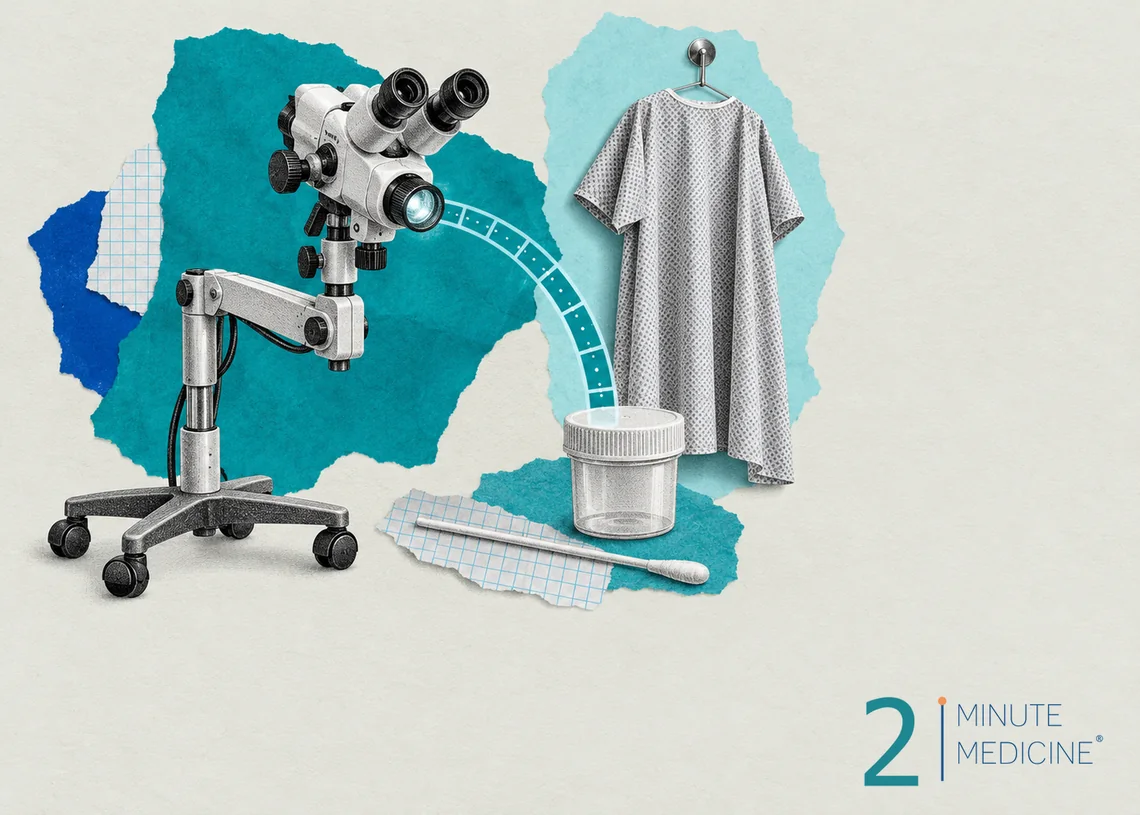
A colposcopy is an office test that gives a magnified view of the cervix, the lower end of the uterus that opens into the vagina. It is usually done after an abnormal Pap test or a positive test for HPV (human papillomavirus). If the doctor sees an area that looks unusual, they take a tiny piece of tissue (a cervical biopsy) to check under a microscope. Most people who have a colposcopy do not have cancer.
Key points
- The test takes about 10 to 20 minutes and is done in the office, much like a Pap test.
- The scope stays outside your body. It works like a pair of binoculars on a stand.
- A biopsy feels like a quick pinch or cramp. Spotting and dark discharge for a few days afterward is normal.
- Many abnormal results are mild changes that go away on their own. Higher-grade changes can be removed before they ever turn into cancer.
- Keep up with your follow-up visits, even if you feel fine.
Why a colposcopy is done
Cervical screening looks for changes in cells long before cancer forms. A Pap test (Pap smear) collects cells from the cervix to look for abnormal changes, and an HPV test checks for the virus. Almost all cervical cancers are caused by long-lasting infection with certain high-risk types of HPV, a very common virus spread by sexual contact. Most HPV infections clear within a year or two. When one doesn’t, it can slowly change cervical cells over several years.
Your doctor may suggest a colposcopy if:
- Your Pap test showed abnormal cells
- You tested positive for HPV type 16 or 18, the types most likely to cause cancer, even if your Pap test was normal
- Other high-risk HPV types keep showing up on repeat tests
- Your cervix looked unusual during an exam
- You need a check after earlier treatment of abnormal cells
Getting ready
- Book it outside the heaviest days of your period. Light bleeding is usually fine. Call the office if you’re unsure.
- For 24 to 48 hours before, skip vaginal sex, tampons, douching, and creams or medicines in the vagina. These can hide what the doctor needs to see.
- Tell the office if you are or might be pregnant. Colposcopy is still done in pregnancy, but some steps change.
- Tell them if you take a blood thinner.
- Ask whether to take ibuprofen or acetaminophen an hour before. Bring a pad to wear home.
What happens during a colposcopy
You lie on the exam table with your feet in supports, as you would for a Pap test. The doctor places a speculum, the same tool used for a Pap test, to hold the vagina open. The colposcope sits a little way from your body and shines a light on the cervix.
The doctor wipes the cervix with a mild vinegar solution. It may sting a little. Abnormal areas turn white for a minute or two, which makes them easier to see. Sometimes an iodine solution is used as well. Healthy tissue stains brown, and unusual areas don’t.
If an area looks abnormal, the doctor takes one or more biopsies, each about the size of a grain of rice. You may feel a sharp pinch or a cramp. The doctor may also gently scrape cells from inside the opening of the cervix (endocervical curettage), which can cause cramping for a minute. Some offices numb the cervix first. A paste or a silver nitrate stick is often used to stop any bleeding.
You can ask the doctor to tell you what’s coming before each step, and you can ask to pause.
Afterward
Most people go back to work the same day. For a few days you may have:
- Mild cramping, which ibuprofen or acetaminophen can ease
- Light spotting
- A dark brown or black discharge that looks like coffee grounds. This comes from the paste used to stop bleeding and is harmless.
After a biopsy, use pads instead of tampons and avoid vaginal sex and douching for about a week, or as long as your doctor advises.
Possible risks
Colposcopy is a low-risk test. Problems are uncommon but can include heavier bleeding or an infection. A colposcopy and biopsy do not affect your ability to get pregnant.
Your results
Biopsy results usually come back in 1 to 2 weeks. Doctors grade any changes by how many layers of the lining are affected.
- Normal or low-grade changes (often written as CIN 1 or LSIL). These usually go away on their own as the body clears HPV. Your doctor will repeat testing in about a year instead of treating.
- High-grade changes (CIN 2, CIN 3 or HSIL). CIN stands for cervical intraepithelial neoplasia, meaning abnormal cells in the surface layer of the cervix. These are precancer, not cancer. They are usually removed so they can’t progress.
- Cancer. This is uncommon. If it is found, you will be referred to a gynecologic oncologist (a cancer specialist for female organs).
Treatment for high-grade changes
The most common treatment is LEEP (loop electrosurgical excision procedure). A thin wire loop carrying an electric current removes the abnormal area in a few minutes in the office, with numbing medicine. Other choices are a cone biopsy, which removes a cone-shaped piece in an operating room, or destroying the area by freezing or heat (ablation). These treatments work well. Removing tissue can slightly raise the chance of an early birth in a later pregnancy, so tell your doctor if you plan to have children.
After any treatment, you will need more frequent checks for a few years.
Lowering your risk
- Get the HPV vaccine if you are 26 or younger. Adults 27 to 45 can ask their doctor whether it makes sense for them.
- Keep up with cervical screening, even after the vaccine.
- Don’t smoke. Smoking makes it harder for the body to clear HPV.
When to call your doctor
- Bleeding heavier than a normal period, or soaking a pad in an hour
- Fever or chills
- Bad-smelling discharge
- Belly or pelvic pain that gets worse instead of better
Common questions about colposcopy
Does a colposcopy hurt?
Most people feel only mild discomfort. Placing the speculum feels like a Pap test, the vinegar solution may sting, and a biopsy feels like a quick, sharp pinch or cramp. Taking ibuprofen an hour before and asking the doctor to talk you through each step can make it easier.
Does an abnormal colposcopy mean I have cancer?
No. Most abnormal results show mild changes or precancer caused by HPV, not cancer. Mild changes often clear on their own, and higher-grade changes can be removed in a short office procedure. Cancer is found in only a small share of people who have a colposcopy.
Can I have a colposcopy while pregnant?
Yes. Colposcopy can be done during pregnancy and doesn’t harm the baby. The doctor will skip the scraping inside the cervix and usually takes a biopsy only if a high-grade change or cancer is suspected. Treatment of precancer can usually wait until after the birth.
What does a colposcopy show?
It gives a close, magnified view of the cervix, so the doctor can spot areas that may hold abnormal cells, such as patches that turn white after the vinegar wash. The look alone can’t confirm a diagnosis. The biopsy tells whether cells are normal, mildly changed, precancer or, rarely, cancer.
How is a colposcopy different from a Pap test or hysteroscopy?
A Pap test is a quick screening swab of cervical cells. A colposcopy is the follow-up, a magnified look at the cervix with biopsies of any unusual spots. A hysteroscopy is a different test that passes a thin camera through the cervix to look inside the uterus.
Questions to ask your doctor
- Why do I need a colposcopy?
- Will you take a biopsy, and how many?
- When and how will I get my results?
- If I need treatment, which kind do you recommend, and will it affect a future pregnancy?
- How often will I need tests from now on?
Learn more
- Colposcopy – directed biopsy (MedlinePlus, U.S. National Library of Medicine)
- HPV and Pap test results: next steps after an abnormal test (National Cancer Institute)
This guide is general information and doesn’t replace advice from your own doctor. Last updated October 2026.






 Get the app