

Patient Basics: Computed Tomography (CT)
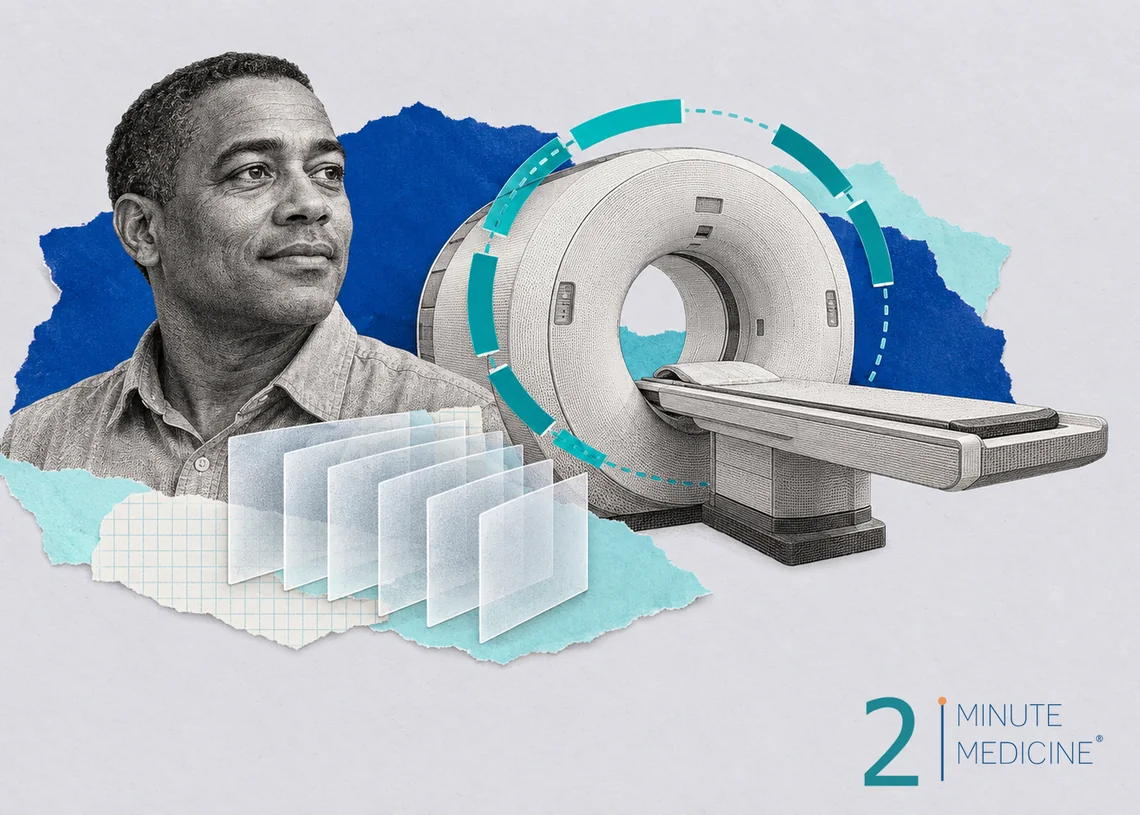
Computed tomography (CT), also called a CT scan or CAT scan, uses X-rays and a computer to make detailed pictures of the inside of the body. It shows bones, organs, blood vessels and soft tissue in thin slices, much like slices of a loaf of bread. A scan takes only a few minutes, which is why emergency rooms use it so often.
Key points
- CT stands for computed tomography. “Tomography” means making pictures in slices.
- It finds injuries, bleeding, infections, blood clots, kidney stones and cancer.
- Many scans use a contrast dye, given in a vein or as a drink, to make some tissues stand out.
- A CT scan uses more radiation than a plain X-ray. When a scan is needed, its benefit is usually much greater than the small risk.
- Tell the staff if you could be pregnant, have kidney disease, or have reacted to contrast dye before.
What CT means in medical terms
CT is short for computed tomography. The word tomography comes from the Greek word for slice, and computed means a computer builds the pictures. In Spanish, the test is called tomografía computarizada, or TC.
How computed tomography works
A CT scanner is a large ring, shaped like a doughnut, with a narrow table that slides through the middle. Inside the ring, an X-ray tube spins around you while detectors on the opposite side measure how much of the beam passes through your body. Dense tissue such as bone blocks more X-rays and looks white. Air looks black, and soft tissue shows up in shades of gray.
A computer turns these measurements into cross-section pictures. It can also stack the slices to build 3D images of bones and blood vessels. A plain X-ray squashes everything into one flat picture, so CT shows far more detail.
What computed tomography is used for
- Injuries: head injuries, broken bones and bleeding inside the chest or belly after a crash or fall
- Stroke: to check quickly for bleeding in the brain, which changes the treatment
- Belly pain: appendicitis, kidney stones, diverticulitis and bowel blockage
- Lungs: blood clots in the lungs (with a CT angiogram), pneumonia and lung spots (nodules)
- Cancer: to find a tumor, see whether it has spread, and check how treatment is working
- Heart: a calcium score or a CT angiogram of the heart arteries
- Screening: low-dose CT to look for early lung cancer in people with a long history of smoking
- Guiding procedures, such as placing a needle for a biopsy or a tube to drain fluid, and planning surgery or radiation
Before the scan
- Tell the staff if you are or might be pregnant.
- Mention any allergy to contrast dye, kidney disease, diabetes, or thyroid problems.
- If you take metformin for diabetes, ask whether to pause it after a contrast scan.
- For some scans, you may be asked not to eat for a few hours.
- For a belly scan, you may drink a contrast liquid over an hour or so before the scan.
- Wear loose clothes without metal, or change into a gown. Take off jewelry, glasses, hairpins and hearing aids.
During the scan
You’ll lie on your back on the table, usually with your arms over your head for chest and belly scans. A radiology technologist positions you and then steps into the next room, where they can see and hear you. The table moves slowly through the ring. You’ll hear whirring and clicking. You may be asked to hold your breath for a few seconds so the pictures aren’t blurred.
If you need contrast dye in a vein, a nurse or technologist places a small IV line in your arm. As the dye goes in, you may feel warm all over, notice a metallic taste, or feel as if you are passing urine. These feelings pass within a minute or two.
The scan itself often takes less than a minute. The whole visit usually lasts 10 to 30 minutes, longer if you drink contrast first. The ring is open at both ends, so most people who dislike tight spaces manage fine.
After the scan
You can usually go back to your normal activities and diet right away. If you had contrast dye, drink extra water for the rest of the day unless your doctor has told you to limit fluids. People who are breastfeeding don’t need to stop after contrast dye.
Possible risks
- Radiation. The dose depends on the body part. A head CT gives about as much radiation as you’d get from nature over several months. A scan of the belly and pelvis is more like a few years’ worth. The extra lifetime cancer risk from one scan is very small, but it adds up with many scans, and children are more sensitive. Ask whether a test without radiation, such as ultrasound or MRI, would work as well.
- Reactions to contrast dye. Most are mild, such as itching or hives. Serious reactions are rare, and the staff are trained to treat them. If you’ve reacted before, you may get medicine beforehand.
- Kidney strain. Contrast dye can affect people whose kidneys already work poorly. A blood test may be done first.
- Pregnancy. CT of the head or chest is often still done when needed. Scans of the belly are avoided when another test can answer the question.
Your results
A radiologist (a doctor who specializes in reading scans) studies the images and sends a report to the doctor who ordered the test. In an emergency, results come within an hour or so. Otherwise, expect them in a day or two, often in your patient portal. Scans sometimes show small, harmless findings unrelated to the reason for the test, such as tiny lung spots or cysts. Your doctor will tell you whether any follow-up is needed.
Common questions about computed tomography
Is a CT scan the same as a CAT scan?
Yes. CAT scan is the older name, short for computerized axial tomography. Today most doctors say CT scan or computed tomography. Modern machines are much faster than the first CAT scanners, but they work the same way, with X-rays and a computer making cross-section pictures.
What is the difference between a CT scan and an MRI?
CT uses X-rays and takes minutes. MRI uses a strong magnet and radio waves, with no radiation, and takes 30 to 60 minutes in a narrower tube. CT is better for emergencies, bleeding, bones and lungs. MRI shows more detail in the brain, spinal cord, joints and some organs.
Can you have a CT scan with a pacemaker or metal implant?
Yes. Pacemakers, joint replacements, plates and screws are not a problem for CT, unlike some MRI scans. Metal can cause streaks on the pictures near the implant, and the staff can adjust the scan to reduce them. Still tell the technologist about any device or implant you have.
Questions to ask your doctor
- Why do I need this CT scan, and what will it show?
- Will I need contrast dye?
- Is there a test without radiation that would work as well?
- How do I get ready, and can I take my usual medicines?
- When and how will I get my results?
Learn more
- CT scans (MedlinePlus, U.S. National Library of Medicine)
- Computed tomography (CT) (U.S. Food and Drug Administration)
This guide is general information and doesn’t replace advice from your own doctor. Last updated October 2026.
RelatedReports







 Get the app