
• About
  • Masthead
  • License Content
  • Advertise
  • Press Releases
  • Newsroom
  • RSS/Email List
  • 2MM Podcast
  • Write for us
  • Contact Us
2 Minute Medicine
No Result
View All Result

No products in the cart.

Sign in
SUBSCRIBE
  • About
  • Specialties
    • All Specialties, All Recent Reports
    • Cardiology
    • Chronic Disease
    • Dermatology
    • Emergency
    • Endocrinology
    • Gastroenterology
    • Imaging and Intervention
    • Infectious Disease
    • Nephrology
    • Neurology
    • Obstetrics
    • Oncology
    • Ophthalmology
    • Pediatrics
    • Pharma
    • Preclinical
    • Psychiatry
    • Public Health
    • Pulmonology
    • Rheumatology
    • Surgery
    • Rewinds
    • The Scan
  • EvidencePulse™
  • HypeCheck™
  • AI News
  • Classics™
    • 2MM+ Online Access
    • Paperback and Ebook
  • Tools
    • NPI Registry Lookup
    • RVU Search
    • Physician Pay by Specialty
    • ICD-10 Code Lookup
    • FDA Drug Approvals
    • Drug Safety for Breastfeeding/Pregnancy
    • Clinical Guidelines
    • Medical Calculators
    • ECG Reference
      • QTc Calculator
      • Sgarbossa Criteria
      • ECG Axis Calculator
      • AV Block Helper
  • Rankings
    • Medical School Rankings
    • Residency Rankings
  • Partners
    • License Content
    • Advertise with Us
2 Minute Medicine
  • About
  • Specialties
    • All Specialties, All Recent Reports
    • Cardiology
    • Chronic Disease
    • Dermatology
    • Emergency
    • Endocrinology
    • Gastroenterology
    • Imaging and Intervention
    • Infectious Disease
    • Nephrology
    • Neurology
    • Obstetrics
    • Oncology
    • Ophthalmology
    • Pediatrics
    • Pharma
    • Preclinical
    • Psychiatry
    • Public Health
    • Pulmonology
    • Rheumatology
    • Surgery
    • Rewinds
    • The Scan
  • EvidencePulse™
  • HypeCheck™
  • AI News
  • Classics™
    • 2MM+ Online Access
    • Paperback and Ebook
  • Tools
    • NPI Registry Lookup
    • RVU Search
    • Physician Pay by Specialty
    • ICD-10 Code Lookup
    • FDA Drug Approvals
    • Drug Safety for Breastfeeding/Pregnancy
    • Clinical Guidelines
    • Medical Calculators
    • ECG Reference
      • QTc Calculator
      • Sgarbossa Criteria
      • ECG Axis Calculator
      • AV Block Helper
  • Rankings
    • Medical School Rankings
    • Residency Rankings
  • Partners
    • License Content
    • Advertise with Us
Sign in
SUBSCRIBE
2 Minute Medicine
Sign in
Subscribe
2 Minute MedicineFree on Google PlayGet
✦EvidencePulse™by 2 Minute Medicine3 reportsYou askedtop stroke trials 2026Synthesizing medical evidence...Top 2026 stroke trial results:OCEANIC — ischemic stroke: 6.2% vs 8.4%OPTION* — mRS 0–1: 43.6% vs 34.2%ORIENTAL* — mRS 0–2: 58.6% vs 46.6%*Higher sICH in intervention armsParticipants randomizedNOCEANIC12,327OPTION570ORIENTAL564Ask about guidelines or landmark trials...↑Try EvidencePulse™Ask the evidence. Get the signal.Try it now →
Home Health A to Z

Patient Basics: Diabetic Neuropathies (Diabetic Nerve Damage)
by2 Minute Medicine
October 30, 2026
in Health A to Z
Reading Time: 5 mins read
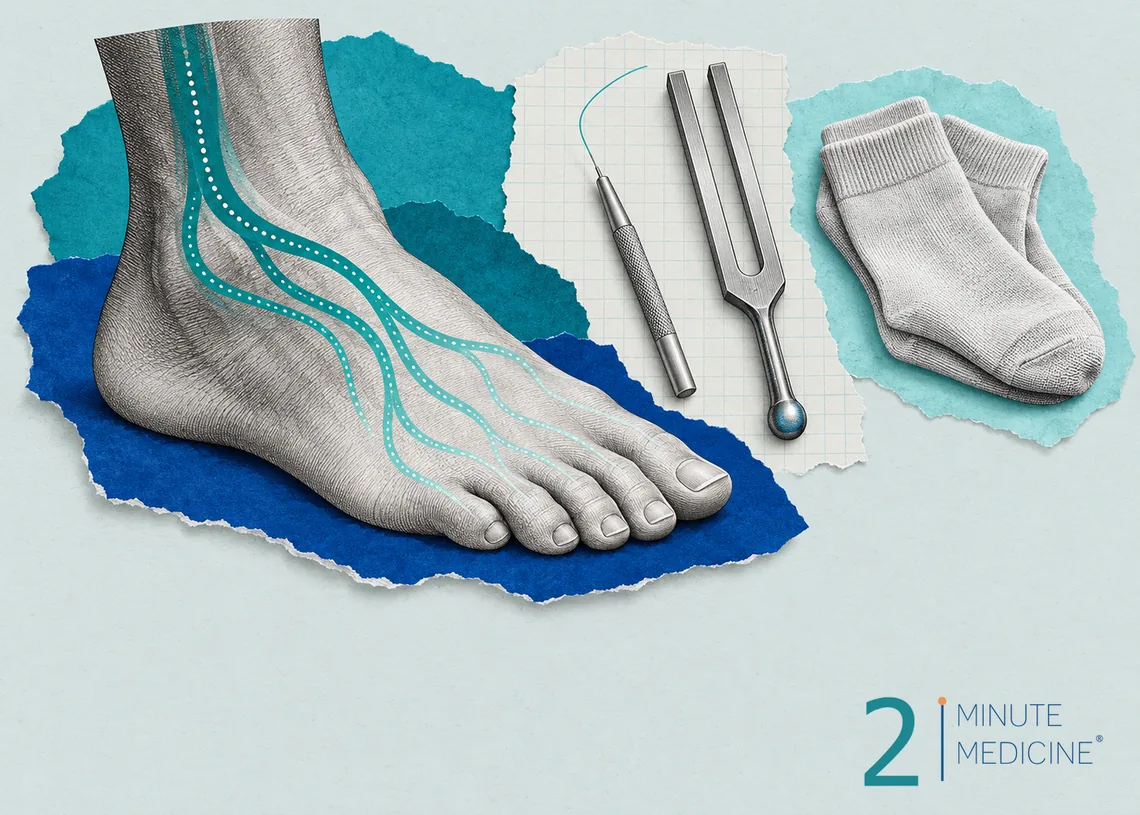
Diabetic neuropathy collage: a bare foot with a teal nerve ribbon, a monofilament, a tuning fork and folded socks
Share on FacebookShare on TwitterShare on LinkedIn

Diabetic neuropathy is nerve damage caused by diabetes. Over years, high blood sugar harms the nerves and the tiny blood vessels that feed them. Most often it causes numbness, tingling or burning pain in the feet and legs, but it can also affect digestion, the bladder, the heart and other organs. Keeping blood sugar in your target range is the best way to prevent it or keep it from getting worse.

Key points

  • Up to half of people with diabetes develop some nerve damage over time.
  • Numb feet can’t feel cuts or blisters, which can turn into ulcers and infections. Check your feet every day.
  • Everyone with diabetes needs a foot exam at least once a year.
  • Damaged nerves usually don’t fully heal, but good blood sugar control can slow the damage and ease symptoms.
  • Several medicines can ease nerve pain. Others treat stomach, bowel, bladder or blood pressure problems.

What causes diabetic neuropathy

High blood sugar damages nerve fibers and weakens the small blood vessels that carry oxygen and nutrients to them. The risk rises the longer you have diabetes and the higher your blood sugar has been. Other things that add to the risk include:

  • High blood pressure and high cholesterol or triglycerides
  • Smoking and heavy drinking
  • Extra weight
  • Kidney disease
  • Low vitamin B12, which can happen with long-term use of metformin

Types of diabetic neuropathy

Peripheral neuropathy

Most people with nerve damage from diabetes have this type. It usually starts in the toes and feet, then may move up the legs. Later it can affect the hands. Both sides are usually affected. Signs include:

  • Numbness, or feeling as if you are wearing socks when you aren’t
  • Tingling, burning, or sharp, electric pains, often worse at night
  • Pain from a light touch, such as bed sheets
  • Poor balance and weak foot muscles
  • Sores on the feet that you don’t feel, and changes in the shape of the foot

Autonomic neuropathy

This type affects the nerves that run the body’s automatic jobs. It can cause:

  • Slow stomach emptying (gastroparesis), with nausea, vomiting, bloating and feeling full quickly
  • Constipation, or diarrhea that often happens at night
  • Bladder problems, such as trouble emptying the bladder fully
  • Erectile dysfunction, or vaginal dryness
  • Dizziness or fainting when standing up, from a drop in blood pressure
  • A fast heart rate at rest
  • Sweating too much or too little
  • Not noticing the warning signs of low blood sugar

Proximal neuropathy

Also called diabetic amyotrophy, this type causes sudden, severe pain in the hip, buttock or thigh, followed by weak thigh muscles. It usually starts on one side and is most common in older adults with type 2 diabetes. It often improves slowly over months to a couple of years.

Focal neuropathy

Damage to a single nerve can cause sudden double vision, drooping of one side of the face, foot drop, or carpal tunnel syndrome in the wrist. Most of these improve over weeks to months.

RELATED REPORTS

Spinal cord stimulation shows considerable improvement in pain and quality of life for patients with refractory diabetic neuropathy

ACE-inhibitors and statins do not impact albuminuria in adolescents with type 1 diabetes mellitus: The AdDIT trial

How diabetic neuropathy is diagnosed

Your doctor will ask about your symptoms and check your feet. A simple foot exam includes:

  • Touching your foot with a thin nylon thread (monofilament) to test feeling
  • Checking whether you feel a buzzing tuning fork
  • Testing reflexes, pinprick and temperature feeling
  • Looking for sores, calluses and changes in foot shape, and checking pulses

Blood tests can rule out other causes of nerve damage, such as low vitamin B12 or thyroid problems. Nerve conduction studies are done if the cause is unclear. For autonomic symptoms, you may have heart rate and blood pressure tests or a test of how fast your stomach empties.

Diabetic neuropathy treatment

Slowing the damage

  • Keep blood sugar in your target range. For many people, that means an A1C below 7%.
  • Control blood pressure and cholesterol.
  • Quit smoking and limit alcohol.
  • Be active most days, with your doctor’s advice about safe exercise for your feet.

Easing nerve pain

These medicines don’t repair nerves, but they can calm pain:

  • Pregabalin or gabapentin
  • Duloxetine or venlafaxine
  • Low doses of older antidepressants such as amitriptyline or nortriptyline
  • Capsaicin or lidocaine applied to the skin

It can take a few tries to find the right medicine and dose. Opioids are generally avoided because of their risks. For severe pain that doesn’t respond, a spinal cord stimulator is an option.

Treating other symptoms

  • Stomach. Small, frequent, lower-fat meals help. Medicines such as metoclopramide can help the stomach empty, though only for limited periods.
  • Bowels. Fiber, fluids and laxatives ease constipation. Loperamide or other treatments, sometimes an antibiotic, can control diarrhea.
  • Dizziness on standing. Stand up slowly, drink enough fluids and wear compression stockings. Medicines can raise blood pressure if needed.
  • Bladder and sexual problems. Timed bathroom trips, medicines and other treatments can help.

Caring for your feet at home

  • Look at your feet every day, using a mirror for the soles, or ask someone to help.
  • Wash and dry your feet daily, especially between the toes. Moisturize the tops and bottoms, but not between the toes.
  • Test bath water with your elbow, since numb feet can be burned.
  • Never walk barefoot, even at home. Check your shoes for stones before putting them on.
  • Wear shoes that fit well and clean, dry socks.
  • Trim toenails straight across, or have a foot doctor (podiatrist) do it.

When to see a doctor

  • Numbness, tingling or pain in your feet or hands
  • A cut, blister or sore on your foot that isn’t healing, or any redness, warmth or swelling
  • Vomiting, bloating, or bowel or bladder changes
  • Dizziness when you stand up

Get care the same day for a foot sore that smells, drains or is spreading redness, or for fever with a foot wound.

Common questions about diabetic neuropathy

Can diabetic neuropathy be reversed?

Usually not fully. Once nerves are badly damaged, they rarely recover. But tight blood sugar control, along with control of blood pressure and cholesterol, can stop or slow the damage, and pain often eases. Some types, such as proximal and focal neuropathy, often get better on their own over months.

Does diabetic neuropathy come and go?

The symptoms can. Pain and tingling often flare at night, with stress or with swings in blood sugar, and may ease at other times. Numbness tends to stay. The underlying nerve damage doesn’t come and go, so keep up with foot checks even on good days.

Can diabetic neuropathy cause stomach problems?

Yes. When diabetes damages the nerves that control digestion, the stomach can empty slowly. This causes nausea, vomiting, bloating and feeling full early. Nerve damage in the bowel can also cause constipation or diarrhea, and unpredictable digestion can make blood sugar harder to control.

Questions to ask your doctor

  • What type of neuropathy do I have?
  • What blood sugar and A1C targets should I aim for?
  • Which medicine is best for my pain?
  • How often should my feet be checked, and should I see a podiatrist?
  • Should my vitamin B12 level be checked?

Learn more

  • Diabetic neuropathy (National Institute of Diabetes and Digestive and Kidney Diseases)
  • Diabetic nerve problems (MedlinePlus, U.S. National Library of Medicine)

This guide is general information and doesn’t replace advice from your own doctor. Last updated October 2026.

Tags: Diabetic Neuropathies
Previous Post

Patient Basics: Developmental Dysplasia of the Hip (Hip Dysplasia)

Next Post

Patient Basics: Dysthymia (Persistent Depressive Disorder)

RelatedReports

2 Minute Medicine

Spinal cord stimulation shows considerable improvement in pain and quality of life for patients with refractory diabetic neuropathy

June 2, 2021
Cardiology

ACE-inhibitors and statins do not impact albuminuria in adolescents with type 1 diabetes mellitus: The AdDIT trial

November 7, 2017
Next Post
Decompression sickness collage of a hyperbaric chamber, a scuba tank and mask, rising bubbles and an oxygen mask

Patient Basics: Decompression Sickness

Collage of a patch of skin with a small, round, firm dermatofibroma, a handheld dermatoscope, a tiny mosquito and a razor

Patient Basics: Dermatofibroma

Creutzfeldt-Jakob disease collage of an older woman, an engraved brain with a tangled teal ribbon, a teacup and glasses

Patient Basics: Creutzfeldt-Jakob Disease (CJD)

✦ EvidencePulse™ by 2 Minute Medicine 3 reports You asked top stroke trials 2026 Synthesizing medical evidence... Top 2026 stroke trial results: OCEANIC — ischemic stroke: 6.2% vs 8.4% OPTION* — mRS 0–1: 43.6% vs 34.2% ORIENTAL* — mRS 0–2: 58.6% vs 46.6% *Higher sICH in intervention arms Participants randomizedN OCEANIC 12,327 OPTION 570 ORIENTAL 564 Ask about guidelines or landmark trials... Try EvidencePulse™ Get the signal. Try it now → Physician-trained medical AI by 2 Minute Medicine

2MM+ All Access

Full details →
$4.99 /month

3-day free trial · cancel anytime

  • ✓100+ physician-written reports
  • ✓EvidencePulse™ + HypeCheck™
  • ✓Ad-free reading + newsletters
Start 3-day free trial

Then $4.99/month. Manage renewal in your account.

2 Minute Medicine® is an award winning, physician-run, expert medical media company. Our content is curated, written and edited by practicing health professionals who have clinical and scientific expertise in their field of reporting. Our editorial management team is comprised of highly-trained MD physicians. Join numerous brands, companies, and hospitals who trust our licensed content.

Recent Reports

  • Pelacarsen lowers lipoprotein(a) but does not reduce major cardiovascular events in patients with established cardiovascular disease
  • Durvalumab plus enfortumab vedotin was approved for perioperative treatment of muscle-invasive bladder cancer
  • CDC reports 5,412 confirmed measles cases in the United States in 2026
License Content
Terms of Use | Disclaimer
Cookie Policy

Get the app

Read 2 Minute Medicine on iPhone, iPad and Android.

Download on the App StoreGet it on Google Play
QR code for www.2minutemedicine.com/app
On a computer? Scan this with your phone’s camera.
2MM+ All Access Full details →

The medical literature, distilled daily.

Monthly plan selected: $4.99 /month.

$4.99/month

3-day free trial · cancel anytime

Start 3-day free trial

Then $4.99/month. Manage renewal in your account.

Yearly plan selected: $49.90 /year.

$49.90/year

2 months free

Start 3-day free trial

Then $49.90/year.

Membership benefits

  • ✓100+ new physician-written study summaries monthly, 12,000+ searchable
  • ✓AI EvidencePulse™ + HypeCheck™
  • ✓Ad-free reading + newsletters
  • ✓FDA drug approvals + clinical calculators

Already a member? Sign in

  • Get the app
  • About
  • Specialties
    • All Specialties, All Recent Reports
    • Cardiology
    • Chronic Disease
    • Dermatology
    • Emergency
    • Endocrinology
    • Gastroenterology
    • Imaging and Intervention
    • Infectious Disease
    • Nephrology
    • Neurology
    • Obstetrics
    • Oncology
    • Ophthalmology
    • Pediatrics
    • Pharma
    • Preclinical
    • Psychiatry
    • Public Health
    • Pulmonology
    • Rheumatology
    • Surgery
    • Rewinds
    • The Scan
  • EvidencePulse™
  • HypeCheck™
  • AI News
  • Classics™
    • 2MM+ Online Access
    • Paperback and Ebook
  • Tools
    • NPI Registry Lookup
    • RVU Search
    • Physician Pay by Specialty
    • ICD-10 Code Lookup
    • FDA Drug Approvals
    • Drug Safety for Breastfeeding/Pregnancy
    • Clinical Guidelines
    • Medical Calculators
    • ECG Reference
      • QTc Calculator
      • Sgarbossa Criteria
      • ECG Axis Calculator
      • AV Block Helper
  • Rankings
    • Medical School Rankings
    • Residency Rankings
  • Partners
    • License Content
    • Advertise with Us
No Result
View All Result

© 2026 2 Minute Medicine, Inc. - Physician-written medical news.


