

Patient Basics: Esophagitis
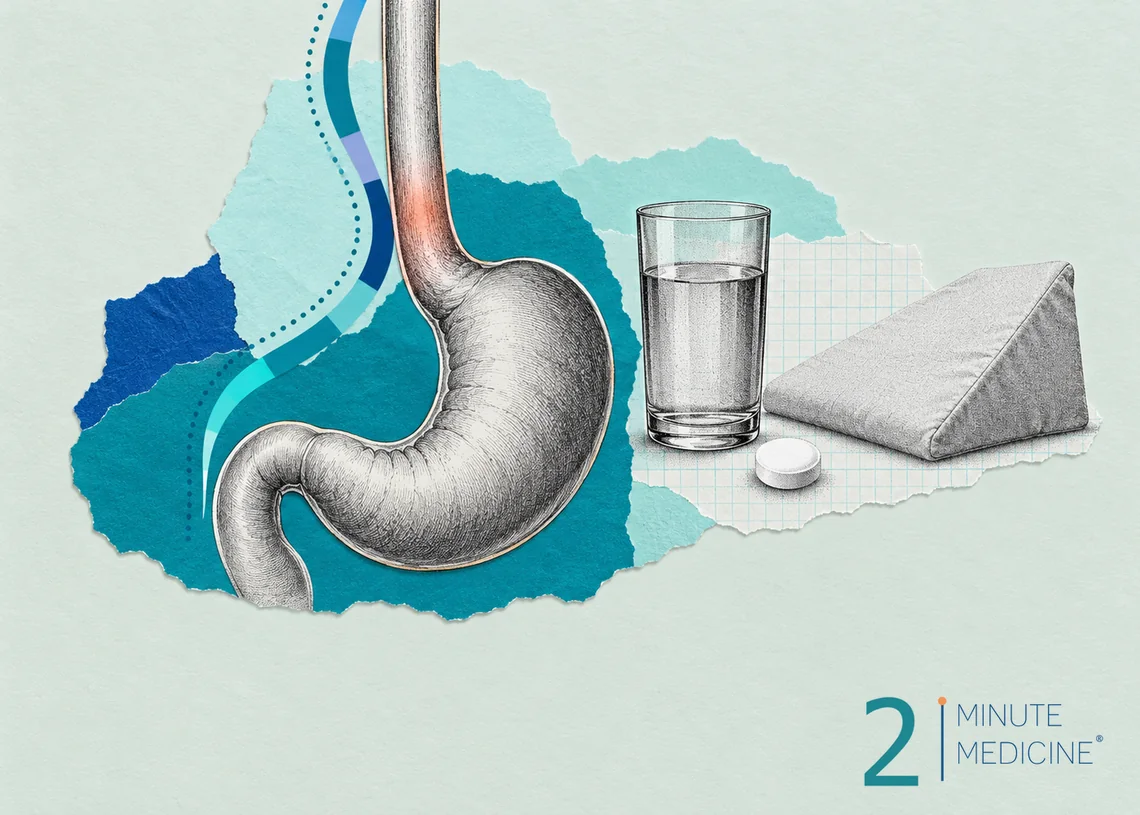
Esophagitis is irritation and swelling (inflammation) of the esophagus, the food pipe that carries what you swallow from your throat down to your stomach. It can cause heartburn, pain when you swallow, or a feeling that food gets stuck. Stomach acid backing up is the most common cause, and most types heal well once the cause is treated.
Key points
- The main types are reflux esophagitis, eosinophilic esophagitis (an allergy-related type), pill esophagitis and infections.
- Painful swallowing, trouble swallowing and heartburn are the usual symptoms.
- An upper endoscopy, with small tissue samples, is the main test.
- Treatment depends on the cause and may include acid-lowering medicine, a change in how you take pills, diet changes or medicine for an infection.
- Get emergency care if food is stuck and you can’t swallow your own saliva.
What causes esophagitis
- Acid reflux (GERD). When the valve at the bottom of the esophagus doesn’t close well, stomach acid washes back up and burns the lining. Being overweight, a hiatal hernia (part of the stomach pushing up into the chest), pregnancy, smoking, large meals and lying down after eating all make reflux worse.
- Eosinophilic esophagitis (EoE). This is a long-term immune condition. A type of white blood cell called an eosinophil builds up in the lining, usually in response to foods such as milk, wheat, eggs or soy. Over time the esophagus can stiffen and narrow. EoE is more common in males and in people with asthma, eczema, hay fever or food allergies.
- Pills. Some pills can stick in the esophagus and burn the lining if taken with too little water or right before lying down. Common culprits are doxycycline and other tetracycline antibiotics, aspirin, ibuprofen and naproxen, potassium tablets, iron pills and bone drugs such as alendronate.
- Infections. Yeast (Candida), the herpes virus or cytomegalovirus can infect the esophagus. This mostly happens in people with a weak immune system, such as from HIV, chemotherapy, an organ transplant or steroid medicines. Steroid inhalers for asthma can also lead to yeast infection in the mouth and throat.
- Other causes. Radiation treatment to the chest, frequent vomiting and swallowing a harsh chemical such as drain cleaner can also damage the esophagus.
Symptoms
- Heartburn, a burning feeling behind the breastbone
- Pain when you swallow, sometimes felt in the chest
- Trouble swallowing, or food that feels stuck in your chest or throat
- Sour liquid coming up into your mouth
- Hoarseness, a sore throat or a cough
Young children with EoE may refuse food, vomit, have belly pain or grow slowly. Teens and adults with EoE often learn to eat slowly, chew a lot or drink water with each bite without realizing how much they’ve adjusted.
How esophagitis is diagnosed
Your doctor will ask about your symptoms, your medicines and how you take them, and any allergies or asthma. If you have typical heartburn, your doctor may first try acid-lowering medicine and see whether you improve.
- Upper endoscopy. A thin, flexible tube with a camera passes through your mouth into your esophagus and stomach while you are sedated. The doctor can see redness, sores, narrowing, white patches from yeast, or rings and grooves from EoE.
- Biopsy. Small tissue samples taken during endoscopy are checked in a lab. This is the only way to confirm EoE and helps identify infections.
- Barium swallow. You drink a chalky liquid that shows up on X-rays. It can show narrowing or problems with how the esophagus squeezes.
- pH test. A thin tube or a small capsule measures how often acid comes up over a day or two, if reflux is uncertain.
Doctors grade reflux esophagitis seen on endoscopy from A to D using the Los Angeles (LA) system. LA grade A is the mildest, with only small breaks in the lining, and it usually heals well with treatment. Grade D is the most severe.
How esophagitis is treated
Reflux esophagitis
Proton pump inhibitors (PPIs), such as omeprazole, esomeprazole and pantoprazole, lower stomach acid and let the lining heal. Famotidine is a milder option. Vonoprazan is a newer acid blocker that some people take instead. Habits help too: losing extra weight, eating smaller meals, not eating within 3 hours of bedtime, raising the head of your bed and quitting smoking. If medicine doesn’t control reflux, surgery to tighten the valve is an option.
Eosinophilic esophagitis
- PPIs calm EoE in many people, even without reflux.
- Swallowed steroids, such as budesonide liquid, coat the esophagus and work on the lining.
- Diet changes. Removing common trigger foods, such as milk or wheat, and adding them back one at a time can find the cause. A dietitian can guide this.
- Dupilumab is an injected medicine that blocks part of the allergic reaction. It’s approved for adults and children.
- Dilation. If the esophagus has narrowed, the doctor can gently stretch it during endoscopy.
Pill and infection-related esophagitis
Pill damage usually heals once the pill is stopped or taken the right way. A coating medicine may ease pain. Infections are treated with antifungal medicine such as fluconazole, or antiviral medicine for herpes or cytomegalovirus.
If it isn’t treated
Long-lasting inflammation can scar the esophagus and narrow it (a stricture), making swallowing harder. Sores can bleed. Years of reflux can change the cells lining the lower esophagus. This is called Barrett’s esophagus, and it slightly raises the risk of esophageal cancer, so doctors check it with regular endoscopies.
Lowering your risk
- Take each pill with a full glass of water while standing or sitting up, and stay upright for at least 30 minutes.
- Don’t take pills right before bed.
- Rinse your mouth and spit after using a steroid inhaler.
- Keep reflux under control with the habits above.
- If you have EoE, take small bites, chew well and keep up with treatment.
When to see a doctor
- Heartburn more than twice a week, or heartburn that store-bought medicine doesn’t fix within 2 weeks
- Pain or trouble when you swallow
- Weight loss you can’t explain
- A child who struggles to eat, vomits often or isn’t growing well
Get emergency care if food is stuck and you can’t swallow or are drooling, if you vomit blood or something that looks like coffee grounds, or if your stools are black. Call 911 for chest pain with shortness of breath, sweating, or pain in your arm or jaw, as these can be signs of a heart attack. If someone swallows a harsh chemical, call Poison Help at 1-800-222-1222 or 911.
Common questions about esophagitis
Does esophagitis go away?
Yes, most esophagitis heals with treatment. Reflux esophagitis usually heals in about 8 weeks on acid-lowering medicine. Pill damage often improves within days to a few weeks, and infections clear in a week or two with the right medicine. Eosinophilic esophagitis is long-term, so it needs ongoing treatment to stay calm.
What should I do if a pill feels stuck in my chest?
Drink a full glass of water and eat a soft food, such as bread or a banana, to help push it down, and stay upright. The lining can stay sore for hours or days after the pill has passed. Get emergency care if you can’t swallow your saliva or have chest pain.
What if I swallowed a bone and my throat hurts?
A small fish or chicken bone often scratches the throat, and soreness can last a day or so after it has passed. If it feels like it’s still stuck, or you can’t swallow, are drooling, have chest pain or vomit blood, go to an emergency department. A doctor can remove it with an endoscope.
What foods should I avoid with esophagitis?
Skip foods that hurt to swallow or bring on heartburn, such as spicy, fried or fatty foods, citrus, tomatoes, chocolate, coffee, alcohol and fizzy drinks. Soft, bland foods like oatmeal, eggs, yogurt and cooked vegetables are easier while you heal. With eosinophilic esophagitis, the foods to avoid are your own trigger foods.
Questions to ask your doctor
- What type of esophagitis do I have?
- Do I need an endoscopy?
- Could any of my medicines be causing it?
- How long will I need treatment?
- Should I change what I eat?
Learn more
- Esophagitis (MedlinePlus, U.S. National Library of Medicine)
This guide is general information and doesn’t replace advice from your own doctor. Last updated October 2026.






 Get the app