

Patient Basics: Gas (Flatulence)
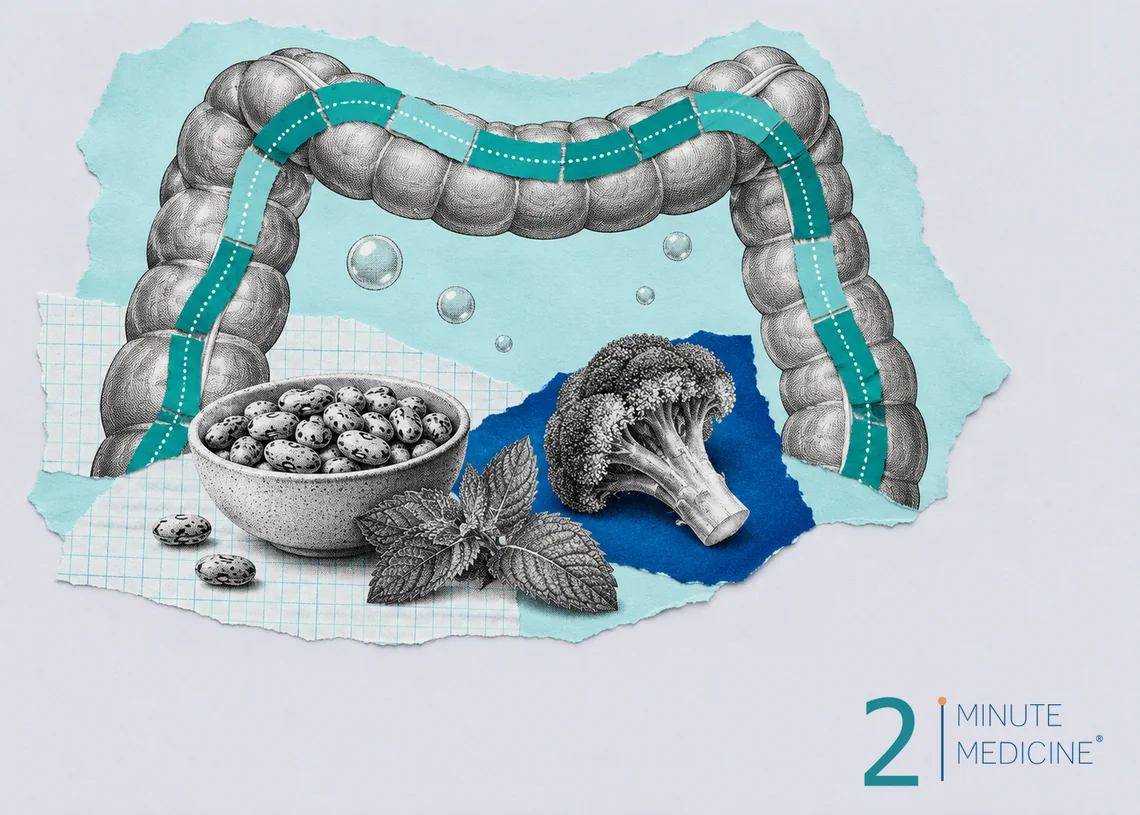
Flatulence means passing gas from the bowel through the anus, which most people call farting. Everyone does it, most often about 13 to 21 times a day. The gas comes from air you swallow and from bacteria breaking down food in your large intestine (colon). Extra gas is usually harmless and often eases with changes to what and how you eat, though gas with pain, weight loss or blood in your stool needs a checkup.
Key points
- Beans, some vegetables and fruits, whole grains, dairy, sugar-free sweeteners and fizzy drinks are common causes of gas.
- Lactose intolerance, irritable bowel syndrome (IBS), celiac disease and some medicines can cause extra gas.
- Eating slowly, cutting back on gassy foods and taking products such as alpha-galactosidase or lactase can help.
- A food diary can show which foods bother you most.
- See a doctor if gas comes with ongoing belly pain, weight loss, diarrhea, constipation or blood in your stool.
What causes flatulence
Swallowed air
You swallow small amounts of air all day. Eating or drinking fast, chewing gum, sucking on hard candy, drinking through a straw, smoking, and loose dentures all add more. Most swallowed air comes back up as a burp, but some travels through the bowel.
Foods that cause gas
Your small intestine can’t fully digest some carbohydrates. When they reach the colon, bacteria break them down and make hydrogen, carbon dioxide and sometimes methane. Common culprits include:
- Beans, lentils and peas
- Broccoli, cabbage, cauliflower, Brussels sprouts, onions and garlic
- Apples, pears, peaches and prunes
- Whole grains and bran
- Milk, ice cream and soft cheeses, if you have trouble digesting lactose (milk sugar)
- Sorbitol, mannitol and xylitol, the sugar alcohols in sugar-free gum, candy and some medicines
- Fructose, found in fruit juice, honey and high-fructose corn syrup
- Fiber supplements and added fibers such as inulin
- Soda, beer and other fizzy drinks
The smell comes from tiny amounts of sulfur gases. Eggs, meat, garlic and cabbage-family vegetables can make it stronger.
Health conditions and medicines
- Lactose intolerance or trouble absorbing fructose
- Irritable bowel syndrome, which often makes the gut more sensitive to normal amounts of gas
- Constipation, which gives bacteria more time to make gas
- Celiac disease, small intestinal bacterial overgrowth (SIBO) and some gut infections, such as giardia
- Medicines such as metformin, weight-loss shots like semaglutide and tirzepatide, some diabetes pills, and antibiotics
How to reduce flatulence
Quick relief
No remedy removes gas instantly, but these steps help it pass sooner:
- Take a short walk. Movement helps gas move through the bowel.
- Lie on your left side, or on your back with your knees pulled to your chest.
- Gently rub your belly in circles, moving from the lower right up and across to the lower left.
- Sip a warm drink, such as peppermint or ginger tea.
- Put a warm heating pad on your belly.
Changing what and how you eat
- Eat slowly and chew well. Skip gum, straws and fizzy drinks.
- Cut back on the foods that bother you most, then add them back slowly to see how much you can handle.
- Soak dried beans and pour off the water before cooking, or rinse canned beans.
- Add fiber a little at a time over a few weeks, and drink plenty of water.
- Try lactose-free milk or yogurt if dairy seems to cause gas.
- Keep a food and symptom diary for a week or two.
- If you have IBS, ask about a low-FODMAP diet. It cuts out foods that ferment easily, then adds them back one group at a time, ideally with a dietitian’s help.
Gas medicines
- Alpha-galactosidase (Beano) helps digest the sugars in beans and vegetables. Take it with the first bite.
- Lactase (Lactaid) helps digest milk sugar. Take it with dairy foods.
- Simethicone (Gas-X) breaks up gas bubbles. It may ease bloating, though studies show only modest benefit.
- Bismuth subsalicylate (Pepto-Bismol) can reduce the smell of gas. It can turn stools black. Don’t give it to children or teens, or take it if you’re allergic to aspirin.
- Activated charcoal has little proof of benefit and can keep other medicines from being absorbed. Charcoal-lined pads or underwear can reduce odor.
- Probiotics help some people, but results vary.
If a condition such as lactose intolerance, celiac disease or SIBO is the cause, treating it usually eases the gas.
How doctors find the cause
Your doctor will ask about your diet, medicines and bowel habits, and examine your belly. Depending on your symptoms, you may have a breath test for lactose intolerance or SIBO, blood tests for celiac disease, or stool tests for infection. A colonoscopy may be advised if you have warning signs or are due for colon cancer screening.
When to see a doctor
- Gas with belly pain or bloating that doesn’t go away
- Diarrhea or constipation that is new or lasts more than a couple of weeks
- Weight loss you can’t explain
- Blood in your stool, or black, tarry stools
- Heartburn, nausea or vomiting along with the gas
- A change in your bowel habits after age 45, or a family history of colon cancer
Get emergency care for severe belly pain, or a swollen belly with vomiting when you can’t pass gas or stool. These can be signs of a blocked bowel.
Common questions about flatulence
Why am I so gassy lately?
A recent change is the usual reason. Eating more fiber, beans or plant foods, starting metformin, a fiber supplement or a weight-loss shot, a stomach bug or a course of antibiotics can all increase gas. If extra gas lasts more than a few weeks or comes with pain or bowel changes, see a doctor.
Why do I fart so much after eating?
Eating sets off a natural reflex that makes the colon squeeze and move its contents along. Gas made from earlier meals then moves toward the exit, so passing gas after a meal is normal. Large or fatty meals, eating fast and fizzy drinks can make it more noticeable.
Why does my gas smell so bad?
The smell comes from small amounts of sulfur gases made by gut bacteria. Eggs, meat, garlic, onions, broccoli and cabbage add to it. Very smelly gas along with greasy, floating stools or diarrhea can point to trouble absorbing food, such as celiac disease or an infection, and needs a checkup.
Is it bad to hold in gas?
Holding in gas now and then won’t harm you, but it can cause bloating and cramps. The gas doesn’t disappear. It comes out later as flatulence or, sometimes, as a burp. When you can, find a private moment and let it pass, and look at what might be causing extra gas.
Questions to ask your doctor
- What do you think is causing my gas?
- Could any of my medicines play a part?
- Should I be tested for lactose intolerance, celiac disease or SIBO?
- Would a low-FODMAP diet or a dietitian help me?
- Which over-the-counter products are safe for me to try?
Learn more
- Gas in the digestive tract (National Institute of Diabetes and Digestive and Kidney Diseases)
- Gas (flatulence) (MedlinePlus, U.S. National Library of Medicine)
This guide is general information and doesn’t replace advice from your own doctor. Last updated October 2026.






 Get the app