

Patient Basics: Hirsutism
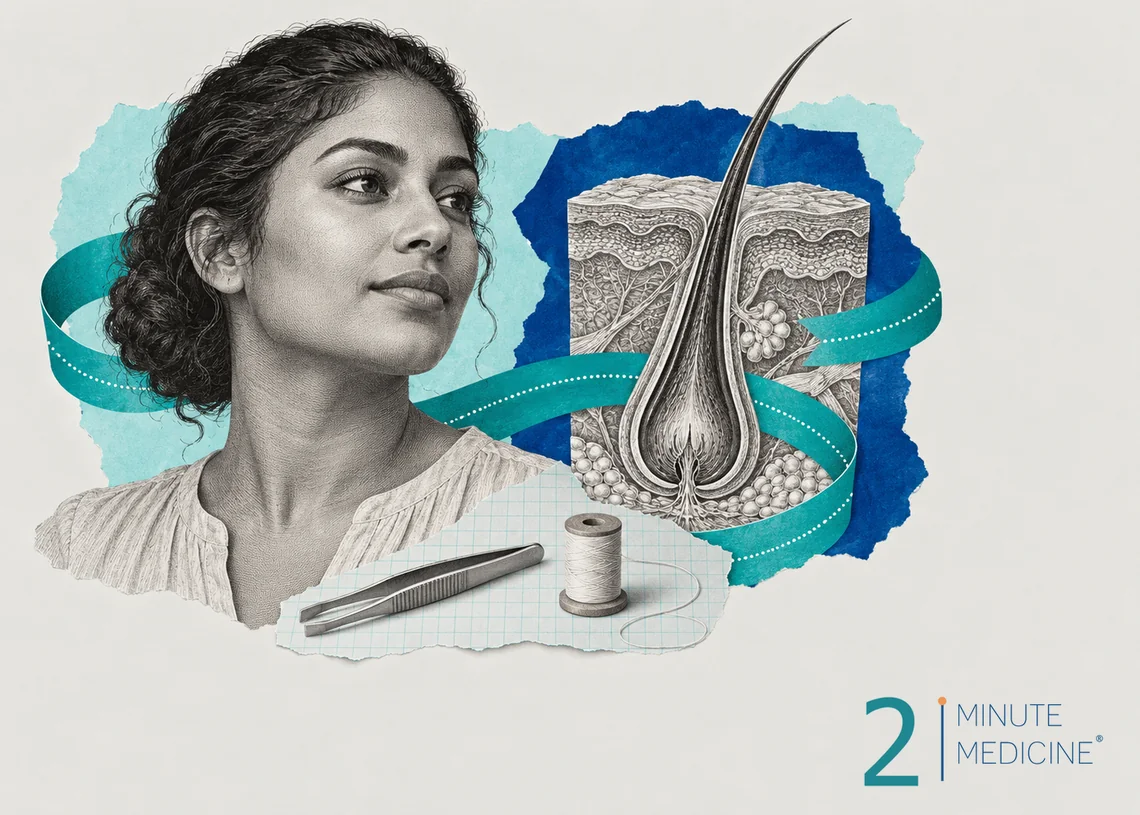
Hirsutism is coarse, dark hair growing on a woman’s face, chest, back or belly, in the places where men usually grow hair. It is common, affecting roughly 1 in 10 women. It usually comes from higher levels of, or extra sensitivity to, male-type hormones called androgens, and polycystic ovary syndrome (PCOS) is the most common cause. Medicines and hair removal methods work well, though they take months to show full results.
Key points
- Hirsutism means excess hair in a male pattern, such as on the upper lip, chin, chest or lower belly.
- PCOS causes most cases. Others happen with normal hormone levels.
- Acne, irregular periods and thinning scalp hair often come with it and point to high androgens.
- Hair that grows fast, with a deeper voice or other body changes, needs a prompt check for a rare tumor.
- Birth control pills, spironolactone and laser or electrolysis help most women.
Where hirsutism appears
The word comes from the Latin for “hairy.” All women have fine, light hair on much of the body. In hirsutism, that hair turns thick, dark and long in areas that respond to androgens, including:
- Upper lip, chin, jawline and sideburns
- Neck and chest, including around the nipples
- Upper and lower back
- The line from the belly button down, and the inner thighs
How much body hair is normal varies a lot between families and ethnic backgrounds. Some women of Mediterranean, Middle Eastern or South Asian descent naturally have more hair without any hormone problem.
Hirsutism is different from hypertrichosis, which is extra hair all over the body, in any pattern. Hypertrichosis has other causes, such as certain medicines, and isn’t driven by androgens.
What causes hirsutism
Androgens, such as testosterone, are hormones that women make in small amounts in the ovaries and adrenal glands. They turn soft hair into coarse hair in androgen-sensitive areas. Causes include:
- Polycystic ovary syndrome (PCOS). This is the most common cause. It brings irregular periods, higher androgen levels and often insulin resistance and weight gain.
- Idiopathic hirsutism. Hormone levels and periods are normal, but the hair follicles are extra sensitive to androgens. This is often the cause of mild hirsutism.
- Non-classic congenital adrenal hyperplasia. An inherited enzyme problem makes the adrenal glands produce extra androgens.
- Medicines and products that contain or act like androgens, such as testosterone, anabolic steroids, DHEA supplements and danazol. Testosterone gel used by a partner can rub off onto your skin through close contact.
- Other hormone conditions, such as Cushing syndrome or a high prolactin level.
- Menopause, when estrogen falls and androgens have more effect, often on the chin.
- Tumors of the ovary or adrenal gland that make androgens. These are rare.
Extra weight can raise androgen levels and make hirsutism worse.
Signs of hirsutism and high androgens
Along with extra hair, high androgen levels can cause:
- Acne and oily skin
- Thinning hair on the top of the scalp
- Irregular, light or missed periods
- Trouble getting pregnant
- Darker, velvety skin in the neck folds or armpits, a sign of insulin resistance
Rarely, very high androgen levels cause virilization: a deeper voice, a larger clitoris, more muscle, smaller breasts and hair loss at the temples. Hair growth that comes on over a few months, or any of these changes, needs prompt testing.
How it’s diagnosed
- History and exam. Your doctor asks when the hair started, how fast it grew, your periods, medicines and family history. They may score hair in several body areas on a scale. Tell them how you remove hair, since that can hide how much there is.
- Blood tests, often in the morning and early in your cycle, check testosterone, DHEA-S (an adrenal androgen) and 17-hydroxyprogesterone. Prolactin, thyroid and pregnancy tests may be added.
- Tests for PCOS-related problems, such as blood sugar and cholesterol
- Imaging. A pelvic ultrasound looks at the ovaries. A CT or MRI of the adrenal glands is done if a tumor is possible.
Mild hirsutism with regular periods and no other signs may not need many tests.
How hirsutism is treated
Treatment depends on the cause, how much the hair bothers you, and whether you want to get pregnant. Many women use hair removal and medicine together.
Hair removal
- Shaving, plucking, waxing, threading and hair removal creams work for a short time. Shaving doesn’t make hair grow back thicker or darker.
- Bleaching makes hair less visible.
- Laser hair removal reduces hair over several sessions and works best on dark hair. Lasers designed for darker skin lower the risk of burns and skin color changes.
- Electrolysis destroys each follicle with a fine probe and electric current. It works on any hair color and can be permanent, but it takes many visits.
- Eflornithine cream, by prescription, slows facial hair growth while you use it.
Medicines
- Combined birth control pills lower androgen production by the ovaries and are usually the first choice. They also regulate periods in PCOS.
- Spironolactone blocks androgens at the hair follicle. It is often added after 6 months if pills alone aren’t enough.
- Finasteride is another option.
Anti-androgen medicines can harm a developing baby, so they are taken with reliable birth control. Because hair grows in slow cycles, you’ll need at least 6 months to judge whether a medicine is working. Hair often returns if the medicine stops.
Treating the cause
Losing weight, if you have overweight and PCOS, can lower androgen levels and improve periods. Stopping a medicine that causes hair growth often helps. Adrenal conditions are treated with steroid medicines, and tumors are removed with surgery.
When to see a doctor
- New dark, coarse hair on your face, chest or belly
- Extra hair along with irregular periods, acne or trouble getting pregnant
- Hair growth that bothers you, even if it seems mild
See a doctor soon if hair growth is sudden or fast, or comes with a deeper voice, more muscle or other body changes.
Common questions about hirsutism
What is mild hirsutism?
Mild hirsutism means a small amount of extra coarse hair, often on the chin or upper lip, with regular periods and no other signs of high androgens. It is often idiopathic, meaning hormone levels are normal. Hair removal alone may be enough, though medicine can help if it bothers you.
Can hirsutism be cured?
It can be controlled, and sometimes the cause can be fixed, such as stopping a medicine or removing a tumor. For PCOS and idiopathic hirsutism, medicines reduce new growth while you take them. Electrolysis and laser can remove hair long term. Be wary of online stories of natural cures that lack evidence.
Is hirsutism a sign of something serious?
Usually not. Most cases come from PCOS or sensitive hair follicles, which aren’t dangerous. PCOS does raise the risk of diabetes and heart disease, so it’s worth checking. Hair that grows quickly, with a deeper voice or other changes, can rarely signal a hormone-making tumor and needs prompt testing.
Questions to ask your doctor
- What is causing my extra hair growth?
- Do I have PCOS, and what else does that mean for my health?
- Which hair removal method suits my skin and hair type?
- How long until I see results from medicine?
- Are these medicines OK if I’m planning a pregnancy?
Learn more
- Hirsutism (DermNet)
- Excessive hair growth (hirsutism) (NHS)
This guide is general information and doesn’t replace advice from your own doctor. Last updated October 2026.






 Get the app