

Patient Basics: Hearing Loss in Adults
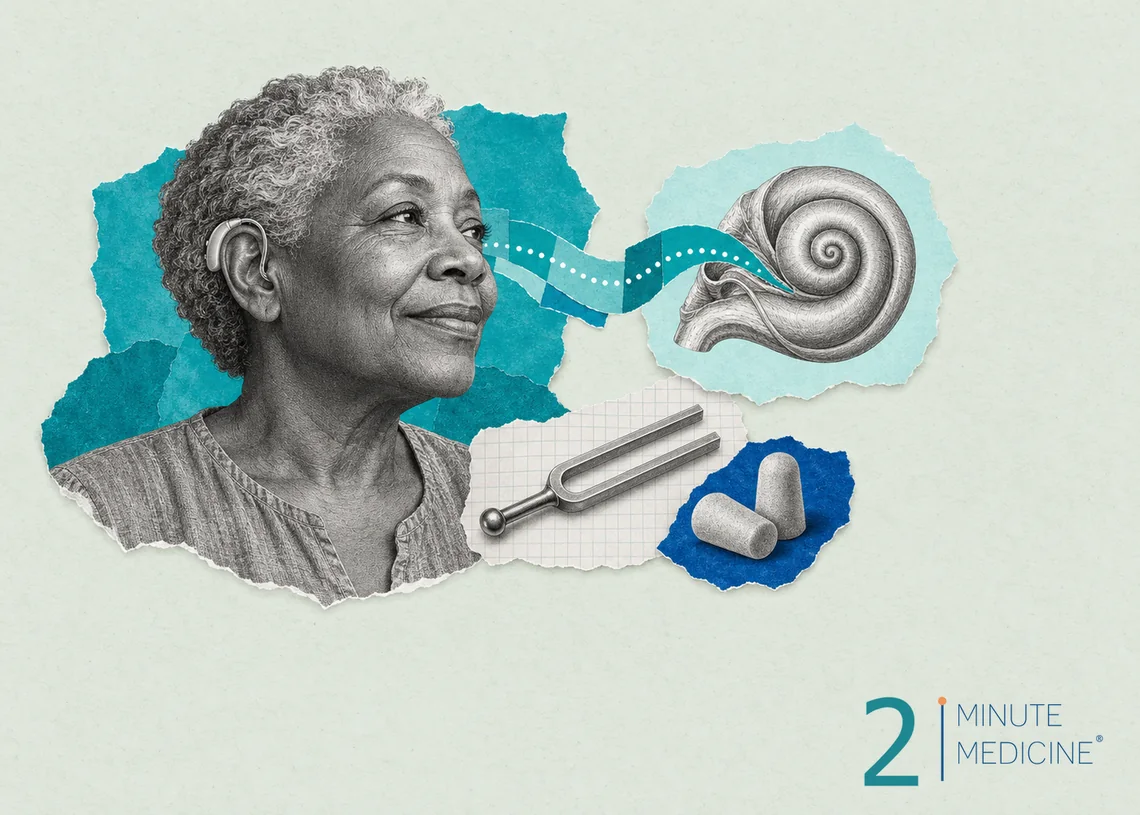
Hearing loss in adults is common and often comes on so slowly that family members notice it first. About 1 in 3 people aged 65 to 74 has some hearing loss, and nearly half of those over 75 do. Some causes, such as earwax, are easy to fix. Others are permanent but can be helped a great deal with hearing aids and other devices. A sudden drop in hearing is different and needs a doctor within a day or two.
Key points
- Aging and loud noise are the most common causes of hearing loss in adults.
- Sudden hearing loss, especially in one ear, is urgent. Treatment works best when started within days.
- A hearing test by an audiologist shows the type and degree of hearing loss.
- Over-the-counter hearing aids are sold without a prescription to adults with mild to moderate hearing loss.
- Untreated hearing loss is linked to isolation, depression and memory problems.
How hearing works
Sound travels down the ear canal and makes the eardrum vibrate. Three tiny bones in the middle ear pass the vibrations to the cochlea, a snail-shaped organ in the inner ear filled with fluid and thousands of tiny hair cells. The hair cells turn vibrations into nerve signals. The hearing nerve (eighth cranial nerve), which also carries balance signals, sends them to the brain.
Types and causes of hearing loss in adults
Conductive hearing loss
Something blocks sound on its way through the outer or middle ear. This type can often be treated. Causes include:
- Earwax packed in the ear canal
- Fluid or infection behind the eardrum
- A hole in the eardrum, from infection, a loud blast or a cotton swab pushed too far
- Otosclerosis, where one of the middle-ear bones becomes stuck
- Swimmer’s ear, growths in the ear canal or a cholesteatoma (a skin cyst in the middle ear)
Sensorineural hearing loss
The hair cells in the inner ear or the hearing nerve are damaged. This is the most common type, and it is usually permanent. Causes include:
- Aging (presbycusis). Hair cells wear out over the years, high-pitched sounds go first, and both ears are affected about equally.
- Loud noise. Power tools, firearms, loud music, concerts and noisy jobs can damage hair cells, either over years or from one very loud blast.
- Genes and family history
- Some medicines, such as certain antibiotics given by vein and some cancer drugs
- Ménière’s disease, which causes spells of dizziness, ringing and fluctuating hearing
- Acoustic neuroma, a slow-growing, noncancerous tumor on the hearing nerve, which affects one ear
- Diabetes, high blood pressure and smoking, which can harm blood flow to the inner ear
Some people have both types, called mixed hearing loss.
Signs of hearing loss
- Speech sounds mumbled, especially women’s and children’s voices
- Trouble following conversation in restaurants or groups
- Often asking people to repeat themselves
- Turning the TV or phone volume up higher than others like
- Ringing, buzzing or hissing in the ears (tinnitus)
- Feeling tired after social events, or avoiding them
How it’s diagnosed
Your doctor will look in your ears with a lighted scope to check for wax, fluid or a damaged eardrum. A tuning fork test can hint at whether the loss is conductive or sensorineural. An audiologist (hearing specialist) then does a full hearing test in a quiet booth. You’ll listen to tones and words through headphones, and the results are shown on a chart called an audiogram. A test of how the eardrum moves may also be done. If hearing is worse in one ear, an MRI may be ordered to check the hearing nerve.
Treating hearing loss in adults
Treating the cause
- Earwax can be softened with drops and rinsed out, or removed by a clinician. Don’t use cotton swabs or ear candles.
- Ear infections and fluid are treated with medicine or, if fluid lasts, a small tube in the eardrum.
- Surgery can repair a hole in the eardrum, replace a stuck middle-ear bone in otosclerosis, or remove a cholesteatoma.
- Sudden sensorineural hearing loss is usually treated with steroid pills or steroid shots behind the eardrum.
Hearing aids
Hearing aids are the main treatment for permanent hearing loss. Most sit behind the ear or inside the ear canal and can connect to phones and TVs.
- Over-the-counter (OTC) hearing aids can be bought in stores and online, without a hearing test or prescription, by adults 18 and older with mild to moderate hearing loss.
- Prescription hearing aids, fitted by an audiologist or hearing aid specialist, suit more severe loss, children, and anyone who wants professional fitting.
It takes a few weeks to get used to hearing aids, so wear them every day. Original Medicare doesn’t pay for hearing aids, but some Medicare Advantage plans, other insurance and state programs help.
Other devices
- Cochlear implants for severe to profound hearing loss when hearing aids don’t help enough. A surgeon places a device that sends signals straight to the hearing nerve.
- Assistive tools, such as captioned phones, TV captions, amplified phones, flashing or vibrating alarms, and hearing loops in theaters and places of worship
Living with hearing loss
- Tell people you have hearing loss and what helps, such as facing you and speaking clearly without shouting.
- Turn on captions on your TV and phone.
- Keep up with friends and activities. Staying social protects your mood and memory.
Protecting your hearing
- Wear earplugs or earmuffs around loud machines, at concerts and when shooting.
- Keep earbuds and headphones at no more than about 60% of the volume, and take breaks.
- Ask your doctor if any of your medicines can affect hearing.
- Don’t smoke, and keep diabetes and blood pressure in check.
- Get a hearing test if you notice changes, and regularly after age 50 or 60.
When to see a doctor
- Gradual hearing loss, or family members say you don’t hear well
- Hearing loss in only one ear
- Ringing in one ear, or ringing that doesn’t go away
- Ear pain, drainage or a feeling of fullness that lasts
- Dizziness or spells of spinning
Get care within 24 to 48 hours for sudden hearing loss in either ear. Call 911 if sudden hearing loss comes with face drooping, weakness, trouble speaking, severe dizziness or a severe headache, which can be signs of a stroke.
Common questions about hearing loss in adults
What does it mean when you can’t hear out of one ear?
Often it is earwax, fluid after a cold, or an ear infection, which are all treatable. But sudden hearing loss in one ear can also come from damage to the inner ear, and it needs care within a day or two. Hearing that slowly fades in one ear should be checked, sometimes with an MRI.
Why does one ear feel full or pressured?
A blocked eustachian tube from a cold, allergies or flying is the most common cause. Earwax, fluid behind the eardrum and Ménière’s disease can also cause fullness. Sudden inner-ear hearing loss can feel like a plugged ear, so see a doctor promptly if the fullness comes with a sudden drop in hearing.
Can hearing loss be reversed?
Some can. Hearing loss from earwax, infection, fluid or a torn eardrum often improves with treatment. Sudden sensorineural loss may partly recover, especially with quick steroid treatment. Loss from aging or years of noise is permanent, because damaged hair cells don’t grow back, but hearing aids and implants work well.
Does hearing loss raise the risk of dementia?
Studies link untreated hearing loss with faster memory decline and a higher risk of dementia. The brain works harder to make sense of sound, and people with hearing loss often become isolated. Treating it may help. In one large study of older adults at higher risk, hearing aids slowed thinking decline.
Questions to ask your doctor
- What type of hearing loss do I have, and what caused it?
- Will it get worse?
- Would OTC hearing aids work for me, or do I need prescription ones?
- Could any of my medicines be affecting my hearing?
- Am I a candidate for a cochlear implant?
Learn more
- Age-related hearing loss (National Institute on Deafness and Other Communication Disorders)
- OTC hearing aids: what you should know (FDA)
This guide is general information and doesn’t replace advice from your own doctor. Last updated October 2026.






 Get the app