• About
  • Masthead
  • License Content
  • Advertise
  • Press Releases
  • Newsroom
  • RSS/Email List
  • 2MM Podcast
  • Write for us
  • Contact Us
2 Minute Medicine
No Result
View All Result

No products in the cart.

Sign in
SUBSCRIBE
  • About
  • Specialties
    • All Specialties, All Recent Reports
    • Cardiology
    • Chronic Disease
    • Dermatology
    • Emergency
    • Endocrinology
    • Gastroenterology
    • Imaging and Intervention
    • Infectious Disease
    • Nephrology
    • Neurology
    • Obstetrics
    • Oncology
    • Ophthalmology
    • Pediatrics
    • Pharma
    • Preclinical
    • Psychiatry
    • Public Health
    • Pulmonology
    • Rheumatology
    • Surgery
    • Rewinds
    • The Scan
  • EvidencePulse™
  • HypeCheck™
  • AI News
  • Classics™
    • 2MM+ Online Access
    • Paperback and Ebook
  • Tools
    • NPI Registry Lookup
    • RVU Search
    • Physician Pay by Specialty
    • ICD-10 Code Lookup
    • FDA Drug Approvals
    • Drug Safety for Breastfeeding/Pregnancy
    • Clinical Guidelines
    • Medical Calculators
    • ECG Reference
      • QTc Calculator
      • Sgarbossa Criteria
      • ECG Axis Calculator
      • AV Block Helper
  • Rankings
    • Medical School Rankings
    • Residency Rankings
  • Partners
    • License Content
    • Advertise with Us
2 Minute Medicine
  • About
  • Specialties
    • All Specialties, All Recent Reports
    • Cardiology
    • Chronic Disease
    • Dermatology
    • Emergency
    • Endocrinology
    • Gastroenterology
    • Imaging and Intervention
    • Infectious Disease
    • Nephrology
    • Neurology
    • Obstetrics
    • Oncology
    • Ophthalmology
    • Pediatrics
    • Pharma
    • Preclinical
    • Psychiatry
    • Public Health
    • Pulmonology
    • Rheumatology
    • Surgery
    • Rewinds
    • The Scan
  • EvidencePulse™
  • HypeCheck™
  • AI News
  • Classics™
    • 2MM+ Online Access
    • Paperback and Ebook
  • Tools
    • NPI Registry Lookup
    • RVU Search
    • Physician Pay by Specialty
    • ICD-10 Code Lookup
    • FDA Drug Approvals
    • Drug Safety for Breastfeeding/Pregnancy
    • Clinical Guidelines
    • Medical Calculators
    • ECG Reference
      • QTc Calculator
      • Sgarbossa Criteria
      • ECG Axis Calculator
      • AV Block Helper
  • Rankings
    • Medical School Rankings
    • Residency Rankings
  • Partners
    • License Content
    • Advertise with Us
Sign in
SUBSCRIBE
2 Minute Medicine
Sign in
Subscribe
2 Minute MedicineFree on Google PlayGet
✦EvidencePulse™by 2 Minute Medicine3 reportsYou askedtop stroke trials 2026Synthesizing medical evidence...Top 2026 stroke trial results:OCEANIC — ischemic stroke: 6.2% vs 8.4%OPTION* — mRS 0–1: 43.6% vs 34.2%ORIENTAL* — mRS 0–2: 58.6% vs 46.6%*Higher sICH in intervention armsParticipants randomizedNOCEANIC12,327OPTION570ORIENTAL564Ask about guidelines or landmark trials...↑Try EvidencePulse™Ask the evidence. Get the signal.Try it now →
Home Health A to Z

Patient Basics: Kidney Failure
by2 Minute Medicine
October 30, 2026
in Health A to Z
Reading Time: 6 mins read
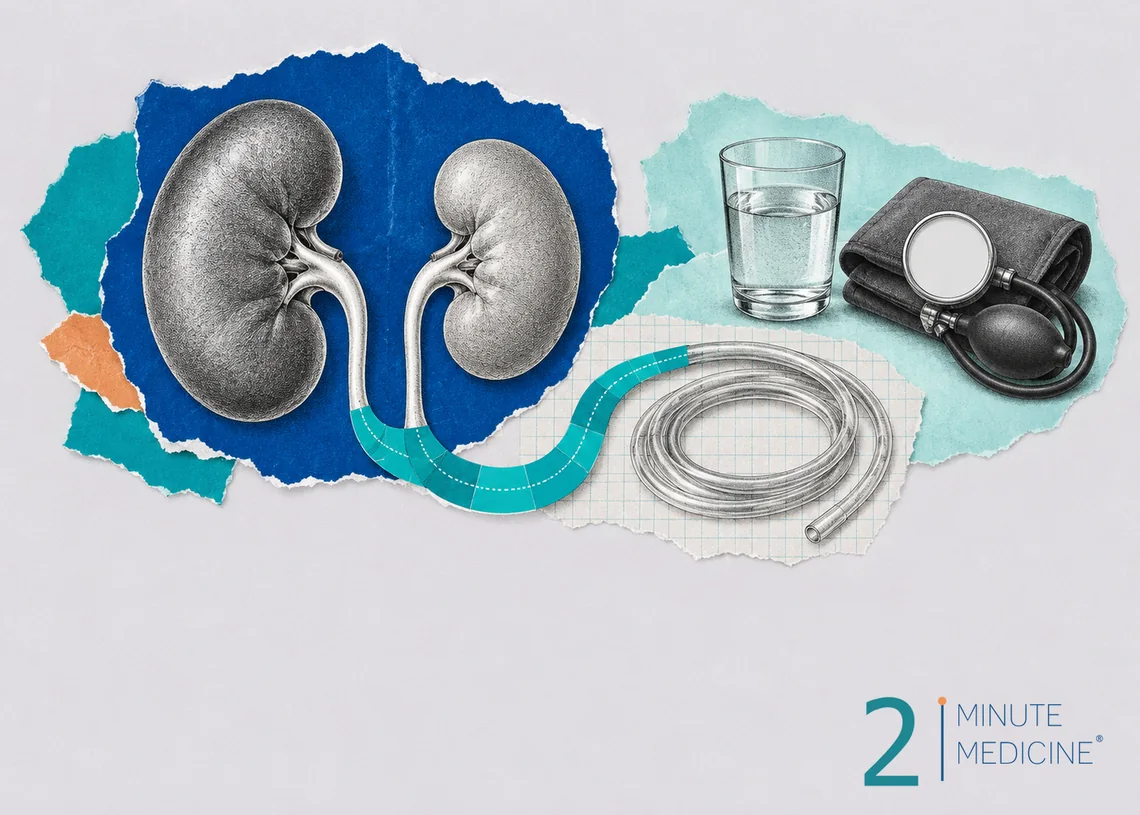
Kidney failure collage: a pair of engraved kidneys, coiled dialysis tubing, a glass of water and a blood pressure cuff
Share on FacebookShare on TwitterShare on LinkedIn

Kidney failure (renal failure) means the kidneys can no longer filter enough waste and extra fluid from the blood. It can come on suddenly over hours or days, or slowly over many years. Sudden kidney failure can often be reversed. When long-term kidney disease reaches failure, a person needs dialysis or a kidney transplant to stay alive.

Key points

  • Diabetes and high blood pressure cause most long-term kidney failure.
  • Early kidney disease usually has no symptoms. Blood and urine tests can find it years before failure.
  • A blood test result called eGFR shows how well the kidneys filter. Below 15 means kidney failure.
  • Medicines and healthy habits can slow kidney damage, especially when started early.
  • Treatments for kidney failure are hemodialysis, peritoneal dialysis, a kidney transplant, or care focused on comfort.

What healthy kidneys do

You have two kidneys, each about the size of a fist, just below the ribs on either side of the spine. They clean the blood and make urine. They also keep the right balance of salt, potassium and acid in the body, help control blood pressure, keep bones strong, and make a hormone that tells the body to make red blood cells.

Types of kidney failure

  • Acute kidney injury (acute renal failure). The kidneys stop working well over hours or days. It often happens in people who are already in the hospital with another illness. With treatment, function often comes back, at least in part.
  • Chronic kidney disease (CKD). Damage builds slowly over years. Doctors sort it into five stages based on eGFR. Stage 5, an eGFR below 15, is kidney failure, also called end-stage kidney disease.

Doctors may use the terms “renal impairment” or “decreased kidney function” for kidneys that work less well than normal but have not failed.

What causes kidney failure

Sudden kidney failure

  • Too little blood flow to the kidneys, from severe dehydration, blood loss, a serious infection (sepsis), or heart failure
  • Direct harm from some medicines, such as high doses of ibuprofen-type pain relievers (NSAIDs) or certain antibiotics
  • Breakdown of injured muscle after a crush injury or extreme exercise
  • A blockage to urine flow, such as an enlarged prostate, kidney stones or a tumor

Long-term kidney failure

  • Diabetes, the most common cause in the US
  • High blood pressure
  • Inflammation of the kidney’s filters (glomerulonephritis), including from lupus
  • Polycystic kidney disease, an inherited condition
  • Repeated kidney infections or long-term blockage

Kidney failure symptoms

Most people feel fine until the kidneys have lost most of their function. As waste builds up, signs can include:

  • Swelling in the legs, ankles, feet or around the eyes
  • Making much less urine, or foamy urine
  • Tiredness, weakness and trouble concentrating
  • Poor appetite, nausea, vomiting or a metallic taste
  • Itchy skin and muscle cramps
  • Shortness of breath
  • Trouble sleeping

The buildup of urea and other wastes in the blood is called uremia. Kidney failure can also cause anemia (too few red blood cells), too much potassium, and too much acid in the blood.

Tests for kidney function

  • Creatinine and eGFR. Creatinine is a waste product in the blood. Labs use it, along with age and sex, to work out the eGFR. An eGFR of 90 or more is normal. An eGFR below 60 for three months or longer means chronic kidney disease.
  • Urine albumin. Protein in the urine is an early sign of kidney damage.
  • Other blood tests check potassium, acid levels and blood counts.
  • Ultrasound shows the size of the kidneys and any blockage.
  • Kidney biopsy. Sometimes a tiny piece of kidney is removed with a needle to find the cause.

Kidney failure treatment

Slowing kidney disease

  • Keep blood pressure in your target range, often with an ACE inhibitor or ARB.
  • Keep blood sugar under control if you have diabetes.
  • Take an SGLT2 inhibitor, such as dapagliflozin or empagliflozin, if your doctor recommends one. For people with type 2 diabetes, finerenone or semaglutide may also help protect the kidneys.
  • Avoid NSAIDs such as ibuprofen and naproxen unless your doctor says they are OK.
  • Work with a dietitian on salt, protein, potassium and phosphorus.
  • Don’t smoke.

Sudden kidney failure is treated by fixing the cause, such as giving fluids, stopping a harmful medicine or relieving a blockage. Some people need dialysis for a short time while the kidneys recover.

RELATED REPORTS

Hemodiafiltration reduces mortality compared to hemodialysis in kidney failure with dose-dependent benefits

Impact of dialysis on survival and home time among older adults with chronic kidney failure

Dialysis

  • Hemodialysis. A machine filters your blood through a special filter, usually through a connection made in the arm (a fistula). Most people go to a center three times a week for about four hours. Home hemodialysis is often done in shorter sessions, five or six days a week, which is gentler on the body.
  • Peritoneal dialysis. A cleansing fluid flows into the belly through a soft tube, soaks up waste through the belly lining, and is drained out. It is done at home every day, often overnight with a machine.

Kidney transplant

A healthy kidney from a living or deceased donor takes over the work of the failed kidneys. For many people, a transplant offers a longer life and more freedom than dialysis. You will need to take medicines to stop your body rejecting the new kidney for as long as it works.

Supportive care

Some people, often older adults with other serious illnesses, choose not to start dialysis. Their care team treats symptoms such as swelling, itching and nausea and focuses on comfort and quality of life.

When to see a doctor

Ask for a kidney check (eGFR and urine albumin) if you have diabetes, high blood pressure, heart disease or a family history of kidney failure. Get emergency care if you make little or no urine, have trouble breathing, become confused, or have chest pain or a pounding, irregular heartbeat.

Common questions about kidney failure

What is a normal urine output per day?

Most adults make about 1 to 2 liters (4 to 8 cups) of urine a day, depending on how much they drink. Making less than about 400 milliliters (under 2 cups) a day is a warning sign. Some people with kidney failure still pass normal amounts, so urine volume alone doesn’t show how well the kidneys work.

How does kidney failure affect the heart?

Kidney failure raises blood pressure, lets fluid build up, and can push potassium high enough to cause dangerous heart rhythms. Over time, these strain the heart and harden the arteries. Heart disease is the most common cause of death in people with kidney disease, so heart care is part of kidney care.

Can kidney failure be reversed?

Sudden kidney failure often improves once the cause is treated, although the kidneys may not return fully to normal. Kidney damage from long-term disease can’t be undone. Treatment can slow it, sometimes for many years, and dialysis or a transplant takes over when the kidneys fail.

What happens if kidney failure isn’t treated?

Without dialysis or a transplant, waste and fluid keep building up and kidney failure becomes fatal. Near the end, people often sleep more, eat less, become confused and have more swelling or trouble breathing. Hospice and palliative care teams can keep a person comfortable during this time.

Questions to ask your doctor

  • What is my eGFR, and how fast is it changing?
  • What is causing my kidney disease?
  • Which of my medicines could harm my kidneys?
  • What should I eat and drink?
  • When should I start learning about dialysis and transplant?

Learn more

  • Kidney failure (National Institute of Diabetes and Digestive and Kidney Diseases)
  • Kidney failure (MedlinePlus, U.S. National Library of Medicine)

This guide is general information and doesn’t replace advice from your own doctor. Last updated October 2026.

Tags: kidney failure
Previous Post

Patient Basics: Nail Trauma

Next Post

Patient Basics: Optic Nerve Swelling (Papilledema)

RelatedReports

Chronic Disease

Hemodiafiltration reduces mortality compared to hemodialysis in kidney failure with dose-dependent benefits

December 12, 2024
Older adult health collage: a smiling older man in a cardigan beside a wooden chair, folded reading glasses and a cup of tea
Nephrology

Impact of dialysis on survival and home time among older adults with chronic kidney failure

August 25, 2024
#VisualAbstract: Pulsed Field or Conventional Thermal Ablation for Paroxysmal Atrial Fibrillation
StudyGraphics

#VisualAbstract: Effect of Hemodiafiltration or Hemodialysis on Mortality in Kidney Failure

October 6, 2023
#VisualAbstract: Budesonide may be effective for slowing renal function decline in patients with IgA nephropathy
StudyGraphics

#VisualAbstract: Budesonide may be effective for slowing renal function decline in patients with IgA nephropathy

October 3, 2023
Next Post
Collage of an older man in profile, a brain with one tiny deep artery pinched in a lacunar stroke, and a blood pressure cuff

Patient Basics: Lacunar Stroke

Latex allergy collage: a rubber tree dripping white sap into a cup, disposable gloves, a balloon, a rubber band and a kiwi

Patient Basics: Latex Allergy

Leg strain collage of an engraved hamstring at the back of the thigh, a foam roller, an elastic wrap and a running shoe

Patient Basics: Leg Strain

✦ EvidencePulse™ by 2 Minute Medicine 3 reports You asked top stroke trials 2026 Synthesizing medical evidence... Top 2026 stroke trial results: OCEANIC — ischemic stroke: 6.2% vs 8.4% OPTION* — mRS 0–1: 43.6% vs 34.2% ORIENTAL* — mRS 0–2: 58.6% vs 46.6% *Higher sICH in intervention arms Participants randomizedN OCEANIC 12,327 OPTION 570 ORIENTAL 564 Ask about guidelines or landmark trials... Try EvidencePulse™ Get the signal. Try it now → Physician-trained medical AI by 2 Minute Medicine

2MM+ All Access

Full details →
$4.99 /month

3-day free trial · cancel anytime

  • ✓100+ physician-written reports
  • ✓EvidencePulse™ + HypeCheck™
  • ✓Ad-free reading + newsletters
Start 3-day free trial

Then $4.99/month. Manage renewal in your account.

2 Minute Medicine® is an award winning, physician-run, expert medical media company. Our content is curated, written and edited by practicing health professionals who have clinical and scientific expertise in their field of reporting. Our editorial management team is comprised of highly-trained MD physicians. Join numerous brands, companies, and hospitals who trust our licensed content.

Recent Reports

  • Use of colchicine is not associated with reduced cardiovascular events among Chinese adults starting urate-lowering therapy
  • ARO-DIMER-PA can Significantly Lower LDL-C and Triglycerides in Patients with Mixed Hyperlipidemia
  • CCTA-guided PCI noninferior to IVUS-guided PCI for target-vessel failure
License Content
Terms of Use | Disclaimer
Cookie Policy

Get the app

Read 2 Minute Medicine on iPhone, iPad and Android.

Download on the App StoreGet it on Google Play
QR code for www.2minutemedicine.com/app
On a computer? Scan this with your phone’s camera.
2MM+ All Access Full details →

The medical literature, distilled daily.

Monthly plan selected: $4.99 /month.

$4.99/month

3-day free trial · cancel anytime

Start 3-day free trial

Then $4.99/month. Manage renewal in your account.

Yearly plan selected: $49.90 /year.

$49.90/year

2 months free

Start 3-day free trial

Then $49.90/year.

Membership benefits

  • ✓100+ new physician-written study summaries monthly, 12,000+ searchable
  • ✓AI EvidencePulse™ + HypeCheck™
  • ✓Ad-free reading + newsletters
  • ✓FDA drug approvals + clinical calculators

Already a member? Sign in

  • Get the app
  • About
  • Specialties
    • All Specialties, All Recent Reports
    • Cardiology
    • Chronic Disease
    • Dermatology
    • Emergency
    • Endocrinology
    • Gastroenterology
    • Imaging and Intervention
    • Infectious Disease
    • Nephrology
    • Neurology
    • Obstetrics
    • Oncology
    • Ophthalmology
    • Pediatrics
    • Pharma
    • Preclinical
    • Psychiatry
    • Public Health
    • Pulmonology
    • Rheumatology
    • Surgery
    • Rewinds
    • The Scan
  • EvidencePulse™
  • HypeCheck™
  • AI News
  • Classics™
    • 2MM+ Online Access
    • Paperback and Ebook
  • Tools
    • NPI Registry Lookup
    • RVU Search
    • Physician Pay by Specialty
    • ICD-10 Code Lookup
    • FDA Drug Approvals
    • Drug Safety for Breastfeeding/Pregnancy
    • Clinical Guidelines
    • Medical Calculators
    • ECG Reference
      • QTc Calculator
      • Sgarbossa Criteria
      • ECG Axis Calculator
      • AV Block Helper
  • Rankings
    • Medical School Rankings
    • Residency Rankings
  • Partners
    • License Content
    • Advertise with Us
No Result
View All Result

© 2026 2 Minute Medicine, Inc. - Physician-written medical news.