• About
  • Masthead
  • License Content
  • Advertise
  • Press Releases
  • Newsroom
  • RSS/Email List
  • 2MM Podcast
  • Write for us
  • Contact Us
2 Minute Medicine
No Result
View All Result

No products in the cart.

Sign in
SUBSCRIBE
  • About
  • Specialties
    • All Specialties, All Recent Reports
    • Cardiology
    • Chronic Disease
    • Dermatology
    • Emergency
    • Endocrinology
    • Gastroenterology
    • Imaging and Intervention
    • Infectious Disease
    • Nephrology
    • Neurology
    • Obstetrics
    • Oncology
    • Ophthalmology
    • Pediatrics
    • Pharma
    • Preclinical
    • Psychiatry
    • Public Health
    • Pulmonology
    • Rheumatology
    • Surgery
    • Rewinds
    • The Scan
  • EvidencePulse™
  • HypeCheck™
  • AI News
  • Classics™
    • 2MM+ Online Access
    • Paperback and Ebook
  • Tools
    • NPI Registry Lookup
    • RVU Search
    • Physician Pay by Specialty
    • ICD-10 Code Lookup
    • FDA Drug Approvals
    • Drug Safety for Breastfeeding/Pregnancy
    • Clinical Guidelines
    • Medical Calculators
    • ECG Reference
      • QTc Calculator
      • Sgarbossa Criteria
      • ECG Axis Calculator
      • AV Block Helper
  • Rankings
    • Medical School Rankings
    • Residency Rankings
  • Partners
    • License Content
    • Advertise with Us
2 Minute Medicine
  • About
  • Specialties
    • All Specialties, All Recent Reports
    • Cardiology
    • Chronic Disease
    • Dermatology
    • Emergency
    • Endocrinology
    • Gastroenterology
    • Imaging and Intervention
    • Infectious Disease
    • Nephrology
    • Neurology
    • Obstetrics
    • Oncology
    • Ophthalmology
    • Pediatrics
    • Pharma
    • Preclinical
    • Psychiatry
    • Public Health
    • Pulmonology
    • Rheumatology
    • Surgery
    • Rewinds
    • The Scan
  • EvidencePulse™
  • HypeCheck™
  • AI News
  • Classics™
    • 2MM+ Online Access
    • Paperback and Ebook
  • Tools
    • NPI Registry Lookup
    • RVU Search
    • Physician Pay by Specialty
    • ICD-10 Code Lookup
    • FDA Drug Approvals
    • Drug Safety for Breastfeeding/Pregnancy
    • Clinical Guidelines
    • Medical Calculators
    • ECG Reference
      • QTc Calculator
      • Sgarbossa Criteria
      • ECG Axis Calculator
      • AV Block Helper
  • Rankings
    • Medical School Rankings
    • Residency Rankings
  • Partners
    • License Content
    • Advertise with Us
Sign in
SUBSCRIBE
2 Minute Medicine
Sign in
Subscribe
2 Minute MedicineFree on Google PlayGet
✦EvidencePulse™by 2 Minute Medicine3 reportsYou askedtop stroke trials 2026Synthesizing medical evidence...Top 2026 stroke trial results:OCEANIC — ischemic stroke: 6.2% vs 8.4%OPTION* — mRS 0–1: 43.6% vs 34.2%ORIENTAL* — mRS 0–2: 58.6% vs 46.6%*Higher sICH in intervention armsParticipants randomizedNOCEANIC12,327OPTION570ORIENTAL564Ask about guidelines or landmark trials...↑Try EvidencePulse™Ask the evidence. Get the signal.Try it now →
Home Health A to Z

Patient Basics: Macular Degeneration
by2 Minute Medicine
October 30, 2026
in Health A to Z
Reading Time: 5 mins read
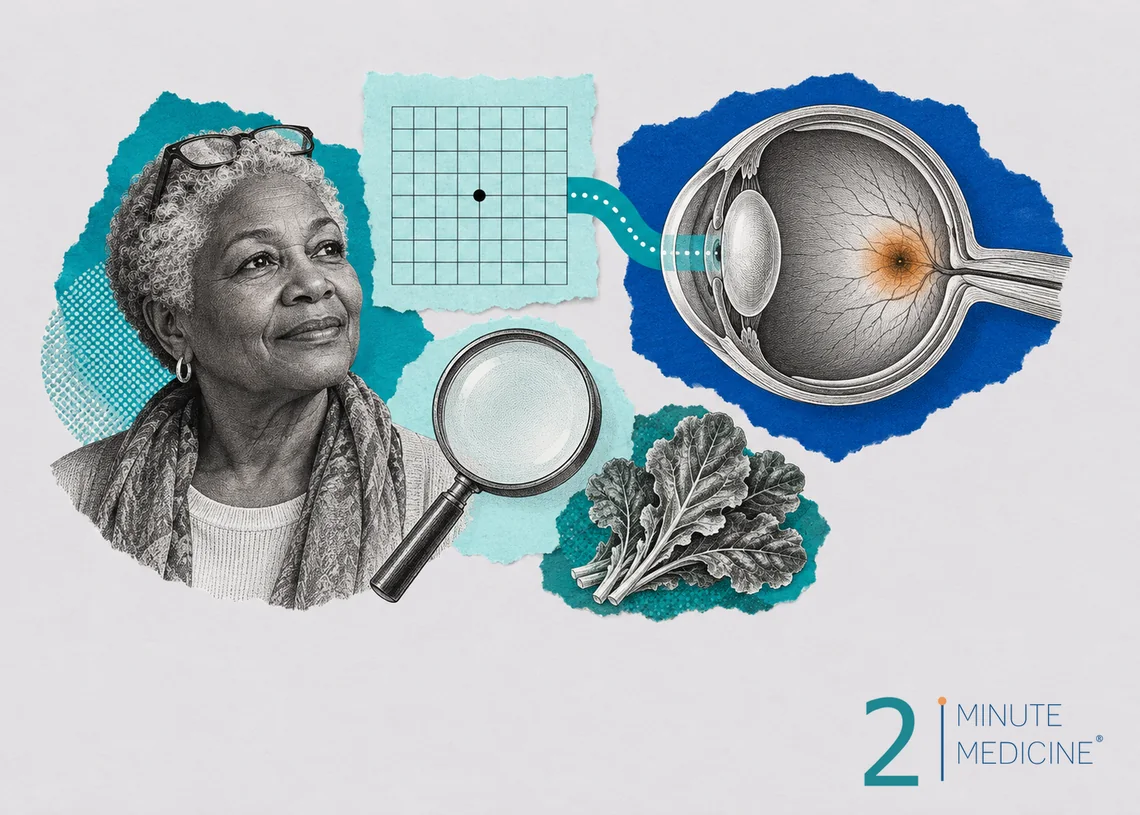
Macular degeneration collage: an older woman, an engraved eye, a grid with a center dot, a magnifying glass and leafy greens
Share on FacebookShare on TwitterShare on LinkedIn

Age-related macular degeneration (AMD) is damage to the macula, the small central part of the retina that you use to read, drive and recognize faces. It blurs or blanks out the center of your vision but leaves side vision alone, so it doesn’t cause total blindness. It is a leading cause of vision loss in people over 60. Treatment can’t undo the damage, but finding it early and treating the “wet” form quickly can save a lot of sight.

Key points

  • There are two forms. Dry AMD is common and slow. Wet AMD is less common but can take vision quickly.
  • Straight lines that look wavy, or a new blurry or dark spot in the center of your vision, need an eye exam within a day or two.
  • Wet AMD is treated with injections into the eye. There are no pills or eye drops that treat it.
  • A special mix of vitamins and minerals (the AREDS2 formula) can slow intermediate dry AMD from getting worse.
  • Not smoking is the most important thing you can do to protect your eyes.

Who gets macular degeneration

  • Age. It is rare before 50 and becomes much more common after 60.
  • Smoking. Smokers are 2 to 4 times as likely to get AMD.
  • Family history. Certain genes raise the risk.
  • Race. It is more common in white people than in Black or Hispanic people.
  • Heart and blood vessel risks, such as high blood pressure, high cholesterol and obesity.

Dry and wet macular degeneration

Dry AMD makes up most cases. Yellow deposits called drusen build up under the retina, and the macula slowly thins. It moves through early, intermediate and late stages, often over many years. The late stage, called geographic atrophy, leaves patches of the macula that no longer work.

Wet AMD happens when weak new blood vessels grow under the macula and leak fluid or blood. It can develop from dry AMD at any stage. Vision can get worse over days or weeks, so it needs prompt treatment.

Symptoms and how someone with AMD sees

  • Blurry or fuzzy central vision
  • Straight lines, such as door frames or tiles, that look wavy or bent
  • A gray, dark or empty spot in the center of what you look at
  • Needing brighter light to read, and trouble adjusting to dim rooms
  • Faces that are hard to make out, and colors that look less bright

A person with advanced AMD may see the edges of a room clearly but not the face of the person in front of them. Early AMD often causes no symptoms, which is why regular eye exams matter after age 50. Some people with vision loss start seeing shapes or patterns that aren’t there (Charles Bonnet syndrome). This comes from the brain filling in missing vision, not from a mental illness.

How it’s diagnosed

  • Dilated eye exam. Drops widen your pupils so the eye doctor can see drusen and other changes.
  • Optical coherence tomography (OCT). A quick, painless scan that shows the layers of the retina and any fluid under it.
  • Angiography. A dye injected in the arm, or a special OCT scan, shows leaking blood vessels.
  • Amsler grid. A square of straight lines with a dot in the middle. Looking at it with one eye at a time can reveal wavy or missing areas.

Macular degeneration treatment

Wet AMD

Medicines that block a growth signal called VEGF stop new blood vessels from leaking. They include aflibercept (Eylea), ranibizumab (Lucentis), faricimab (Vabysmo) and bevacizumab (Avastin), plus lower-cost copies called biosimilars. The doctor numbs the eye and injects the medicine with a very fine needle. Most people feel pressure rather than pain. Injections start monthly, and many people can stretch to every 2 to 4 months once the eye is dry. Treatment usually continues long term.

Most people keep the vision they had when treatment started, and about a third gain some back. Stopping injections too soon lets leaking return.

RELATED REPORTS

No difference between pharmacologic treatments in age-related macular degeneration risk reduction

Clearside’s CLS-AX shows promise in treatment of wet age-related macular degeneration

Dry AMD

  • AREDS2 vitamins. For intermediate AMD, or late AMD in one eye, this formula of vitamins C and E, zinc, copper, lutein and zeaxanthin lowers the chance of reaching late AMD by about a quarter. It does not help early AMD or prevent AMD. The original formula had beta-carotene, which raises lung cancer risk in smokers and former smokers.
  • Injections for geographic atrophy. Pegcetacoplan (Syfovre) and avacincaptad pegol (Izervay) are given into the eye every 1 to 2 months. They slow the growth of damaged areas but don’t restore vision, and they can raise the chance of wet AMD.
  • Light therapy. In 2024 the FDA authorized an in-office device that shines low-level red and near-infrared light into the eye (photobiomodulation) for some people with dry AMD. The benefit in studies was modest. Home red-light gadgets are not the same and are not proven.

No eye drops, pills or surgery can repair dry AMD. Be wary of clinics that promise a cure, including unapproved stem cell injections, which have blinded some people.

Low vision help

Magnifiers, bright task lighting, large-print books, high-contrast settings and talking apps on phones help people stay independent. A low vision specialist can show you which tools fit your needs.

Lowering your risk

  • Don’t smoke. Quitting at any age helps.
  • Eat leafy greens, colorful vegetables and fish.
  • Stay active and keep blood pressure and cholesterol in check.
  • Wear sunglasses outdoors.
  • Have a dilated eye exam as often as your eye doctor advises after age 50.

When to see an eye doctor

Call an eye doctor right away, within a day or two, if you notice new wavy lines, a new dark or blurry spot, or a sudden drop in central vision. If you already have AMD, check each eye with an Amsler grid at home as your doctor suggests.

Common questions about macular degeneration

Is there a pill for wet AMD?

No. Wet AMD is treated with injections into the eye that stop leaking blood vessels. The AREDS2 vitamin pills can lower the chance of dry AMD turning into late AMD in some people, but they don’t treat wet AMD once it has started. Researchers are testing longer-lasting treatments, including gene therapy.

Can you go blind from macular degeneration?

Not completely. AMD affects central vision, so side vision stays. Advanced AMD can still make it impossible to read, drive or see faces, and many people with it meet the definition of legal blindness. Prompt treatment of wet AMD has made severe vision loss much less common.

Does cataract surgery make macular degeneration worse?

Large studies have not shown that cataract surgery speeds up AMD. Removing a cloudy lens often helps people see better, even with AMD. Your eye doctor may check the macula before and after surgery, and set expectations based on how much of your vision loss comes from each problem.

Questions to ask your doctor

  • Do I have dry or wet AMD, and what stage?
  • Should I take AREDS2 vitamins?
  • How often do I need exams or injections?
  • What changes in my vision should make me call right away?
  • Can you refer me to a low vision specialist?

Learn more

  • Age-related macular degeneration (National Eye Institute)
  • Macular degeneration (MedlinePlus, U.S. National Library of Medicine)

This guide is general information and doesn’t replace advice from your own doctor. Last updated October 2026.

Tags: macular degeneration
Previous Post

Patient Basics: Meniere’s Disease

Next Post

Patient Basics: Lung Cancer Overview

RelatedReports

Eye disease collage: a close-up of one eye, round wire-rimmed glasses, an ophthalmoscope and a cross-section of the eyeball
Chronic Disease

No difference between pharmacologic treatments in age-related macular degeneration risk reduction

May 8, 2025
Pharma

Clearside’s CLS-AX shows promise in treatment of wet age-related macular degeneration

October 28, 2024
Blindness and visual impairment decreasing worldwide
Chronic Disease

Stereotactic radiotherapy reduces anti-VEGF injection requirements in neovascular age-related macular degeneration

August 8, 2024
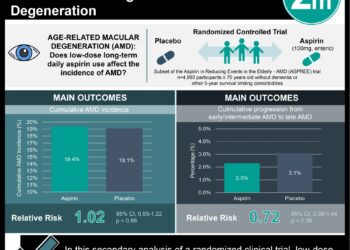
#VisualAbstract: Low-Dose Daily Aspirin does not Affect the Progression of Age-Related Macular Degeneration
StudyGraphics

#VisualAbstract: Low-Dose Daily Aspirin does not Affect the Progression of Age-Related Macular Degeneration

June 14, 2024
Next Post
Lung cancer collage: an older man beside an engraved pair of lungs, a snapped cigarette and a small paper house

Patient Basics: Lung Cancer Overview

Lyme disease collage: a blacklegged tick, fine-tipped tweezers, a blade of grass, a hiking boot and an expanding ring motif

Patient Basics: Lyme Disease

Collage of engraved shin bones with a thin leg fracture line, a pair of crutches, a walking boot and a blank X-ray card

Patient Basics: Leg Fracture

✦ EvidencePulse™ by 2 Minute Medicine 3 reports You asked top stroke trials 2026 Synthesizing medical evidence... Top 2026 stroke trial results: OCEANIC — ischemic stroke: 6.2% vs 8.4% OPTION* — mRS 0–1: 43.6% vs 34.2% ORIENTAL* — mRS 0–2: 58.6% vs 46.6% *Higher sICH in intervention arms Participants randomizedN OCEANIC 12,327 OPTION 570 ORIENTAL 564 Ask about guidelines or landmark trials... Try EvidencePulse™ Get the signal. Try it now → Physician-trained medical AI by 2 Minute Medicine

2MM+ All Access

Full details →
$4.99 /month

3-day free trial · cancel anytime

  • ✓100+ physician-written reports
  • ✓EvidencePulse™ + HypeCheck™
  • ✓Ad-free reading + newsletters
Start 3-day free trial

Then $4.99/month. Manage renewal in your account.

2 Minute Medicine® is an award winning, physician-run, expert medical media company. Our content is curated, written and edited by practicing health professionals who have clinical and scientific expertise in their field of reporting. Our editorial management team is comprised of highly-trained MD physicians. Join numerous brands, companies, and hospitals who trust our licensed content.

Recent Reports

  • CDC reports 5,182 confirmed measles cases in the United States in 2026
  • In selected patients with anterior-circulation large-vessel stroke 24-72 hours after onset, thrombectomy improved 90-day function but increased hemorrhage and death
  • Mavacamten reduced left ventricular outflow tract obstruction more than placebo in adolescents with symptomatic obstructive hypertrophic cardiomyopathy
License Content
Terms of Use | Disclaimer
Cookie Policy

Get the app

Read 2 Minute Medicine on iPhone, iPad and Android.

Download on the App StoreGet it on Google Play
QR code for www.2minutemedicine.com/app
On a computer? Scan this with your phone’s camera.
2MM+ All Access Full details →

The medical literature, distilled daily.

Monthly plan selected: $4.99 /month.

$4.99/month

3-day free trial · cancel anytime

Start 3-day free trial

Then $4.99/month. Manage renewal in your account.

Yearly plan selected: $49.90 /year.

$49.90/year

2 months free

Start 3-day free trial

Then $49.90/year.

Membership benefits

  • ✓100+ physician-written reports
  • ✓AI EvidencePulse™ + HypeCheck™
  • ✓Ad-free reading + newsletters
  • ✓FDA drug approvals + clinical calculators

Already a member? Sign in

  • Get the app
  • About
  • Specialties
    • All Specialties, All Recent Reports
    • Cardiology
    • Chronic Disease
    • Dermatology
    • Emergency
    • Endocrinology
    • Gastroenterology
    • Imaging and Intervention
    • Infectious Disease
    • Nephrology
    • Neurology
    • Obstetrics
    • Oncology
    • Ophthalmology
    • Pediatrics
    • Pharma
    • Preclinical
    • Psychiatry
    • Public Health
    • Pulmonology
    • Rheumatology
    • Surgery
    • Rewinds
    • The Scan
  • EvidencePulse™
  • HypeCheck™
  • AI News
  • Classics™
    • 2MM+ Online Access
    • Paperback and Ebook
  • Tools
    • NPI Registry Lookup
    • RVU Search
    • Physician Pay by Specialty
    • ICD-10 Code Lookup
    • FDA Drug Approvals
    • Drug Safety for Breastfeeding/Pregnancy
    • Clinical Guidelines
    • Medical Calculators
    • ECG Reference
      • QTc Calculator
      • Sgarbossa Criteria
      • ECG Axis Calculator
      • AV Block Helper
  • Rankings
    • Medical School Rankings
    • Residency Rankings
  • Partners
    • License Content
    • Advertise with Us
No Result
View All Result

© 2026 2 Minute Medicine, Inc. - Physician-written medical news.