

Patient Basics: Leg Fracture
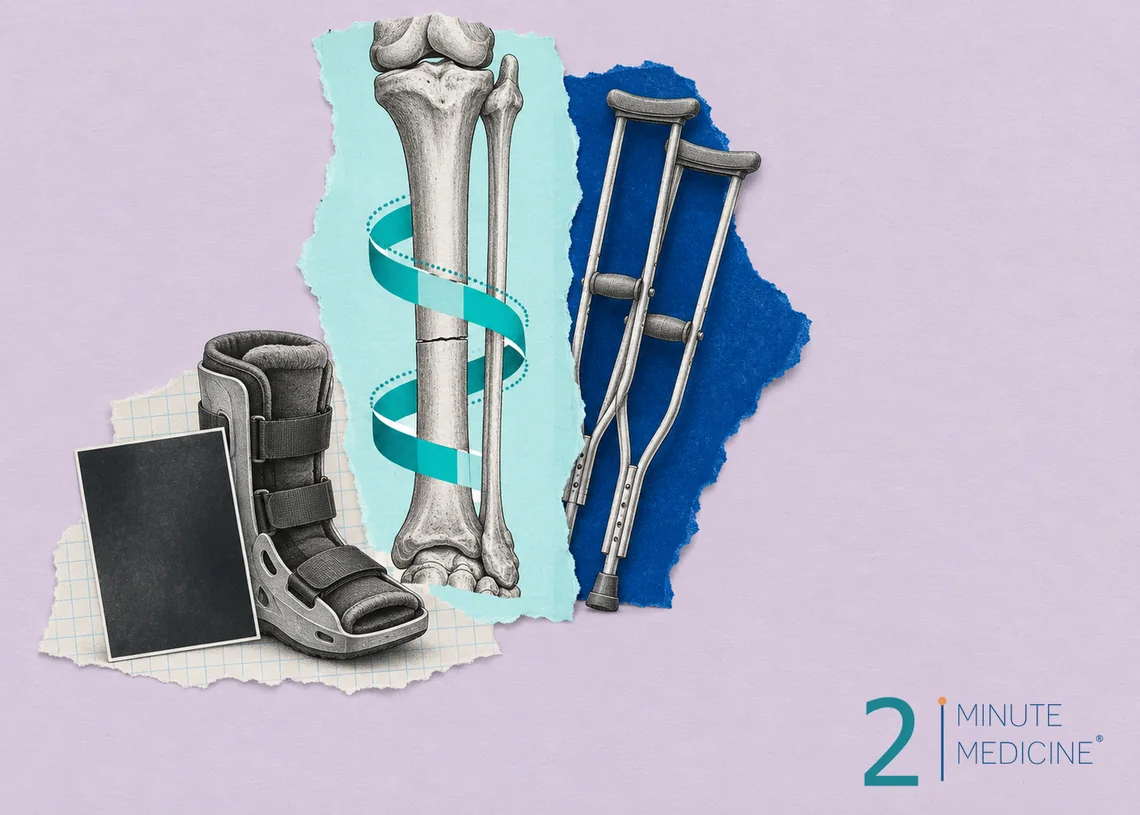
A leg fracture (broken leg) is a break in one of the long bones of the leg: the thighbone (femur), the shinbone (tibia) or the thin bone beside it (fibula). Breaks range from small cracks that heal in a boot to serious injuries that need surgery. A broken thighbone or a bone poking through the skin is an emergency, so call 911.
Key points
- Most leg fractures come from falls, car crashes and sports injuries. Repeated stress, such as long-distance running, can cause small cracks.
- Signs include sharp pain, swelling, a leg that looks bent or shortened, and being unable to put weight on it.
- Don’t try to straighten a broken leg. Keep it still until help arrives.
- Treatment may be a cast or boot, or surgery with a rod, plate or screws.
- Pain that keeps getting worse in a cast or after surgery can mean dangerous pressure in the muscles. Get help right away.
What causes a leg fracture
- Falls, including falls from a ladder or on ice
- Crashes involving cars, motorcycles and bicycles
- Sports such as skiing, soccer and football, especially from twisting or a direct hit
- Overuse. Runners, dancers and military recruits can get stress fractures, tiny cracks from repeated pounding. These are common in the shinbone.
- Weak bones. Osteoporosis, and less often cancer that has spread to bone, can let a bone break after a minor fall or even without one.
In toddlers, a simple stumble can cause a twisting crack in the shinbone. Any child with a fracture that doesn’t fit the story of how it happened should be checked carefully.
Types of fractures
- Closed or open. In a closed fracture, the skin isn’t broken. In an open (compound) fracture, the bone breaks through the skin, which raises the risk of infection.
- Displaced or not. In a displaced fracture, the broken ends have moved out of line.
- Simple or comminuted. A comminuted fracture means the bone has broken into several pieces.
- Growth plate fracture. In children, a break near the end of a bone can affect how it grows.
Leg fracture symptoms
- Sudden, severe pain that gets worse when you move
- Swelling and bruising
- A leg that looks bent, twisted or shorter than the other
- Being unable to walk or bear weight
- Numbness or tingling in the foot
- A wound with bone showing
A stress fracture causes pain that builds slowly during activity and eases with rest. There’s often a tender spot on the bone.
First aid
- Call 911 for a suspected thighbone fracture, a bone through the skin, a leg that looks deformed, heavy bleeding, or a cold, pale or numb foot.
- Keep the person still and the leg in the position you found it.
- Press on any bleeding with a clean cloth, and cover an open wound loosely.
- Put a cold pack wrapped in a towel on the area.
- Don’t give food or drink, in case surgery is needed.
How it’s diagnosed
A doctor checks the leg, the skin, the pulses in the foot and how well you can feel and move your toes. X-rays show most fractures. A CT scan gives a more detailed view of breaks near the knee or ankle. Stress fractures often don’t show on early X-rays, so an MRI may be used.
Treatment
Without surgery
Many stable breaks, where the bone ends stay lined up, heal in a cast, splint, brace or walking boot. A doctor may first move the bones back into place (setting the bone) while you’re numbed or sedated. You’ll use crutches or a walker to keep weight off the leg for a while. A break in the fibula alone, away from the ankle, often heals in a boot, and many people can walk on it soon.
Surgery
Surgery is common for breaks of the thighbone and for many shinbone breaks. Options include:
- A metal rod placed down the hollow center of the bone. This is the usual repair for a broken thighbone, and it often lets you start walking within days.
- Plates and screws on the outside of the bone, often for breaks near a joint
- An external frame. Pins through the skin attach to bars outside the leg to hold the bone steady, often for a short time after a severe injury.
Open fractures need antibiotics, a tetanus shot if you’re not up to date, and surgery to clean the wound.
Medicines
You’ll get medicine for pain. Many people also take a blood thinner for a few weeks to prevent blood clots while they’re less active.
Possible complications
- Compartment syndrome. Swelling can build up pressure inside the muscles of the leg and cut off blood flow. It causes severe pain that keeps rising, tightness and numbness. It needs emergency surgery within hours.
- Blood clots in the leg veins, which can travel to the lungs
- Infection, especially after an open fracture or surgery
- Slow healing or poor alignment. Smoking, diabetes and poor nutrition slow bone healing.
- Stiff joints and later arthritis, especially after breaks into the knee or ankle
Recovery
Most broken leg bones take about 3 to 6 months to heal fully in adults, and less time in children. Your care team will tell you how much weight you can put on the leg and when. Physical therapy helps bring back strength, balance and movement. Return to sports or heavy work can take several months more.
While you heal:
- Raise your leg above heart level for the first few days to ease swelling.
- Keep your cast or splint dry, and don’t push objects inside it to scratch.
- Move your toes often.
- Don’t smoke. Eat enough protein, calcium and vitamin D.
Lowering your risk
- Wear seat belts, and helmets and protective gear for riding and sports.
- Build up running and training slowly.
- For older adults, remove tripping hazards at home, use good lighting and do balance exercises.
- Ask your doctor whether you need a bone density test.
When to call your doctor
- Pain that gets worse or isn’t eased by your medicine
- Numbness, tingling, or toes that are cold, pale, blue or hard to move
- A cast that feels too tight, cracks or gets wet
- Fever, or redness, pus or a bad smell from a wound
- Pain, swelling or warmth in your calf
Call 911 for chest pain, sudden shortness of breath or coughing up blood. These can be signs of a blood clot in the lungs.
Common questions about leg fractures
How do I know if my leg is broken or just bruised?
You can’t always tell without an X-ray. A break is more likely if you heard a snap, the leg looks bent or shorter, you can’t take four steps on it, or one spot on the bone is very tender. A calf or thigh muscle strain usually hurts over a wider area and lets you bear some weight.
What is a tibia fracture?
It’s a break in the shinbone, the larger of the two bones in the lower leg. It’s the most common break of a long bone, and the fibula beside it often breaks too. Many need surgery with a rod or plate, and healing usually takes 4 to 6 months.
Does it matter if it’s my right or left leg?
Not for healing, since both legs heal the same way. It matters for daily life, because you can’t safely drive with your right leg in a cast or boot. Even with a left leg injury, you may not be able to drive a car with a clutch. Ask your doctor when driving is safe.
Questions to ask your doctor
- Which bone is broken, and is it lined up?
- Do I need surgery, and what happens if I don’t have it?
- How much weight can I put on my leg, and when?
- Do I need a blood thinner?
- When can I drive, work and exercise again?
Learn more
- Broken leg (NHS)
- Leg injuries and disorders (MedlinePlus, U.S. National Library of Medicine)
This guide is general information and doesn’t replace advice from your own doctor. Last updated October 2026.






 Get the app