

Patient Basics: Muscle Strain (Pulled Muscle)
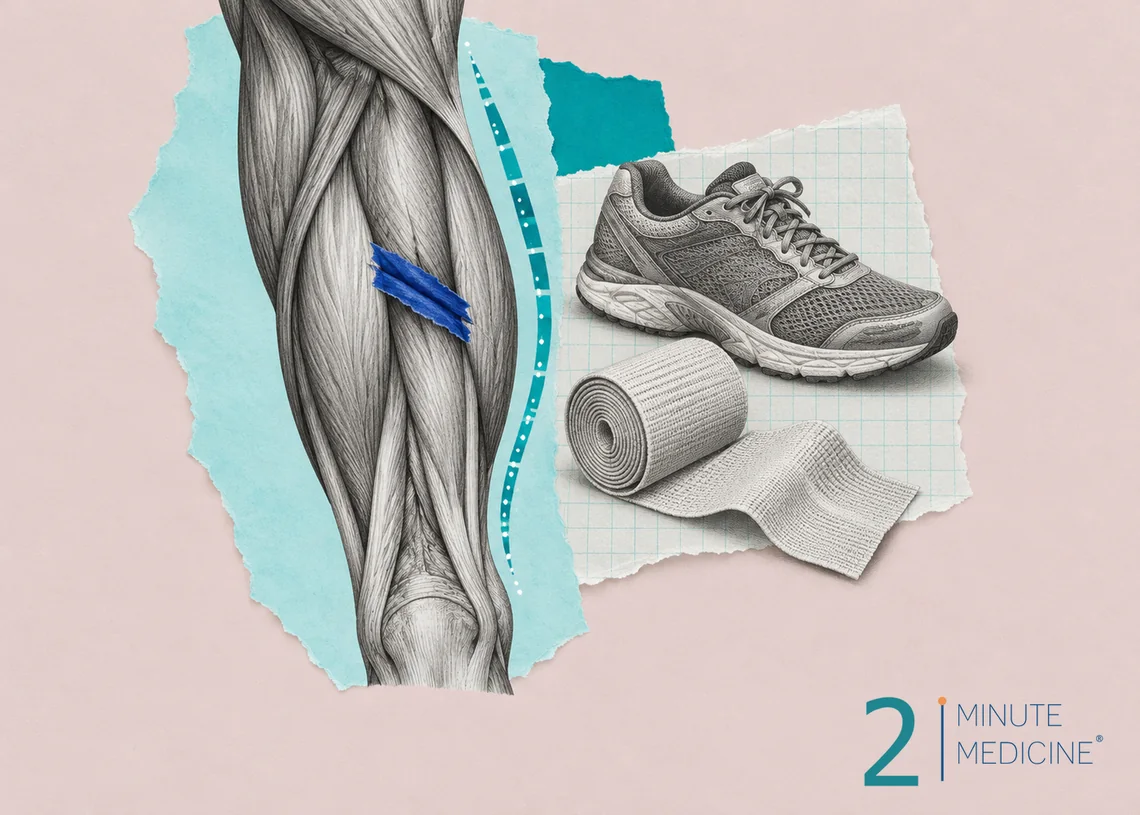
A muscle strain, often called a pulled muscle, is a stretch or tear in a muscle or in the tendon that connects it to bone. It usually happens during a sudden movement, such as sprinting, lifting or twisting. Most strains heal on their own within a few weeks with a short rest, then a gradual return to activity.
Key points
- Strains are most common in the back of the thigh (hamstring), the front of the thigh, the calf, the groin and the lower back.
- Pain starts suddenly, often with tenderness, swelling or bruising.
- For the first few days, protect the muscle and use ice and compression. Then start moving it gently.
- Mild strains heal in a week or two. Bigger tears can take months.
- A strain is different from a sprain, which is an injury to a ligament (the tissue that links bones at a joint).
What causes a muscle strain
Muscles are made of bundles of long fibers. A strain happens when fibers are stretched past their limit. This most often happens while a muscle is working and being stretched at the same moment, such as when a runner’s leg swings forward at top speed or when you lower something heavy.
The risk is higher if you:
- Skip a warm-up or keep going when you’re tired
- Have tight or weak muscles
- Have strained the same muscle before
- Increase your training too quickly
- Play sports with sprinting, jumping or quick turns, such as soccer, football, basketball, tennis or track
Back and neck strains often come from lifting, twisting or holding an awkward position for a long time.
Muscle strain symptoms
- Sudden pain, sometimes with a popping or snapping feeling
- Tenderness when you press on the muscle
- Swelling and bruising, which may appear a day or two later and spread downward
- Muscle spasm or cramping
- Weakness, and pain when you use or stretch the muscle
Doctors grade strains by how much is torn:
- Grade 1 (mild). A few fibers are stretched or torn. The muscle is sore but still strong.
- Grade 2 (moderate). More fibers are torn. There’s more pain and swelling, and some loss of strength.
- Grade 3 (severe). The muscle or tendon tears all the way through. You may feel a gap or see a bulge, and you may not be able to use the muscle.
How it’s diagnosed
A doctor can usually tell from how the injury happened and a physical exam. They’ll check where it hurts, how well you can move, and how strong the muscle is. Most people don’t need scans. Your paperwork may say musculoskeletal strain, which means the same thing.
An ultrasound or MRI may help if a complete tear is possible, if you’re an athlete planning a return to sport, or if the injury isn’t healing. Some tendon tears, such as a hamstring tendon pulled off the bone, heal best with surgery within a few weeks, so it helps to find them early.
Treatment
The first 2 to 3 days
- Protect the muscle. Avoid activities that cause pain. Crutches can help after a bad leg strain.
- Use ice. Put a cold pack wrapped in a thin towel on the area for 15 to 20 minutes at a time, several times a day.
- Wrap it. An elastic bandage can limit swelling. Wrap it snug but not tight, and loosen it if your fingers or toes tingle or turn cold.
- Raise it. Prop an injured arm or leg above the level of your heart when you can.
- Ease the pain. Acetaminophen (Tylenol), ibuprofen (Advil, Motrin) or naproxen (Aleve) can help. Check with your doctor first if you have kidney disease, stomach ulcers or heart disease, or take a blood thinner.
Getting moving again
Resting too long leaves a muscle stiff and weak. Once the worst pain eases, usually after a few days, start gentle stretches and movements that don’t hurt much. Add light strengthening exercises over the next few weeks. Walking, cycling or swimming can keep you fit while you heal. A physical therapist can set up a program, which helps most with severe strains or ones that keep coming back.
Surgery
Surgery is rarely needed. It’s mainly for a tendon that has torn completely or pulled away from the bone, such as at the top of the hamstring or at the biceps.
How long a muscle strain lasts
A mild (grade 1) strain usually feels better in 1 to 3 weeks. A moderate (grade 2) strain can take 4 to 8 weeks or longer. A severe (grade 3) tear may take several months. Go back to sports only when you can move the muscle through its full range and it feels as strong as the same muscle on the other side. Returning too soon is a common reason a strain happens again.
Lowering your risk
- Warm up with light activity before exercise.
- Build up speed, distance and weight slowly.
- Strengthen your muscles regularly. For the hamstrings, exercises that work the muscle while it lengthens, such as Nordic hamstring curls, lower the chance of injury.
- Rest when you’re worn out, and drink enough fluids.
- Lift with your legs, keep loads close to your body, and avoid twisting while you lift.
When to see a doctor
- You felt a pop and can’t use the muscle or put weight on the leg
- You see a gap, dent or large bulge in the muscle
- Pain or swelling is severe, or you have numbness or tingling
- There’s no improvement after a week of home care
- Your calf is painful and swollen without a clear injury, which can be a blood clot
Get emergency care for severe muscle pain and weakness with dark, cola-colored urine after hard exercise. This can be rhabdomyolysis, a breakdown of muscle that can harm the kidneys.
Common questions about muscle strain
How do you know if you pulled a muscle?
You usually feel a sudden sharp pain, or a pop, in the muscle during a movement such as sprinting or lifting. The spot is tender to press, hurts when you use or stretch the muscle, and may swell or bruise over the next day or two. Pain centered on a joint points more toward a sprain.
Is a pulled muscle the same as a torn muscle?
Yes. Every pulled muscle has some torn fibers. In a mild strain only a few fibers tear and the muscle stays strong. A complete tear (grade 3) goes all the way through the muscle or tendon and may need surgery.
Can a pulled muscle cause tingling?
A strain on its own rarely causes tingling. More often it comes from a wrap that’s too tight, swelling pressing on a nerve, or a pinched nerve in the back, which can feel like a back strain. See a doctor if tingling in your legs or arms lasts after you loosen the wrap.
Questions to ask your doctor
- How bad is my strain?
- Do I need a scan?
- When can I go back to work or sports?
- Which exercises should I do, and should I see a physical therapist?
- How can I keep this from happening again?
Learn more
- Strains (MedlinePlus Medical Encyclopedia)
- Sprains and strains (MedlinePlus, U.S. National Library of Medicine)
This guide is general information and doesn’t replace advice from your own doctor. Last updated October 2026.






 Get the app