

Patient Basics: Pituitary Tumors
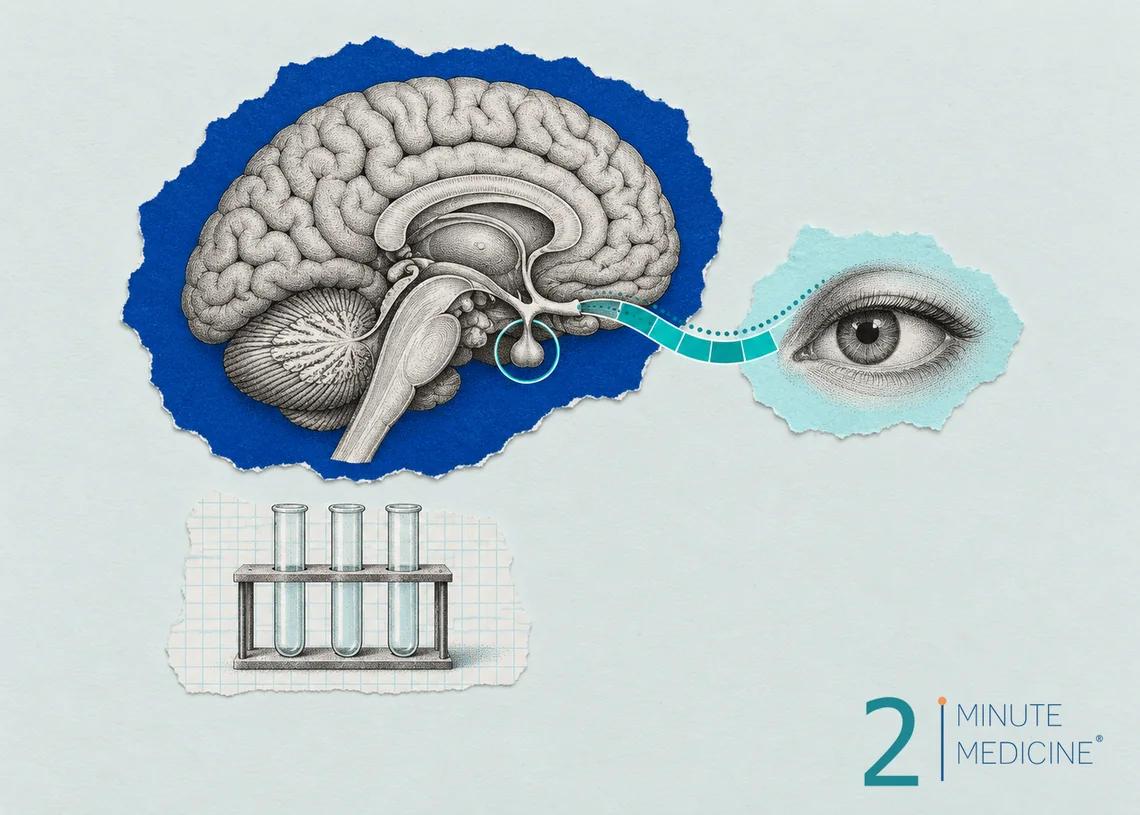
A pituitary tumor is a growth in the pituitary gland, a pea-sized gland at the base of the brain that controls many of the body’s hormones. Nearly all are pituitary adenomas, which are not cancer and grow slowly. They cause trouble by making too much of a hormone, or by growing large enough to press on nearby nerves, especially the ones that carry vision. Most can be treated with medicine, surgery through the nose, or careful watching.
Key points
- Pituitary adenomas are common. Many are tiny, cause no symptoms and are found by chance on a scan.
- Doctors now also call them pituitary neuroendocrine tumors (PitNETs).
- Hormone-making tumors cause symptoms such as milky nipple discharge, missed periods, enlarged hands and feet, or weight gain with high blood pressure.
- Large tumors can cause headaches and loss of side vision.
- Prolactin-making tumors usually shrink with pills. Most other tumors that need treatment are removed through the nose.
What the pituitary gland does
The pituitary sits in a small bony pocket behind the nose, just below the brain and right under the place where the nerves from the two eyes cross. It sends hormones that control the thyroid, the adrenal glands, the ovaries or testes, growth, breast milk and the body’s water balance. A tumor can push one hormone too high, crowd out others so they drop too low, or both.
What causes a pituitary adenoma
Most pituitary adenomas happen by chance, when a single cell in the gland picks up a gene change and grows into a lump. They aren’t caused by anything you did. A small number are part of inherited conditions, such as multiple endocrine neoplasia type 1 (MEN1), which also affects the parathyroid glands and pancreas. Tumors in children or young adults, or in people with a family history, may lead to genetic testing.
Types of pituitary tumors
Doctors sort them by size and by what they make. Microadenomas are smaller than 1 centimeter (less than half an inch). Macroadenomas are 1 centimeter or larger.
- Prolactinoma makes prolactin, the milk hormone. It is the most common hormone-making type.
- Nonfunctioning adenoma makes no extra hormone. It is often found when it has grown large enough to press on nerves.
- Growth hormone tumor causes acromegaly in adults, or very fast growth (gigantism) in children.
- ACTH-making tumor drives the adrenal glands to make too much cortisol. This is Cushing disease.
- TSH-making tumor is rare and causes an overactive thyroid.
Other growths in the area include craniopharyngiomas, Rathke cleft cysts and meningiomas. Cancer that starts in the pituitary is very rare.
Pituitary adenoma symptoms
From pressure
- Loss of side (peripheral) vision, often on both sides, so you bump into things or miss cars beside you
- Headaches
- Double vision or a drooping eyelid, less often
From too much hormone
- Prolactin: irregular or missing periods, milky discharge from the nipples, low sex drive, erectile dysfunction and trouble getting pregnant
- Growth hormone: larger hands and feet, rings and shoes that no longer fit, coarser facial features, a wider gap between teeth, joint pain, snoring, sweating, and high blood sugar or blood pressure
- Cortisol: weight gain in the face and belly, purple stretch marks, easy bruising, weak muscles, high blood pressure and diabetes
- Thyroid hormone: a racing heart, weight loss, shakiness and sweating
From too little hormone
A large tumor can squeeze the normal gland and lower its output (hypopituitarism). This can cause tiredness, feeling cold, low sex drive, missed periods, dizziness, and in children, slow growth.
How it’s diagnosed
- Blood and urine tests measure pituitary hormones and the hormones they control, such as prolactin, IGF-1 (a marker of growth hormone), cortisol, thyroid hormones and sex hormones.
- An MRI of the pituitary with contrast dye shows the tumor’s size and how close it is to the nerves to the eyes.
- A visual field test checks your side vision, usually by an eye doctor.
Small tumors found by chance on a scan done for another reason are common. They are usually checked with hormone tests and a repeat MRI.
How a pituitary adenoma is treated
Care is usually shared by an endocrinologist (hormone specialist), a neurosurgeon and sometimes an eye doctor.
Watching
A small tumor that makes no extra hormone and isn’t pressing on anything can often be watched with MRI scans every year or two.
Medicine
- Prolactinomas usually shrink with cabergoline or bromocriptine pills. These restore periods and fertility in most people, and surgery is rarely needed.
- Growth hormone tumors left after surgery can be treated with monthly shots such as octreotide or lanreotide, octreotide capsules, or pegvisomant, which blocks growth hormone’s effects.
- Cushing disease that persists after surgery can be treated with pills such as osilodrostat or metyrapone that lower cortisol.
Surgery
Most other tumors that need treatment are removed through the nose and the sinus behind it (transsphenoidal surgery), usually with a thin camera called an endoscope. There is no cut on the face or scalp. Most people stay in the hospital a few days. Vision often improves after pressure on the nerves is relieved.
Radiation
Focused radiation, such as stereotactic radiosurgery, can treat tumor tissue left after surgery or tumors that grow back. It works slowly over months to years and can lower pituitary hormones over time.
Hormone replacement
If the gland makes too little of any hormone, you may need to replace it with pills or shots, such as hydrocortisone, thyroid hormone, estrogen or testosterone, or desmopressin for water balance. If you take hydrocortisone, you’ll need extra doses during illness or surgery. Ask about a medical alert bracelet.
When to see a doctor
- Loss of side vision or new headaches that keep coming back
- Milky nipple discharge or periods that stop without pregnancy
- Changes in the size of your hands, feet or face
- Unexplained weight gain with easy bruising and high blood pressure
Get emergency care for a sudden, severe headache with vision loss, double vision, vomiting or confusion. Bleeding into a pituitary tumor (pituitary apoplexy) is rare but needs urgent treatment.
Common questions about pituitary adenomas
Is a pituitary adenoma a brain tumor?
Not exactly. The pituitary sits just below the brain, outside the brain tissue itself. Pituitary adenomas are almost always noncancerous and don’t spread to other parts of the body. Large ones can still press on nearby nerves and the brain, which is why they sometimes need surgery.
Can a pituitary tumor go away on its own?
Rarely. Most small tumors stay the same size for years, and some grow slowly. Prolactinomas often shrink a lot with medicine, and some stay small after the pills are stopped. Occasionally a tumor shrinks after bleeding inside it. Regular MRI scans show whether yours is changing.
Can a pituitary adenoma cause weight gain?
Yes, in some cases. Tumors that make too much cortisol cause weight gain, mainly in the face and belly. Low thyroid hormone or low sex hormones from a large tumor can also add weight. Most people with weight gain don’t have a pituitary problem, so look for other signs and ask your doctor.
Questions to ask your doctor
- What type of pituitary tumor do I have, and how big is it?
- Is it making extra hormones, or lowering any?
- Do I need treatment now, or can we watch it?
- What are the risks of surgery for my vision and hormones?
- How often will I need MRI scans and blood tests?
Learn more
- Pituitary tumors (National Cancer Institute)
- Pituitary tumors (MedlinePlus, U.S. National Library of Medicine)
This guide is general information and doesn’t replace advice from your own doctor. Last updated October 2026.






 Get the app