

Patient Basics: Scleroderma
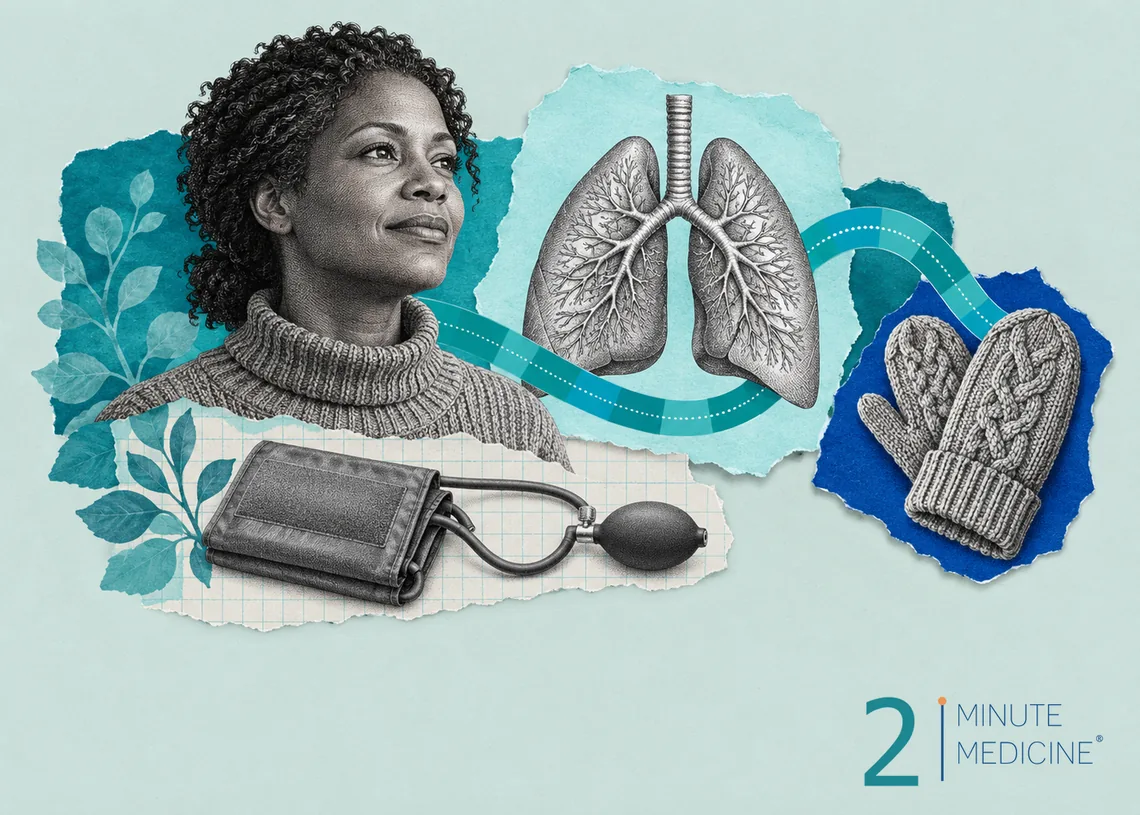
Scleroderma is a long-term autoimmune disease that makes the body produce too much collagen, the protein that gives skin its strength. The skin becomes thick and tight, and in some people the blood vessels, lungs, gut, heart or kidneys are affected too. There is no cure yet, but treatments can protect the organs and ease symptoms. Regular checks to catch organ problems early make a big difference.
Key points
- One type affects only patches of skin. The other type, systemic sclerosis, can also affect internal organs.
- Fingers that turn white or blue in the cold (Raynaud’s phenomenon) are often the first sign.
- It is several times more common in women than in men and usually starts between ages 30 and 50.
- Blood tests and screening of the lungs, heart and kidneys guide treatment.
- Check your blood pressure at home. A sudden rise can signal a kidney emergency.
Types of scleroderma
Localized scleroderma
This type affects the skin and sometimes the tissue underneath, but not internal organs. Morphea causes oval patches of firm, shiny skin, often with a purple or darker edge. Linear scleroderma forms a band of hard skin down an arm, leg or the forehead. It is more common in children and can affect the growth of muscles and bones below it.
Systemic sclerosis
This type affects the skin and can also involve organs.
- Limited systemic sclerosis thickens skin on the fingers, hands, forearms, lower legs and face. It tends to progress slowly. Some people develop high blood pressure in the lungs years later. An older name for it is CREST syndrome.
- Diffuse systemic sclerosis spreads to the upper arms, thighs or trunk, often within the first few years. Lung, kidney and heart problems are more likely early on.
What causes scleroderma
In scleroderma, the immune system becomes overactive. It damages small blood vessels and tells cells called fibroblasts to make too much collagen, which builds up as scar-like tissue. Doctors don’t know exactly what starts this process. Genes play a part, and exposure to silica dust and some chemical solvents may raise the risk. It isn’t contagious. It rarely runs strongly in families.
Black Americans are more likely to have the diffuse form and to have lung problems.
Symptoms
- Raynaud’s phenomenon. Fingers or toes turn white, then blue, then red when cold or stressed, often with numbness or pain. Nearly everyone with systemic sclerosis has it.
- Skin changes. Puffy fingers early on, then tight, thick, shiny skin. Fingers may curl and become hard to bend. The face may look tight around the mouth.
- Sores on the fingertips that heal slowly.
- Small red spots on the face, hands and lips from widened blood vessels.
- Hard lumps of calcium under the skin, often on the fingers.
- Digestive problems. Heartburn, trouble swallowing, bloating, diarrhea or constipation.
- Joint and muscle pain and stiffness.
- Shortness of breath or a dry cough from lung scarring or high blood pressure in the lungs.
- Tiredness, dry eyes and dry mouth.
How it’s diagnosed
A rheumatologist (a doctor who treats autoimmune diseases) usually makes the diagnosis based on the skin exam and symptoms. Tests help confirm it and check your organs:
- Blood tests for antibodies. Certain types point to scleroderma and help predict which organs are at risk.
- Nailfold capillaroscopy. A magnifying device looks at the tiny blood vessels at the base of the fingernails.
- Breathing tests and a CT scan of the chest to look for lung scarring.
- An echocardiogram (ultrasound of the heart) to check for high blood pressure in the lungs.
- Blood pressure checks, blood tests and urine tests for kidney problems.
- A skin biopsy, sometimes, for localized scleroderma.
These screening tests are repeated over time, often every year, because problems can start without symptoms.
Treatment
Treatment depends on which parts of the body are affected.
- Raynaud’s and finger sores: keep warm, and avoid smoking and cold. Medicines that widen blood vessels, such as nifedipine, amlodipine or sildenafil, help. Severe cases may need stronger medicines through a vein.
- Skin and the immune system: medicines that calm the immune system, such as methotrexate or mycophenolate, can soften skin and slow the disease. For severe, rapidly worsening early disease, a stem cell transplant is an option at some specialist centers.
- Lungs: mycophenolate, cyclophosphamide, rituximab, tocilizumab and the anti-scarring drug nintedanib can slow lung scarring. High blood pressure in the lungs has its own specific medicines.
- Kidneys: a blood pressure medicine called an ACE inhibitor treats a kidney crisis. It works best when started fast.
- Digestion: acid-lowering medicine, small meals, raising the head of the bed, and treatment for bowel problems.
- Joints and movement: physical and occupational therapy help keep hands and joints flexible.
- Localized scleroderma: creams, light therapy, or methotrexate for more active disease.
High doses of steroid medicines can trigger a kidney crisis, so doctors use them with caution.
Living with scleroderma
- Dress warmly in layers. Wear gloves and warm socks, and use hand warmers.
- Don’t smoke. It narrows blood vessels and worsens finger sores.
- Use rich, unscented moisturizers on dry, tight skin.
- Do daily hand and face stretches.
- See a dentist regularly, since a smaller mouth opening and dry mouth raise the risk of tooth problems.
- Talk to your doctor before pregnancy. Many women with scleroderma have healthy pregnancies with careful planning.
- Connect with others through a support group.
The outlook varies widely. Many people with the limited form live a normal lifespan. Diffuse disease is more serious, but care has improved a lot.
When to see a doctor
- Fingers that change color in the cold, along with puffy fingers or tight skin
- A sore on a fingertip that doesn’t heal or looks infected
- New shortness of breath, cough or swelling in the legs
- Trouble swallowing or weight loss
Get emergency care for a sudden rise in blood pressure, a severe headache, vision changes, confusion or much less urine than usual. These can be signs of a kidney crisis. Call 911 for chest pain or severe trouble breathing.
Common questions about scleroderma
Can scleroderma be cured?
Not yet, but it can improve. Morphea patches often soften over a few years, and in diffuse disease the skin tightening often peaks in the first years and then eases. Online stories of a cure from diets or supplements aren’t backed by research. Treatment from a rheumatologist protects your organs.
What are the first signs of scleroderma?
Raynaud’s phenomenon is usually first, with fingers turning white or blue in the cold. Puffy, swollen fingers, heartburn and tiredness often follow. In localized scleroderma, the first sign is a firm, shiny patch or band of skin. See a doctor if color changes come with puffy fingers.
Is scleroderma the same as lupus?
No. Both are autoimmune diseases, and both can cause Raynaud’s, joint pain and tiredness. Scleroderma mainly causes thick, tight skin and scarring, while lupus more often causes rashes, joint swelling and kidney inflammation. Some people have features of both, called an overlap syndrome.
Questions to ask your doctor
- Which type of scleroderma do I have?
- Which organs are at risk, and how often should they be checked?
- What blood pressure reading should make me call you?
- What can I do to protect my fingers?
- Is there a scleroderma specialist center near me?
Learn more
- Scleroderma (National Institute of Arthritis and Musculoskeletal and Skin Diseases)
This guide is general information and doesn’t replace advice from your own doctor. Last updated October 2026.





 Get the app