
• About
  • Masthead
  • License Content
  • Advertise
  • Press Releases
  • Newsroom
  • RSS/Email List
  • 2MM Podcast
  • Write for us
  • Contact Us
2 Minute Medicine
No Result
View All Result

No products in the cart.

Sign in
SUBSCRIBE
  • About
  • Specialties
    • All Specialties, All Recent Reports
    • Cardiology
    • Chronic Disease
    • Dermatology
    • Emergency
    • Endocrinology
    • Gastroenterology
    • Imaging and Intervention
    • Infectious Disease
    • Nephrology
    • Neurology
    • Obstetrics
    • Oncology
    • Ophthalmology
    • Pediatrics
    • Pharma
    • Preclinical
    • Psychiatry
    • Public Health
    • Pulmonology
    • Rheumatology
    • Surgery
    • Rewinds
    • The Scan
  • EvidencePulse™
  • HypeCheck™
  • AI News
  • Classics™
    • 2MM+ Online Access
    • Paperback and Ebook
  • Tools
    • NPI Registry Lookup
    • RVU Search
    • Physician Pay by Specialty
    • ICD-10 Code Lookup
    • FDA Drug Approvals
    • Drug Safety for Breastfeeding/Pregnancy
    • Clinical Guidelines
    • Medical Calculators
    • ECG Reference
      • QTc Calculator
      • Sgarbossa Criteria
      • ECG Axis Calculator
      • AV Block Helper
  • Rankings
    • Medical School Rankings
    • Residency Rankings
  • Partners
    • License Content
    • Advertise with Us
2 Minute Medicine
  • About
  • Specialties
    • All Specialties, All Recent Reports
    • Cardiology
    • Chronic Disease
    • Dermatology
    • Emergency
    • Endocrinology
    • Gastroenterology
    • Imaging and Intervention
    • Infectious Disease
    • Nephrology
    • Neurology
    • Obstetrics
    • Oncology
    • Ophthalmology
    • Pediatrics
    • Pharma
    • Preclinical
    • Psychiatry
    • Public Health
    • Pulmonology
    • Rheumatology
    • Surgery
    • Rewinds
    • The Scan
  • EvidencePulse™
  • HypeCheck™
  • AI News
  • Classics™
    • 2MM+ Online Access
    • Paperback and Ebook
  • Tools
    • NPI Registry Lookup
    • RVU Search
    • Physician Pay by Specialty
    • ICD-10 Code Lookup
    • FDA Drug Approvals
    • Drug Safety for Breastfeeding/Pregnancy
    • Clinical Guidelines
    • Medical Calculators
    • ECG Reference
      • QTc Calculator
      • Sgarbossa Criteria
      • ECG Axis Calculator
      • AV Block Helper
  • Rankings
    • Medical School Rankings
    • Residency Rankings
  • Partners
    • License Content
    • Advertise with Us
Sign in
SUBSCRIBE
2 Minute Medicine
Sign in
Subscribe
2 Minute MedicineFree on Google PlayGet
✦EvidencePulse™by 2 Minute Medicine3 reportsYou askedtop stroke trials 2026Synthesizing medical evidence...Top 2026 stroke trial results:OCEANIC — ischemic stroke: 6.2% vs 8.4%OPTION* — mRS 0–1: 43.6% vs 34.2%ORIENTAL* — mRS 0–2: 58.6% vs 46.6%*Higher sICH in intervention armsParticipants randomizedNOCEANIC12,327OPTION570ORIENTAL564Ask about guidelines or landmark trials...↑Try EvidencePulse™Ask the evidence. Get the signal.Try it now →
Home Health A to Z

Patient Basics: Shigellosis
by2 Minute Medicine
October 30, 2026
in Health A to Z
Reading Time: 5 mins read
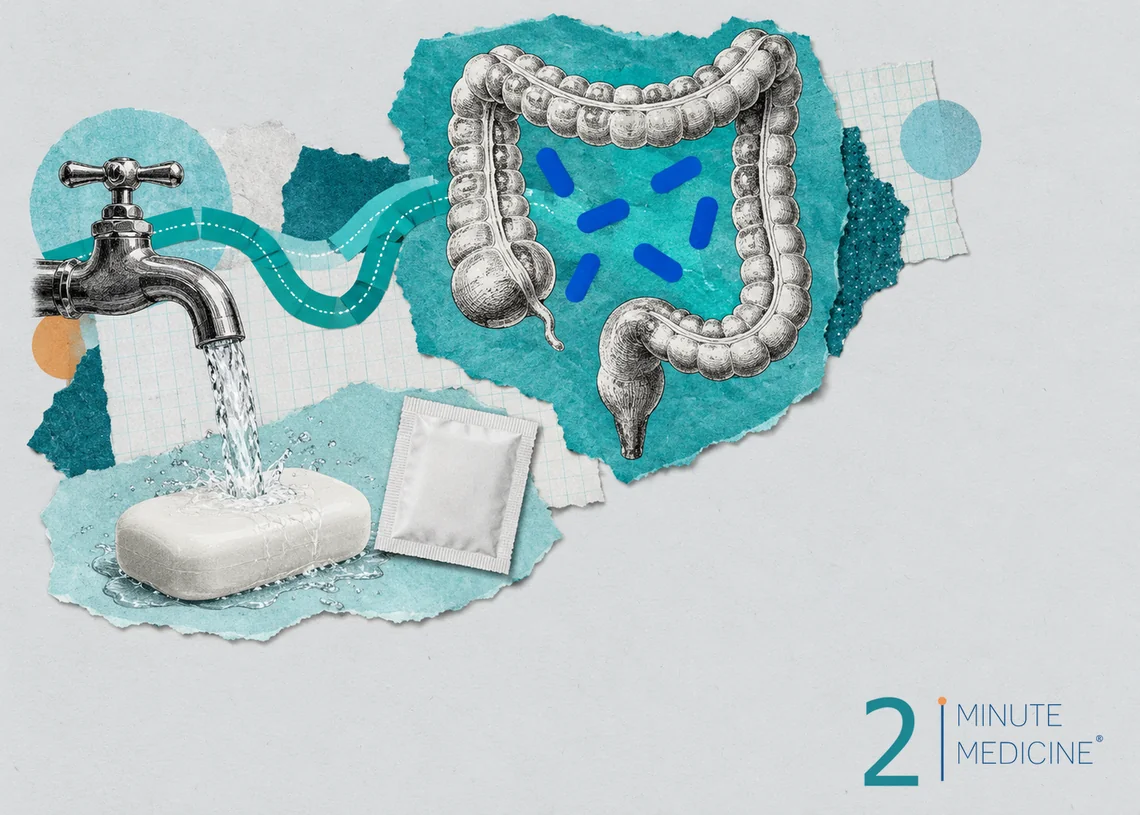
Shigellosis collage: a drawing of the large intestine, rod-shaped bacteria, a running tap, a bar of soap and a blank sachet
Share on FacebookShare on TwitterShare on LinkedIn

Shigellosis is a gut infection caused by Shigella bacteria. It brings on diarrhea, which is often bloody, along with fever and stomach cramps. It spreads very easily from person to person, because swallowing just a tiny number of germs is enough to get sick. Most people get better in about a week with fluids and rest, and careful handwashing is the best way to stop it spreading.

Key points

  • Shigella spreads through traces of stool that get onto hands, food, water or objects, and during sex.
  • Young children in childcare, travelers, and men who have sex with men get it more often.
  • A stool test confirms the infection.
  • Many people don’t need antibiotics. When they are needed, lab testing helps choose one, because many Shigella strains now resist common antibiotics.
  • Stay home from work, school or childcare while you have diarrhea, and wash your hands well with soap and water.

What causes shigellosis

Shigella bacteria live in the human gut and leave the body in stool. People get infected when the germs reach their mouth, often without anyone noticing. Common ways it spreads:

  • Changing a diaper or helping a child use the toilet, then touching your mouth or food
  • Touching surfaces such as toilet handles, changing tables or toys that carry the germs
  • Eating food prepared by someone who has the infection
  • Drinking or swimming in water that contains sewage, such as a lake, a wading pool or poorly treated water while traveling
  • Sexual contact, especially contact that involves the anus

Outbreaks are common in childcare centers, schools, camps and among people who live in crowded places or lack easy access to clean water. People experiencing homelessness are also at higher risk.

Shigellosis symptoms

Symptoms usually start 1 to 2 days after swallowing the germs, but it can take up to a week.

  • Diarrhea, which may contain blood or mucus
  • Fever
  • Stomach cramps and pain
  • A painful, frequent urge to pass stool even when the bowels are empty
  • Nausea and, sometimes, vomiting

Some people, especially adults, have only mild, watery diarrhea, or no symptoms at all, but can still pass on the germs.

Possible complications

  • Dehydration, the most common problem, which is most dangerous in babies, young children and older adults
  • Seizures in young children with a high fever
  • Reactive arthritis, joint pain and swelling, sometimes with sore eyes, that starts weeks after the infection
  • Blood infection, mainly in people with a weak immune system
  • Hemolytic uremic syndrome, a rare kidney problem linked to one type of Shigella that is uncommon in the US

How it’s diagnosed

Shigellosis looks like many other causes of diarrhea, so a stool sample is needed to confirm it. Many labs use a fast DNA test (PCR) that checks for several germs at once. A stool culture, which grows the bacteria, is also done when possible so the lab can test which antibiotics will work. Doctors report confirmed cases to the health department, which may contact you to help find the source and protect others.

RELATED REPORTS

No Content Available

How shigellosis is treated

Fluids and rest

Drinking enough fluid is the most important treatment. Oral rehydration solutions from a drugstore replace both water and salts. For young children, offer small sips often, and keep breastfeeding or formula going. Eat normal foods as soon as you feel up to it. People who are very dehydrated may need fluids through a vein (IV).

Antibiotics

Mild cases usually clear on their own in 5 to 7 days without antibiotics. A doctor may prescribe them for severe illness, a weak immune system, older adults, or to limit spread from people who work with food, in health care or in childcare. Choices include azithromycin, ciprofloxacin and ceftriaxone. Drug-resistant Shigella is increasing in the US, so the choice should be based on lab results when possible. Take every dose as prescribed.

What to avoid

Don’t take medicines that slow the bowel, such as loperamide, without a doctor’s advice. They can keep the germs in the gut longer and make the illness worse. Don’t give them to children.

Preventing the spread of shigellosis

  • Wash your hands with soap and water for at least 20 seconds after using the toilet or changing a diaper, and before preparing food or eating. Hand sanitizer works less well.
  • Throw away soiled diapers in a closed bin, and clean changing areas after each use.
  • Don’t prepare food for others while you are sick.
  • Keep children with diarrhea home from childcare. Your childcare center or health department will say when they can return; some require a negative stool test.
  • Don’t swim for 2 weeks after your diarrhea stops.
  • Wait at least 2 weeks after your diarrhea stops before having sex. Washing before sex and using barriers such as condoms or dental dams lower the risk.
  • When traveling, drink bottled or treated water and eat food that is cooked and served hot.

There is no vaccine for shigellosis yet.

When to see a doctor

  • Bloody diarrhea
  • A fever of 102°F (38.9°C) or higher
  • Diarrhea lasting more than 3 days, or getting worse
  • Signs of dehydration, such as very little urine, a dry mouth, dizziness when standing, or no tears in a crying child
  • A baby, an older adult, someone who is pregnant or someone with a weak immune system who has diarrhea

Get emergency care for a seizure, confusion, extreme sleepiness, or a child who won’t drink and isn’t peeing.

Common questions about shigellosis

How long is shigellosis contagious?

You can spread Shigella while you have diarrhea and for 1 to 2 weeks after it stops, and sometimes longer. The germs stay in stool even when you feel well. Antibiotics can shorten this time. Careful handwashing protects the people around you until then.

Is shigellosis a sexually transmitted infection?

It can spread during sex, though most cases come from other routes. Any sexual contact that brings traces of stool to the mouth, such as oral-anal sex, can pass it on. Outbreaks of drug-resistant Shigella have spread this way among men who have sex with men.

Can you get shigellosis more than once?

Yes. Having it once gives some protection against the same type of Shigella, but there are several types, so you can be infected again. Repeat infections are more likely if the source, such as a childcare outbreak or unsafe water, is still around.

Questions to ask your doctor

  • Do I or my child need antibiotics?
  • Was a stool culture done to check which antibiotics will work?
  • When can I go back to work, or my child go back to childcare?
  • Should anyone else in my home be tested?
  • Which warning signs mean I should come back?

Learn more

  • About Shigella infection (Centers for Disease Control and Prevention)
  • Shigellosis (MedlinePlus, U.S. National Library of Medicine)

This guide is general information and doesn’t replace advice from your own doctor. Last updated October 2026.

Tags: Shigellosis
Previous Post

Patient Basics: Sexually Transmitted Diseases (STDs and STIs)

Next Post

Patient Basics: Shin Splints

RelatedReports

No Content Available
Next Post
Secondary hypertension collage: two kidneys with adrenal glands in teal, a blood pressure cuff and black licorice twists

Patient Basics: Secondary Hypertension

Collage on depressants: a calm middle-aged man in profile, a blank pill bottle, a crescent moon and a small potted seedling

Patient Basics: Depressant and Sedative-Hypnotic Drug Misuse (Substance Abuse)

Scarlet fever collage: a calm young girl beside a throat swab tube, a medicine bottle and a chain of round strep bacteria

Patient Basics: Scarlet Fever

✦ EvidencePulse™ by 2 Minute Medicine 3 reports You asked top stroke trials 2026 Synthesizing medical evidence... Top 2026 stroke trial results: OCEANIC — ischemic stroke: 6.2% vs 8.4% OPTION* — mRS 0–1: 43.6% vs 34.2% ORIENTAL* — mRS 0–2: 58.6% vs 46.6% *Higher sICH in intervention arms Participants randomizedN OCEANIC 12,327 OPTION 570 ORIENTAL 564 Ask about guidelines or landmark trials... Try EvidencePulse™ Get the signal. Try it now → Physician-trained medical AI by 2 Minute Medicine

2MM+ All Access

Full details →
$4.99 /month

3-day free trial · cancel anytime

  • ✓100+ physician-written reports
  • ✓EvidencePulse™ + HypeCheck™
  • ✓Ad-free reading + newsletters
Start 3-day free trial

Then $4.99/month. Manage renewal in your account.

2 Minute Medicine® is an award winning, physician-run, expert medical media company. Our content is curated, written and edited by practicing health professionals who have clinical and scientific expertise in their field of reporting. Our editorial management team is comprised of highly-trained MD physicians. Join numerous brands, companies, and hospitals who trust our licensed content.

Recent Reports

  • Pelacarsen lowers lipoprotein(a) but does not reduce major cardiovascular events in patients with established cardiovascular disease
  • Durvalumab plus enfortumab vedotin was approved for perioperative treatment of muscle-invasive bladder cancer
  • CDC reports 5,412 confirmed measles cases in the United States in 2026
License Content
Terms of Use | Disclaimer
Cookie Policy

Get the app

Read 2 Minute Medicine on iPhone, iPad and Android.

Download on the App StoreGet it on Google Play
QR code for www.2minutemedicine.com/app
On a computer? Scan this with your phone’s camera.
2MM+ All Access Full details →

The medical literature, distilled daily.

Monthly plan selected: $4.99 /month.

$4.99/month

3-day free trial · cancel anytime

Start 3-day free trial

Then $4.99/month. Manage renewal in your account.

Yearly plan selected: $49.90 /year.

$49.90/year

2 months free

Start 3-day free trial

Then $49.90/year.

Membership benefits

  • ✓100+ new physician-written study summaries monthly, 12,000+ searchable
  • ✓AI EvidencePulse™ + HypeCheck™
  • ✓Ad-free reading + newsletters
  • ✓FDA drug approvals + clinical calculators

Already a member? Sign in

  • Get the app
  • About
  • Specialties
    • All Specialties, All Recent Reports
    • Cardiology
    • Chronic Disease
    • Dermatology
    • Emergency
    • Endocrinology
    • Gastroenterology
    • Imaging and Intervention
    • Infectious Disease
    • Nephrology
    • Neurology
    • Obstetrics
    • Oncology
    • Ophthalmology
    • Pediatrics
    • Pharma
    • Preclinical
    • Psychiatry
    • Public Health
    • Pulmonology
    • Rheumatology
    • Surgery
    • Rewinds
    • The Scan
  • EvidencePulse™
  • HypeCheck™
  • AI News
  • Classics™
    • 2MM+ Online Access
    • Paperback and Ebook
  • Tools
    • NPI Registry Lookup
    • RVU Search
    • Physician Pay by Specialty
    • ICD-10 Code Lookup
    • FDA Drug Approvals
    • Drug Safety for Breastfeeding/Pregnancy
    • Clinical Guidelines
    • Medical Calculators
    • ECG Reference
      • QTc Calculator
      • Sgarbossa Criteria
      • ECG Axis Calculator
      • AV Block Helper
  • Rankings
    • Medical School Rankings
    • Residency Rankings
  • Partners
    • License Content
    • Advertise with Us
No Result
View All Result

© 2026 2 Minute Medicine, Inc. - Physician-written medical news.


