

Patient Basics: Tennis Elbow (Lateral Epicondylitis)
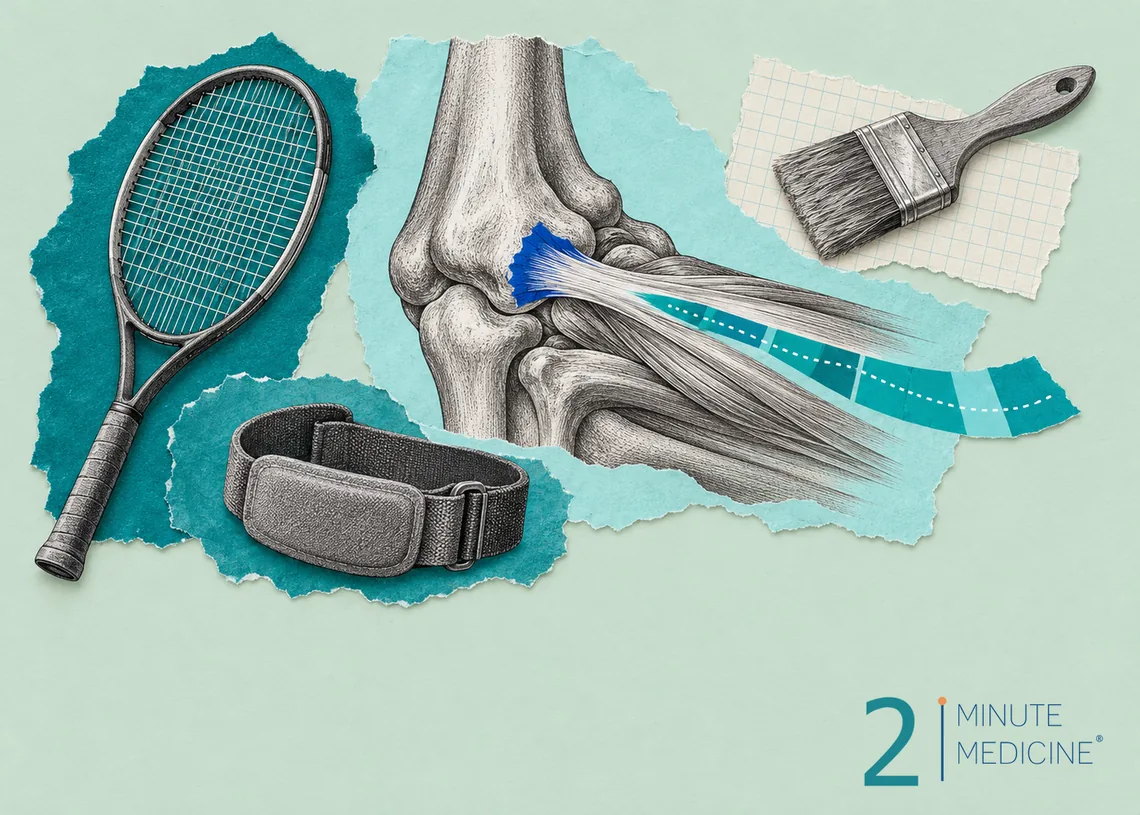
Tennis elbow (lateral epicondylitis) is pain on the outer side of the elbow from overusing the forearm muscles that grip and bend the wrist back. Despite the name, most people who get it don’t play tennis. It usually clears up on its own within a year, and changing how you grip and lift, plus a few targeted exercises, can speed things up.
Key points
- It comes from repeated gripping, lifting and twisting, such as using tools, painting, gardening, typing and racquet sports.
- It’s most common in people in their 40s and 50s.
- Gripping, shaking hands, lifting a mug or turning a doorknob often hurts.
- Strengthening exercises and a forearm strap help many people. A sling usually isn’t needed.
- Steroid shots may ease pain for a few weeks but can slow long-term recovery.
- Most people get better without surgery.
What causes tennis elbow
The muscles that lift your wrist and fingers join a single tendon that anchors on a bony knob at the outer elbow, called the lateral epicondyle. When those muscles work hard over and over, the tendon gets tiny tears and starts to wear. The body’s repair can’t keep up. Doctors now often call it lateral elbow tendinopathy, because in long-lasting cases there’s more wear than swelling.
Things that raise the risk include:
- Jobs and hobbies with forceful, repeated gripping, such as carpentry, plumbing, butchery, painting and knitting
- Long hours with a computer mouse or keyboard
- A poor backhand stroke, a racquet strung too tight, or a grip that’s the wrong size
- Smoking and obesity
Golfer’s elbow is the same kind of problem on the inner side of the elbow, in the tendon used to bend the wrist down.
Symptoms
- Pain and tenderness on the outer elbow, sometimes spreading down the forearm toward the wrist
- Pain when you grip, lift with your palm facing down, twist a jar lid or shake hands
- A weaker grip, so you drop things more easily
- Stiffness in the morning
Pain usually builds slowly over weeks, most often in the arm you use most.
How tennis elbow is diagnosed
A doctor can usually tell from your story and an exam. They’ll press on the bony bump and ask you to lift your wrist or middle finger against resistance. Pain with these tests points to tennis elbow. X-rays, ultrasound or MRI are rarely needed unless the pain doesn’t improve, there was an injury, or another problem is possible. Your doctor may check your neck too, because a pinched nerve there can cause arm pain.
How tennis elbow is treated
Ease the strain
- Cut back on the movements that hurt, but keep using the arm for light tasks.
- Lift with your palm facing up, and use both hands for heavy objects.
- Use tools and racquets with thicker, cushioned grips. A tennis coach can check your stroke.
- At a desk, keep your wrist straight and take short breaks.
Pain relief
A cold pack for 15 minutes can calm a flare. Anti-inflammatory medicine such as ibuprofen or naproxen, or diclofenac gel on the skin, can help for a short time, if it’s right for you.
Braces
A counterforce strap is a band worn around the forearm, about an inch or two below the elbow. It spreads the pull of the muscles away from the sore spot, and many people find it helps during activity. A wrist splint worn at night keeps the wrist muscles relaxed. Slings aren’t usually recommended, because keeping the arm still can lead to stiffness and weakness.
Exercises
Exercise is the main treatment. A physical therapist can set up a program, which often includes:
- Holds: pressing the back of your hand up against a table or your other hand, without moving, for 30 to 45 seconds. This can ease pain.
- Slow lowering: resting your forearm on a table, palm down, and slowly lowering a light weight with your wrist. Lift it back up with the other hand.
- Stretching: with your arm straight, gently bending the wrist down with your other hand.
- Grip work: squeezing a soft ball or putty.
Mild discomfort during exercise is fine. Stop if pain is sharp or still worse the next day. Results take several weeks to a few months of regular practice.
Shots and other procedures
A steroid (cortisone) shot can bring quick relief, but studies show pain is more likely to come back months later, so many doctors avoid it. Platelet-rich plasma (PRP) shots, made from your own blood, and shock wave therapy have mixed results. Ask what the evidence shows before paying for them.
Surgery
Surgery is an option if pain lasts 6 to 12 months despite good treatment. The surgeon removes the damaged part of the tendon, through a small open cut or a scope. Recovery takes a few months, including physical therapy.
Lowering your risk
- Warm up before sports and heavy work.
- Keep forearm muscles strong with light exercises.
- Take breaks from repeated gripping tasks.
- Choose tools, grips and racquets that fit your hand.
When to see a doctor
- Pain that doesn’t improve after a few weeks of easing off
- Pain at night or at rest
- Numbness or tingling in the hand or fingers
- Swelling, redness, warmth or fever around the elbow
- Pain after a fall or injury, or trouble bending or straightening the elbow
Common questions about tennis elbow
Should I wear a sling for tennis elbow?
Usually not. Holding the arm still in a sling can cause stiffness and weaker muscles, which can slow healing. A forearm strap during activity, a wrist splint at night, and gentle exercises work better for most people. A doctor might suggest a sling only for a day or two after a bad flare.
How long does tennis elbow last?
Most cases get better within 6 to 12 months, even without treatment. Exercises, a strap and changes to how you grip can shorten that. A few people have pain for up to two years. When pain keeps returning, the gripping task behind it is often still going on.
Can you get tennis elbow without playing tennis?
Yes. Most people with tennis elbow have never played tennis. Any task that grips and twists over and over can cause it, including using a screwdriver, painting walls, lifting boxes, gardening and long hours with a mouse. Only a small share of cases come from racquet sports.
Can I keep exercising with tennis elbow?
Usually, yes. Lower-body workouts and cardio are fine, and most upper-body exercises are too if they don’t cause elbow pain. Avoid heavy gripping moves, such as pull-ups or heavy curls, until pain settles. Use straps or a looser grip, and build back up slowly.
Questions to ask your doctor
- Are you sure this is tennis elbow, or could it be a nerve problem?
- What changes at work or home would help most?
- Which exercises should I do, and how often?
- Would a strap or wrist splint help me?
- When would a shot or surgery make sense?
Learn more
- Tennis elbow (MedlinePlus, U.S. National Library of Medicine)
- Tennis elbow (NHS)
This guide is general information and doesn’t replace advice from your own doctor. Last updated October 2026.






 Get the app