
• About
  • Masthead
  • License Content
  • Advertise
  • Press Releases
  • Newsroom
  • RSS/Email List
  • 2MM Podcast
  • Write for us
  • Contact Us
2 Minute Medicine
No Result
View All Result

No products in the cart.

Sign in
SUBSCRIBE
  • About
  • Specialties
    • All Specialties, All Recent Reports
    • Cardiology
    • Chronic Disease
    • Dermatology
    • Emergency
    • Endocrinology
    • Gastroenterology
    • Imaging and Intervention
    • Infectious Disease
    • Nephrology
    • Neurology
    • Obstetrics
    • Oncology
    • Ophthalmology
    • Pediatrics
    • Pharma
    • Preclinical
    • Psychiatry
    • Public Health
    • Pulmonology
    • Rheumatology
    • Surgery
    • Rewinds
    • The Scan
  • EvidencePulse™
  • HypeCheck™
  • AI News
  • Classics™
    • 2MM+ Online Access
    • Paperback and Ebook
  • Tools
    • NPI Registry Lookup
    • RVU Search
    • Physician Pay by Specialty
    • ICD-10 Code Lookup
    • FDA Drug Approvals
    • Drug Safety for Breastfeeding/Pregnancy
    • Clinical Guidelines
    • Medical Calculators
    • ECG Reference
      • QTc Calculator
      • Sgarbossa Criteria
      • ECG Axis Calculator
      • AV Block Helper
  • Rankings
    • Medical School Rankings
    • Residency Rankings
  • Partners
    • License Content
    • Advertise with Us
2 Minute Medicine
  • About
  • Specialties
    • All Specialties, All Recent Reports
    • Cardiology
    • Chronic Disease
    • Dermatology
    • Emergency
    • Endocrinology
    • Gastroenterology
    • Imaging and Intervention
    • Infectious Disease
    • Nephrology
    • Neurology
    • Obstetrics
    • Oncology
    • Ophthalmology
    • Pediatrics
    • Pharma
    • Preclinical
    • Psychiatry
    • Public Health
    • Pulmonology
    • Rheumatology
    • Surgery
    • Rewinds
    • The Scan
  • EvidencePulse™
  • HypeCheck™
  • AI News
  • Classics™
    • 2MM+ Online Access
    • Paperback and Ebook
  • Tools
    • NPI Registry Lookup
    • RVU Search
    • Physician Pay by Specialty
    • ICD-10 Code Lookup
    • FDA Drug Approvals
    • Drug Safety for Breastfeeding/Pregnancy
    • Clinical Guidelines
    • Medical Calculators
    • ECG Reference
      • QTc Calculator
      • Sgarbossa Criteria
      • ECG Axis Calculator
      • AV Block Helper
  • Rankings
    • Medical School Rankings
    • Residency Rankings
  • Partners
    • License Content
    • Advertise with Us
Sign in
SUBSCRIBE
2 Minute Medicine
Sign in
Subscribe
2 Minute MedicineFree on Google PlayGet
✦EvidencePulse™by 2 Minute Medicine3 reportsYou askedtop stroke trials 2026Synthesizing medical evidence...Top 2026 stroke trial results:OCEANIC — ischemic stroke: 6.2% vs 8.4%OPTION* — mRS 0–1: 43.6% vs 34.2%ORIENTAL* — mRS 0–2: 58.6% vs 46.6%*Higher sICH in intervention armsParticipants randomizedNOCEANIC12,327OPTION570ORIENTAL564Ask about guidelines or landmark trials...↑Try EvidencePulse™Ask the evidence. Get the signal.Try it now →
Home Health A to Z

Patient Basics: Traveler’s Diarrhea
by2 Minute Medicine
October 30, 2026
in Health A to Z
Reading Time: 5 mins read
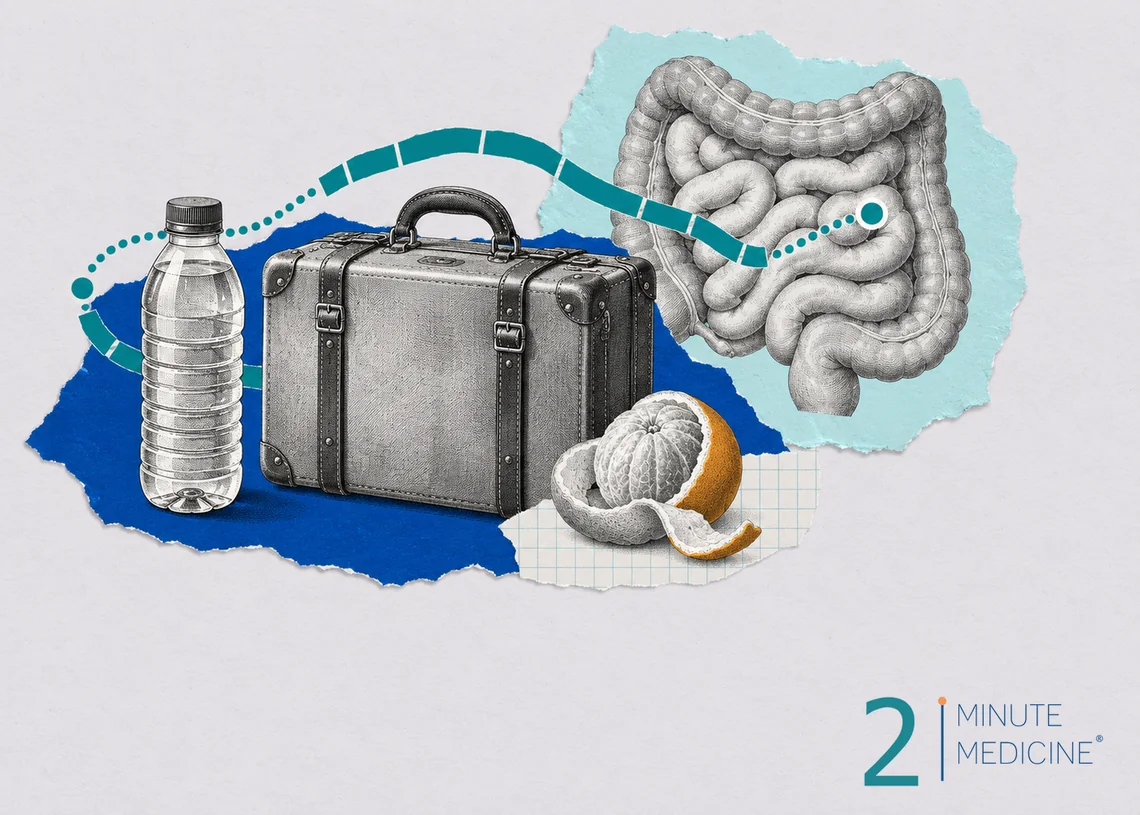
Traveler's diarrhea collage: a small suitcase, a sealed water bottle, a peeled orange and an engraved coil of intestine
Share on FacebookShare on TwitterShare on LinkedIn

Traveler’s diarrhea is loose, watery stools that start during or soon after a trip, usually from food or water carrying germs your body isn’t used to. It is the most common illness among international travelers, especially in parts of Asia, Africa, the Middle East, Mexico, and Central and South America. Most cases last 3 to 5 days and get better without antibiotics. The most important treatment is drinking enough fluids.

Key points

  • Bacteria cause most cases, often a type of E. coli. Viruses and parasites cause the rest.
  • Drink plenty of safe fluids, and use oral rehydration salts for children, older adults and anyone with heavy diarrhea.
  • Loperamide (Imodium) can ease mild to moderate diarrhea in adults who don’t have a fever or bloody stools.
  • Antibiotics are kept for severe cases or diarrhea with fever or blood.
  • Careful hand washing and food and water choices lower the risk but can’t remove it.

What causes traveler’s diarrhea

The germs spread when food or water is contaminated with tiny amounts of stool. Local people often have some immunity, but visitors don’t.

  • Bacteria cause most cases. Enterotoxigenic E. coli is the most common. Campylobacter, Shigella and Salmonella are others.
  • Viruses, especially norovirus, which often spreads on cruise ships and in resorts.
  • Parasites, such as Giardia and Cryptosporidium. They are less common and tend to cause diarrhea that lasts longer than 2 weeks.

Risky foods include raw or undercooked meat and seafood, salads and other raw vegetables, fruit you didn’t peel yourself, unpasteurized milk and cheese, food kept at room temperature, sauces left on tables, tap water, and ice made from it.

Symptoms

  • Three or more loose or watery stools in a day
  • Belly cramps and a sudden urge to go
  • Nausea, bloating and sometimes vomiting
  • Low fever and feeling unwell

It most often starts within the first week or two of a trip but can begin after you get home. Fever above 102°F (38.9°C), blood or mucus in the stool, or severe pain are signs of a more serious infection called dysentery.

How to treat traveler’s diarrhea

Replace fluids

Diarrhea drains water and salts from your body. Sip safe fluids often: bottled water, broth, weak tea, or sports drinks diluted with water. Oral rehydration salts (ORS) are packets you mix with safe water. They have the right balance of salt and sugar to help the gut absorb fluid, and they are the best choice for children and anyone losing a lot of fluid. You can buy them at most pharmacies abroad. Keep eating plain foods such as rice, bread, bananas and soup once you feel up to it.

Medicines you can buy without a prescription

  • Loperamide (Imodium) slows the bowel and cuts the number of trips to the bathroom. Don’t use it if you have a fever or bloody stools, and stop it if your belly swells or symptoms get worse.
  • Bismuth subsalicylate (Pepto-Bismol) eases diarrhea and nausea. It can turn your tongue and stool black, which is harmless. Skip it if you are allergic to aspirin, take a blood thinner, or are pregnant.

Don’t give these medicines to children unless a doctor says to.

RELATED REPORTS

No Content Available

Antibiotics

Doctors suggest an antibiotic for moderate to severe diarrhea that keeps you from your plans, and for diarrhea with fever or blood. Azithromycin is the usual choice, often as a single dose, especially in South and Southeast Asia, where many bacteria resist other drugs. Rifaximin is an option for diarrhea without fever or blood. Ciprofloxacin and similar drugs are used less now because of rising resistance and side effects such as tendon injury. Antibiotics can also cause side effects of their own and help resistant germs spread, so they aren’t needed for mild cases.

Before a trip, ask your doctor whether to carry an antibiotic to use only if you get sick, and exactly when to start it.

Lowering your risk

  • Wash hands with soap and water before eating and after using the toilet. Carry hand sanitizer with at least 60% alcohol.
  • Drink sealed bottled water or drinks, or water that has been boiled, filtered or treated. Use it to brush your teeth too.
  • Skip ice unless you know it was made from safe water.
  • Eat food that is cooked and served hot. Choose busy places with fast turnover.
  • Eat fruit you peel yourself, such as bananas and oranges.
  • Avoid raw or undercooked meat, fish and shellfish, and unpasteurized dairy.
  • Bismuth subsalicylate taken during a short trip can lower the chance of diarrhea, but it isn’t right for everyone. Ask your doctor first.

A travel medicine visit 4 to 6 weeks before you go is a good time to get advice and any needed vaccines, such as for hepatitis A and typhoid, which also spread through food and water.

When to see a doctor

  • Blood or mucus in the stool
  • Fever above 102°F (38.9°C)
  • Signs of dehydration: strong thirst, very dark urine or little urine, dizziness, a dry mouth, or in babies, no wet diapers for 6 hours or more
  • Vomiting that keeps you from holding down fluids
  • Diarrhea that lasts more than 3 days despite treatment
  • Diarrhea that lasts 2 weeks or more after you get home, which may mean a parasite
  • You are pregnant, older, or have a weak immune system or a long-term illness

Get emergency care for confusion, fainting, or a child who is very sleepy, floppy or hard to wake.

Common questions about traveler’s diarrhea

How long does traveler’s diarrhea last?

Most cases last 3 to 5 days, and many clear sooner with an antibiotic or loperamide. About 1 in 10 people have symptoms for more than a week. Diarrhea that lasts weeks after a trip may come from a parasite and should be checked with stool tests.

Is traveler’s diarrhea contagious?

It can be. Some causes, such as norovirus and Shigella, spread easily from person to person through unwashed hands and shared surfaces. Wash your hands well, clean the bathroom often, and don’t prepare food for others until you have been well for a day or two.

Do probiotics prevent traveler’s diarrhea?

The evidence is mixed. A few studies found a small benefit from certain probiotics, but most found little or none, so experts don’t routinely advise them. Hand washing and careful food and water choices do more.

Questions to ask your doctor

  • How risky is my destination for traveler’s diarrhea?
  • Should I carry an antibiotic, and when would I take it?
  • Can I safely use loperamide or bismuth with my other medicines?
  • Which vaccines do I need for this trip?

Learn more

  • Travelers’ diarrhea (Centers for Disease Control and Prevention)
  • Traveler’s health (MedlinePlus, U.S. National Library of Medicine)

This guide is general information and doesn’t replace advice from your own doctor. Last updated October 2026.

Tags: Traveler's Diarrhea
Previous Post

Patient Basics: Granulomatosis with Polyangiitis (Wegener’s)

Next Post

Patient Basics: Vascular Birthmarks

RelatedReports

No Content Available
Next Post
Tourette syndrome collage: a calm boy beside a brain drawing with deep movement centers in teal and a school backpack

Patient Basics: Tourette Syndrome

Toxic shock syndrome collage: a young woman in calm profile, clusters of round bacteria, a blank calendar page and an IV bag

Patient Basics: Toxic Shock Syndrome

Toxoplasmosis collage: a calm sitting cat beside a litter scoop, gardening gloves, a meat thermometer and a microscope slide

Patient Basics: Toxoplasmosis

✦ EvidencePulse™ by 2 Minute Medicine 3 reports You asked top stroke trials 2026 Synthesizing medical evidence... Top 2026 stroke trial results: OCEANIC — ischemic stroke: 6.2% vs 8.4% OPTION* — mRS 0–1: 43.6% vs 34.2% ORIENTAL* — mRS 0–2: 58.6% vs 46.6% *Higher sICH in intervention arms Participants randomizedN OCEANIC 12,327 OPTION 570 ORIENTAL 564 Ask about guidelines or landmark trials... Try EvidencePulse™ Get the signal. Try it now → Physician-trained medical AI by 2 Minute Medicine

2MM+ All Access

Full details →
$4.99 /month

3-day free trial · cancel anytime

  • ✓100+ physician-written reports
  • ✓EvidencePulse™ + HypeCheck™
  • ✓Ad-free reading + newsletters
Start 3-day free trial

Then $4.99/month. Manage renewal in your account.

2 Minute Medicine® is an award winning, physician-run, expert medical media company. Our content is curated, written and edited by practicing health professionals who have clinical and scientific expertise in their field of reporting. Our editorial management team is comprised of highly-trained MD physicians. Join numerous brands, companies, and hospitals who trust our licensed content.

Recent Reports

  • Pelacarsen lowers lipoprotein(a) but does not reduce major cardiovascular events in patients with established cardiovascular disease
  • Durvalumab plus enfortumab vedotin was approved for perioperative treatment of muscle-invasive bladder cancer
  • CDC reports 5,412 confirmed measles cases in the United States in 2026
License Content
Terms of Use | Disclaimer
Cookie Policy

Get the app

Read 2 Minute Medicine on iPhone, iPad and Android.

Download on the App StoreGet it on Google Play
QR code for www.2minutemedicine.com/app
On a computer? Scan this with your phone’s camera.
2MM+ All Access Full details →

The medical literature, distilled daily.

Monthly plan selected: $4.99 /month.

$4.99/month

3-day free trial · cancel anytime

Start 3-day free trial

Then $4.99/month. Manage renewal in your account.

Yearly plan selected: $49.90 /year.

$49.90/year

2 months free

Start 3-day free trial

Then $49.90/year.

Membership benefits

  • ✓100+ new physician-written study summaries monthly, 12,000+ searchable
  • ✓AI EvidencePulse™ + HypeCheck™
  • ✓Ad-free reading + newsletters
  • ✓FDA drug approvals + clinical calculators

Already a member? Sign in

  • Get the app
  • About
  • Specialties
    • All Specialties, All Recent Reports
    • Cardiology
    • Chronic Disease
    • Dermatology
    • Emergency
    • Endocrinology
    • Gastroenterology
    • Imaging and Intervention
    • Infectious Disease
    • Nephrology
    • Neurology
    • Obstetrics
    • Oncology
    • Ophthalmology
    • Pediatrics
    • Pharma
    • Preclinical
    • Psychiatry
    • Public Health
    • Pulmonology
    • Rheumatology
    • Surgery
    • Rewinds
    • The Scan
  • EvidencePulse™
  • HypeCheck™
  • AI News
  • Classics™
    • 2MM+ Online Access
    • Paperback and Ebook
  • Tools
    • NPI Registry Lookup
    • RVU Search
    • Physician Pay by Specialty
    • ICD-10 Code Lookup
    • FDA Drug Approvals
    • Drug Safety for Breastfeeding/Pregnancy
    • Clinical Guidelines
    • Medical Calculators
    • ECG Reference
      • QTc Calculator
      • Sgarbossa Criteria
      • ECG Axis Calculator
      • AV Block Helper
  • Rankings
    • Medical School Rankings
    • Residency Rankings
  • Partners
    • License Content
    • Advertise with Us
No Result
View All Result

© 2026 2 Minute Medicine, Inc. - Physician-written medical news.


