• About
  • Masthead
  • License Content
  • Advertise
  • Press Releases
  • Newsroom
  • RSS/Email List
  • 2MM Podcast
  • Write for us
  • Contact Us
2 Minute Medicine
No Result
View All Result

No products in the cart.

Sign in
SUBSCRIBE
  • About
  • Specialties
    • All Specialties, All Recent Reports
    • Cardiology
    • Chronic Disease
    • Dermatology
    • Emergency
    • Endocrinology
    • Gastroenterology
    • Imaging and Intervention
    • Infectious Disease
    • Nephrology
    • Neurology
    • Obstetrics
    • Oncology
    • Ophthalmology
    • Pediatrics
    • Pharma
    • Preclinical
    • Psychiatry
    • Public Health
    • Pulmonology
    • Rheumatology
    • Surgery
    • Rewinds
    • The Scan
  • EvidencePulse™
  • HypeCheck™
  • AI News
  • Classics™
    • 2MM+ Online Access
    • Paperback and Ebook
  • Tools
    • Medical Calculators
    • Clinical Guidelines
    • Physician Pay by Specialty
    • FDA Drug Approvals
    • RVU Search
    • ICD-10 Code Lookup
    • Drug Safety for Breastfeeding/Pregnancy
    • ECG Reference
      • QTc Calculator
      • Sgarbossa Criteria
      • ECG Axis Calculator
      • AV Block Helper
    • NPI Registry Lookup
  • Rankings
    • Medical School Rankings
    • Residency Rankings
  • Partners
    • License Content
    • Advertise with Us
2 Minute Medicine
  • About
  • Specialties
    • All Specialties, All Recent Reports
    • Cardiology
    • Chronic Disease
    • Dermatology
    • Emergency
    • Endocrinology
    • Gastroenterology
    • Imaging and Intervention
    • Infectious Disease
    • Nephrology
    • Neurology
    • Obstetrics
    • Oncology
    • Ophthalmology
    • Pediatrics
    • Pharma
    • Preclinical
    • Psychiatry
    • Public Health
    • Pulmonology
    • Rheumatology
    • Surgery
    • Rewinds
    • The Scan
  • EvidencePulse™
  • HypeCheck™
  • AI News
  • Classics™
    • 2MM+ Online Access
    • Paperback and Ebook
  • Tools
    • Medical Calculators
    • Clinical Guidelines
    • Physician Pay by Specialty
    • FDA Drug Approvals
    • RVU Search
    • ICD-10 Code Lookup
    • Drug Safety for Breastfeeding/Pregnancy
    • ECG Reference
      • QTc Calculator
      • Sgarbossa Criteria
      • ECG Axis Calculator
      • AV Block Helper
    • NPI Registry Lookup
  • Rankings
    • Medical School Rankings
    • Residency Rankings
  • Partners
    • License Content
    • Advertise with Us
Sign in
SUBSCRIBE
2 Minute Medicine
Sign in
Subscribe
2 Minute MedicineFree on Google PlayGet
✦EvidencePulse™by 2 Minute Medicine3 reportsYou askedtop stroke trials 2026Synthesizing medical evidence...Top 2026 stroke trial results:OCEANIC — ischemic stroke: 6.2% vs 8.4%OPTION* — mRS 0–1: 43.6% vs 34.2%ORIENTAL* — mRS 0–2: 58.6% vs 46.6%*Higher sICH in intervention armsParticipants randomizedNOCEANIC12,327OPTION570ORIENTAL564Ask about guidelines or landmark trials...↑Try EvidencePulse™Ask the evidence. Get the signal.Try it now →
Home Health A to Z

Patient Basics: Vasculitis Overview

by2 Minute Medicine
October 30, 2026
in Health A to Z
Reading Time: 5 mins read
Vasculitis collage: a calm man in his 50s beside a branching artery tree with one narrowed section and a pill organizer
Share on FacebookShare on TwitterShare on LinkedIn

Vasculitis means inflammation of the blood vessels. It happens when the immune system attacks the walls of arteries, veins or tiny capillaries. The swollen walls can narrow, close off or weaken, which cuts the blood supply to organs and tissues. There are many types, from mild rashes that clear on their own to serious illnesses, and most can be controlled with treatment.

Key points

  • Vasculitis can affect one organ, such as the skin, or many parts of the body at once.
  • Doctors name the types by the size of the blood vessels involved: large, medium or small.
  • Common signs include fever, tiredness, weight loss, aches, rashes and numbness, plus problems in whichever organ is affected.
  • Blood and urine tests, scans and often a biopsy confirm it.
  • Treatment calms the immune system, usually starting with steroids. Many people reach remission.

What causes vasculitis

In most people, the trigger isn’t known. The immune system, which normally fights germs, turns on the blood vessel walls. Some forms are linked to:

  • Infections, such as hepatitis B or hepatitis C
  • Other autoimmune diseases, such as lupus, rheumatoid arthritis or Sjögren’s disease
  • Medicines, including some antibiotics, the thyroid drug propylthiouracil, hydralazine for blood pressure, and cocaine mixed with levamisole
  • Some blood cancers

Genes play a part in some types. Vasculitis is not contagious.

Types of vasculitis

Large blood vessels

  • Giant cell arteritis affects people over 50. It causes a new headache, tender scalp, jaw pain when chewing and, if untreated, sudden vision loss. It often occurs with polymyalgia rheumatica (aching and stiffness in the shoulders and hips).
  • Takayasu arteritis mostly affects young women. It narrows the aorta and its main branches and can cause arm pain with use, weak pulses or different blood pressures in each arm.

Medium blood vessels

  • Kawasaki disease affects young children. It causes fever for 5 days or more, red eyes, red lips, rash and swollen hands and feet, and can harm the heart’s arteries.
  • Polyarteritis nodosa can affect the skin, nerves, gut and kidneys. Some cases are linked to hepatitis B.

Small blood vessels

  • ANCA-associated vasculitis includes granulomatosis with polyangiitis (Wegener’s), microscopic polyangiitis, and eosinophilic granulomatosis with polyangiitis (Churg-Strauss). These often affect the sinuses, lungs, kidneys and nerves. The last one usually comes with asthma.
  • IgA vasculitis (Henoch-Schönlein purpura) is most common in children. It causes raised purple spots on the legs and buttocks, joint pain and belly pain, and sometimes affects the kidneys. It usually clears within weeks.
  • Skin vasculitis causes small, raised purple or red spots, often on the lower legs, and may follow an infection or a new medicine.
  • Cryoglobulinemic vasculitis is most often linked to hepatitis C.

Behçet’s disease, which causes mouth and genital sores and eye inflammation, can affect vessels of any size.

Vasculitis symptoms

Many people first feel generally unwell, with fever, night sweats, tiredness, poor appetite, weight loss, and aching muscles and joints. Other symptoms depend on which organs are involved:

  • Skin: purple or red spots, bumps, sores or ulcers
  • Nose and sinuses: crusting, nosebleeds, ongoing stuffiness or sinus infections that don’t clear
  • Lungs: cough, shortness of breath or coughing up blood
  • Kidneys: often no symptoms at first, but blood or protein in the urine, swelling or high blood pressure
  • Nerves: numbness, tingling or weakness, such as trouble lifting the front of a foot
  • Eyes: redness, pain or blurry vision
  • Gut: belly pain, especially after meals

How vasculitis is diagnosed

Because the symptoms are common to many illnesses, vasculitis can take time to diagnose. A rheumatologist (a doctor who treats immune and joint diseases) often leads the work-up. Tests may include:

RELATED REPORTS

The addition of leflunomide (Arava) to prednisone (Deltasone) may not improve rate of remission in Takayasu arteritis

Systematic review of Kawasaki disease shows excellent long-term survival

  • Blood tests for inflammation (ESR and CRP), blood counts, kidney and liver function, ANCA antibodies and hepatitis
  • A urine test for blood and protein
  • Scans such as a chest X-ray or CT, ultrasound of the arteries, MRI, a PET scan or an angiogram
  • A biopsy of the skin, kidney, nose, lung or temple artery, which can show the inflammation directly

How vasculitis is treated

Treatment depends on the type and how severe it is. Mild skin vasculitis may need only rest, raising the legs and stopping a trigger medicine. Serious forms need prompt treatment to protect the organs.

  • Steroids, such as prednisone, bring inflammation down quickly. Doctors lower the dose over weeks to months to limit side effects.
  • Other immune-calming medicines help control the disease and allow less steroid. These include rituximab, cyclophosphamide, methotrexate, azathioprine and mycophenolate. Tocilizumab is used for giant cell arteritis, and avacopan for ANCA-associated vasculitis.
  • Treating the cause, such as antiviral medicine for hepatitis B or C
  • Kawasaki disease is treated in the hospital with immune globulin (IVIG) through a vein and aspirin.

These medicines raise the risk of infection. Your doctor may advise vaccines, an antibiotic to prevent a type of pneumonia, and calcium, vitamin D or other medicine to protect your bones while you take steroids.

Living with vasculitis

Many people reach remission, which means the disease is quiet. Some types return (relapse), so regular checkups with blood and urine tests continue even when you feel well. Don’t stop steroids suddenly. Stay active, eat well, don’t smoke, and keep a list of your medicines with you. Support groups can help with the stress of a long-term illness.

When to see a doctor

  • Fever, tiredness and weight loss that you can’t explain
  • A rash of small purple or red spots that don’t fade when pressed
  • Sinus problems or nosebleeds that keep coming back, with other symptoms
  • New numbness, tingling or weakness

Get emergency care for sudden vision loss, coughing up blood, severe shortness of breath, very little urine, or a child with a fever lasting 5 days plus red eyes or rash. If you are over 50 with a new headache and jaw pain or vision changes, get seen the same day.

Common questions about vasculitis

Is vasculitis an autoimmune disease?

Most types are. In vasculitis, the immune system attacks the walls of the blood vessels by mistake. Some cases are set off by an infection or a medicine, and some happen alongside other autoimmune diseases such as lupus or rheumatoid arthritis.

Can vasculitis be cured?

Some forms, such as IgA vasculitis in children or vasculitis caused by a medicine, often go away completely. Other types can’t be cured but can be put into long-lasting remission. Many people then need low doses of medicine, or none, with regular checkups.

Is vasculitis serious?

It can be. Vasculitis that affects the kidneys, lungs, nerves, eyes or heart can cause lasting damage if it isn’t treated quickly. With early diagnosis and modern treatment, most people with even severe forms survive and do well.

Questions to ask your doctor

  • Which type of vasculitis do I have, and which organs are involved?
  • What are the goals of my treatment, and how long will I need it?
  • What side effects should I watch for?
  • Which vaccines should I get?
  • What are the signs of a relapse?

Learn more

  • What is vasculitis? (National Heart, Lung, and Blood Institute)
  • Vasculitis (MedlinePlus, U.S. National Library of Medicine)

This guide is general information and doesn’t replace advice from your own doctor. Last updated October 2026.

Tags: vasculitis
Previous Post

Patient Basics: Vascular Birthmarks

Next Post

Patient Basics: Tourette Syndrome

RelatedReports

Lower target oxygen saturation in extremely preterm infants appears safe
Chronic Disease

The addition of leflunomide (Arava) to prednisone (Deltasone) may not improve rate of remission in Takayasu arteritis

July 10, 2026
Cardiology

Systematic review of Kawasaki disease shows excellent long-term survival

February 9, 2022
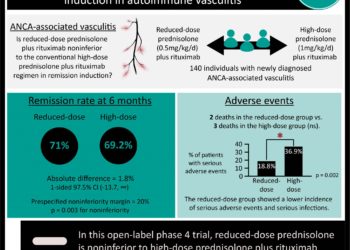
#VisualAbstract: Reduced-dose glucocorticoid adjunct non-inferior to high-dose glucocorticoid plus rituximab regimen for induction of disease remission in autoimmune vasculitis
StudyGraphics

#VisualAbstract: Reduced-dose glucocorticoid adjunct non-inferior to high-dose glucocorticoid plus rituximab regimen for induction of disease remission in autoimmune vasculitis

June 8, 2021
Chronic Disease

Cigarette smoking and antineutrophil cytoplasmic antibody-associated vasculitis

May 5, 2020
Next Post
Tourette syndrome collage: a calm boy beside a brain drawing with deep movement centers in teal and a school backpack

Patient Basics: Tourette Syndrome

Toxic shock syndrome collage: a young woman in calm profile, clusters of round bacteria, a blank calendar page and an IV bag

Patient Basics: Toxic Shock Syndrome

Toxoplasmosis collage: a calm sitting cat beside a litter scoop, gardening gloves, a meat thermometer and a microscope slide

Patient Basics: Toxoplasmosis

✦ EvidencePulse™ by 2 Minute Medicine 3 reports You asked top stroke trials 2026 Synthesizing medical evidence... Top 2026 stroke trial results: OCEANIC — ischemic stroke: 6.2% vs 8.4% OPTION* — mRS 0–1: 43.6% vs 34.2% ORIENTAL* — mRS 0–2: 58.6% vs 46.6% *Higher sICH in intervention arms Participants randomizedN OCEANIC 12,327 OPTION 570 ORIENTAL 564 Ask about guidelines or landmark trials... Try EvidencePulse™ Get the signal. Try it now → Physician-trained medical AI by 2 Minute Medicine

2MM+ All Access

Full details →
$4.99 /month

3-day free trial · cancel anytime

  • ✓100+ physician-written reports
  • ✓EvidencePulse™ + HypeCheck™
  • ✓Ad-free reading + newsletters
Start 3-day free trial

Then $4.99/month. Manage renewal in your account.

2 Minute Medicine® is an award winning, physician-run, expert medical media company. Our content is curated, written and edited by practicing health professionals who have clinical and scientific expertise in their field of reporting. Our editorial management team is comprised of highly-trained MD physicians. Join numerous brands, companies, and hospitals who trust our licensed content.

Recent Reports

  • Pediatric mental health care utilization varied by climate vulnerability and historical redlining
  • The Scan by 2 Minute Medicine®: Light therapy offers hope for seasonal depression, measles cases highlight vaccination gaps, prostate screening guidelines evolve, and social media use affects young adults’ mental health
  • HMS1005 showed generally good tolerability and improved glucose measures in topline phase 1b results
License Content
Terms of Use | Disclaimer
Cookie Policy

Get the app

Read 2 Minute Medicine on iPhone, iPad and Android.

Download on the App StoreGet it on Google Play
QR code for www.2minutemedicine.com/app
On a computer? Scan this with your phone’s camera.
2MM+ All Access Full details →

The medical literature, distilled daily.

Monthly plan selected: $4.99 /month.

$4.99/month

3-day free trial · cancel anytime

Start 3-day free trial

Then $4.99/month. Manage renewal in your account.

Yearly plan selected: $49.90 /year.

$49.90/year

2 months free

Start 3-day free trial

Then $49.90/year.

Membership benefits

  • ✓100+ new physician-written study summaries monthly, 12,000+ searchable
  • ✓AI EvidencePulse™ + HypeCheck™
  • ✓Ad-free reading + newsletters
  • ✓FDA drug approvals + clinical calculators

Already a member? Sign in

  • Get the app
  • About
  • Specialties
    • All Specialties, All Recent Reports
    • Cardiology
    • Chronic Disease
    • Dermatology
    • Emergency
    • Endocrinology
    • Gastroenterology
    • Imaging and Intervention
    • Infectious Disease
    • Nephrology
    • Neurology
    • Obstetrics
    • Oncology
    • Ophthalmology
    • Pediatrics
    • Pharma
    • Preclinical
    • Psychiatry
    • Public Health
    • Pulmonology
    • Rheumatology
    • Surgery
    • Rewinds
    • The Scan
  • EvidencePulse™
  • HypeCheck™
  • AI News
  • Classics™
    • 2MM+ Online Access
    • Paperback and Ebook
  • Tools
    • Medical Calculators
    • Clinical Guidelines
    • Physician Pay by Specialty
    • FDA Drug Approvals
    • RVU Search
    • ICD-10 Code Lookup
    • Drug Safety for Breastfeeding/Pregnancy
    • ECG Reference
      • QTc Calculator
      • Sgarbossa Criteria
      • ECG Axis Calculator
      • AV Block Helper
    • NPI Registry Lookup
  • Rankings
    • Medical School Rankings
    • Residency Rankings
  • Partners
    • License Content
    • Advertise with Us
No Result
View All Result

© 2026 2 Minute Medicine, Inc. - Physician-written medical news.