Post-traumatic stress disorder is associated with increased risk of mild cognitive impairment and dementia among United States Veterans
1. Among US Veterans, post-traumatic stress disorder (PTSD) and health-related social needs (HRSNs) were independently associated with a higher hazard of incident mild cognitive impairment, Alzheimer disease, or AD-related dementias, and those with both PTSD and HRSNs had the highest hazard.
Evidence Rating Level: 2 (Good)
Health-related social needs (HRSNs) are individual-level social circumstances, including housing instability, financial problems, and food insecurity. Post-traumatic stress disorder (PTSD) and HRSNs have been associated with cognitive decline; however, their joint associations with mild cognitive impairment (MCI), Alzheimer disease (AD), and AD-related dementias (ADRD) are unclear. This study thus examined the independent and joint associations of PTSD and HRSNs with incident MCI, AD, and ADRD among US veterans. This retrospective cohort study analyzed data from the National Veterans Health Administration (VHA) between 2015 and 2024 and included veterans aged 55 to 100 years with no prior diagnosis of MCI, AD, or ADRD. The primary outcome was a composite of incident MCI, AD, or ADRD. Among the 3,817,970 veterans included in the study (mean [SD] age, 70.3 [9.1] years; 3,664,349 [96.0%] male), 270,282 (7.1%) developed MCI, AD, or ADRD with median (IQR) follow-up of 8.84 (5.02-9.03) years. The hazard of incident MCI, AD, or ADRD was 33% higher among veterans with PTSD (adjusted hazard ratio [aHR], 1.33; 95% CI, 1.32-1.35) and 117% higher among those with HRSNs (aHR, 2.17; 95% CI, 2.13-2.20). Compared with veterans with neither PTSD or HRSNs, the hazard of incident MCI, AD, or ADRD was 114% higher among those with HRSNs only (aHR, 2.14; 95% CI, 2.11-2.17), 13% higher among those with PTSD only (aHR,1.13; 95% CI, 1.07-1.19), and 187% higher among those with both PTSD and HRSNs (aHR, 2.87; 95% CI, 2.82-2.92). Overall, this study found that among US veterans, PTSD and HRSNs were independently associated with a higher hazard of incident MCI, AD, or ADRD, and those with both PTSD and HRSNs had the highest hazard. These findings suggest that US veterans with both PTSD and HRSNs may represent a clinically vulnerable group.
Click here to read this study in JAMA Network Open
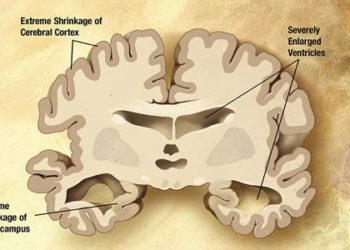
Image: PD
©2026 2 Minute Medicine, Inc. All rights reserved. No works may be reproduced without expressed written consent from 2 Minute Medicine, Inc. Inquire about licensing here. No article should be construed as medical advice and is not intended as such by the authors or by 2 Minute Medicine, Inc.