• About
  • Masthead
  • License Content
  • Advertise
  • Press Releases
  • Newsroom
  • RSS/Email List
  • 2MM Podcast
  • Write for us
  • Contact Us
2 Minute Medicine
No Result
View All Result

No products in the cart.

Sign in
SUBSCRIBE
  • About
  • Specialties
    • All Specialties, All Recent Reports
    • Cardiology
    • Chronic Disease
    • Dermatology
    • Emergency
    • Endocrinology
    • Gastroenterology
    • Imaging and Intervention
    • Infectious Disease
    • Nephrology
    • Neurology
    • Obstetrics
    • Oncology
    • Ophthalmology
    • Pediatrics
    • Pharma
    • Preclinical
    • Psychiatry
    • Public Health
    • Pulmonology
    • Rheumatology
    • Surgery
    • Rewinds
    • The Scan
  • EvidencePulse™
  • HypeCheck™
  • AI News
  • Classics™
    • 2MM+ Online Access
    • Paperback and Ebook
  • Tools
    • NPI Registry Lookup
    • RVU Search
  • Partners
    • License Content
    • Advertise with Us
2 Minute Medicine
  • About
  • Specialties
    • All Specialties, All Recent Reports
    • Cardiology
    • Chronic Disease
    • Dermatology
    • Emergency
    • Endocrinology
    • Gastroenterology
    • Imaging and Intervention
    • Infectious Disease
    • Nephrology
    • Neurology
    • Obstetrics
    • Oncology
    • Ophthalmology
    • Pediatrics
    • Pharma
    • Preclinical
    • Psychiatry
    • Public Health
    • Pulmonology
    • Rheumatology
    • Surgery
    • Rewinds
    • The Scan
  • EvidencePulse™
  • HypeCheck™
  • AI News
  • Classics™
    • 2MM+ Online Access
    • Paperback and Ebook
  • Tools
    • NPI Registry Lookup
    • RVU Search
  • Partners
    • License Content
    • Advertise with Us
Sign in
SUBSCRIBE
2 Minute Medicine
Sign in
Subscribe
2 Minute MedicineFree on Google PlayGet
✦ EvidencePulse™ by 2 Minute Medicine 2026 evidence scan 3 reports You asked top stroke trials 2026 Synthesizing medical evidence... Top 2026 stroke trial results: OCEANIC — ischemic stroke: 6.2% vs 8.4% OPTION* — mRS 0–1: 43.6% vs 34.2% ORIENTAL* — mRS 0–2: 58.6% vs 46.6% *Higher sICH in intervention arms Participants randomizedN OCEANIC 12,327 OPTION 570 ORIENTAL 564 Ask about guidelines or landmark trials... ↑ Try EvidencePulse™ Ask the evidence.
Get the signal.
Try it now → Physician-trained medical AI by 2 Minute Medicine
Home All Specialties Cardiology

Ramipril increases pain-free walking time in patients with peripheral artery disease

bys25qthea
February 6, 2013
in Cardiology, Chronic Disease
Reading Time: 3 mins read
Share on FacebookShare on TwitterShare on LinkedIn

Feb 5th – JAMA – Pain-free walking time and maximum walking times increased by 77% and 123%, respectively with the use of ramipril in peripheral artery disease.

[tabs tab1=”2MM Rundown” tab2= “2MM Full Report”]

[tab]

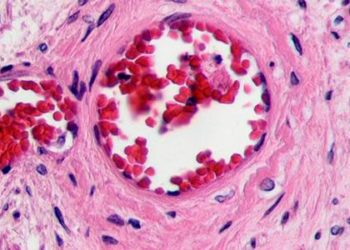
Image: PD

1. At six months of therapy, pain-free walking time and maximum walking times increased by 77% and 123%, respectively with the use of ramipril.

2. In associated surveys, patients on ramipril noted improvements of perceived ability to perform daily activities.

RELATED REPORTS

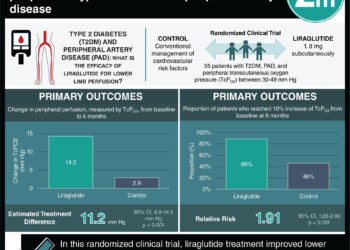
#VisualAbstract: Liraglutide may improve lower limb perfusion in people with type 2 diabetes and peripheral artery disease

Surgical bypass for chronic limb-threatening ischemia reduces risk of adverse limb events

The study indicates that ramipril, in comparison with placebo, significantly increased pain-free walking time and maximum walking times. These results are especially important because claudication is known to greatly affect quality of life and increase hospitalization rates for those with peripheral artery disease (PAD).

This study is strengthened by its double-blind, randomized placebo-controlled design, as well as a relatively large sample size. Bolstering its potential importance, the improvement seen with ramipril was greater than improvement rates on existing FDA-approved medications (e.g. cilostazol and pentoxifylline), which is very encouraging although the study was not designed to make such comparisons. Nonetheless, a few limitations should be considered for this study. First, this study was conducted solely on Australian patients with strict inclusion criteria, hindering its generalizability. Secondly, there is no proven biochemical explanation for the results, which should be a subject of future research. Nonetheless, the study provides solid support for the use of ACE inhibitors, specifically ramipril, for patients with PAD.

Click to read the study in JAMA

[/tab]

[tab]

Image: PD

1. At six months of therapy, pain-free walking time and maximum walking times increased by 77% and 123%, respectively with the use of ramipril.

2. In associated surveys, patients on ramipril noted improvements of perceived ability to perform daily activities.

This [randomized, double-blind, placebo-controlled] study: The study followed 212 Australian participants (mean age 65.5) from three hospitals for three years. The participants were divided into two groups: ramipril 10 mg/d for 24 weeks or placebo. Compared to the placebo group, those on ramipril demonstrated a 75-second increase in mean pain-free walking time. Ramipril also increased maximum walking time by 255 seconds. Furthermore, the ramipril group reported improvements in Walking Impairment Questionnaire scores, which served as a proxy to patient’s perception of the severity of their physical impairments.

In sum: The study indicates that ramipril, in comparison with placebo, significantly increased pain-free walking time and maximum walking times. These results are especially important because claudication is known to greatly affect quality of life and increase hospitalization rates for those with peripheral artery disease (PAD).

This study is strengthened by its double-blind, randomized placebo-controlled design, as well as a relatively large sample size. Bolstering its potential importance, the improvement seen with ramipril was greater than improvement rates on existing FDA-approved medications (e.g. cilostazol and pentoxifylline), which is very encouraging although the study was not designed to make such comparisons. Nonetheless, a few limitations should be considered for this study. First, this study was conducted solely on Australian patients with strict inclusion criteria, hindering its generalizability. Secondly, there is no proven biochemical explanation for the results, which should be a subject of future research. Nonetheless, the study provides solid support for the use of ACE inhibitors, specifically ramipril, for patients with PAD.

Click to read the study in JAMA 

By John Prendergass and Rif Rahman

More from this author: Protected sleep periods improve intern alertness and sleep duration, ADHD medication decreases rates of criminality in ADHD patients, Low dose aspirin shows net clinical benefit in patients with first unprovoked venous thromboembolism

© 2013 2minutemedicine.com. All rights reserved. No works may be reproduced without written consent from 2minutemedicine.com. Disclaimer: We present factual information directly from peer reviewed medical journals. No post should be construed as medical advice and is not intended as such by the authors or by 2minutemedicine.com. PLEASE SEE A HEALTHCARE PROVIDER IN YOUR AREA IF YOU SEEK MEDICAL ADVICE OF ANY SORT. Content is produced in accordance with fair use copyrights solely and strictly for the purpose of teaching, news and criticism. No benefit, monetary or otherwise, is realized by any participants or the owner of this domain.

[/tab]

[/tabs]

Tags: PADperipheral artery diseaseramipril
Previous Post

More patients utilizing hospice services and choosing to die at home over past decade

Next Post

Rivaroxaban has no net clinical benefit over enoxaparin for thromboprophylaxis in acutely ill patients

RelatedReports

#VisualAbstract: Paclitaxel-coated balloon may be superior to uncoated balloon for coronary in-stent restenosis
Chronic Disease

#VisualAbstract: Liraglutide may improve lower limb perfusion in people with type 2 diabetes and peripheral artery disease

March 28, 2024
Soaring rates of peripheral artery disease, now over 200 million cases worldwide
Cardiology

Surgical bypass for chronic limb-threatening ischemia reduces risk of adverse limb events

December 28, 2022
Nearly Half of All Pediatric Buprenorphine Exposures Result in Hospitalization
Cardiology

Polypill strategy reduces the risk of cardiovascular events after a myocardial infarction

September 15, 2022
StudyGraphics

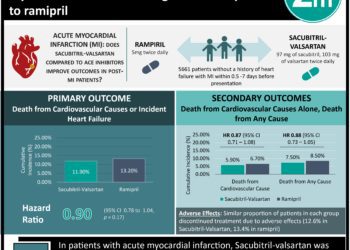
#VisualAbstract: Effectiveness of sacubitril-valsartan in post-myocardial infarction management compared to ramipril

February 10, 2022
Next Post

Rivaroxaban has no net clinical benefit over enoxaparin for thromboprophylaxis in acutely ill patients

Pre-operative discussion of analgesic goals improves pediatric post-operative pain management

Chlorhexidine bathing significantly reduces the development of hospital-acquired blood-stream infections

✦ EvidencePulse™ by 2 Minute Medicine 2026 evidence scan 3 reports You asked top stroke trials 2026 Synthesizing medical evidence... Top 2026 stroke trial results: OCEANIC — ischemic stroke: 6.2% vs 8.4% OPTION* — mRS 0–1: 43.6% vs 34.2% ORIENTAL* — mRS 0–2: 58.6% vs 46.6% *Higher sICH in intervention arms Participants randomizedN OCEANIC 12,327 OPTION 570 ORIENTAL 564 Ask about guidelines or landmark trials... Try EvidencePulse™ Get the signal. Try it now → Physician-trained medical AI by 2 Minute Medicine

2MM+ All Access

Full details →
$4.99 /month

3-day free trial · cancel anytime

  • ✓100+ physician-written reports
  • ✓EvidencePulse™ + HypeCheck™
  • ✓Ad-free reading + newsletters
Start 3-day free trial

Then $4.99/month. Manage renewal in your account.

NPI Lookup · Free

Look up any US clinician

Search by name or NPI number, live from the CMS NPI Registry.

  • OIG exclusion check
  • Licenses and specialties
  • No account needed
Open NPI Lookup →

2 Minute Medicine® is an award winning, physician-run, expert medical media company. Our content is curated, written and edited by practicing health professionals who have clinical and scientific expertise in their field of reporting. Our editorial management team is comprised of highly-trained MD physicians. Join numerous brands, companies, and hospitals who trust our licensed content.

Recent Reports

  • An electronic health record tool for exercise prescription may reduce fall rate among older adults
  • Optogenetic therapy may partially restore vision in retinitis pigmentosa
  • An artificial intelligence system for human papillomavirus-positive dual stain cervical cancer screening reads p16-Ki67 slides
License Content
Terms of Use | Disclaimer
Cookie Policy

Get the app

Read 2 Minute Medicine on iPhone, iPad and Android.

Download on the App StoreGet it on Google Play
QR code for www.2minutemedicine.com/app
On a computer? Scan this with your phone’s camera.
2MM+ All Access Full details →

The medical literature, distilled daily.

Monthly plan selected: $4.99 /month.

$4.99/month

3-day free trial · cancel anytime

Start 3-day free trial

Then $4.99/month. Manage renewal in your account.

Yearly plan selected: $49.90 /year.

$49.90/year

2 months free

Start 3-day free trial

Then $49.90/year.

Membership benefits

  • ✓100+ physician-written reports
  • ✓AI EvidencePulse™ + HypeCheck™
  • ✓Ad-free reading + newsletters
  • ✓NPI watchlist + bulk NPI verification

Already a member? Sign in

  • Get the app
  • About
  • Specialties
    • All Specialties, All Recent Reports
    • Cardiology
    • Chronic Disease
    • Dermatology
    • Emergency
    • Endocrinology
    • Gastroenterology
    • Imaging and Intervention
    • Infectious Disease
    • Nephrology
    • Neurology
    • Obstetrics
    • Oncology
    • Ophthalmology
    • Pediatrics
    • Pharma
    • Preclinical
    • Psychiatry
    • Public Health
    • Pulmonology
    • Rheumatology
    • Surgery
    • Rewinds
    • The Scan
  • EvidencePulse™
  • HypeCheck™
  • AI News
  • Classics™
    • 2MM+ Online Access
    • Paperback and Ebook
  • Tools
    • NPI Registry Lookup
    • RVU Search
  • Partners
    • License Content
    • Advertise with Us
No Result
View All Result

© 2026 2 Minute Medicine, Inc. - Physician-written medical news.