

• About
  • Masthead
  • License Content
  • Advertise
  • Submit Press Release
  • RSS/Email List
  • 2MM Podcast
  • Write for us
  • Contact Us
2 Minute Medicine
No Result
View All Result

No products in the cart.

SUBSCRIBE
  • About
  • Specialties
    • All Specialties, All Recent Reports
    • Cardiology
    • Chronic Disease
    • Dermatology
    • Emergency
    • Endocrinology
    • Gastroenterology
    • Imaging and Intervention
    • Infectious Disease
    • Nephrology
    • Neurology
    • Obstetrics
    • Oncology
    • Ophthalmology
    • Pediatrics
    • Pharma
    • Preclinical
    • Psychiatry
    • Public Health
    • Pulmonology
    • Rheumatology
    • Surgery
  • Tools+
    • EvidencePulse™
    • HypeCheck™
    • NPI Registry Lookup
    • RVU Search
  • Pharma
  • AI Roundup
  • The Scan+
  • Classics™+
    • 2MM+ Online Access
    • Paperback and Ebook
  • Rewinds
  • Partners
    • License Content
    • Submit Press Release
    • Advertise with Us
  • Account
    • Subscribe
    • My account
    • Cart
    • Sign-in
2 Minute Medicine
  • About
  • Specialties
    • All Specialties, All Recent Reports
    • Cardiology
    • Chronic Disease
    • Dermatology
    • Emergency
    • Endocrinology
    • Gastroenterology
    • Imaging and Intervention
    • Infectious Disease
    • Nephrology
    • Neurology
    • Obstetrics
    • Oncology
    • Ophthalmology
    • Pediatrics
    • Pharma
    • Preclinical
    • Psychiatry
    • Public Health
    • Pulmonology
    • Rheumatology
    • Surgery
  • Tools+
    • EvidencePulse™
    • HypeCheck™
    • NPI Registry Lookup
    • RVU Search
  • Pharma
  • AI Roundup
  • The Scan+
  • Classics™+
    • 2MM+ Online Access
    • Paperback and Ebook
  • Rewinds
  • Partners
    • License Content
    • Submit Press Release
    • Advertise with Us
  • Account
    • Subscribe
    • My account
    • Cart
    • Sign-in
SUBSCRIBE
2 Minute Medicine
Subscribe
EvidencePulse™ by 2 Minute Medicine 2026 evidence scan 3 reports You asked top stroke trials 2026 Synthesizing medical evidence... Top 2026 stroke trial results: OCEANIC — ischemic stroke: 6.2% vs 8.4% OPTION* — mRS 0–1: 43.6% vs 34.2% ORIENTAL* — mRS 0–2: 58.6% vs 46.6% *Higher sICH in intervention arms Participants randomizedN OCEANIC 12,327 OPTION 570 ORIENTAL 564 Ask about guidelines or landmark trials... ↑ Try EvidencePulse™ Ask the evidence.
Get the signal.
Try it now → Physician-trained medical AI by 2 Minute Medicine
Home All Specialties Chronic Disease

Relugolix treatment significantly decreases testosterone levels in advanced prostate cancer
byHarsh ShahandDeepti Shroff
June 7, 2020
in Chronic Disease, Oncology, Urology
Reading Time: 3 mins read
Testosterone replacement in male cancer survivors helps improve body composition
Share on FacebookShare on Twitter

1. Relugolix was shown to significantly decrease testosterone levels for a sustained period of time in male patients with advanced prostate cancer.

2. The risk of cardiovascular adverse events with relugolix therapy was found to be significantly lower than with leuprolide therapy.

Evidence Rating Level: 1 (Excellent)

Study Rundown: Long-acting injectable luteinizing hormone-releasing hormone (LHRH) agonists are commonly used for androgen-deprivation therapy to achieve low levels of testosterone as treatment for advanced prostate cancer. However, the side effects of LHRH agonist therapy are not always favorable for treatment. LHRH agonists initially cause a surge in testosterone levels resulting in clinical flares of bone pain and obstructive urinary symptoms. Additionally, suppression of testosterone levels occurs over a period of weeks with LHRH agonists. Relugolix was developed to rapidly inhibit pituitary release of luteinizing hormone and follicle-stimulating hormone to lower testosterone levels. This study evaluated the efficacy and safety of oral relugolix in men with advanced prostate cancer. The participants were randomized to receive relugolix or leuprolide treatment. The study found that patients in the relugolix group had a significant decrease in testosterone levels for a sustained period of time. Also, patients in the relugolix group experienced significantly lower risk of major cardiovascular adverse events.

This randomized trial was limited by comparison of PSA levels for both study groups during patient selection. The mean and median PSA levels for the relugolix group were higher than in the leuprolide group. The difference in the PSA levels indicated the differences in severities of prostate cancer in each group with the sicker patients being treated with relugolix. Another limitation of the study was the testosterone recovery after treatment cessation. Testosterone recovery after stopping relugolix was much greater than after stopping leuprolide, which could lead to clinical flares that relugolix tried to mitigate. Nonetheless, this study was strengthened by the long-term patient follow-up between both groups. For physicians, these findings highlight an additional treatment for patients with advanced prostate cancer.

Click to read the study in NEJM

RELATED REPORTS

Enzalutamide (Xtandi) and abiraterone (Zytiga) may have similar effectiveness in metastatic castration-sensitive prostate cancer

Stockholm3 outperforms PSA for detecting significant prostate cancer 

Pfizer’s Talzenna combo significantly delays prostate cancer progression

Relevant Reading: The Oral Gonadotropin-releasing Hormone Receptor Antagonist Relugolix as Neoadjuvant/Adjuvant Androgen Deprivation Therapy to External Beam Radiotherapy in Patients with Localised Intermediate-risk Prostate Cancer: A Randomised, Open-label, Parallel-group

In-Depth [randomized controlled trial]: This randomized control trial enrolled 934 patients in a multicenter study from 155 centers. Inclusion criteria included: males 18 years of age or older; histologically confirmed adenocarcinoma of the prostate; and candidates for at least one year of continuous androgen-deprivation therapy. The exclusion criteria for the study included history of a major adverse cardiovascular event within six months of trial initiation. The patients were randomized to the relugolix or leuprolide treatment group in a 2:1 ratio. The primary outcome was sustained castration rate. Sustained castration rate was defined as the cumulative probability of testosterone suppression to less than 50 ng per deciliter from day 29 through week 48. Additionally, major cardiovascular adverse events from both treatment groups were recorded. The rapid action of relugolix therapy was determined by PSA response at day 15 between relugolix (79.4%) and leuprolide (19.8%) (P<0.001). Sustained castration rate was achieved in 96.7% of patients in the relugolix group (95% confidence interval [CI], 94.9 to 97.9) compared to 88.8% leuprolide treatment (95% CI, 84.6 to 91.8). Furthermore, sustained testosterone suppression levels in the relugolix group was determined to be non-inferior to the leuprolide group (between-group difference, 7.9 percentage points; 95% CI, 4.1 to 11.8). Major cardiovascular events were defined as nonfatal myocardial infarction, nonfatal stroke, and death from any cause. After 48 weeks of treatment, the incidence of a major cardiovascular events was 2.9% (95% CI, 1.7 to 4.5) in the relugolix group and 6.2% (95% CI, 3.8 to 9.5) in the leuprolide group. Additionally, Kaplan-Meier estimates of the incidence rates yielded a 54% lower risk (hazard ration, 0.46; 95% CI, 0.24 to 0.88) of cardiovascular events in the relugolix group compared to the leuprolide group. Taken together, administration of relugolix treatment significantly decreased testosterone levels for a sustained period of time and reduced the risk of major cardiovascular event in patients with advanced prostate cancer.

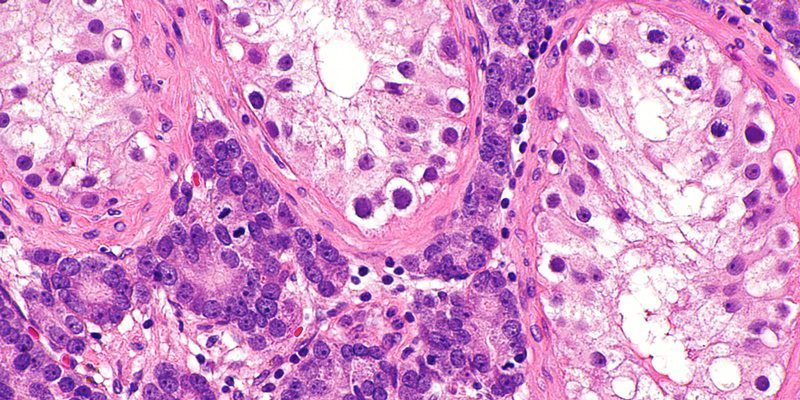
Image: PD

©2020 2 Minute Medicine, Inc. All rights reserved. No works may be reproduced without expressed written consent from 2 Minute Medicine, Inc. Inquire about licensing here. No article should be construed as medical advice and is not intended as such by the authors or by 2 Minute Medicine, Inc.
Tags: leuprolideluteinizing hormone-releasing hormone (LHRH)prostate cancerprostate specific antigen (PSA)relugolix
Previous Post

Internet-delivered cognitive behavioral therapy found to be noninferior to in-person therapy for health anxiety

Next Post

Gastric bypass surgery more effective than medical therapy alone for achieving microalbuminuria remission in Type 2 Diabetes

RelatedReports

Radiation plus hormone therapy may improve prostate cancer survival
Chronic Disease

Enzalutamide (Xtandi) and abiraterone (Zytiga) may have similar effectiveness in metastatic castration-sensitive prostate cancer

July 22, 2026
Patient-reported outcomes differ significantly based on treatment in prostate cancer: The ProtecT trial
Oncology

Stockholm3 outperforms PSA for detecting significant prostate cancer 

June 22, 2026
Radiation plus hormone therapy may improve prostate cancer survival
Oncology

Pfizer’s Talzenna combo significantly delays prostate cancer progression

April 9, 2026
2 Minute Medicine: Pharma Roundup: Price Hikes, Breakthrough Approvals, Legal Showdowns, Biotech Expansion, and Europe’s Pricing Debate [May 12nd, 2025]
Endocrinology

2 Minute Medicine: Pharma Roundup – Pfizer’s Talzenna delays prostate cancer progression, apixaban lowers VTE bleeding risk, Lilly’s retatrutide hits Phase III metabolic targets, and FDA warns Novo Nordisk over safety reporting violations [March 2026]

March 30, 2026
Next Post
Being overweight and obese associated with increased incidence of chronic kidney disease

Gastric bypass surgery more effective than medical therapy alone for achieving microalbuminuria remission in Type 2 Diabetes

Behavioral dysregulation in infancy predicts later child mental health

39·0°C versus 38·5°C ear temperature as fever limit in children with neutropenia undergoing chemotherapy for cancer: A multicentre, cluster-randomised, multiple-crossover, non-inferiority trial

Late gestation antidepressant use linked to postpartum hemorrhage

Indirect effects of COVID-19 estimated to lead to tens of thousands of additional maternal and child deaths

EvidencePulse™ by 2 Minute Medicine 2026 evidence scan 3 reports You asked top stroke trials 2026 Synthesizing medical evidence... Top 2026 stroke trial results: OCEANIC — ischemic stroke: 6.2% vs 8.4% OPTION* — mRS 0–1: 43.6% vs 34.2% ORIENTAL* — mRS 0–2: 58.6% vs 46.6% *Higher sICH in intervention arms Participants randomizedN OCEANIC 12,327 OPTION 570 ORIENTAL 564 Ask about guidelines or landmark trials... ↑ Try EvidencePulse™ Get the signal. Try it now → Physician-trained medical AI by 2 Minute Medicine

2MM+ All Access

Full details →
$4.99 /month

3-day free trial · cancel anytime

  • ✓100+ physician-written reports
  • ✓EvidencePulse™ + HypeCheck™
  • ✓Ad-free reading + newsletters
Start 5-day free trial

Then $4.99/month. Manage renewal in your account.

2 Minute Medicine® is an award winning, physician-run, expert medical media company. Our content is curated, written and edited by practicing health professionals who have clinical and scientific expertise in their field of reporting. Our editorial management team is comprised of highly-trained MD physicians. Join numerous brands, companies, and hospitals who trust our licensed content.

Recent Reports

  • Nirsevimab (Beyfortus) may reduce severe respiratory syncytial virus infections among infants
  • An artificial intelligence (AI) tool achieved high diagnostic accuracy for the identification and prediction of sepsis
  • Use of long-acting broadly neutralizing antibodies may delay human immunodeficiency virus (HIV) rebound following discontinuation of antiretroviral therapy
License Content
Terms of Use | Disclaimer
Cookie Policy
Cleantalk Pixel
2MM+ All Access Full details →

The medical literature, distilled daily.

Monthly plan selected: $4.99 /month.

$4.99/month

3-day free trial · cancel anytime

Start 3-day free trial

Then $4.99/month. Manage renewal in your account.

Yearly plan selected: $49.90 /year.

$49.90/year

2 months free

Start 3-day free trial

Then $49.90/year.

Membership benefits

  • ✓100+ physician-written reports
  • ✓AI EvidencePulse™ + HypeCheck™
  • ✓Ad-free reading + newsletters

Already a member? Sign in

  • About
  • Specialties
    • All Specialties, All Recent Reports
    • Cardiology
    • Chronic Disease
    • Dermatology
    • Emergency
    • Endocrinology
    • Gastroenterology
    • Imaging and Intervention
    • Infectious Disease
    • Nephrology
    • Neurology
    • Obstetrics
    • Oncology
    • Ophthalmology
    • Pediatrics
    • Pharma
    • Preclinical
    • Psychiatry
    • Public Health
    • Pulmonology
    • Rheumatology
    • Surgery
  • Tools
    • EvidencePulse™
    • HypeCheck™
    • NPI Registry Lookup
    • RVU Search
  • Pharma
  • AI Roundup
  • The Scan
  • Classics™
    • 2MM+ Online Access
    • Paperback and Ebook
  • Rewinds
  • Partners
    • License Content
    • Submit Press Release
    • Advertise with Us
  • Account
    • Subscribe
    • My account
    • Cart
    • Sign-in
No Result
View All Result

© 2026 2 Minute Medicine, Inc. - Physician-written medical news.