• About
  • Masthead
  • License Content
  • Advertise
  • Submit Press Release
  • RSS/Email List
  • 2MM Podcast
  • Write for us
  • Contact Us
2 Minute Medicine
No Result
View All Result

No products in the cart.

SUBSCRIBE
  • Specialties
    • All Specialties, All Recent Reports
    • Cardiology
    • Chronic Disease
    • Dermatology
    • Emergency
    • Endocrinology
    • Gastroenterology
    • Imaging and Intervention
    • Infectious Disease
    • Nephrology
    • Neurology
    • Obstetrics
    • Oncology
    • Ophthalmology
    • Pediatrics
    • Pharma
    • Preclinical
    • Psychiatry
    • Public Health
    • Pulmonology
    • Rheumatology
    • Surgery
  • Tools
    • EvidencePulse™
    • RVU Search
    • NPI Registry Lookup
  • Pharma
  • AI News
  • The Scan+
  • Classics™+
    • 2MM+ Online Access
    • Paperback and Ebook
  • Rewinds
  • Partners
    • License Content
    • Submit Press Release
    • Advertise with Us
  • Account
    • Subscribe
    • Sign-in
    • My account
2 Minute Medicine
  • Specialties
    • All Specialties, All Recent Reports
    • Cardiology
    • Chronic Disease
    • Dermatology
    • Emergency
    • Endocrinology
    • Gastroenterology
    • Imaging and Intervention
    • Infectious Disease
    • Nephrology
    • Neurology
    • Obstetrics
    • Oncology
    • Ophthalmology
    • Pediatrics
    • Pharma
    • Preclinical
    • Psychiatry
    • Public Health
    • Pulmonology
    • Rheumatology
    • Surgery
  • Tools
    • EvidencePulse™
    • RVU Search
    • NPI Registry Lookup
  • Pharma
  • AI News
  • The Scan+
  • Classics™+
    • 2MM+ Online Access
    • Paperback and Ebook
  • Rewinds
  • Partners
    • License Content
    • Submit Press Release
    • Advertise with Us
  • Account
    • Subscribe
    • Sign-in
    • My account
SUBSCRIBE
2 Minute Medicine
Subscribe
Home All Specialties Obstetrics

Simvastatin associated with slowed fibroid growth in mice
byDenise PongandLeah Hawkins Bressler, MD, MPH
April 5, 2015
in Obstetrics
Reading Time: 3 mins read
0
Share on FacebookShare on Twitter

1. Leiomyoma cells treated with simvastatin exhibited increased apoptotic activity and decreased proliferative activity.

2. Mice treated with simvastatin had decreased leiomyoma growth and decreased proliferative tumor activity.

Evidence Rating Level: 2 (Good)  

Study Rundown: Uterine fibroids, or leoiomyomas, are benign tumors found in women of reproductive age. While some women are asymptomatic, many experience heavy or prolonged menstrual bleeding, pelvic pain and impaired fertility. Risk factors include black race, early menarche and obesity. An enlarged, mobile and irregular uterus can be palpated on bimanual exam, and a subsequent pelvic ultrasound is typically performed to rule out other causes. Expectant management is recommended for asymptomatic women. Options for women with symptomatic uterine fibroids include medical management of symptoms or surgical management. Hysterectomy is performed for definitive treatment, and myomectomy can be performed for women desiring fertility. There is mixed evidence with regard to the impact of hormonal therapy on fibroids; while GnRH agonists can be used to shrink fibroids prior to hysterectomy to facilitate specimen delivery, oral contraceptives and medroxyprogesterone injections are not thought to significantly impact fibroid growth. Given that simvastatin has previously shown anti-tumor properties for gynecologic conditions, authors in the present work assessed whether simvastatin was an effective treatment for leiomyomas in an animal model. They found that its use was associated with increases in apoptopsis and inhibition of in vitro proliferation, which led to reduced tumor growth and proliferation in a mouse model. Results merit further investigation and imply simvastatin may be a promising non-invasive treatment option for fibroids.

Strengths included evaluation of mechanism of action, dual in vitro and in vivo animal model investigations and the use of human leiomyoma cells. Limitations included tumor implantation outside of the uterine serosa, which may result in different growth patterns and response to simvastatin than native intrauterine leiomyomas. Replication of results and pharmacokinetic studies are needed prior to Phase I trials.

Click to read the study in AJOG

RELATED REPORTS

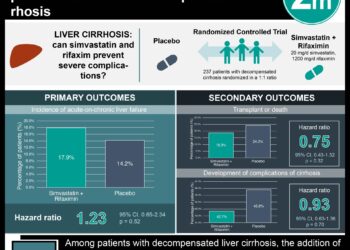
#VisualAbstract: Simvastatin and Rifaximin Does Not Improve Outcomes in Decompensated Cirrhosis

Simvastatin does not improve outcomes in patients critically ill with COVID-19

#VisualAbstract: Simvastatin is non-superior to control in critically ill COVID-19 patients

Relevant Reading: Effect of statin on risk of gynecologic cancers: a meta-analysis of observational studies and randomized controlled trials

In-Depth [animal study]: This study evaluated the effects of simvastatin on leiomyoma growth in vitro and in a mouse model. In the in vitro model, human and rat leiomyoma cells were treated with 0.1, 1, 2, 5 or 10 µM simvastatin. For the animal model, mice received a human tumor xenograft and were treated with 0 (n = 10) or 20 µg/gm (n = 10) simvastatin daily. Outcomes of interest were apoptosis (caspase-3 activity) and proliferation and signaling (MTT activity, Akt phosphorylation) in the in vitro model and tumor growth and proliferation (Ki67 expression) in the mouse model.

Compared to controls, cells treated with simvastatin demonstrated higher levels of apoptosis as measured by caspase-3 activity (p < 0.01). Simvastatin-treated cells showed increased inhibition of proliferation as measured by MTT activity (p = 0.02) and Akt phosphorylation (p < 0.01). In the mouse model, tumor growth and proliferation were less in the simvastatin treatment group as measured by both Ki67 expression (p = 0.02), tumor measurements (p < 0.01) and ultrasound (p = 0.04); there was no significant difference in tumor weight.

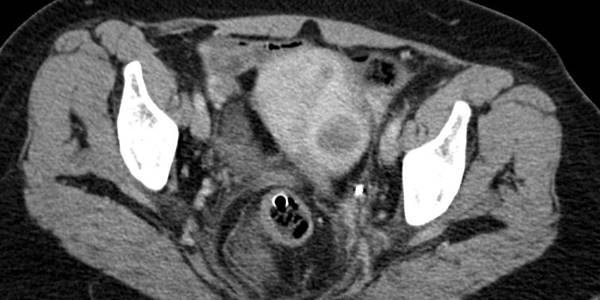
Image: CC/Somatom Sensation Open 40/Wiki

©2015 2 Minute Medicine, Inc. All rights reserved. No works may be reproduced without expressed written consent from 2 Minute Medicine, Inc. Inquire about licensing here. No article should be construed as medical advice and is not intended as such by the authors or by 2 Minute Medicine, Inc.
Tags: fibroidleoiomyomasimvastatin
Previous Post

An apple a day may not keep the doctor away

Next Post

HPV-targeted T-cell therapy may induce cervical cancer regression

RelatedReports

#VisualAbstract: Simvastatin and Rifaximin Does Not Improve Outcomes in Decompensated Cirrhosis
StudyGraphics

#VisualAbstract: Simvastatin and Rifaximin Does Not Improve Outcomes in Decompensated Cirrhosis

February 19, 2025
Palliative chemotherapy associated with more ICU treatment at end-of-life
Emergency

Simvastatin does not improve outcomes in patients critically ill with COVID-19

February 12, 2024
#VisualAbstract: Simvastatin is non-superior to control in critically ill COVID-19 patients
StudyGraphics

#VisualAbstract: Simvastatin is non-superior to control in critically ill COVID-19 patients

January 12, 2024
Gender conformity influences use of laxatives and muscle-building products
Cardiology

Risk of myopathy and myalgia among statin users may be small and clinically insignificant

September 20, 2022
Next Post
HPV-targeted T-cell therapy may induce cervical cancer regression

HPV-targeted T-cell therapy may induce cervical cancer regression

Breastfeeding associated with decreased risk of childhood obesity

Potential contamination of purchased human milk via internet

Noninvasive ventilation strategies examined in NICU infants

Resident competency lacking in neonatal intubation

2 Minute Medicine® is an award winning, physician-run, expert medical media company. Our content is curated, written and edited by practicing health professionals who have clinical and scientific expertise in their field of reporting. Our editorial management team is comprised of highly-trained MD physicians. Join numerous brands, companies, and hospitals who trust our licensed content.

Recent Reports

  • Pfizer’s Talzenna combo significantly delays prostate cancer progression
  • Bottom-vented bottles may not reduce gastrointestinal discomfort in infants
  • Ketorolac administration after cesarean delivery may reduce postoperative opioid use
License Content
Terms of Use | Disclaimer
Cookie Policy
Privacy Statement (EU)
Disclaimer

© 2025 2 Minute Medicine, Inc. - Physician-written medical news.

  • Specialties
    • All Specialties, All Recent Reports
    • Cardiology
    • Chronic Disease
    • Dermatology
    • Emergency
    • Endocrinology
    • Gastroenterology
    • Imaging and Intervention
    • Infectious Disease
    • Nephrology
    • Neurology
    • Obstetrics
    • Oncology
    • Ophthalmology
    • Pediatrics
    • Pharma
    • Preclinical
    • Psychiatry
    • Public Health
    • Pulmonology
    • Rheumatology
    • Surgery
  • Tools
    • EvidencePulse™
    • RVU Search
    • NPI Registry Lookup
  • Pharma
  • AI News
  • The Scan
  • Classics™
    • 2MM+ Online Access
    • Paperback and Ebook
  • Rewinds
  • Partners
    • License Content
    • Submit Press Release
    • Advertise with Us
  • Account
    • Subscribe
    • Sign-in
    • My account
No Result
View All Result

© 2025 2 Minute Medicine, Inc. - Physician-written medical news.