


• About
  • Masthead
  • License Content
  • Advertise
  • Submit Press Release
  • RSS/Email List
  • 2MM Podcast
  • Write for us
  • Contact Us
2 Minute Medicine
No Result
View All Result

No products in the cart.

SUBSCRIBE
  • Specialties
    • All Specialties, All Recent Reports
    • Cardiology
    • Chronic Disease
    • Dermatology
    • Emergency
    • Endocrinology
    • Gastroenterology
    • Imaging and Intervention
    • Infectious Disease
    • Nephrology
    • Neurology
    • Obstetrics
    • Oncology
    • Ophthalmology
    • Pediatrics
    • Pharma
    • Preclinical
    • Psychiatry
    • Public Health
    • Pulmonology
    • Rheumatology
    • Surgery
  • Tools
    • EvidencePulse™
    • RVU Search
    • NPI Registry Lookup
  • Pharma
  • AI News
  • The Scan+
  • Classics™+
    • 2MM+ Online Access
    • Paperback and Ebook
  • Rewinds
  • Partners
    • License Content
    • Submit Press Release
    • Advertise with Us
  • Account
    • Subscribe
    • Sign-in
    • My account
2 Minute Medicine
  • Specialties
    • All Specialties, All Recent Reports
    • Cardiology
    • Chronic Disease
    • Dermatology
    • Emergency
    • Endocrinology
    • Gastroenterology
    • Imaging and Intervention
    • Infectious Disease
    • Nephrology
    • Neurology
    • Obstetrics
    • Oncology
    • Ophthalmology
    • Pediatrics
    • Pharma
    • Preclinical
    • Psychiatry
    • Public Health
    • Pulmonology
    • Rheumatology
    • Surgery
  • Tools
    • EvidencePulse™
    • RVU Search
    • NPI Registry Lookup
  • Pharma
  • AI News
  • The Scan+
  • Classics™+
    • 2MM+ Online Access
    • Paperback and Ebook
  • Rewinds
  • Partners
    • License Content
    • Submit Press Release
    • Advertise with Us
  • Account
    • Subscribe
    • Sign-in
    • My account
SUBSCRIBE
2 Minute Medicine
Subscribe
Home All Specialties Pediatrics

Smokeless tobacco use in children has not changed

bys25qthea
May 14, 2013
in Pediatrics, Public Health
Reading Time: 3 mins read
0
Share on FacebookShare on Twitter

Image: CC

1. Between 2000-2011, there was no significant variation in smokeless tobacco use among US middle and high school students. 

2. Demographics such as race/ethnicity and gender were not predictors of the rate of smokeless tobacco use. 

Evidence Rating Level: 2 (Good) 

Study Rundown: The study determined that, between 2000-2011, the overall rate of smokeless tobacco use among US middle and high school students was low, but unchanged. Some variation was noted by age group: decreased use in age groups of 9-11 year olds and 12-14 year olds, but increased use in 15-17 year olds. Demographic information such as race/ethnicity and gender did not affect the rate of smokeless tobacco use.

The strengths of this study include its large sample base, which ranged from 18,000-35,000 students yearly. The data came from a reputable survey, the National Youth Tobacco Survey (NYTS). With this tool, the study could be repeated in future years, and it may allow for evaluation of any public health interventions that are made. However, the fact that the entirety of the study is based on a volunteer, anonymous survey is subject to recall and selection bias, which its biggest limitation. In addition, the authors do not disclose variation based upon geography or subtype (e.g. public versus private), which is important given the heterogeneity of the US school system.

RELATED REPORTS

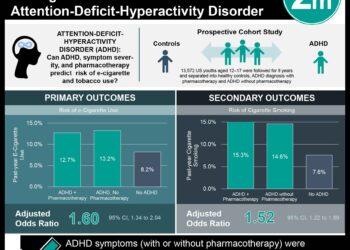
#VisualAbstract: Higher Nicotine Consumption Observed Among Youth with Attention-Deficit-Hyperactivity Disorder

Genetic, clinical, lifestyle and sociodemographic risk factors for head and neck cancer:

Higher nicotine consumption observed among youth with attention-deficit hyperactivity disorder

Click to read the study, published today in JAMA

Relevant Reading: Trends in smokeless tobacco use among adults and adolescents in the United States

Dr. Israel Agaku, DMD, MPH speaks to 2 Minute Medicine: Harvard School of Public Health 

“As you may know, smokeless tobacco has been shown to be a starter product for initiating tobacco use among youths since they may be milder, sweeter or cheaper than smoked tobacco products. Our findings showed a stable trend in smokeless tobacco use among U.S. middle and high school students during 2000-2011.  Leveling regulatory and taxation policies for smoked and smokeless tobacco products, coupled with evidence-based population measures that denormalize tobacco use as well as clinical cessation programs may help reduce the prevalence of smokeless tobacco use among youths.”

In-Depth [prospective observational study]: The study was conducted between 2000-2011 using the National Youth Tobacco Survey (NYTS). The number of respondents varied from year to year, ranging from approximately 18,000 to 35,000 middle school and high school students in the US. To monitor changes in use over time, the researchers used average annual percentage changes (AAPC).

Between 2000 and 2011, the overall rate of smokeless tobacco use among US middle and high school students was low but unchanged (5.3% and 5.2%, respectively). Some variation was noted by age group: decreased AAPC in age groups of 9-11 year olds (-4.6, p=0.007) and 12-14 year olds (-3.4, p=0.02), but increased AAPC in 15-17 year olds (0.9, p=0.01). Demographics such as race/ethnicity and gender did not affect the rate of smokeless tobacco use (p>0.05).  

By Anne Marie Walters and Rif Rahman

More from this author: New gene variants linked with Alzheimer Disease in African Americans

© 2013 2minutemedicine.com. All rights reserved. No works may be reproduced without written consent from 2minutemedicine.com. Disclaimer: We present factual information directly from peer reviewed medical journals. No post should be construed as medical advice and is not intended as such by the authors or by 2minutemedicine.com. PLEASE SEE A HEALTHCARE PROVIDER IN YOUR AREA IF YOU SEEK MEDICAL ADVICE OF ANY SORT. Content is produced in accordance with fair use copyrights solely and strictly for the purpose of teaching, news and criticism. No benefit, monetary or otherwise, is realized by any participants or the owner of this domain. 

Tags: cigarettesNational Youth Tobacco Surveysmokingtobacco
Previous Post

The CARP trial: Preoperative revascularization prior to elective vascular surgery [Classics Series]

Next Post

Dual-chamber ICDs fail to offer benefit over single chamber ICDs

RelatedReports

#VisualAbstract: Higher Nicotine Consumption Observed Among Youth with Attention-Deficit-Hyperactivity Disorder
StudyGraphics

#VisualAbstract: Higher Nicotine Consumption Observed Among Youth with Attention-Deficit-Hyperactivity Disorder

April 16, 2025
No difference in PET-CT surveillance versus planned neck dissection in advanced head and neck cancer
Cardiology

Genetic, clinical, lifestyle and sociodemographic risk factors for head and neck cancer:

April 13, 2025
Strict tobacco licensing laws linked to reduced adolescent smoking initiation
Chronic Disease

Higher nicotine consumption observed among youth with attention-deficit hyperactivity disorder

May 19, 2025
Strict tobacco licensing laws linked to reduced adolescent smoking initiation
Chronic Disease

Characterization of increased cryptogenic ischemic stroke risk from smoking

May 19, 2025
Next Post
Dual-chamber ICDs fail to offer benefit over single chamber ICDs

Dual-chamber ICDs fail to offer benefit over single chamber ICDs

Pelvic organ prolapse surgery has increasing complications long-term

Pelvic organ prolapse surgery has increasing complications long-term

2 Minute Medicine Rewind

2 Minute Medicine Rewind

2 Minute Medicine® is an award winning, physician-run, expert medical media company. Our content is curated, written and edited by practicing health professionals who have clinical and scientific expertise in their field of reporting. Our editorial management team is comprised of highly-trained MD physicians. Join numerous brands, companies, and hospitals who trust our licensed content.

Recent Reports

  • An ultrasound test may more reliably detect ovarian cancer in premenopausal women than the Risk of Malignancy Index
  • Chimeric antigen receptor T-cell therapy may induce sustained remission in multirefractory autoimmune hemolytic anemia
  • Neonatal Hyperbilirubinemia and navigating the 2022 AAP guideline updates
License Content
Terms of Use | Disclaimer
Cookie Policy
Privacy Statement (EU)
Disclaimer

© 2025 2 Minute Medicine, Inc. - Physician-written medical news.

  • Specialties
    • All Specialties, All Recent Reports
    • Cardiology
    • Chronic Disease
    • Dermatology
    • Emergency
    • Endocrinology
    • Gastroenterology
    • Imaging and Intervention
    • Infectious Disease
    • Nephrology
    • Neurology
    • Obstetrics
    • Oncology
    • Ophthalmology
    • Pediatrics
    • Pharma
    • Preclinical
    • Psychiatry
    • Public Health
    • Pulmonology
    • Rheumatology
    • Surgery
  • Tools
    • EvidencePulse™
    • RVU Search
    • NPI Registry Lookup
  • Pharma
  • AI News
  • The Scan
  • Classics™
    • 2MM+ Online Access
    • Paperback and Ebook
  • Rewinds
  • Partners
    • License Content
    • Submit Press Release
    • Advertise with Us
  • Account
    • Subscribe
    • Sign-in
    • My account
No Result
View All Result

© 2025 2 Minute Medicine, Inc. - Physician-written medical news.