Telitacicept may reduce proteinuria in patients with high-risk IgA nephropathy
1. In this interim analysis from a randomized controlled trial, adults with biopsy-proven IgA nephropathy and persistent proteinuria who received telitacicept had improved proteinuria compared to placebo.
2. Telitacicept was associated with more overall adverse events but fewer serious adverse events and more stable kidney function.
Evidence Rating Level: 1 (Excellent)
Study Rundown: IgA nephropathy is the most common primary glomerulonephritis worldwide and remains a major cause of kidney failure, particularly in young adults. Patients with persistent proteinuria despite optimized supportive care are at high risk for progression, but disease-specific therapies remain limited. Telitacicept is a human transmembrane activator and CAML interactor (TACI) receptor mimic which neutralizes B-cell activating factor (BAFF) and a proliferation-inducing ligand (APRIL), two pathways implicated in IgA nephropathy. This phase 3 randomized controlled trial investigated whether weekly subcutaneous telitacicept could reduce proteinuria in adults with biopsy-proven IgA nephropathy and persistent proteinuria despite standard care. In this prespecified interim analysis, telitacicept led to a significantly greater reduction in the 24-hour urinary protein-to-creatinine ratio than placebo at 39 weeks. Kidney function also appeared more stable with telitacicept, though secondary efficacy analyses were not adjusted for multiplicity and should be interpreted cautiously. Adverse events were more common with telitacicept overall, but there were fewer serious adverse events compared to placebo and no unexpected safety findings were reported. The generalizability of these findings is limited by the exclusively Chinese study population and the interim nature of the analysis, with longer-term follow-up still pending. Nonetheless, this study suggests that telitacicept may be a promising disease-modifying therapy for high-risk IgA nephropathy.
Click to read the study in NEJM
Relevant Reading: Randomized Phase 2 Trial of Telitacicept in Patients with IgA Nephropathy With Persistent Proteinuria.
In-Depth [randomized controlled trial]: This phase 3, multicenter, double-blind, randomized, placebo-controlled trial enrolled 318 adults with biopsy-proven primary IgA nephropathy at 72 sites in China. Eligible patients had persistent proteinuria despite optimized supportive care, an estimated glomerular filtration rate of at least 30 mL/min/1.73 m², and stable background treatment with an angiotensin-converting–enzyme inhibitor or angiotensin-receptor blocker. Patients were randomly assigned in a 1:1 ratio to receive either weekly subcutaneous telitacicept 240 mg or placebo. At baseline, mean age was 38.2 years, 53.8% were women, mean estimated glomerular filtration rate was 75.5 mL/min/1.73 m², median 24-hour urinary protein-to-creatinine ratio was 1.26, roughly 71% had hematuria, about 18% had diabetes, and about 35% were receiving a sodium–glucose cotransporter 2 inhibitor. The primary end point was the geometric mean ratio of the 24-hour urinary protein-to-creatinine ratio at week 39 relative to baseline. At week 39, the adjusted geometric mean ratio was 0.41 (95% confidence interval [CI], 0.37 to 0.46) with telitacicept and 0.91 (95% CI, 0.81 to 1.02) with placebo, corresponding to a relative difference of -55.0% (95% CI, -61.3 to -47.6 points; P<0.001). Proteinuria response, defined as a 24-hour urinary protein-to-creatinine ratio below 0.8, occurred in 61.0% of the telitacicept group (95% CI, 53.0 to 68.6) versus 19.5% of the placebo group (95% CI, 13.7 to 26.5). Estimated kidney function appeared more stable with telitacicept, with a percentage change in estimated glomerular filtration rate of -1.0% (95% CI, -3.2 to 1.2) versus -7.7% (95% CI, -9.9 to -5.4) with placebo; however, these secondary analyses were descriptive because multiplicity was not controlled. Safety outcomes showed a higher burden of mostly mild treatment-emergent events overall with telitacicept. Any adverse event occurred in 89.3% of telitacicept-treated patients and 78.6% of placebo-treated patients, whereas serious adverse events occurred in 2.5% and 8.2%, respectively. Infections were similar between groups, no hepatitis B virus reactivation was reported, and no deaths occurred. In summary, telitacicept substantially reduced proteinuria over 39 weeks, with preliminary signals for preservation of kidney function and an acceptable short-term safety profile.
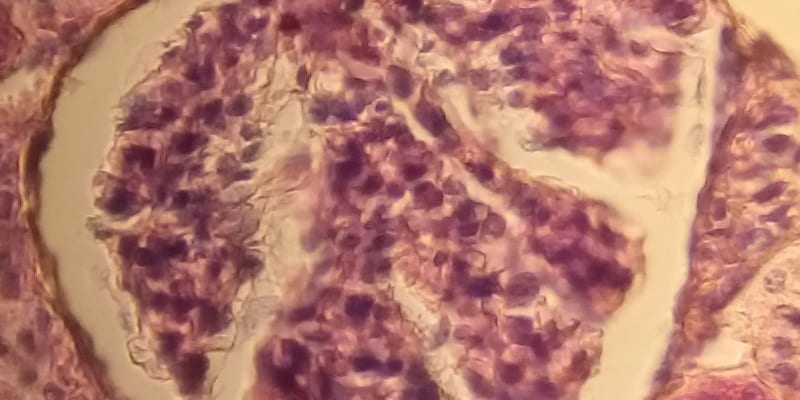
Image: PD
©2026 2 Minute Medicine, Inc. All rights reserved. No works may be reproduced without expressed written consent from 2 Minute Medicine, Inc. Inquire about licensing here. No article should be construed as medical advice and is not intended as such by the authors or by 2 Minute Medicine, Inc.