• About
  • Masthead
  • License Content
  • Advertise
  • Submit Press Release
  • RSS/Email List
  • 2MM Podcast
  • Write for us
  • Contact Us
2 Minute Medicine
No Result
View All Result

No products in the cart.

SUBSCRIBE
  • Specialties
    • All Specialties, All Recent Reports
    • Cardiology
    • Chronic Disease
    • Dermatology
    • Emergency
    • Endocrinology
    • Gastroenterology
    • Imaging and Intervention
    • Infectious Disease
    • Nephrology
    • Neurology
    • Obstetrics
    • Oncology
    • Ophthalmology
    • Pediatrics
    • Pharma
    • Preclinical
    • Psychiatry
    • Public Health
    • Pulmonology
    • Rheumatology
    • Surgery
  • Tools
    • EvidencePulse™
    • RVU Search
    • NPI Registry Lookup
  • Pharma
  • AI News
  • The Scan+
  • Classics™+
    • 2MM+ Online Access
    • Paperback and Ebook
  • Rewinds
  • Partners
    • License Content
    • Submit Press Release
    • Advertise with Us
  • Account
    • Subscribe
    • Sign-in
    • My account
2 Minute Medicine
  • Specialties
    • All Specialties, All Recent Reports
    • Cardiology
    • Chronic Disease
    • Dermatology
    • Emergency
    • Endocrinology
    • Gastroenterology
    • Imaging and Intervention
    • Infectious Disease
    • Nephrology
    • Neurology
    • Obstetrics
    • Oncology
    • Ophthalmology
    • Pediatrics
    • Pharma
    • Preclinical
    • Psychiatry
    • Public Health
    • Pulmonology
    • Rheumatology
    • Surgery
  • Tools
    • EvidencePulse™
    • RVU Search
    • NPI Registry Lookup
  • Pharma
  • AI News
  • The Scan+
  • Classics™+
    • 2MM+ Online Access
    • Paperback and Ebook
  • Rewinds
  • Partners
    • License Content
    • Submit Press Release
    • Advertise with Us
  • Account
    • Subscribe
    • Sign-in
    • My account
SUBSCRIBE
2 Minute Medicine
Subscribe
Home All Specialties Oncology

Treatment with adjuvant mFOLFIRINOX as compared with gemcitabine improves survival outcomes in resected pancreatic cancer
byKassandra McFarlaneandSze Wah Samuel Chan
September 12, 2022
in Chronic Disease, Gastroenterology, Oncology
Reading Time: 2 mins read
0
Share on FacebookShare on Twitter

1. Median disease-free survival is longer in patients receiving mFOLFIRINOX as compared to those receiving gemcitabine.

2. Median overall survival is longer in patients on mFOLFIRINOX compared to gemcitabine.

Evidence Rating Level: 1 (Excellent)

Study Rundown: One of the leading causes of cancer-related deaths globally is pancreatic ductal adenocarcinoma (PDAC). It has been shown that adjuvant chemotherapy in patients with resected PDAC can improve survival outcomes. Previous studies showed that adjuvant treatment with gemcitabine improved outcomes when compared with only observation. This randomized controlled study presents the updated 5-year survival outcomes comparing a modified FOLFIRINOX (mFOLFIRINOX) chemotherapy treatment and gemcitabine as adjuvant treatment post-resection of PDAC. The previous outcomes were reported after 3 years. The primary outcome of interest was disease-free survival (DFS) and secondary outcomes included overall survival (OS). Additionally, prognostic factors associated with OS were identified. After a median follow-up of 69.7months, the median DFS in the mFOLFIRINOX group was 21.4 months, as compared to 12.8 months in the gemcitabine group. The 5-year DFS was 26.1% in the mFOLFIRINOX group compared to 19.0% in the gemcitabine group. The median OS was 53.5 months for patients receiving mFOLFIRINOX and 35.5 months for those receiving gemcitabine. The 5-year OS rate was 43.2% for mFOLFIRINOX and 31.4% for gemcitabine. Some of the prognostic factors for OS included an age less than 70 years old, and having lower tumour stage, well-differentiated tumour grade. Limitations to this study include an upper age limit to the study population of 79 years, so results should be applied to age groups greater than this with caution. Additionally, the patients in this study had good performance status, whereas in routine practice a significant proportion of patients receiving pancreatectomy have reduced performance status, so these results may not be directly applicable in those cases. Overall, the results from this study suggest that treatment with adjuvant mFOLFIRINOX after resection for PDAC significantly improves survival outcomes as compared to treatment with gemcitabine.

Click to read the study in JAMA Oncology

Relevant Reading: FOLFIRINOX or gemcitabine as adjuvant therapy for pancreatic cancer

RELATED REPORTS

New targeted therapy daraxonrasib improves survival in pancreatic cancer

2 Minute Medicine: Pharma Roundup – Geopolitical instability in the Strait of Hormuz threatens global generic drug supply, daraxonrasib improves pancreatic cancer survival, sparsentan (Filspari) approved for focal segmental glomerulosclerosis, glucagon-like peptide-1 receptor agonists linked to reduced substance use disorders, and orforglipron (Foundayo) expands oral weight loss therapy options

Neoadjuvant therapy regimen improves outcomes in high-risk intrahepatic cholangiocarcinoma

In-Depth [randomized controlled trial]: This open-label, phase 3, randomized controlled trial was conducted out of 77 healthcare centres across Canada and France. The study enrolled 493 adult patients between the ages 18-79 years old and randomly assigned them to receive either adjuvant mFOLFIRINOX or gemcitabine. There were 247 patients in the mFOLFIRINOX group and 246 in the gemcitabine group. The median duration of follow-up was 69.7 months. In the mFOLFIRINOX group, median DFS was 21.4 months (inter-quartile range (IQR), 9.9-70.0 months) compared with 12.8 months (IQR, 7.9-29.8 months) in the gemcitabine group. The 5-year DFS rate for patients receiving mFOLFIRINOX was 26.1% (95% confidence interval (CI), 20.5% to 32.1%) and in the gemcitabine group it was 19.0% (95% CI, 14.3% to 24.3%). The median OS was 53.5 months in the mFOLFIRINOX group (IQR, 22.4-NE) as compared to 35.5 months in the gemcitabine group (IQR, 20.3-80.8 months) (stratified hazard ratio (HR), 0.68; 95% CI, 0.54 to 0.85). The 5-year OS was 43.2% in the mFOLFIRINOX group (95% CI, 36.5%-49.7%) as compared to 31.4% (95% CI, 25.5%-37.5%) in the gemcitabine group.

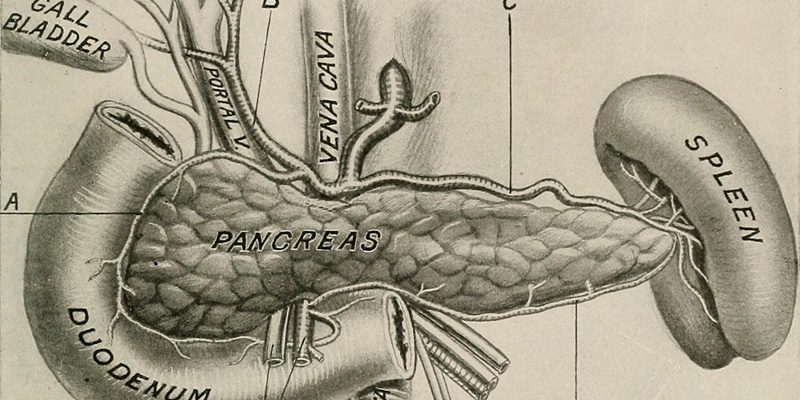
Image: PD

©2022 2 Minute Medicine, Inc. All rights reserved. No works may be reproduced without expressed written consent from 2 Minute Medicine, Inc. Inquire about licensing here. No article should be construed as medical advice and is not intended as such by the authors or by 2 Minute Medicine, Inc.


Tags: FOLFIRINOXgemcitabinepancreatic cancer
Previous Post

Commercial dietary vitamins targeting the immune system may have inaccurate labeling

Next Post

The MR CLEAN trial: Intraarterial Treatment for Acute Ischemic Stroke [Classics Series]

RelatedReports

Oncology

New targeted therapy daraxonrasib improves survival in pancreatic cancer

May 5, 2026
2 Minute Medicine: Pharma Roundup: Price Hikes, Breakthrough Approvals, Legal Showdowns, Biotech Expansion, and Europe’s Pricing Debate [May 12nd, 2025]
Pharma

2 Minute Medicine: Pharma Roundup – Geopolitical instability in the Strait of Hormuz threatens global generic drug supply, daraxonrasib improves pancreatic cancer survival, sparsentan (Filspari) approved for focal segmental glomerulosclerosis, glucagon-like peptide-1 receptor agonists linked to reduced substance use disorders, and orforglipron (Foundayo) expands oral weight loss therapy options

May 4, 2026
Survivors of adult-onset cancers associated with increased incidence of cardiovascular disease
Oncology

Neoadjuvant therapy regimen improves outcomes in high-risk intrahepatic cholangiocarcinoma

March 18, 2026
Many new pediatric asthma cases attributable to obesity
Chronic Disease

GLP-1 receptor agonists show little effect on obesity-related cancer risk

December 8, 2025
Next Post
ABCD2 Score: Predicting Early Stroke Risk After Transient Ischemic Attack (TIA) [Classics Series]

The MR CLEAN trial: Intraarterial Treatment for Acute Ischemic Stroke [Classics Series]

Quick Take: Effect of Pregabalin on Radiotherapy-Related Neuropathic Pain in Patients With Head and Neck Cancer: A Randomized Controlled Trial

Routine dexamethasone is not effective compared to placebo to treat dyspnea in patients with advanced cancer

Ear infections decreasing in infants

Home oxygen therapy for bronchiolitis feasible, cost-effective, and favorable to caregivers

2 Minute Medicine® is an award winning, physician-run, expert medical media company. Our content is curated, written and edited by practicing health professionals who have clinical and scientific expertise in their field of reporting. Our editorial management team is comprised of highly-trained MD physicians. Join numerous brands, companies, and hospitals who trust our licensed content.

Recent Reports

  • Pediatric hospitals adopt generative AI for documentation and care coordination
  • Hospitals face a new test of artificial intelligence governance
  • Food and Drug Administration reviews model for predicting drug related liver injury
License Content
Terms of Use | Disclaimer
Cookie Policy
Privacy Statement (EU)
Disclaimer
  • Specialties
    • All Specialties, All Recent Reports
    • Cardiology
    • Chronic Disease
    • Dermatology
    • Emergency
    • Endocrinology
    • Gastroenterology
    • Imaging and Intervention
    • Infectious Disease
    • Nephrology
    • Neurology
    • Obstetrics
    • Oncology
    • Ophthalmology
    • Pediatrics
    • Pharma
    • Preclinical
    • Psychiatry
    • Public Health
    • Pulmonology
    • Rheumatology
    • Surgery
  • Tools
    • EvidencePulse™
    • RVU Search
    • NPI Registry Lookup
  • Pharma
  • AI News
  • The Scan
  • Classics™
    • 2MM+ Online Access
    • Paperback and Ebook
  • Rewinds
  • Partners
    • License Content
    • Submit Press Release
    • Advertise with Us
  • Account
    • Subscribe
    • Sign-in
    • My account
No Result
View All Result

© 2026 2 Minute Medicine, Inc. - Physician-written medical news.