• About
  • Masthead
  • License Content
  • Advertise
  • Submit Press Release
  • RSS/Email List
  • 2MM Podcast
  • Write for us
  • Contact Us
2 Minute Medicine
No Result
View All Result

No products in the cart.

SUBSCRIBE
  • Specialties
    • All Specialties, All Recent Reports
    • Cardiology
    • Chronic Disease
    • Dermatology
    • Emergency
    • Endocrinology
    • Gastroenterology
    • Imaging and Intervention
    • Infectious Disease
    • Nephrology
    • Neurology
    • Obstetrics
    • Oncology
    • Ophthalmology
    • Pediatrics
    • Pharma
    • Preclinical
    • Psychiatry
    • Public Health
    • Pulmonology
    • Rheumatology
    • Surgery
  • Tools
    • EvidencePulse™
    • RVU Search
    • NPI Registry Lookup
  • Pharma
  • AI News
  • The Scan+
  • Classics™+
    • 2MM+ Online Access
    • Paperback and Ebook
  • Rewinds
  • Partners
    • License Content
    • Submit Press Release
    • Advertise with Us
  • Account
    • Subscribe
    • Sign-in
    • My account
2 Minute Medicine
  • Specialties
    • All Specialties, All Recent Reports
    • Cardiology
    • Chronic Disease
    • Dermatology
    • Emergency
    • Endocrinology
    • Gastroenterology
    • Imaging and Intervention
    • Infectious Disease
    • Nephrology
    • Neurology
    • Obstetrics
    • Oncology
    • Ophthalmology
    • Pediatrics
    • Pharma
    • Preclinical
    • Psychiatry
    • Public Health
    • Pulmonology
    • Rheumatology
    • Surgery
  • Tools
    • EvidencePulse™
    • RVU Search
    • NPI Registry Lookup
  • Pharma
  • AI News
  • The Scan+
  • Classics™+
    • 2MM+ Online Access
    • Paperback and Ebook
  • Rewinds
  • Partners
    • License Content
    • Submit Press Release
    • Advertise with Us
  • Account
    • Subscribe
    • Sign-in
    • My account
SUBSCRIBE
2 Minute Medicine
Subscribe
Home All Specialties Emergency

Ultrasound as effective as CT at identifying high-risk kidney stones, reduces radiation exposure
byJon LiuandXu Gao
September 18, 2014
in Emergency, Imaging and Intervention, Nephrology
Reading Time: 3 mins read
0
Share on FacebookShare on Twitter

1. Point-of-care (POC) ultrasound was equally effective as CT scan in identifying renal calculi at “high-risk” for complications at 30-days after assessment.

2. POC ultrasound reduced radiation exposure at the time of assessment in the emergency department as compared to CT scan.

Evidence Rating Level: 1 (Excellent)

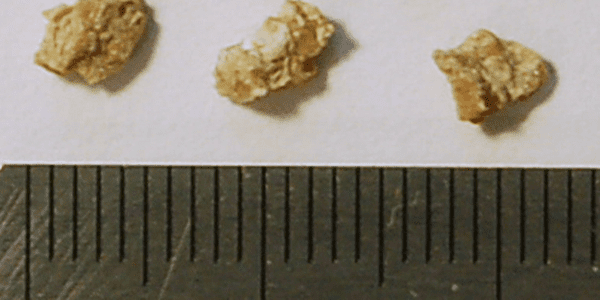
Study Rundown: Renal stones, or calculi, are a common cause for acute pain (“renal colic”) and presentations to emergency departments. Patients with suspected calculi or a history of stones are often exposed to frequent CT scans, thus increasing their radiation exposure. POC ultrasound has recently become more accessible and has the additional benefit of reduced radiation exposure. This modality could be an easier and faster method in the evaluation of renal calculi.

This study randomized patients who presented to emergency departments with suspected renal calculi to one of three initial imaging modalities: point-of-care ultrasound by emergency physician, ultrasound by radiologist or CT scan by technician. Ultrasound (whether by ER physician or radiologist) was found to be as effective as CT scan in identifying stones with “high-risk complications” at 30 days after randomization. Ultrasound was also associated reduced total radiation exposure.

This study could not be blinded and a significant portion of patients randomized to POC or radiologist ultrasound still went on to have a CT scan for various indications. Furthermore, CT scan remained the most sensitive imaging modality for renal calculi when compared to POC and radiologist ultrasound. There is still ongoing analysis as to whether POC ultrasound is more cost effective than CT scan. Overall, the positive results of this study suggest that ultrasound may be a useful tool in the initial evaluation of nephrolithiasis in the emergency setting. Further evaluation is needed to analyze the overall benefit of using POC ultrasound. The feasibility of adopting this method also depends on the training of emergency physicians in using the technology.

RELATED REPORTS

Artificial intelligence (AI) may reduce cognitive load for sonographers in fetal ultrasound scans without affecting diagnostic performance

What Is the Cricothyroid Membrane and Why It Matters in Medicine

Artificial intelligence-guided ultrasound lacks sufficient accuracy for deep vein thrombosis detection

Click to read the study, published today in NEJM

Click to read an accompanying editorial in NEJM

Relevant Reading: Nonenhanced Helical CT and US in the Emergency Evaluation of Patients with Renal Colic: Prospective Comparison

In-Depth [randomized controlled trial]: 2759 patients with suspected renal calculi from various centers were randomized to one of the following initial imaging modalities: point-of-care ultrasound by emergency physician, radiologist ultrasound, or CT scan. Baseline characteristics were well-matched in all three groups including those with a history of renal calculi and physician “estimated likelihood” of renal calculi.

The primary outcomes of the study were: high risk diagnoses complications that could be related to missed or delayed diagnoses, cumulative radiation exposure from imaging, and total costs. No significant difference in high risk complications was found between the three groups (p=0.30). Radiation exposure during emergency visit at time of enrolment was significantly less in POC ultrasound and radiologist ultrasound groups (p<0.001). Secondary outcomes also demonstrated that POC ultrasound (compared to CT scan) decreased the median duration of emergency room visits (p<0.001) without changing the number of patient returning to emergency (p=0.77) or requiring re-admission to hospital at 60 days follow up (p=0.80).

More from this author: Brodalumab effective in treating active psoriatic arthritis, Idelalisib plus rituximab improves progression-free survival in relapsed CLL, SSRI use during pregnancy not linked to increased risk of autism,Combo antifungal therapy most effective treatment for cryptococcal meningitis

Image: PD

©2012-2014 2minutemedicine.com. All rights reserved. No works may be reproduced without expressed written consent from 2minutemedicine.com. Disclaimer: We present factual information directly from peer reviewed medical journals. No post should be construed as medical advice and is not intended as such by the authors, editors, staff or by 2minutemedicine.com. PLEASE SEE A HEALTHCARE PROVIDER IN YOUR AREA IF YOU SEEK MEDICAL ADVICE OF ANY SORT.


Tags: CT scanrenal stonesrenal ultrasoundultrasound
Previous Post

Most anticoagulants for venous thromboembolism similarly effective

Next Post

PET-CT bests contrast CT for response assessment of lymphoma

RelatedReports

Paternal factors associated with short interpregnancy interval
2 Minute Medicine

Artificial intelligence (AI) may reduce cognitive load for sonographers in fetal ultrasound scans without affecting diagnostic performance

October 22, 2025
Patient Basics: Graves’ Disease
Career Development

What Is the Cricothyroid Membrane and Why It Matters in Medicine

September 17, 2025
Patient Basics: Ultrasound
2 Minute Medicine

Artificial intelligence-guided ultrasound lacks sufficient accuracy for deep vein thrombosis detection

August 22, 2025
2MM: AI Roundup- AI Cancer Test, Smarter Hospitals, Faster Drug Discovery, and Mental Health Tech [May 2nd, 2025]
AI Roundup

2MM: AI Roundup – Free AI Scribes, Smarter Heart Ultrasounds, Faster NHS Physio, and Preventive-Care AI [August 7th 2025]

August 27, 2025
Next Post
Comorbidities of head and neck cancer may drive malnutrition

PET-CT bests contrast CT for response assessment of lymphoma

Conservative treatment of recurrent ovarian tumors may preserve fertility

Clinically undetectable ovarian and tubal tumors may be present in high-risk patients

MRI helps predict risk of local recurrence in upper rectal cancers

Cardiac MRI predicts degree of heart dysfunction after STEMI

2 Minute Medicine® is an award winning, physician-run, expert medical media company. Our content is curated, written and edited by practicing health professionals who have clinical and scientific expertise in their field of reporting. Our editorial management team is comprised of highly-trained MD physicians. Join numerous brands, companies, and hospitals who trust our licensed content.

Recent Reports

  • Neighborhood Deprivation and Days Spent at Home After Fall-Related Hip Fracture
  • Three vs 12-month DAPT after implantation of biodegradable-polymer sirolimus-eluting coronary stent: a randomised clinical trial
  • Association between atrial fibrillation and both the in-hospital mortality and disease severity in acute pancreatitis: insights from a multicenter study
License Content
Terms of Use | Disclaimer
Cookie Policy
Privacy Statement (EU)
Disclaimer

© 2025 2 Minute Medicine, Inc. - Physician-written medical news.

  • Specialties
    • All Specialties, All Recent Reports
    • Cardiology
    • Chronic Disease
    • Dermatology
    • Emergency
    • Endocrinology
    • Gastroenterology
    • Imaging and Intervention
    • Infectious Disease
    • Nephrology
    • Neurology
    • Obstetrics
    • Oncology
    • Ophthalmology
    • Pediatrics
    • Pharma
    • Preclinical
    • Psychiatry
    • Public Health
    • Pulmonology
    • Rheumatology
    • Surgery
  • Tools
    • EvidencePulse™
    • RVU Search
    • NPI Registry Lookup
  • Pharma
  • AI News
  • The Scan
  • Classics™
    • 2MM+ Online Access
    • Paperback and Ebook
  • Rewinds
  • Partners
    • License Content
    • Submit Press Release
    • Advertise with Us
  • Account
    • Subscribe
    • Sign-in
    • My account
No Result
View All Result

© 2025 2 Minute Medicine, Inc. - Physician-written medical news.