• About
  • Masthead
  • License Content
  • Advertise
  • Submit Press Release
  • RSS/Email List
  • 2MM Podcast
  • Write for us
  • Contact Us
2 Minute Medicine
No Result
View All Result

No products in the cart.

SUBSCRIBE
  • Specialties
    • All Specialties, All Recent Reports
    • Cardiology
    • Chronic Disease
    • Dermatology
    • Emergency
    • Endocrinology
    • Gastroenterology
    • Imaging and Intervention
    • Infectious Disease
    • Nephrology
    • Neurology
    • Obstetrics
    • Oncology
    • Ophthalmology
    • Pediatrics
    • Pharma
    • Preclinical
    • Psychiatry
    • Public Health
    • Pulmonology
    • Rheumatology
    • Surgery
  • Tools
    • EvidencePulse™
    • RVU Search
    • NPI Registry Lookup
  • Pharma
  • AI News
  • The Scan+
  • Classics™+
    • 2MM+ Online Access
    • Paperback and Ebook
  • Rewinds
  • Partners
    • License Content
    • Submit Press Release
    • Advertise with Us
  • Account
    • Subscribe
    • Sign-in
    • My account
2 Minute Medicine
  • Specialties
    • All Specialties, All Recent Reports
    • Cardiology
    • Chronic Disease
    • Dermatology
    • Emergency
    • Endocrinology
    • Gastroenterology
    • Imaging and Intervention
    • Infectious Disease
    • Nephrology
    • Neurology
    • Obstetrics
    • Oncology
    • Ophthalmology
    • Pediatrics
    • Pharma
    • Preclinical
    • Psychiatry
    • Public Health
    • Pulmonology
    • Rheumatology
    • Surgery
  • Tools
    • EvidencePulse™
    • RVU Search
    • NPI Registry Lookup
  • Pharma
  • AI News
  • The Scan+
  • Classics™+
    • 2MM+ Online Access
    • Paperback and Ebook
  • Rewinds
  • Partners
    • License Content
    • Submit Press Release
    • Advertise with Us
  • Account
    • Subscribe
    • Sign-in
    • My account
SUBSCRIBE
2 Minute Medicine
Subscribe
Home All Specialties Chronic Disease

PET-CT bests contrast CT for response assessment of lymphoma
byAmir Tarsha, MSandStefan Trela
September 18, 2014
in Chronic Disease, Imaging and Intervention, Oncology
Reading Time: 3 mins read
0
Share on FacebookShare on Twitter

1. Contrast-enhanced CT results were weakly predictive of progression-free survival in follicular lymphoma patients after rituximab chemotherapy treatment.

2. Negative PET-CT results were strongly predictive of progression-free survival and overall survival.

Evidence Rating Level: 2 (Good)    

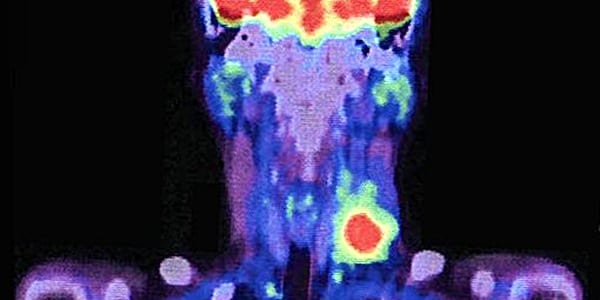
Study Rundown: Patients with follicular lymphoma, now more than ever, can expect extended survival time. Many of those diagnosed may die of unrelated causes while in remission. The current first-line approach to treatment of follicular lymphoma is rituximab chemotherapy. The ability to accurately assess patients’ response to rituximab and in turn use that information to make predictions about disease progression and survivability, is crucial before moving forward with further treatment. This study evaluated the role of PET-CT (with 18F-fluorodeoxyglucose as the uptake material) in rituximab response assessment. The investigators compared the results of both contrast-enhanced CT and PET-CT in patients with high-tumor burden follicular lymphoma who had received at least six cycles of rituximab chemotherapy.

After a median follow-up period of 54.8 months, they found that a promising response assessment by PET-CT strongly predicted survival and the absence of tumor progression in those patients, while a similar response assessment by contrast-enhancing CT was weakly predictive of those endpoints. The authors suggest that PET-CT, rather than contrast-enhanced CT, may be a more appropriate tool for assisting in clinical decision-making for physicians treating follicular lymphoma.

Funding: Groupe d’Etude des Lymphomes de l’Adulte (Paris, France), now LYSA (Lymphoma Study Association), Direction de la Recherche Clinique de l’Assistance Publique–Hôpitaux de Paris, Fondazione Italiana Linfomi, and the Italian Ministry of Health.

RELATED REPORTS

A biomarker-guided approach to cardioprotection in cancer patients receiving anthracyclines is associated with improvements in left ventricular ejection fraction

CAR+ T-cell lymphoma linked to cilta-cel therapy in myeloma

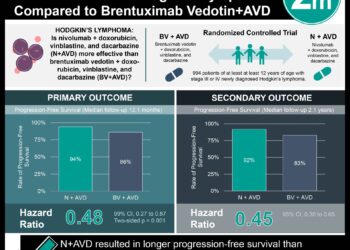
Nivolumab+AVD improves progression-free survival in advanced-stage Hodgkin lymphoma

Click to read the study, published today in The Lancet

Relevant Reading: Improved survival of follicular lymphoma patients in the United States

In-Depth [retrospective cohort]: This study reviewed the PET-CT and contrasted-enhanced CT rituximab response results in patients with follicular lymphoma from three previous multicenter prospective studies (the PRIMA study, PET-Folliculaire study, and the Fondazione Italiana Linfomi FOLL05 study). 439 patients had a local PET scan assessment and 246 had centrally-reviewed scans. Patients were excluded from review if their scans were not done within 3 months of the last rituximab cycle. Since this study was retrospective, the interpretation of scan results by local physicians was not controlled. This was a major limitation of the study that was addressed by ensuring that 246 patient scans were reviewed again independently by three PET physicians using the standard five-point Deauville scale.. The primary endpoints were progression-free survival and overall survival.

In patients with a positive PET-CT, 23.2% (95% Confidence Interval [CI] 11.1-37.9) were progression free at 4 years, while 63.4% (55.9-70.0) of patients with a negative scan were progression free (p<0.0001). The 4 year overall survivability was 87.2% (95% CI 71.9-94.5) in those with a positive scan and 97.1 (93.2-98.8) in those with a negative scan (p<0.0001). Additionally, a negative PET-CT scan predicted a median progression-free survival of 74.0 months in 83% of patients. A positive scan, however, had a median progression survival of 16.9 months. Contrast-enhanced CT was weakly predictive of both endpoints (Hazard Ratio [HR] 1.7, 95% CI 1.1-2.5; p=.017).

More from this author: Local excision inferior to major resection in T1-2 colon cancer and T2 rectal cancer, Secondary mastoid obliteration improves quality of life for patients with chronic otitis media, Healthcare reform linked with reduced racial disparities in surgical care, VATS lobectomy may be preferred in COPD with non-small-cell lung cancer, One-on-one training leads to improved virtual reality laparoscopic performance

Image: PD

©2012-2013 2minutemedicine.com. All rights reserved. No works may be reproduced without expressed written consent from 2minutemedicine.com. Disclaimer: We present factual information directly from peer reviewed medical journals. No post should be construed as medical advice and is not intended as such by the authors, editors, staff or by 2minutemedicine.com. PLEASE SEE A HEALTHCARE PROVIDER IN YOUR AREA IF YOU SEEK MEDICAL ADVICE OF ANY SORT.
Tags: lymphoma
Previous Post

Ultrasound as effective as CT at identifying high-risk kidney stones, reduces radiation exposure

Next Post

Clinically undetectable ovarian and tubal tumors may be present in high-risk patients

RelatedReports

Lisinopril and carvedilol reduce cardiotoxicity in breast cancer patients receiving trastuzumab and anthracyclines
Cardiology

A biomarker-guided approach to cardioprotection in cancer patients receiving anthracyclines is associated with improvements in left ventricular ejection fraction

January 13, 2026
Chemotherapy and stem-cell transplant for multiple myeloma remain superior
Hematology

CAR+ T-cell lymphoma linked to cilta-cel therapy in myeloma

March 7, 2025
Adaptive interim PET-CT guides treatment for advanced Hodgkin’s lymphoma
Chronic Disease

Nivolumab+AVD improves progression-free survival in advanced-stage Hodgkin lymphoma

November 21, 2024
Nivolumab+AVD Improves Survival in  Advanced Classic Hodgkin’s Lymphoma Compared to Brentuximab Vedotin+AVD
StudyGraphics

Nivolumab+AVD Improves Survival in Advanced Classic Hodgkin’s Lymphoma Compared to Brentuximab Vedotin+AVD

October 30, 2024
Next Post
Conservative treatment of recurrent ovarian tumors may preserve fertility

Clinically undetectable ovarian and tubal tumors may be present in high-risk patients

MRI helps predict risk of local recurrence in upper rectal cancers

Cardiac MRI predicts degree of heart dysfunction after STEMI

3D mammography (tomosynthesis) enhances accuracy of breast cancer screening

Limited benefit to extending breast cancer screening in older women

2 Minute Medicine® is an award winning, physician-run, expert medical media company. Our content is curated, written and edited by practicing health professionals who have clinical and scientific expertise in their field of reporting. Our editorial management team is comprised of highly-trained MD physicians. Join numerous brands, companies, and hospitals who trust our licensed content.

Recent Reports

  • Two scores for risk stratification of adults presenting with syncope may be effective at identifying those with low risk
  • Use of procalcitonin in neonatal late-onset sepsis may reduce the duration of antibiotic therapy without increase in mortality
  • A novel therapy targeting γ-aminobutyric acid is safe and may be effective in major depressive disorder
License Content
Terms of Use | Disclaimer
Cookie Policy
Privacy Statement (EU)
Disclaimer
  • Specialties
    • All Specialties, All Recent Reports
    • Cardiology
    • Chronic Disease
    • Dermatology
    • Emergency
    • Endocrinology
    • Gastroenterology
    • Imaging and Intervention
    • Infectious Disease
    • Nephrology
    • Neurology
    • Obstetrics
    • Oncology
    • Ophthalmology
    • Pediatrics
    • Pharma
    • Preclinical
    • Psychiatry
    • Public Health
    • Pulmonology
    • Rheumatology
    • Surgery
  • Tools
    • EvidencePulse™
    • RVU Search
    • NPI Registry Lookup
  • Pharma
  • AI News
  • The Scan
  • Classics™
    • 2MM+ Online Access
    • Paperback and Ebook
  • Rewinds
  • Partners
    • License Content
    • Submit Press Release
    • Advertise with Us
  • Account
    • Subscribe
    • Sign-in
    • My account
No Result
View All Result

© 2026 2 Minute Medicine, Inc. - Physician-written medical news.