• About
  • Masthead
  • License Content
  • Advertise
  • Submit Press Release
  • RSS/Email List
  • 2MM Podcast
  • Write for us
  • Contact Us
2 Minute Medicine
No Result
View All Result

No products in the cart.

SUBSCRIBE
  • About
  • Specialties
    • All Specialties, All Recent Reports
    • Cardiology
    • Chronic Disease
    • Dermatology
    • Emergency
    • Endocrinology
    • Gastroenterology
    • Imaging and Intervention
    • Infectious Disease
    • Nephrology
    • Neurology
    • Obstetrics
    • Oncology
    • Ophthalmology
    • Pediatrics
    • Pharma
    • Preclinical
    • Psychiatry
    • Public Health
    • Pulmonology
    • Rheumatology
    • Surgery
  • Tools+
    • EvidencePulse™
    • HypeCheck™
    • NPI Registry Lookup
    • RVU Search
  • Pharma
  • AI Roundup
  • The Scan+
  • Classics™+
    • 2MM+ Online Access
    • Paperback and Ebook
  • Rewinds
  • Partners
    • License Content
    • Submit Press Release
    • Advertise with Us
  • Account
    • Subscribe
    • My account
    • Cart
    • Sign-in
2 Minute Medicine
  • About
  • Specialties
    • All Specialties, All Recent Reports
    • Cardiology
    • Chronic Disease
    • Dermatology
    • Emergency
    • Endocrinology
    • Gastroenterology
    • Imaging and Intervention
    • Infectious Disease
    • Nephrology
    • Neurology
    • Obstetrics
    • Oncology
    • Ophthalmology
    • Pediatrics
    • Pharma
    • Preclinical
    • Psychiatry
    • Public Health
    • Pulmonology
    • Rheumatology
    • Surgery
  • Tools+
    • EvidencePulse™
    • HypeCheck™
    • NPI Registry Lookup
    • RVU Search
  • Pharma
  • AI Roundup
  • The Scan+
  • Classics™+
    • 2MM+ Online Access
    • Paperback and Ebook
  • Rewinds
  • Partners
    • License Content
    • Submit Press Release
    • Advertise with Us
  • Account
    • Subscribe
    • My account
    • Cart
    • Sign-in
SUBSCRIBE
2 Minute Medicine
Subscribe
Home All Specialties Oncology

Variation in prostate cancer screening rates associated with subsequent metastatic prostate cancer incidence
byGursharan SohiandYuchen Dai
October 30, 2022
in Oncology, Public Health, Urology
Reading Time: 3 mins read
Patient Basics: Prostate-Specific Antigen Blood Test (PSA Test)
Share on FacebookShare on Twitter

1. A retrospective analysis demonstrated that prostate-specific antigen (PSA) screening has overall declined in popularity in recent years.

2. Health centers with higher rates of PSA screening tended to have lower rates of metastatic prostate cancer diagnosis.

Level of Evidence Rating: 2 (Good)

Study Rundown: Prostate cancer is one of the most common malignancies, although unpredictable tumor biology makes it difficult to define screening guidelines for the average-risk population. The decision to monitor prostate-specific antigen (PSA) levels is thus individualized based on a patient’s risk factors for the disease and their goals of care. Society guidelines have varied with time as new evidence emerges about the etiology and course of prostate cancer. As such, Bryant et al. sought to determine how trends in PSA screening affected the rate of metastatic prostate cancer diagnoses at the population level.

Data from 4,678,412 patients were included in this study.  There was an overall decline in the rate of PSA screening over the study period by approximately 10% between 2005 to 2019. The rate of prostate biopsy decreased accordingly as well. The age-adjusted incidence rate of prostate cancer diagnosis decreased in the first part of the study period up until 2014 and was relatively stable thereafter. Concomitantly, the rate of metastatic prostate cancer diagnosis increased over the study period. The year with the lowest rate of metastatic prostate cancer was also the year with the highest rate of PSA screening (2008).

This study demonstrated that there may be an inverse relationship between PSA screening rates and prostate cancer mortality amongst the general population. A primary strength of this study was the large sample size and the longitudinal follow-up. However, these results should be interpreted with caution given the retrospective nature of this study and the many personal considerations that may factor into a patient’s decision as to whether they should pursue PSA screening.

RELATED REPORTS

2 Minute Medicine Rewind July 20, 2026

Stockholm3 outperforms PSA for detecting significant prostate cancer 

New model enhances prediction of prostate cancer-specific mortality

Click here to read this study in JAMA Oncology

Relevant reading: PSA screening in high-risk groups: what are the changes in benefit and harm?

In-Depth: [retrospective cohort]: Data for this study were ascertained from the Veterans Affairs Corporate Warehouse, which accounts for the medical records of all United States army veterans from designated facilities. Records were reviewed from 2005 through to 2019. The exposure of interest was the rate of PSA screening between 2005 and 2014, calculated as the number of males over 40 who underwent PSA testing out of all males over 40 receiving healthcare at a given Veterans Affairs Health Center in a year. The primary outcome was the rate of metastatic prostate cancer diagnosis as defined by Gleason score or pathology report definitions.

The PSA screening rate in 2005 was 47.2%, and 37.0% in 2019. PSA screening peaked at 50.8% of the cohort in 2008. The rate of non-screening, defined as patients who had not undergone a PSA test within 3 years of the index date, increased from 20.9% in 2005 to 33.2% in 2019. The incidence rate of metastatic prostate cancer in 2005 was 5.2 per 100,000 men and 7.9 per 100,000 men in 2019. The lowest incidence rate reported was 4.6 per 100,000 men in 2008. Statistical analysis demonstrated that facility-level PSA screening rates did seem to affect rates of metastatic prostate cancer diagnosis: an incidence rate ratio of 0.91 for the risk of metastatic prostate cancer with each 10% increase in the rate of screening was identified (95% confidence interval 0.87-0.96). Other factors associated with increased risk of metastatic disease included Black patients, patients older than 70 and those living in the Pacific region.

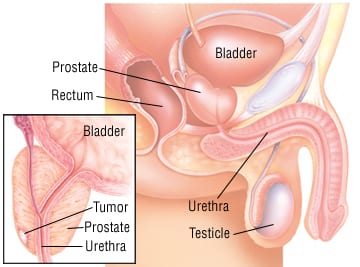
Image: PD

©2022 2 Minute Medicine, Inc. All rights reserved. No works may be reproduced without expressed written consent from 2 Minute Medicine, Inc. Inquire about licensing here. No article should be construed as medical advice and is not intended as such by the authors or by 2 Minute Medicine, Inc.


Tags: metastatic prostate cancerprostate specific antigen (PSA)PSA
Previous Post

Diabetes, stroke, and coronary heart disease associated with increased mortality among Black adults: Jackson Heart Study

Next Post

2 Minute Medicine Rewind October 31, 2022

RelatedReports

Remote patient monitoring did not reduce heart failure readmissions: The BEAT-HF trial
Weekly Rewinds

2 Minute Medicine Rewind July 20, 2026

July 20, 2026
Patient-reported outcomes differ significantly based on treatment in prostate cancer: The ProtecT trial
Oncology

Stockholm3 outperforms PSA for detecting significant prostate cancer 

June 22, 2026
Testosterone replacement in male cancer survivors helps improve body composition
Oncology

New model enhances prediction of prostate cancer-specific mortality

January 12, 2026
Androgen deprivation in prostate cancer: intermittent may compromise survival
Chronic Disease

Radiotherapy and abiraterone improve survival in low-volume metastatic castration-sensitive prostate cancer

December 18, 2024
Next Post
Rivaroxaban likely reduces risk of recurrent stroke in specific subgroup of patients with embolic stroke of undetermined source

2 Minute Medicine Rewind October 31, 2022

Relationship between medication adherence, religiosity and spirituality amongst patients with cardiovascular disease is inconclusive

Risk of autism in offspring linked to maternal pregestational diabetes and severe obesity

COVID-19 vaccination is safe during pregnancy and has benefits for neonatal outcomes

EvidencePulse™ by 2 Minute Medicine 2026 evidence scan 3 reports You asked top stroke trials 2026 Synthesizing medical evidence... Top 2026 stroke trial results: OCEANIC — ischemic stroke: 6.2% vs 8.4% OPTION* — mRS 0–1: 43.6% vs 34.2% ORIENTAL* — mRS 0–2: 58.6% vs 46.6% *Higher sICH in intervention arms Participants randomizedN OCEANIC 12,327 OPTION 570 ORIENTAL 564 Ask about guidelines or landmark trials... ↑ Try EvidencePulse™ Ask the evidence.
Get the signal.
Try it now → Physician-trained medical AI by 2 Minute Medicine

2MM+ All Access

Full details →
$4.99 /month

5-day free trial · cancel anytime

  • ✓100+ physician-written reports
  • ✓EvidencePulse™ + HypeCheck™
  • ✓Ad-free reading + newsletters
Start 5-day free trial

Then $4.99/month. Manage renewal in your account.

2 Minute Medicine® is an award winning, physician-run, expert medical media company. Our content is curated, written and edited by practicing health professionals who have clinical and scientific expertise in their field of reporting. Our editorial management team is comprised of highly-trained MD physicians. Join numerous brands, companies, and hospitals who trust our licensed content.

Recent Reports

  • Aletta brings autonomous robotics into routine blood collection
  • Higher coffee intake is associated with lower visceral fat despite similar body mass index
  • Molecularly guided therapy may improve outcomes in patients with unfavourable cancer of unknown primary compared with standard chemotherapy
License Content
Terms of Use | Disclaimer
Cookie Policy
Cleantalk Pixel
  • About
  • Specialties
    • All Specialties, All Recent Reports
    • Cardiology
    • Chronic Disease
    • Dermatology
    • Emergency
    • Endocrinology
    • Gastroenterology
    • Imaging and Intervention
    • Infectious Disease
    • Nephrology
    • Neurology
    • Obstetrics
    • Oncology
    • Ophthalmology
    • Pediatrics
    • Pharma
    • Preclinical
    • Psychiatry
    • Public Health
    • Pulmonology
    • Rheumatology
    • Surgery
  • Tools
    • EvidencePulse™
    • HypeCheck™
    • NPI Registry Lookup
    • RVU Search
  • Pharma
  • AI Roundup
  • The Scan
  • Classics™
    • 2MM+ Online Access
    • Paperback and Ebook
  • Rewinds
  • Partners
    • License Content
    • Submit Press Release
    • Advertise with Us
  • Account
    • Subscribe
    • My account
    • Cart
    • Sign-in
No Result
View All Result

© 2026 2 Minute Medicine, Inc. - Physician-written medical news.

2MM+ All Access Full details →

The medical literature, distilled daily.

Monthly plan selected: $4.99 /month.

$4.99/month

5-day free trial · cancel anytime

Start 5-day free trial

Then $4.99/month. Manage renewal in your account.

Yearly plan selected: $49.90 /year.

$49.90/year

2 months free · only $4.16/month

Start 5-day free trial

Then $49.90/year. Manage renewal in your account.

Membership benefits

  • ✓100+ physician-written reports
  • ✓AI EvidencePulse™ + HypeCheck™
  • ✓Ad-free reading + newsletters

Already a member? Sign in