• About
  • Masthead
  • License Content
  • Advertise
  • Submit Press Release
  • RSS/Email List
  • 2MM Podcast
  • Write for us
  • Contact Us
2 Minute Medicine
No Result
View All Result

No products in the cart.

SUBSCRIBE
  • About
  • Specialties
    • All Specialties, All Recent Reports
    • Cardiology
    • Chronic Disease
    • Dermatology
    • Emergency
    • Endocrinology
    • Gastroenterology
    • Imaging and Intervention
    • Infectious Disease
    • Nephrology
    • Neurology
    • Obstetrics
    • Oncology
    • Ophthalmology
    • Pediatrics
    • Pharma
    • Preclinical
    • Psychiatry
    • Public Health
    • Pulmonology
    • Rheumatology
    • Surgery
  • Tools+
    • EvidencePulse™
    • HypeCheck™
    • NPI Registry Lookup
    • RVU Search
  • Pharma
  • AI Roundup
  • The Scan+
  • Classics™+
    • 2MM+ Online Access
    • Paperback and Ebook
  • Rewinds
  • Partners
    • License Content
    • Submit Press Release
    • Advertise with Us
  • Account
    • Subscribe
    • My account
    • Cart
    • Sign-in
2 Minute Medicine
  • About
  • Specialties
    • All Specialties, All Recent Reports
    • Cardiology
    • Chronic Disease
    • Dermatology
    • Emergency
    • Endocrinology
    • Gastroenterology
    • Imaging and Intervention
    • Infectious Disease
    • Nephrology
    • Neurology
    • Obstetrics
    • Oncology
    • Ophthalmology
    • Pediatrics
    • Pharma
    • Preclinical
    • Psychiatry
    • Public Health
    • Pulmonology
    • Rheumatology
    • Surgery
  • Tools+
    • EvidencePulse™
    • HypeCheck™
    • NPI Registry Lookup
    • RVU Search
  • Pharma
  • AI Roundup
  • The Scan+
  • Classics™+
    • 2MM+ Online Access
    • Paperback and Ebook
  • Rewinds
  • Partners
    • License Content
    • Submit Press Release
    • Advertise with Us
  • Account
    • Subscribe
    • My account
    • Cart
    • Sign-in
SUBSCRIBE
2 Minute Medicine
Subscribe
EvidencePulse™ by 2 Minute Medicine 2026 evidence scan 3 reports You asked top stroke trials 2026 Synthesizing medical evidence... Top 2026 stroke trial results: OCEANIC — ischemic stroke: 6.2% vs 8.4% OPTION* — mRS 0–1: 43.6% vs 34.2% ORIENTAL* — mRS 0–2: 58.6% vs 46.6% *Higher sICH in intervention arms Participants randomizedN OCEANIC 12,327 OPTION 570 ORIENTAL 564 Ask about guidelines or landmark trials... ↑ Try EvidencePulse™ Ask the evidence.
Get the signal.
Try it now → Physician-trained medical AI by 2 Minute Medicine
Home All Specialties Oncology

Annual CT safe and effective for screening of nonsolid lung nodules
byXiaofan PanandDylan Wolman
June 28, 2015
in Oncology, Pulmonology
Reading Time: 3 mins read
Annual CT safe and effective for screening of nonsolid lung nodules
Share on FacebookShare on Twitter

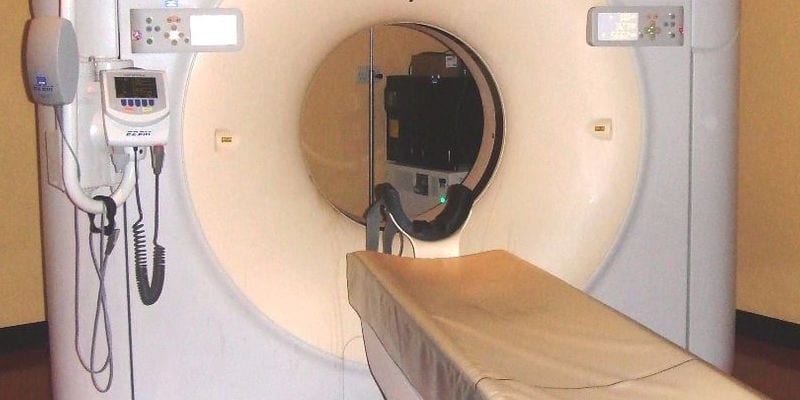
1. In patients with nonsolid lung nodules, yearly computed tomography (CT) scans may be used to safely screen for malignant progression regardless of lesion size.

2. Newly identified nonsolid nodules were more likely to resolve or to decrease in size than other nodules, and those that do persist and progress are likely early stage adenocarcinomas.

Evidence Rating Level: 2 (Good)

Study Rundown: The widespread utilization of chest CT scans has increased the importance of the accurate evaluation of lung nodules. These small parenchymal lesions are classified as solid, partially solid or nonsolid based on CT morphology, with solid nodules most strongly associated with malignancy. Nonsolid nodules present the most difficult assessment challenge due to their irregular morphology and poorly defined borders affecting the radiologist’s ability to quantify size over time. Typical evaluation of nonsolid nodules involves tracking them over time for potential transition to solid nodules, requiring repeated chest CT scans or invasive biopsies. The goal of this study was to examine the impact of annual CT scans on the long-term clinical course of patients with non-solid nodules. To this end, all study participants received baseline and repeated CT scans at 12-month intervals and the prevalence of nonsolid nodules was recorded, as were long-term outcomes and interventions for patients in the cohort. Prospective baseline imaging revealed that only 4.2% of patients had at least one nonsolid nodule, and only 0.7% of annual repeat screenings identified nonsolid nodules. Of these, 1/30 to 1/50 proved to be stage I adenocarcinomas, with no later stage malignancies revealed. Survival among patients with cancers identified in this fashion was 100%, therefore the authors concluded that nonsolid nodules of any size can be safely monitored with yearly CT scans. This study was limited in that not all the nonsolid nodules were readily diagnosable within the follow-up interval of the study, which may have influenced the prevalence findings of the study. Intraobserver variability may have also limited the generalizability of findings as nodules features were measured by a single radiologist. Future studies should focus on broadening the generalizability of these findings through a multicenter cohort with multiple radiologist readers.

Click to read the study in Radiology

Relevant Reading: Recommendations for the management of subsolid pulmonary nodules detected at CT: a statement from the Fleischner Society.

RELATED REPORTS

Lung cancer screening models show variable performance across populations

Celebrity body scans are colliding with radiology evidence

Two plasma-based biomarkers may accurately predict positive CT head scans in traumatic brain injury

In-Depth [prospective cohort]: The resarchers collected data from the International Early Lung Cancer Program including 57,496 baseline CT scans with 64,677 follow-up studies at 12-month intervals. Among these studies, 2,392 (4.2%) baseline scans revealed nonsolid nodules, of which 73 studies revealed adenocarcinoma. Yearly follow-up CT scans identified new nonsolid nodules in 485 (0.7%) of 64,677 repeated screenings, 11 of which led to a diagnosis of lung adenocarcinoma. All adenocarcinomas diagnosed from nonsolid nodules were stage I, regardless of initial size or time to diagnosis. Nonsolid nodules were more likely to resolve or decrease in size with annual repeat CT scans than in baseline rounds (p < 0.0001). Participants with malignancies underwent various treatments with median time to treatment at 19 months (interquartile range 6–41 months). Progressive transitions to invasive disease, or development of solid nodule characteristics, were found in 22 cases prior to treatment with median transition time from nonsolid to part-solid at 25 months. Participants were followed for an average of six years and treatment via surgical intervention was curative for all study participants with detected disease, yielding a 100% survival rate with median follow-up since diagnosis of 78 months (interquartile range 45–122 months).

Image: PD

©2015 2 Minute Medicine, Inc. All rights reserved. No works may be reproduced without expressed written consent from 2 Minute Medicine, Inc. Inquire about licensing here. No article should be construed as medical advice and is not intended as such by the authors or by 2 Minute Medicine, Inc.
Tags: cancer screeningComputed Tomography (CT)nodule
Previous Post

Increased risk of stillbirth recurrence after a previous stillbirth

Next Post

Amniotic fluid lactate associated with labor disorders

RelatedReports

Thoracic radiotherapy improves survival in small-cell lung cancer patients
Oncology

Lung cancer screening models show variable performance across populations

June 29, 2026
MRI helps predict risk of local recurrence in upper rectal cancers
Imaging and Intervention

Celebrity body scans are colliding with radiology evidence

September 4, 2026
Brain lesions on MRI linked with subsequent increased stroke risk
Emergency

Two plasma-based biomarkers may accurately predict positive CT head scans in traumatic brain injury

March 22, 2026
American College of Physicians releases principles to guide patient partnership in health care
Oncology

Human papillomavirus vaccination may allow longer cervical cancer screening intervals

February 2, 2026
Next Post
Amniotic fluid lactate associated with labor disorders

Amniotic fluid lactate associated with labor disorders

Umbilical cord milking improves placental transfusion

Umbilical cord milking improves placental transfusion

AAP recommends telemedicine to improve access to care

AAP recommends telemedicine to improve access to care

EvidencePulse™ by 2 Minute Medicine 2026 evidence scan 3 reports You asked top stroke trials 2026 Synthesizing medical evidence... Top 2026 stroke trial results: OCEANIC — ischemic stroke: 6.2% vs 8.4% OPTION* — mRS 0–1: 43.6% vs 34.2% ORIENTAL* — mRS 0–2: 58.6% vs 46.6% *Higher sICH in intervention arms Participants randomizedN OCEANIC 12,327 OPTION 570 ORIENTAL 564 Ask about guidelines or landmark trials... ↑ Try EvidencePulse™ Ask the evidence.
Get the signal.
Try it now → Physician-trained medical AI by 2 Minute Medicine

2MM+ All Access

Full details →
$4.99 /month

5-day free trial · cancel anytime

  • ✓100+ physician-written reports
  • ✓EvidencePulse™ + HypeCheck™
  • ✓Ad-free reading + newsletters
Start 5-day free trial

Then $4.99/month. Manage renewal in your account.

2 Minute Medicine® is an award winning, physician-run, expert medical media company. Our content is curated, written and edited by practicing health professionals who have clinical and scientific expertise in their field of reporting. Our editorial management team is comprised of highly-trained MD physicians. Join numerous brands, companies, and hospitals who trust our licensed content.

Recent Reports

  • Higher maternal body mass index is associated with increased risk of cardiovascular disease in offspring
  • Transanastomotic tubes not linked to anastomotic stricture after esophageal atresia repair
  • Artificial intelligence (AI) chatbot reduced depression, anxiety, and eating disorder risk symptoms
License Content
Terms of Use | Disclaimer
Cookie Policy
Cleantalk Pixel
2MM+ All Access Full details →

The medical literature, distilled daily.

Monthly plan selected: $4.99 /month.

$4.99/month

5-day free trial · cancel anytime

Start 5-day free trial

Then $4.99/month. Manage renewal in your account.

Yearly plan selected: $49.90 /year.

$49.90/year

2 months free · only $4.16/month

Start 5-day free trial

Then $49.90/year. Manage renewal in your account.

Membership benefits

  • ✓100+ physician-written reports
  • ✓AI EvidencePulse™ + HypeCheck™
  • ✓Ad-free reading + newsletters

Already a member? Sign in

  • About
  • Specialties
    • All Specialties, All Recent Reports
    • Cardiology
    • Chronic Disease
    • Dermatology
    • Emergency
    • Endocrinology
    • Gastroenterology
    • Imaging and Intervention
    • Infectious Disease
    • Nephrology
    • Neurology
    • Obstetrics
    • Oncology
    • Ophthalmology
    • Pediatrics
    • Pharma
    • Preclinical
    • Psychiatry
    • Public Health
    • Pulmonology
    • Rheumatology
    • Surgery
  • Tools
    • EvidencePulse™
    • HypeCheck™
    • NPI Registry Lookup
    • RVU Search
  • Pharma
  • AI Roundup
  • The Scan
  • Classics™
    • 2MM+ Online Access
    • Paperback and Ebook
  • Rewinds
  • Partners
    • License Content
    • Submit Press Release
    • Advertise with Us
  • Account
    • Subscribe
    • My account
    • Cart
    • Sign-in
No Result
View All Result

© 2026 2 Minute Medicine, Inc. - Physician-written medical news.