

• About
  • Masthead
  • License Content
  • Advertise
  • Submit Press Release
  • RSS/Email List
  • 2MM Podcast
  • Write for us
  • Contact Us
2 Minute Medicine
No Result
View All Result

No products in the cart.

SUBSCRIBE
  • Specialties
    • All Specialties, All Recent Reports
    • Cardiology
    • Chronic Disease
    • Dermatology
    • Emergency
    • Endocrinology
    • Gastroenterology
    • Imaging and Intervention
    • Infectious Disease
    • Nephrology
    • Neurology
    • Obstetrics
    • Oncology
    • Ophthalmology
    • Pediatrics
    • Pharma
    • Preclinical
    • Psychiatry
    • Public Health
    • Pulmonology
    • Rheumatology
    • Surgery
  • Tools
    • EvidencePulse™
    • RVU Search
    • NPI Registry Lookup
  • Pharma
  • AI News
  • The Scan+
  • Classics™+
    • 2MM+ Online Access
    • Paperback and Ebook
  • Rewinds
  • Partners
    • License Content
    • Submit Press Release
    • Advertise with Us
  • Account
    • Subscribe
    • Sign-in
    • My account
2 Minute Medicine
  • Specialties
    • All Specialties, All Recent Reports
    • Cardiology
    • Chronic Disease
    • Dermatology
    • Emergency
    • Endocrinology
    • Gastroenterology
    • Imaging and Intervention
    • Infectious Disease
    • Nephrology
    • Neurology
    • Obstetrics
    • Oncology
    • Ophthalmology
    • Pediatrics
    • Pharma
    • Preclinical
    • Psychiatry
    • Public Health
    • Pulmonology
    • Rheumatology
    • Surgery
  • Tools
    • EvidencePulse™
    • RVU Search
    • NPI Registry Lookup
  • Pharma
  • AI News
  • The Scan+
  • Classics™+
    • 2MM+ Online Access
    • Paperback and Ebook
  • Rewinds
  • Partners
    • License Content
    • Submit Press Release
    • Advertise with Us
  • Account
    • Subscribe
    • Sign-in
    • My account
SUBSCRIBE
2 Minute Medicine
Subscribe
Home All Specialties Infectious Disease

Postnatal cytolomegalovirus infection not linked to impaired motor development
byMatthew Lin, MDandLeah Carr, MD
January 12, 2018
in Infectious Disease, Pediatrics
Reading Time: 3 mins read
0
Share on FacebookShare on Twitter

1. Postnatal cytomegalovirus (pCMV) infection in preterm infants associated with higher gross motor scores at 16 months of life and earlier age of onset of independent walking (AOIW).

2. At 6 years of age, children with a history of pCMV infection had cognitive scores within normal limits for age, although with significantly lower verbal IQ scores compared to their non-infected counterparts.

Evidence Rating Level: 1 (Excellent)

Study Rundown: CMV is one of the most common viral infection in neonates, and may be transmitted to neonates by congenital, perinatal, or postnatal route. Postnatal transmission commonly occurs via breastfeeding in virally shedding mothers. Term infants generally remain asymptomatic, but preterm infants and VLBW infants may be at increased risk of symptomatic disease and sequelae, including sepsislike syndrome and sensorineural hearing loss. Despite knowledge of acute complications, there is limited data on long-term neurodevelopmental outcomes in children with pCMV. The objective of this study was to evaluate neurodevelopmental outcomes in preterm infants who test positive for CMV postnatally. Developmental outcomes were measured through multiple, validated developmental and intelligence evaluations. Among the infants studied, pCMV infection was not associated with adverse effects on neurodevelopment during the first 6 years of life. At 6 years of age, infected children had significantly lower verbal IQ scores than their non-infected counterparts, but their scores were still within normal limits. The authors note that this difference is less clear as it may also be explained by maternal education and ethnicity. Infected infants had significantly higher motor performance at 16 months’ corrected age (CA) and had significantly earlier onset of walking. For providers, these data may help guide breastfeeding pasteurization and feeding policies at individual neonatal intensive care units.

Click to read the study in Pediatrics

Relevant Reading: Transmission of cytomegalovirus via breast milk to the prematurely born infant: a systematic review

RELATED REPORTS

Comparison of different types of ultrasound probes for lung ultrasound in neonates

Nutrition source does not influence weight gain for moderate-to-late-preterm infants

Video laryngoscopes for urgent use improve intubation success in neonates

In-Depth [prospective cohort study]: This single–center, prospective, longitudinal study included all infants <32 weeks gestational age admitted to the neonatal intensive care unit (NICU) at Wilhemina Children’s Hospital in Utrecht, the Netherlands, from April 2007 to December 2010. Infants lacking urine CMV studies at term equivalence age (TEA), severe cerebral abnormalities, chromosomal anomalies, death before TEA or lack of parental consent were excluded. Of 701 preterm infants, there were 462 eligible infants with known CMV at TEA, of which 411 had follow-up data. Of these infants, pCMV was diagnosed in 74. At 16 months, 49 (14%) of pCMV infants and 307 (86%) of pCMV infants were evaluated with Griffiths Mental Development Scales (GMDS) scores. Infants with pCMV had higher locomotor subscale scores than their non-infected counterparts (z-score=0.35 [SD=0.81] vs 0.02 [SD=0.98] in the control; p = 0.025). Between 24-30 months of age, there were no significant differences between Bayley Scales of Infant and Toddler Development, Third Edition (BSITD-III) and GMDS z-scores among pCMV-positive and pCMV-negative infants. Infants with pCMV had significantly earlier age of onset of initial walking (AOIW) compared to non-pCMV infants (14.7 months [SD=2.4] and 15.8 months [SD=3.1]; p = 0.026). At 6 years of age, 33 of 118 (28%) children with pCMV and 85 of 118 (72%) of non-pCMV children received Wechsler Preschool and Primary Scale of Intelligence, Third Edition (WPPSI-III) scores: Children with history of pCMV had mean scores all the normal range, with pCMV children having lower scores in verbal IQ compared to non-pCMV children (96 [SD=17] vs 103 [SD=15] points; p = 0.046). There were no significant differences in Movement Assessment Battery for Children, Second Edition (MABC-II) scores and sensorineural hearing loss between groups.

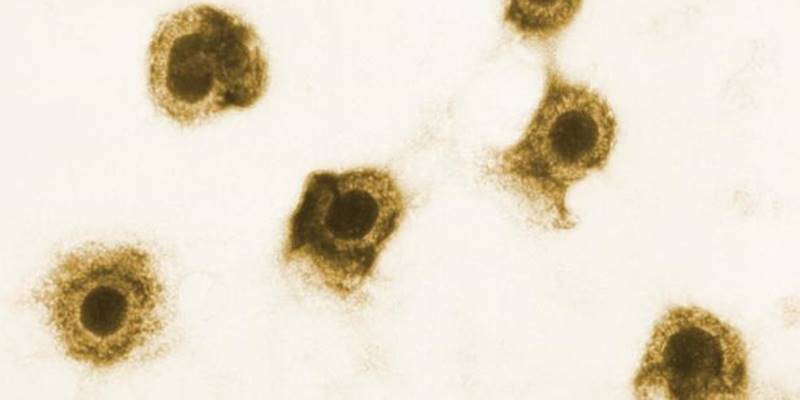
Image: PD

©2018 2 Minute Medicine, Inc. All rights reserved. No works may be reproduced without expressed written consent from 2 Minute Medicine, Inc. Inquire about licensing here. No article should be construed as medical advice and is not intended as such by the authors or by 2 Minute Medicine, Inc.

Tags: cytomegalovirus (CMV)developmental pediatricsneonatology
Previous Post

Risk-based lung cancer screening may prevent more deaths than current guidelines

Next Post

Broader statin use more likely to prevent cardiovascular events

RelatedReports

Racial, ethnic differences in outcomes of extremely preterm infants decreasing but persistent
Emergency

Comparison of different types of ultrasound probes for lung ultrasound in neonates

July 12, 2024
Increasing C-section room temperature linked to reduced neonatal, maternal hypothermia
Gastroenterology

Nutrition source does not influence weight gain for moderate-to-late-preterm infants

June 12, 2024
Evidence-based supportive therapy for bronchiolitis varies significantly between hospitals
Emergency

Video laryngoscopes for urgent use improve intubation success in neonates

June 12, 2024
Wide international variation in survival for periviable neonates
Obstetrics

Ibuprofen does not improve bronchopulmonary dysplasia outcomes

February 12, 2024
Next Post
Low circulating cholesterol in neonates linked with pyloric stenosis

Broader statin use more likely to prevent cardiovascular events

Infant room-sharing associated with less nighttime sleep and unsafe sleep practices

Urinalysis highly sensitive and specific for UTI in febrile infants

Radiation dose associated with increased heart disease in Hodgkin lymphoma survivors

Device closure for patent foramen ovale decreases recurrent stroke risk compared to medical therapy alone

2 Minute Medicine® is an award winning, physician-run, expert medical media company. Our content is curated, written and edited by practicing health professionals who have clinical and scientific expertise in their field of reporting. Our editorial management team is comprised of highly-trained MD physicians. Join numerous brands, companies, and hospitals who trust our licensed content.

Recent Reports

  • Atopic dermatitis activity is not associated with cardiovascular risk
  • Zorevunersen appears safe and may alleviate symptoms in children with Dravet syndrome
  • Apixaban outperforms rivaroxaban in venous thromboembolism bleeding risk
License Content
Terms of Use | Disclaimer
Cookie Policy
Privacy Statement (EU)
Disclaimer

The Classics in Medicine Paperback Released!

Over the past 30 years, the transition from print to digital media has contributed to an exponential increase in medical literature. In response, 2 Minute Medicine presents 160+ authoritative, physician-written summaries of the most cited landmark trials in medicine.

amazon-logo_blackGet-it-on-iBooks-badge

Click anywhere to close this announcement

  • Specialties
    • All Specialties, All Recent Reports
    • Cardiology
    • Chronic Disease
    • Dermatology
    • Emergency
    • Endocrinology
    • Gastroenterology
    • Imaging and Intervention
    • Infectious Disease
    • Nephrology
    • Neurology
    • Obstetrics
    • Oncology
    • Ophthalmology
    • Pediatrics
    • Pharma
    • Preclinical
    • Psychiatry
    • Public Health
    • Pulmonology
    • Rheumatology
    • Surgery
  • Tools
    • EvidencePulse™
    • RVU Search
    • NPI Registry Lookup
  • Pharma
  • AI News
  • The Scan
  • Classics™
    • 2MM+ Online Access
    • Paperback and Ebook
  • Rewinds
  • Partners
    • License Content
    • Submit Press Release
    • Advertise with Us
  • Account
    • Subscribe
    • Sign-in
    • My account
No Result
View All Result

© 2026 2 Minute Medicine, Inc. - Physician-written medical news.