• About
  • Masthead
  • License Content
  • Advertise
  • Submit Press Release
  • RSS/Email List
  • 2MM Podcast
  • Write for us
  • Contact Us
2 Minute Medicine
No Result
View All Result

No products in the cart.

SUBSCRIBE
  • Specialties
    • All Specialties, All Recent Reports
    • Cardiology
    • Chronic Disease
    • Dermatology
    • Emergency
    • Endocrinology
    • Gastroenterology
    • Imaging and Intervention
    • Infectious Disease
    • Nephrology
    • Neurology
    • Obstetrics
    • Oncology
    • Ophthalmology
    • Pediatrics
    • Pharma
    • Preclinical
    • Psychiatry
    • Public Health
    • Pulmonology
    • Rheumatology
    • Surgery
  • Tools
    • EvidencePulse™
    • RVU Search
    • NPI Registry Lookup
  • Pharma
  • AI News
  • The Scan+
  • Classics™+
    • 2MM+ Online Access
    • Paperback and Ebook
  • Rewinds
  • Partners
    • License Content
    • Submit Press Release
    • Advertise with Us
  • Account
    • Subscribe
    • Sign-in
    • My account
2 Minute Medicine
  • Specialties
    • All Specialties, All Recent Reports
    • Cardiology
    • Chronic Disease
    • Dermatology
    • Emergency
    • Endocrinology
    • Gastroenterology
    • Imaging and Intervention
    • Infectious Disease
    • Nephrology
    • Neurology
    • Obstetrics
    • Oncology
    • Ophthalmology
    • Pediatrics
    • Pharma
    • Preclinical
    • Psychiatry
    • Public Health
    • Pulmonology
    • Rheumatology
    • Surgery
  • Tools
    • EvidencePulse™
    • RVU Search
    • NPI Registry Lookup
  • Pharma
  • AI News
  • The Scan+
  • Classics™+
    • 2MM+ Online Access
    • Paperback and Ebook
  • Rewinds
  • Partners
    • License Content
    • Submit Press Release
    • Advertise with Us
  • Account
    • Subscribe
    • Sign-in
    • My account
SUBSCRIBE
2 Minute Medicine
Subscribe
Home All Specialties Ophthalmology

Artificial intelligence-aided analysis of retinal imaging may predict cardiovascular mortality
byMolly Munsell
October 14, 2022
in 2 Minute Medicine, Cardiology, Ophthalmology
Reading Time: 2 mins read
0
Share on FacebookShare on Twitter

1. A model combining artificial intelligence-enabled analysis of retinal vascular images from a large database with several traditional risk factors performed comparably to Framingham risk scores in predicting stroke and myocardial infarction (MI) risk.

2. Addition of retinal vascular scores to Framingham risk scores did not improve prediction of incident stroke and MI.

Evidence Rating Level: 2 (Good)

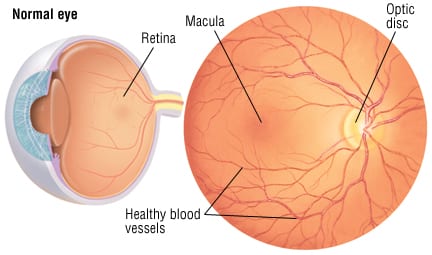
Study Rundown: Changes in retinal vasculature, such as tortuosity, arteriolar narrowing, and branching, have been shown to be associated with cardiovascular disease severity. Retinal imaging thus has potential as a noninvasive prognostic tool. This study aimed to develop a predictive model using artificial intelligence (AI)-enabled analysis of fundus photographs then assess the model’s performance relative to existing risk scores. The AI model was developed using images and outcomes data from about 64,000 patients in the UK Biobank and tested on about 6,000 patients in another database. A model including retinal vessel metrics, age, smoking, and medical history [use of blood pressure and cholesterol medications, diabetes history, past stroke or myocardial infarction (MI)] predicted incident stroke or MI about as well as Framingham risk scores. Adding retinal data to Framingham risk scores did not improve their predictive performance. Patients in both databases had <1% incidence each of stroke, MI, and circulatory death, which limits the applicability of this predictive model to higher-risk populations. The overall performance data here suggests that retinal vascular metrics may perform a similar predictive role to serum lipid levels and blood pressure. Clinical integration of fundus photography in this setting would be challenging, but could one day provide a useful alternative.

Click to read the study in BJO

Relevant Reading: Retinal microvascular signs as screening and prognostic factors for cardiac disease: A systematic review of current evidence

RELATED REPORTS

Food and Drug Administration reviews model for predicting drug related liver injury

2MM: AI Roundup: Food and Drug Administration reviews liver injury prediction tool, Joint Commission launches healthcare artificial intelligence certification, governance playbooks aim to standardize adoption, and pediatric hospitals bring generative tools to the frontline

PrescriberPoint AI agent automates prior authorization with 94.5% acceptance

In-Depth [retrospective cohort]: For both the UK Biobank and EPIC-Norfolk databases, retinal vessel analysis was performed on non-dilated 45° color fundus photographs centered on the fovea. The AI analysis system was fully automated and returned average vessel width, total vessel area, tortuosity, and variance of widths across both eyes for each patient. The optimism adjusted C-statistic for circulatory mortality from a model including retinal vasculometry (RV), smoking, and medical history was 0.774 for men and 0.748 for women in the EPIC-Norfolk database, with R2 values of 0.392 and 0.333, respectively. The C-statistics for incident stroke and MI ranged from 0.641-0.714 with R2 from 0.150-0.274. Framingham Risk score C-statistics for stroke and MI for the same population ranged from 0.682-0.732 with R2 from 0.199-0.309. The RV-based model placed 45.5% of men and 49.9% of women from EPIC-Norfolk with incident stroke or MI in the top quintile of risk scores, compared to 45.5% and 50.9% for Framingham risk score.

Image: PD

©2022 2 Minute Medicine, Inc. All rights reserved. No works may be reproduced without expressed written consent from 2 Minute Medicine, Inc. Inquire about licensing here. No article should be construed as medical advice and is not intended as such by the authors or by 2 Minute Medicine, Inc.

Tags: artificial intelligencecardiovascular deathcardiovascular diseasecardiovascular riskframingham risk scorefundusfundus imagespredictive modelingretinarisk screening
Previous Post

#VisualAbstract: Intravenous immune globulin improved disease severity in dermatomyositis

Next Post

2 Minute Medicine Rewind October 17, 2022

RelatedReports

American College of Physicians releases principles to guide patient partnership in health care
AI Roundup

Food and Drug Administration reviews model for predicting drug related liver injury

June 16, 2026
2MM: AI Roundup- AI Cancer Test, Smarter Hospitals, Faster Drug Discovery, and Mental Health Tech [May 2nd, 2025]
AI Roundup

2MM: AI Roundup: Food and Drug Administration reviews liver injury prediction tool, Joint Commission launches healthcare artificial intelligence certification, governance playbooks aim to standardize adoption, and pediatric hospitals bring generative tools to the frontline

June 15, 2026
Record-based algorithm may improve lung cancer screening follow-up
AI Roundup

PrescriberPoint AI agent automates prior authorization with 94.5% acceptance

May 12, 2026
2MM: AI Roundup- AI Cancer Test, Smarter Hospitals, Faster Drug Discovery, and Mental Health Tech [May 2nd, 2025]
AI Roundup

2MM: AI Roundup – PrescriberPoint launches autonomous agent for prior authorization, Utah begins first in nation autonomous AI prescribing pilot, and JAMA study confirms ambient AI scribes return hours to the clinician work week

May 11, 2026
Next Post
Using HEART score to risk stratify patients with chest pain is safe but underutilized in the ED

2 Minute Medicine Rewind October 17, 2022

Few older adolescents meet recommended levels of physical activity

Exercise is an effective alternative in the management of non-severe depression

Patient Basics: Squamous Cell Carcinoma of the Lung

Toripalimab addition to chemotherapy showed improved survival in advanced stage non-small-cell lung cancer

2 Minute Medicine® is an award winning, physician-run, expert medical media company. Our content is curated, written and edited by practicing health professionals who have clinical and scientific expertise in their field of reporting. Our editorial management team is comprised of highly-trained MD physicians. Join numerous brands, companies, and hospitals who trust our licensed content.

Recent Reports

  • High intake of sugar-sweetened beverages is associated with increased risk of hepatocellular carcinoma
  • Pediatric hospitals adopt generative AI for documentation and care coordination
  • Hospitals face a new test of artificial intelligence governance
License Content
Terms of Use | Disclaimer
Cookie Policy
Privacy Statement (EU)
Disclaimer
  • Specialties
    • All Specialties, All Recent Reports
    • Cardiology
    • Chronic Disease
    • Dermatology
    • Emergency
    • Endocrinology
    • Gastroenterology
    • Imaging and Intervention
    • Infectious Disease
    • Nephrology
    • Neurology
    • Obstetrics
    • Oncology
    • Ophthalmology
    • Pediatrics
    • Pharma
    • Preclinical
    • Psychiatry
    • Public Health
    • Pulmonology
    • Rheumatology
    • Surgery
  • Tools
    • EvidencePulse™
    • RVU Search
    • NPI Registry Lookup
  • Pharma
  • AI News
  • The Scan
  • Classics™
    • 2MM+ Online Access
    • Paperback and Ebook
  • Rewinds
  • Partners
    • License Content
    • Submit Press Release
    • Advertise with Us
  • Account
    • Subscribe
    • Sign-in
    • My account
No Result
View All Result

© 2026 2 Minute Medicine, Inc. - Physician-written medical news.