• About
  • Masthead
  • License Content
  • Advertise
  • Submit Press Release
  • RSS/Email List
  • 2MM Podcast
  • Write for us
  • Contact Us
2 Minute Medicine
No Result
View All Result

No products in the cart.

SUBSCRIBE
  • About
  • Specialties
    • All Specialties, All Recent Reports
    • Cardiology
    • Chronic Disease
    • Dermatology
    • Emergency
    • Endocrinology
    • Gastroenterology
    • Imaging and Intervention
    • Infectious Disease
    • Nephrology
    • Neurology
    • Obstetrics
    • Oncology
    • Ophthalmology
    • Pediatrics
    • Pharma
    • Preclinical
    • Psychiatry
    • Public Health
    • Pulmonology
    • Rheumatology
    • Surgery
  • Tools+
    • EvidencePulse™
    • HypeCheck™
    • NPI Registry Lookup
    • RVU Search
  • Pharma
  • AI Roundup
  • The Scan+
  • Classics™+
    • 2MM+ Online Access
    • Paperback and Ebook
  • Rewinds
  • Partners
    • License Content
    • Submit Press Release
    • Advertise with Us
  • Account
    • Subscribe
    • My account
    • Cart
    • Sign-in
2 Minute Medicine
  • About
  • Specialties
    • All Specialties, All Recent Reports
    • Cardiology
    • Chronic Disease
    • Dermatology
    • Emergency
    • Endocrinology
    • Gastroenterology
    • Imaging and Intervention
    • Infectious Disease
    • Nephrology
    • Neurology
    • Obstetrics
    • Oncology
    • Ophthalmology
    • Pediatrics
    • Pharma
    • Preclinical
    • Psychiatry
    • Public Health
    • Pulmonology
    • Rheumatology
    • Surgery
  • Tools+
    • EvidencePulse™
    • HypeCheck™
    • NPI Registry Lookup
    • RVU Search
  • Pharma
  • AI Roundup
  • The Scan+
  • Classics™+
    • 2MM+ Online Access
    • Paperback and Ebook
  • Rewinds
  • Partners
    • License Content
    • Submit Press Release
    • Advertise with Us
  • Account
    • Subscribe
    • My account
    • Cart
    • Sign-in
SUBSCRIBE
2 Minute Medicine
Subscribe
EvidencePulse™ by 2 Minute Medicine 2026 evidence scan 3 reports You asked top stroke trials 2026 Synthesizing medical evidence... Top 2026 stroke trial results: OCEANIC — ischemic stroke: 6.2% vs 8.4% OPTION* — mRS 0–1: 43.6% vs 34.2% ORIENTAL* — mRS 0–2: 58.6% vs 46.6% *Higher sICH in intervention arms Participants randomizedN OCEANIC 12,327 OPTION 570 ORIENTAL 564 Ask about guidelines or landmark trials... ↑ Try EvidencePulse™ Ask the evidence.
Get the signal.
Try it now → Physician-trained medical AI by 2 Minute Medicine
Home All Specialties Oncology

Neoadjuvant FOLFOX compared to Chemoradiotherapy in Locally Advanced Rectal Cancer
byDaniel GoldshteinandSze Wah Samuel Chan
June 26, 2023
in Chronic Disease, Oncology
Reading Time: 3 mins read
Radiofrequency ablation of hepatic metastases in colorectal cancer linked with improved survival
Share on FacebookShare on Twitter

1. Patients who were randomized to neoadjuvant FOLFOX vs standard chemoradiation had similar disease-free and overall survival rates.

2. There were more severe (grade ≥3) adverse events in the FOLFOX group compared to the standard chemoradiation group.

Evidence Rating Level: 1 (Excellent)

Study Rundown: Pelvic chemoradiotherapy for locally advanced rectal cancer reduces the risk of disease recurrence in the pelvis, but it has negative effects on quality of life and physical function. Some studies have suggested that preoperative pelvic chemotherapy with fluorouracil sensitization and postoperative chemotherapy with the FOLFOX regimen improved disease-free survival in patients with rectal and colon cancer. This non-inferiority trial investigated if neoadjuvant FOLFOX is as effective as neoadjuvant chemoradiotherapy alone for locally advanced rectal cancer patients. The primary endpoint was noninferiority for disease-free survival (DFS), and secondary endpoints included overall survival (OS), local recurrence, pathological response rates, and toxic effects. Five-year DFS was 80.8% in the FOLFOX group and 78.6% in the chemoradiotherapy group, with HR 0.92. Five-year OS was 89.5% vs 90.2% in the FOLFOX vs chemoradiotherapy group, with HR 1.04. Local recurrence at 5 years was 1.8% and 1.6%, respectively with HR 1.18. With regards to safety, severe (grade ≥3) adverse events occurred in 41.0% of the FOLFOX group vs 22.8% in the chemoradiotherapy group. The most frequent grade 3 or higher toxic effects in the FOLFOX group were neutropenia, pain, and hypertension; vs the chemoradiotherapy group had lymphopenia, diarrhea, and hypertension. The strengths of the study included its long follow-up period and adequate sample size. The limitations of this study included the exclusion of high-risk patients. Overall, this study found that neoadjuvant FOLFOX chemotherapy with selective chemoradiotherapy was a viable alternative to the standard approach for locally advanced rectal cancer and may represent an approach with fewer long-term radiotherapy complications.

Click to read the study in NEJM

Relevant Reading: Neoadjuvant Chemotherapy Without Routine Use of Radiation Therapy for Patients With Locally Advanced Rectal Cancer: A Pilot Trial

RELATED REPORTS

Male sex and hispanic ethnicity are associated with increased risk of early-onset colorectal cancer

2 Minute Medicine Rewind June 29, 2026

2 Minute Medicine Rewind May 25, 2026

In-Depth [randomized controlled trial]: This multicenter, unblinded, noninferiority trial randomized adults with untreated, pathologically confirmed locally advanced rectal cancer staged T2-T3 into the FOLFOX group (6 cycles, 585 patients) vs the chemoradiotherapy group (50.4 Gy together with fluorouracil or capecitabine, 543 patients) before surgery. In both groups, adjuvant FOLFOX was suggested but not mandated. The patients in the FOLFOX group received chemoradiotherapy if their tumour shrank less than 20%, or who were unable to complete at least 5 cycles of FOLFOX. The median follow-up was 58 months. In the FOLFOX group, 9.1% received neoadjuvant chemoradiotherapy. Five-year DFS was 80.8% (95%CI, 77.9 to 83.7) in the FOLFOX group and 78.6% (95%CI, 75.4 to 81.8) in the chemoradiotherapy group, with HR 0.92 (90.2%CI, 0.74 to 1.14, p=0.005 for noninferiority). Five-year OS was 89.5% vs 90.2% in the FOLFOX vs chemoradiotherapy group, with HR 1.04 (95%CI, 0.74 to 1.44). Local recurrence at 5 years was 1.8% and 1.6%, respectively with HR 1.18 (95%CI, 0.44 to 3.16). Postoperatively, 74.9% of the FOLFOX group and 77.9% of the chemoradiotherapy group received adjuvant chemotherapy. With regards to safety, severe (grade ≥3) adverse events occurred in 41.0% of the FOLFOX group (12 weeks of treatment) vs 22.8% in the chemoradiotherapy group (5.5 weeks of treatment). The most frequent grade 3 or higher toxic effects in the FOLFOX group were neutropenia (20.3%), pain (3.1%), and hypertension (2.9%); vs the chemoradiotherapy group had lymphopenia (8.3%), diarrhea (6.4%), and hypertension (1.7%). Overall this study found that neoadjuvant FOLFOX chemotherapy with selective chemoradiotherapy was a viable alternative to the standard approach for locally advanced rectal cancer.

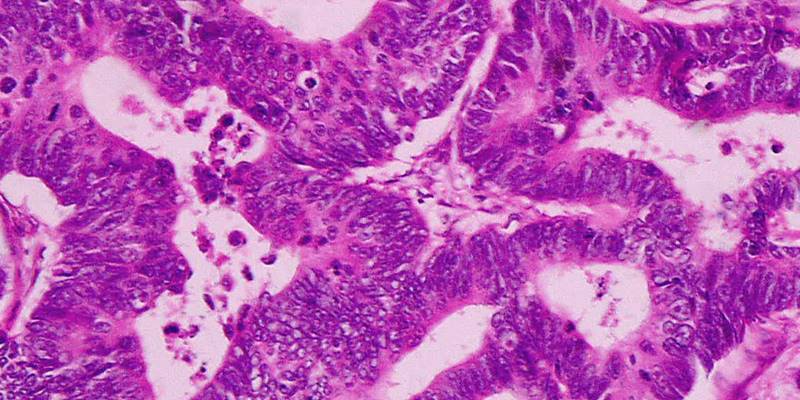
Image: PD

©2023 2 Minute Medicine, Inc. All rights reserved. No works may be reproduced without expressed written consent from 2 Minute Medicine, Inc. Inquire about licensing here. No article should be construed as medical advice and is not intended as such by the authors or by 2 Minute Medicine, Inc.

Tags: colorectal cancerrectal cancer
Previous Post

Survival in hormone receptor-positive, HER2-negative advanced breast cancer is improved with the addition of capivasertib to fulvestrant therapy

Next Post

Heart transplantation after circulatory death noninferior to standard-care transplantation

RelatedReports

Quick Take: Diagnostic Yield of One-Time Colonoscopy vs One-Time Flexible Sigmoidoscopy vs Multiple Rounds of Mailed Fecal Immunohistochemical Tests in Colorectal Cancer Screening
Chronic Disease

Male sex and hispanic ethnicity are associated with increased risk of early-onset colorectal cancer

June 29, 2026
Weekly Rewinds

2 Minute Medicine Rewind June 29, 2026

June 29, 2026
Wide international variation in survival for periviable neonates
Weekly Rewinds

2 Minute Medicine Rewind May 25, 2026

May 25, 2026
2 Minute Medicine AI Roundup editorial illustration
Oncology

Artificial intelligence predicts colorectal cancer in ulcerative colitis with 99% accuracy

September 4, 2026
Next Post
State policies for organ donation may be largely ineffective

Heart transplantation after circulatory death noninferior to standard-care transplantation

Brain injuries linked with increased military suicide risk

Craniotomy and decompressive craniectomy comparable in managing acute subdural hematoma

Survival greater in cervical cancer patients undergoing abdominal hysterectomy compared to minimally invasive techniques: the LACC trial

Defunctioning stoma in anterior resection for rectal cancer does not impact anastomotic leakage

EvidencePulse™ by 2 Minute Medicine 2026 evidence scan 3 reports You asked top stroke trials 2026 Synthesizing medical evidence... Top 2026 stroke trial results: OCEANIC — ischemic stroke: 6.2% vs 8.4% OPTION* — mRS 0–1: 43.6% vs 34.2% ORIENTAL* — mRS 0–2: 58.6% vs 46.6% *Higher sICH in intervention arms Participants randomizedN OCEANIC 12,327 OPTION 570 ORIENTAL 564 Ask about guidelines or landmark trials... ↑ Try EvidencePulse™ Get the signal. Try it now → Physician-trained medical AI by 2 Minute Medicine

2MM+ All Access

Full details →
$4.99 /month

3-day free trial · cancel anytime

  • ✓100+ physician-written reports
  • ✓EvidencePulse™ + HypeCheck™
  • ✓Ad-free reading + newsletters
Start 5-day free trial

Then $4.99/month. Manage renewal in your account.

2 Minute Medicine® is an award winning, physician-run, expert medical media company. Our content is curated, written and edited by practicing health professionals who have clinical and scientific expertise in their field of reporting. Our editorial management team is comprised of highly-trained MD physicians. Join numerous brands, companies, and hospitals who trust our licensed content.

Recent Reports

  • Nirsevimab (Beyfortus) may reduce severe respiratory syncytial virus infections among infants
  • An artificial intelligence (AI) tool achieved high diagnostic accuracy for the identification and prediction of sepsis
  • Use of long-acting broadly neutralizing antibodies may delay human immunodeficiency virus (HIV) rebound following discontinuation of antiretroviral therapy
License Content
Terms of Use | Disclaimer
Cookie Policy
Cleantalk Pixel
2MM+ All Access Full details →

The medical literature, distilled daily.

Monthly plan selected: $4.99 /month.

$4.99/month

3-day free trial · cancel anytime

Start 3-day free trial

Then $4.99/month. Manage renewal in your account.

Yearly plan selected: $49.90 /year.

$49.90/year

2 months free

Start 3-day free trial

Then $49.90/year.

Membership benefits

  • ✓100+ physician-written reports
  • ✓AI EvidencePulse™ + HypeCheck™
  • ✓Ad-free reading + newsletters

Already a member? Sign in

  • About
  • Specialties
    • All Specialties, All Recent Reports
    • Cardiology
    • Chronic Disease
    • Dermatology
    • Emergency
    • Endocrinology
    • Gastroenterology
    • Imaging and Intervention
    • Infectious Disease
    • Nephrology
    • Neurology
    • Obstetrics
    • Oncology
    • Ophthalmology
    • Pediatrics
    • Pharma
    • Preclinical
    • Psychiatry
    • Public Health
    • Pulmonology
    • Rheumatology
    • Surgery
  • Tools
    • EvidencePulse™
    • HypeCheck™
    • NPI Registry Lookup
    • RVU Search
  • Pharma
  • AI Roundup
  • The Scan
  • Classics™
    • 2MM+ Online Access
    • Paperback and Ebook
  • Rewinds
  • Partners
    • License Content
    • Submit Press Release
    • Advertise with Us
  • Account
    • Subscribe
    • My account
    • Cart
    • Sign-in
No Result
View All Result

© 2026 2 Minute Medicine, Inc. - Physician-written medical news.