

Universal Health Services acquisition of Talkspace connects virtual and inpatient behavioral care

1. Universal Health Services (UHS’s) $835 million acquisition of Talkspace combines a national virtual behavioral health platform with a large network of outpatient, crisis, acute, and inpatient psychiatric services, creating the infrastructure for patients to move between levels of care within one organization.
2. The clinical opportunity is strongest around access and transitions after psychiatric hospitalization, but ownership of both virtual and facility-based care will matter only if UHS can demonstrate that integration improves follow-up, escalation, continuity, and patient outcomes.
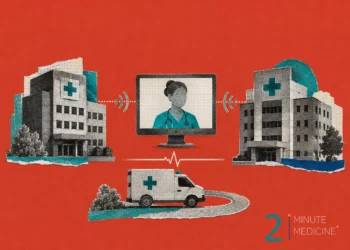
Digital mental health platforms and inpatient psychiatric systems have traditionally occupied opposite ends of behavioral healthcare, with patients left to navigate the fragmented space between them. Universal Health Services (UHS) changed that structure on August 17, 2026, when its $835 million acquisition of Talkspace closed and the virtual behavioral health company became an indirect wholly owned subsidiary. The combination places Talkspace’s national virtual network alongside UHS behavioral health facilities, acute care hospitals, outpatient programs, and crisis services, creating a potential continuum extending from routine therapy to hospitalization. The proposed care continuum could allow a patient identified as deteriorating during virtual treatment to move into higher-acuity UHS services while giving hospitalized patients a defined outpatient pathway before discharge. That model addresses a persistent structural problem in behavioral medicine, where patients may stabilize during hospitalization only to encounter delayed appointments, disconnected clinicians, medication discontinuity, or inadequate follow-up once they return home. Talkspace also brings a distributed clinician network and extensive payer relationships, potentially allowing UHS to reach patients who might never initially enter one of its physical facilities. The combined organization has specifically identified bidirectional referrals as an opportunity, which will matter clinically only if those referrals translate into timely appointments and successful transitions.
Artificial intelligence adds another dimension because Talkspace has incorporated algorithmic matching and automated behavioral health tools into its digital environment. Those technologies become more consequential when a platform is connected to a system capable of providing crisis intervention and inpatient treatment, since a risk signal can theoretically initiate clinical escalation rather than simply generate an alert. That potential also raises governance questions around false positives, missed risk, clinician responsibility, documentation, and how much confidence should be placed in automated interpretation of language associated with suicidality or deterioration. Vertical integration by itself does not guarantee better mental healthcare, and the combined organization will still need interoperable records, aligned clinical protocols, adequate clinician capacity, payer cooperation, and clear escalation pathways. The most useful outcomes to follow will be time to outpatient follow-up after discharge, emergency utilization, psychiatric readmission, treatment retention, and successful movement between levels of care. Physicians referring patients into the system should care less about whether a visit begins digitally or in a facility than whether clinically important information and responsibility follow the patient across those settings. The acquisition will be consequential if UHS can turn ownership of multiple behavioral health entry points into genuine continuity rather than simply a larger collection of services.
Image: PD
©2026 2 Minute Medicine, Inc. All rights reserved. No works may be reproduced without expressed written consent from 2 Minute Medicine, Inc. Inquire about licensing here. No article should be construed as medical advice and is not intended as such by the authors or by 2 Minute Medicine, Inc.
RelatedReports








 Get the app