A robotic approach for ventral hernia repair may improve postoperative outcomes
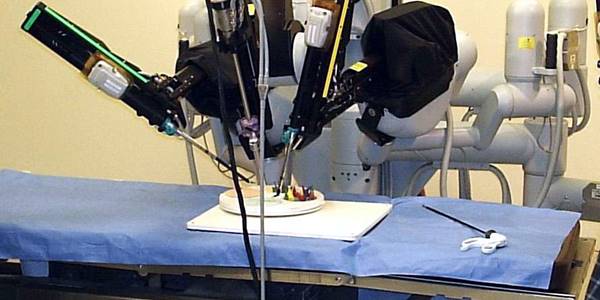
1. Robotic component separation for ventral hernia repair was associated with lower postoperative complication rates, shorter length of stay, and fewer readmissions compared to the open approach.
Evidence Rating Level: 2 (Good)
Surgical repair of complex ventral hernias is challenging and associated with high morbidity. While component separation is commonly used to repair complex ventral hernias, the optimal approach remains debated. Large multicenter studies comparing robotic vs open component separation are lacking. This study thus compared the complication rates and clinical outcomes of robotic vs open component separation for ventral hernia repair. This retrospective cohort study used data from the American College of Surgeons National Surgical Quality Improvement Program (ACS-NSQIP) and included patients undergoing component separation for ventral hernia repair. Study outcomes included 30-day surgical, wound, medical, and overall complications, as well as length of stay and readmission. Patients were split into either the robotic or open surgery groups. Among the 6,207 patients included, 4,443 (71.6%) underwent open technique and 1,764 (28.4%) robotic approach to component separation. After propensity matching (n = 5,259; mean [SD] age, 58.71 [12.78], 2,659 [50.6%] female), robotic repair was independently associated with lower overall complication rates (4.8% vs. 19.6%, adjusted odds ratio [aOR] 0.193, p < 0.001), including wound (2.2% vs. 10.2%, aOR 0.164, p < 0.001), surgical (2.9% vs. 10.0%, aOR 0.271, p < 0.001), and medical complications (2.0% vs. 7.0%, aOR 0.229, p < 0.001). Compared to open surgery, robotic surgery was also associated with shorter length of stay (1.34 vs. 3.86 days, p < 0.001) and lower readmission rates (4.4% vs. 9.1%, p < 0.001). Overall, this study found that robotic component separation for ventral hernia repair was associated with lower postoperative complication rates, shorter length of stay, and fewer readmissions compared to the open approach. These findings highlight the robotic approach as a promising alternative to the open approach. Future studies are needed to examine long-term outcomes.
Click here to read the study in PLOS One
Image: PD
©2026 2 Minute Medicine, Inc. All rights reserved. No works may be reproduced without expressed written consent from 2 Minute Medicine, Inc. Inquire about licensing here. No article should be construed as medical advice and is not intended as such by the authors or by 2 Minute Medicine, Inc.