• About
  • Masthead
  • License Content
  • Advertise
  • Submit Press Release
  • RSS/Email List
  • 2MM Podcast
  • Write for us
  • Contact Us
2 Minute Medicine
No Result
View All Result

No products in the cart.

SUBSCRIBE
  • Specialties
    • All Specialties, All Recent Reports
    • Cardiology
    • Chronic Disease
    • Dermatology
    • Emergency
    • Endocrinology
    • Gastroenterology
    • Imaging and Intervention
    • Infectious Disease
    • Nephrology
    • Neurology
    • Obstetrics
    • Oncology
    • Ophthalmology
    • Pediatrics
    • Pharma
    • Preclinical
    • Psychiatry
    • Public Health
    • Pulmonology
    • Rheumatology
    • Surgery
  • Tools
    • EvidencePulse™
    • RVU Search
    • NPI Registry Lookup
  • Pharma
  • AI News
  • The Scan+
  • Classics™+
    • 2MM+ Online Access
    • Paperback and Ebook
  • Rewinds
  • Partners
    • License Content
    • Submit Press Release
    • Advertise with Us
  • Account
    • Subscribe
    • Sign-in
    • My account
2 Minute Medicine
  • Specialties
    • All Specialties, All Recent Reports
    • Cardiology
    • Chronic Disease
    • Dermatology
    • Emergency
    • Endocrinology
    • Gastroenterology
    • Imaging and Intervention
    • Infectious Disease
    • Nephrology
    • Neurology
    • Obstetrics
    • Oncology
    • Ophthalmology
    • Pediatrics
    • Pharma
    • Preclinical
    • Psychiatry
    • Public Health
    • Pulmonology
    • Rheumatology
    • Surgery
  • Tools
    • EvidencePulse™
    • RVU Search
    • NPI Registry Lookup
  • Pharma
  • AI News
  • The Scan+
  • Classics™+
    • 2MM+ Online Access
    • Paperback and Ebook
  • Rewinds
  • Partners
    • License Content
    • Submit Press Release
    • Advertise with Us
  • Account
    • Subscribe
    • Sign-in
    • My account
SUBSCRIBE
2 Minute Medicine
Subscribe
Home All Specialties Cardiology

Asundexian may reduce recurrent ischemic stroke without increased bleeding risk
byZhenyu LiandThomas Su
April 20, 2026
in Cardiology, Neurology
Reading Time: 3 mins read
0
Share on FacebookShare on Twitter

1. In this randomized controlled trial involving patients with recent noncardioembolic ischemic cerebrovascular accident, asundexian in combination with antiplatelet therapy reduced recurrent ischemic stroke compared to antiplatelet therapy alone.

2. There was no significant difference in major bleeding between the two groups.

Evidence Rating Level: 1 (Excellent) 

Study Rundown: Recurrent ischemic stroke remains a major clinical challenge despite widespread use of antiplatelet therapy, with substantial long-term risks of disability and death. Traditional escalation to dual antiplatelet therapy improves early outcomes but is limited by bleeding risk, particularly with prolonged use. Factor XI has emerged as a promising therapeutic target because it appears to contribute more to pathologic thrombosis than to normal hemostasis, raising the possibility of safer anticoagulation strategies. This large, randomized controlled trial evaluated whether adding the factor XIa inhibitor asundexian to standard antiplatelet therapy could improve secondary stroke prevention. The study found that asundexian lowered the risk of recurrent ischemic stroke and major cardiovascular events compared to placebo. Importantly, this benefit was achieved without a meaningful increase in major bleeding or intracranial hemorrhage, addressing a key limitation of other antithrombotic strategies. Study strengths included the large, globally diverse population, early enrollment after stroke, and inclusion of a broad range of stroke severities and treatment strategies. However, the study was limited by relatively few patients with more severe strokes, limited representation of certain demographic groups, and significant rates of treatment discontinuation. Nonetheless, these findings suggest that asundexian may be effective for reducing the risk of secondary ischemic stroke.

Click to read the study in NEJM

Relevant Reading: One-Year Risk of Stroke after Transient Ischemic Attack or Minor Stroke

RELATED REPORTS

Edaravone dexborneol improves functional independence in patients with acute ischaemic stroke following endovascular thrombectomy

A novel validated, imaging-based risk model may predict poststroke epilepsy more accurately than existing tools

2 Minute Medicine Rewind January 12th, 2026

In-Depth [randomized controlled trial]: This phase 3, double-blind, randomized controlled trial (OCEANIC-STROKE) evaluated the efficacy and safety of asundexian, an oral factor XIa inhibitor, in patients with recent noncardioembolic ischemic stroke or high-risk transient ischemic attack (TIA). A total of 12,327 patients were enrolled within 72 hours of symptom onset and randomized in a 1:1 fashion to receive asundexian 50 mg daily or placebo, in addition to background single or dual antiplatelet therapy. Randomization was stratified by intended antiplatelet regimen, and patients were followed for a median duration of 567 days. The primary efficacy outcome, recurrent ischemic stroke, occurred in 6.2% of patients receiving asundexian compared to 8.4% in the placebo group, corresponding to a hazard ratio (HR) of 0.74 (95% confidence interval [CI], 0.65 to 0.84; p<0.001). Secondary outcomes also favored the asundexian group, including a reduction in the composite of cardiovascular death, myocardial infarction, or stroke (9.2% vs. 11.1%; HR, 0.83; p<0.001) and in any stroke (6.6% vs. 8.8%; HR, 0.74; p<0.001). However, the reduction in ischemic stroke within the first 90 days did not reach statistical significance (HR, 0.84; p=0.08), suggesting that treatment effects may accrue over longer follow-up. The primary safety outcome, major bleeding, was similar between groups (1.9% vs. 1.7%; HR, 1.10; 95% CI, 0.85 to 1.44). Rates of intracranial hemorrhage, hemorrhagic stroke, and fatal bleeding were also comparable. Subgroup analyses were consistent across age, sex, stroke subtype, and use of dual antiplatelet therapy. Overall, asundexian was associated with superior secondary ischemic stroke prevention, particularly later in treatment, without increased risk of major bleeding.

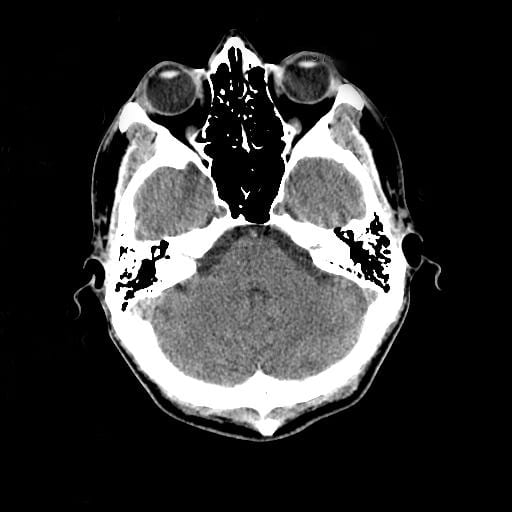
Image: PD

©2026 2 Minute Medicine, Inc. All rights reserved. No works may be reproduced without expressed written consent from 2 Minute Medicine, Inc. Inquire about licensing here. No article should be construed as medical advice and is not intended as such by the authors or by 2 Minute Medicine, Inc. 

Tags: acute ischemic strokeantiplatelet therapyasundexianFactor XI inhibitorsecondary stroke prevention
Previous Post

Transcranial magnetic stimulation may reduce combat-related post-traumatic stress disorder symptoms

Next Post

2 Minute Medicine Rewind April 20, 2026

RelatedReports

Imaging and Intervention

Edaravone dexborneol improves functional independence in patients with acute ischaemic stroke following endovascular thrombectomy

January 15, 2026
Non-alcoholic fatty liver disease and risk of incident acute myocardial infarction and stroke: findings from matched cohort study of 18 million European adults
Chronic Disease

A novel validated, imaging-based risk model may predict poststroke epilepsy more accurately than existing tools

January 12, 2026
Contrast-enhanced computed tomography associated with high sensitivity to renal stone detection
Weekly Rewinds

2 Minute Medicine Rewind January 12th, 2026

January 13, 2026
Rivaroxaban likely reduces risk of recurrent stroke in specific subgroup of patients with embolic stroke of undetermined source
Cardiology

The addition of interacting antiarrhythmics to direct oral anticoagulants in patients with non-valvular atrial fibrillation may not increase ischemic stroke risk compared to non-interacting antiarrhythmics

January 13, 2026
Next Post
Non-alcoholic fatty liver disease and risk of incident acute myocardial infarction and stroke: findings from matched cohort study of 18 million European adults

2 Minute Medicine Rewind April 20, 2026

2 Minute Medicine® is an award winning, physician-run, expert medical media company. Our content is curated, written and edited by practicing health professionals who have clinical and scientific expertise in their field of reporting. Our editorial management team is comprised of highly-trained MD physicians. Join numerous brands, companies, and hospitals who trust our licensed content.

Recent Reports

  • 2 Minute Medicine Rewind April 20, 2026
  • Asundexian may reduce recurrent ischemic stroke without increased bleeding risk
  • Transcranial magnetic stimulation may reduce combat-related post-traumatic stress disorder symptoms
License Content
Terms of Use | Disclaimer
Cookie Policy
Privacy Statement (EU)
Disclaimer

The Classics in Medicine Paperback Released!

Over the past 30 years, the transition from print to digital media has contributed to an exponential increase in medical literature. In response, 2 Minute Medicine presents 160+ authoritative, physician-written summaries of the most cited landmark trials in medicine.

amazon-logo_blackGet-it-on-iBooks-badge

Click anywhere to close this announcement

  • Specialties
    • All Specialties, All Recent Reports
    • Cardiology
    • Chronic Disease
    • Dermatology
    • Emergency
    • Endocrinology
    • Gastroenterology
    • Imaging and Intervention
    • Infectious Disease
    • Nephrology
    • Neurology
    • Obstetrics
    • Oncology
    • Ophthalmology
    • Pediatrics
    • Pharma
    • Preclinical
    • Psychiatry
    • Public Health
    • Pulmonology
    • Rheumatology
    • Surgery
  • Tools
    • EvidencePulse™
    • RVU Search
    • NPI Registry Lookup
  • Pharma
  • AI News
  • The Scan
  • Classics™
    • 2MM+ Online Access
    • Paperback and Ebook
  • Rewinds
  • Partners
    • License Content
    • Submit Press Release
    • Advertise with Us
  • Account
    • Subscribe
    • Sign-in
    • My account
No Result
View All Result

© 2026 2 Minute Medicine, Inc. - Physician-written medical news.