2 Minute Medicine Rewind April 20, 2026

1. Tenecteplase improved early recanalization and short-term neurologic recovery, but in patients older than 80 years with minor ischemic stroke, it did not improve and may worsen 90-day functional outcomes.
2. In this older subgroup, tenecteplase was associated with more serious adverse events, especially hemorrhagic complications and stroke progression or recurrence, supporting standard care over thrombolysis in this setting.
Evidence Rating Level: 1 (Excellent)
This post hoc age-stratified analysis of the TEMPO-2 randomized trial examined whether intravenous tenecteplase benefits older adults with minor ischemic stroke, a group for whom high-quality thrombolysis data remain limited. TEMPO-2 enrolled adults with minor deficits, baseline independence, and symptomatic intracranial occlusion or focal perfusion lesion within 12 hours of symptom onset, and compared tenecteplase 0.25 mg/kg with non-thrombolytic standard care. The primary outcome was a 90-day modified Rankin Scale responder analysis, and secondary outcomes included 90-day function and quality of life, early neurologic recovery, recanalization, and adverse events. Among 884 patients, 208 were older than 80 years. In this subgroup, tenecteplase was associated with worse functional outcomes, including lower rates of mRS 0–1 at 90 days compared with standard care (46.2% vs 59.8%; adjusted risk ratio 0.83, 95% CI 0.72–0.97). Although tenecteplase improved early vessel recanalization and short-term neurologic recovery in both older and younger patients, these early gains did not translate into better 90-day outcomes in those older than 80 years. Serious adverse events were also more frequent in the older tenecteplase group, particularly hemorrhagic events and stroke progression or recurrence. Overall, these findings do not support routine thrombolysis with tenecteplase for minor stroke in patients older than 80 years.
1. Distinct circulating and hepatic molecular signatures appear to track metabolic dysfunction-associated steatotic liver disease progression,
2. Serum proteins showed concordant liver transcriptomic changes in steatohepatitis and fibrosis-related markers such as gelsolin and lumican remained consistent across multiple cohorts, supporting their potential as noninvasive biomarkers and therapeutic targets.
Evidence Rating Level: 2 (Good)
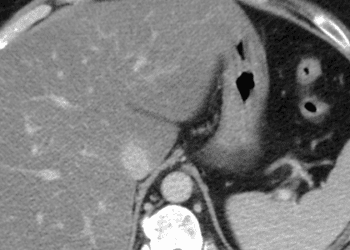
This multi-cohort study examined whether circulating protein signatures correspond to intrahepatic molecular changes across the spectrum of metabolic dysfunction-associated steatotic liver disease. The rationale was that blood-based proteomics may help identify clinically useful noninvasive biomarkers, but prior studies have rarely linked serum findings directly to hepatic gene expression. Investigators analyzed serum proteomics in two population-based cohorts from the Guangzhou Nutrition and Health Study: a cross-sectional magnetic resonance imaging cohort of 1,048 participants, including 428 with simple steatosis, and a prospective cohort of 2,945 participants followed for a median of 9.8 years, in which incident steatosis was identified by ultrasonography. They then assessed liver transcriptomics in a biopsy-based Chinese steatohepatitis cohort of 94 patients and validated hepatic gene signatures in independent Japanese and German cohorts. Serum proteomics identified several proteins associated with steatosis risk, including higher C3, C9, F9, vitronectin, and afamin, and lower sex hormone-binding globulin, apolipoprotein D, and apolipoprotein F. Hepatic transcriptomics showed that progression to steatohepatitis was associated with downregulation of complement-related genes and apolipoprotein F, while fibrosis was linked to increased alpha-2-macroglobulin, gelsolin, and lumican. These fibrosis-related signatures were reproduced across external cohorts. Overall, the study suggests that distinct serum and hepatic molecular signatures may support disease stratification, mechanistic insight, and future biomarker or therapeutic development in steatotic liver disease.
1. Greater childhood intake of ultra-processed foods was associated with higher body mass index in young adulthood.
2. The association was most evident in children with the highest genetic susceptibility to elevated body mass index.
Evidence Rating Level: 2 (Good)
In this 17-year prospective cohort study from the Avon Longitudinal Study of Parents and Children, investigators examined whether ultra-processed food intake in childhood was associated with adiposity in young adulthood and whether this relationship was modified by genetic susceptibility to higher body mass index. The analysis included 3,061 participants in England with dietary data at age 7 and measured body mass index at age 24. Ultra-processed food intake was derived from 3-day food diaries using the NOVA classification and expressed as the percentage of total energy intake. Genetic risk was estimated using a body mass index polygenic score. Linear regression models adjusted for childhood body mass index, age, sex, ethnicity, socioeconomic factors, physical activity, and total energy intake were used to assess associations and gene-diet interaction. Each 10% increase in energy intake from ultra-processed foods at age 7 was associated with a 0.21 kg/m² higher body mass index at age 24. There was also evidence of interaction between ultra-processed food intake and genetic predisposition to higher body mass index. In subgroup analyses, the association persisted only among children with the highest genetic risk, in whom each 10% increase in ultra-processed food intake was associated with a 0.74 kg/m² higher adult body mass index. These findings suggest that childhood ultra-processed food consumption may have the greatest long-term adiposity impact in those genetically predisposed to obesity.
1. Higher-volume pericapsular nerve group block did not provide better postoperative analgesia than the conventional-volume block after primary total hip arthroplasty.
2. Increasing the block volume also did not clearly worsen quadriceps weakness or improve opioid use, ambulation, or length of stay.
Evidence Rating Level: 1 (Excellent)
In this single-center randomized controlled trial, investigators evaluated whether a high-volume pericapsular nerve group block improves analgesia after primary total hip arthroplasty compared with a conventional-volume block. The rationale was that postoperative pain after total hip arthroplasty can be substantial, and although the pericapsular nerve group block may preserve motor function better than other regional techniques, the optimal injectate volume remains uncertain. Adults undergoing primary unilateral total hip arthroplasty under spinal anesthesia were randomized to receive either 40 mL or 20 mL of 0.375% ropivacaine with dexamethasone. The primary outcome was dynamic pain at 6 hours postoperatively; secondary outcomes included pain at other time points, sensory and motor block, opioid use, time to first ambulation, length of stay, and complications. Of 40 randomized patients, 37 were analyzed. High-volume blockade did not improve the primary outcome: median dynamic pain scores at 6 hours were 5 in the high-volume group and 4 in the conventional-volume group. There were also no significant differences in static or dynamic pain at 3 or 24 hours, opioid consumption over 48 hours, time to first walking, hospital length of stay, sensory blockade, motor weakness, or adverse events. The authors concluded that a high-volume pericapsular nerve group block was not superior to the conventional-volume approach for postoperative analgesia after primary total hip arthroplasty.
1. Primary somatosensory cortex stimulation lowered heat pain threshold and heat pain tolerance in the contralateral hand.
2. Both primary somatosensory cortex and ventral posterolateral thalamic stimulation reduced warm detection thresholds bilaterally.
Evidence Rating Level: 2 (Good)
In this double-blind, sham-controlled, within-subject experimental study, investigators examined whether transcranial ultrasound stimulation can modulate acute pain perception by targeting the left primary somatosensory cortex and the left ventral posterolateral nucleus of the thalamus. Twenty-five healthy participants underwent separate stimulation sessions for each target, with quantitative sensory testing performed before and after intervention. Outcomes included heat pain threshold, heat pain tolerance, warm detection threshold, mechanical detection threshold, and pressure pain threshold. Stimulation of the primary somatosensory cortex significantly reduced heat pain threshold and heat pain tolerance in the contralateral hand, suggesting increased sensitivity to noxious heat. The median change was −0.6°C for heat pain threshold and −0.2°C for heat pain tolerance. In addition, stimulation of both the primary somatosensory cortex and ventral posterolateral nucleus produced bilateral reductions in warm detection threshold, indicating modulation of nonpainful thermal sensory processing at both cortical and thalamic levels. No significant effects were observed for mechanical detection threshold or pressure pain threshold. Overall, these findings support a role for the primary somatosensory cortex in acute heat pain perception and suggest that transcranial ultrasound stimulation can influence sensory processing across multiple levels of the somatosensory pathway. Further work is needed to confirm reproducibility, clarify mechanisms, and refine protocols for translation into clinical pain applications.
Image: PD
©2026 2 Minute Medicine, Inc. All rights reserved. No works may be reproduced without expressed written consent from 2 Minute Medicine, Inc. Inquire about licensing here. No article should be construed as medical advice and is not intended as such by the authors or by 2 Minute Medicine, Inc.