• About
  • Masthead
  • License Content
  • Advertise
  • Submit Press Release
  • RSS/Email List
  • 2MM Podcast
  • Write for us
  • Contact Us
2 Minute Medicine
No Result
View All Result

No products in the cart.

SUBSCRIBE
  • Specialties
    • All Specialties, All Recent Reports
    • Cardiology
    • Chronic Disease
    • Dermatology
    • Emergency
    • Endocrinology
    • Gastroenterology
    • Imaging and Intervention
    • Infectious Disease
    • Nephrology
    • Neurology
    • Obstetrics
    • Oncology
    • Ophthalmology
    • Pediatrics
    • Pharma
    • Preclinical
    • Psychiatry
    • Public Health
    • Pulmonology
    • Rheumatology
    • Surgery
  • Tools
    • EvidencePulse™
    • RVU Search
    • NPI Registry Lookup
  • Pharma
  • AI News
  • The Scan+
  • Classics™+
    • 2MM+ Online Access
    • Paperback and Ebook
  • Rewinds
  • Partners
    • License Content
    • Submit Press Release
    • Advertise with Us
  • Account
    • Subscribe
    • Sign-in
    • My account
2 Minute Medicine
  • Specialties
    • All Specialties, All Recent Reports
    • Cardiology
    • Chronic Disease
    • Dermatology
    • Emergency
    • Endocrinology
    • Gastroenterology
    • Imaging and Intervention
    • Infectious Disease
    • Nephrology
    • Neurology
    • Obstetrics
    • Oncology
    • Ophthalmology
    • Pediatrics
    • Pharma
    • Preclinical
    • Psychiatry
    • Public Health
    • Pulmonology
    • Rheumatology
    • Surgery
  • Tools
    • EvidencePulse™
    • RVU Search
    • NPI Registry Lookup
  • Pharma
  • AI News
  • The Scan+
  • Classics™+
    • 2MM+ Online Access
    • Paperback and Ebook
  • Rewinds
  • Partners
    • License Content
    • Submit Press Release
    • Advertise with Us
  • Account
    • Subscribe
    • Sign-in
    • My account
SUBSCRIBE
2 Minute Medicine
Subscribe
Home All Specialties Oncology

Breast cancer screening with MRI provides modest benefit for high-risk women
byAdrian WongandMichaela Dowling
March 2, 2026
in Oncology
Reading Time: 3 mins read
0
Share on FacebookShare on Twitter

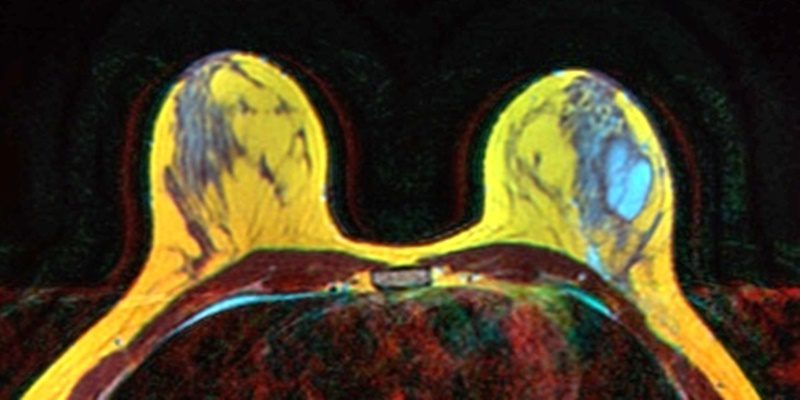
1. For women at higher-than-average risk, adding supplemental MRI to DBT provided only modest additional benefit, resulting in a similar harm-benefit balance compared with DBT alone.
2. Across all risk levels, biennial DBT starting at age 50 was the most cost-effective strategy.

Evidence Rating Level: 2 (Good) 

Study Rundown: A substantial proportion of women undergoing mammography screening in the United States have dense breasts, yet the optimal screening approach for this group remains uncertain. Current guidelines do not recommend routine breast MRI for women at average risk but indicate it may offer greater benefit for those with both high breast density and elevated breast cancer risk. This study evaluated digital breast tomosynthesis (DBT) screening strategies that incorporated supplemental MRI based on breast density and risk level. Across all groups, deaths prevented and life-years gained increased when screening began earlier, occurred more frequently, and included supplemental MRI, with the greatest improvements observed among higher-risk women. However, adding MRI based on breast density provided only modest additional benefit compared with DBT alone. Harms, including false-positive recalls and unnecessary biopsy recommendations, also increased with earlier initiation, more frequent screening, and the use of supplemental MRI. Among average-risk women, MRI led to greater harms relative to the benefits achieved compared with DBT alone. In contrast, for women at higher risk, supplemental MRI produced harm-benefit ratios similar to those seen with DBT alone. The most cost-effective strategy across risk levels was biennial DBT beginning at 50 years of age. Although combining DBT with MRI at this age was slightly more effective, it was less cost-effective than the initiation of DBT alone at 45 years of age. While subgroup analyses were limited to risk and breast density, the findings suggest that MRI may be a reasonable option for women with extremely dense breasts and above-average risk.

Click to read this study in AIM

Relevant Reading: Cost-Effectiveness of Magnetic Resonance Imaging Screening for Women With Extremely Dense Breast Tissue

In-Depth [prospective cohort]: This simulation study evaluated the benefits, harms, and cost-effectiveness of digital breast tomosynthesis (DBT) with supplemental MRI compared with DBT alone across breast density categories and four breast cancer risk levels. Computer models followed a cohort of U.S. women born in 1980 and compared screening strategies with no screening, ranging from average risk (risk ratio [RR] = 1) to highest risk (RR = 4). Screening began at ages 40, 45, or 50, was performed annually or biennially, and ended at age 74. Three independent models projected breast cancer incidence and survival using inputs including breast density and risk level, screening performance, quality-adjusted life years (QALYs), and costs related to diagnostic workup, false-positive results, and treatment. Deaths averted and life-years gained per 1,000 women increased with earlier screening initiation, shorter screening intervals, and the addition of MRI, with larger gains at higher risk levels. Across starting ages and intervals, DBT alone prevented 7.4-10.5 deaths per 1,000 average-risk women and 23.2-33.6 deaths among women at fourfold higher risk. However, adding MRI based on breast density produced only small incremental benefits. For average-risk women with extremely dense breasts, MRI prevented an additional 0.1-0.2 deaths per 1,000 women, while for those with heterogeneously dense breasts, 0.4-0.7 additional deaths were prevented. Harms increased with more intensive screening. False-positive recalls with DBT ranged from 884-2139 per 1,000 women and were similar across risk levels. Adding MRI for women with extremely dense breasts resulted in 35-276 additional recalls per 1,000 average-risk women and 27-242 additional recalls at RR = 4, with similar increases in false-positive biopsy recommendations. Across all risk levels, biennial DBT starting at age 50 was the most cost-effective strategy, followed by biennial DBT at 45. Biennial DBT with MRI at 50 for extremely dense breasts cost less than $50,000 per QALY gained. At RR = 4, adding MRI yielded an ICER of $114,000 per QALY. Overall, supplemental MRI offered modest additional benefit with increased harms but demonstrated comparable harm-benefit tradeoffs for higher-risk women with extremely dense breasts.

RELATED REPORTS

Statins do not increase breast cancer risk in postmenopausal women

2 Minute Medicine Rewind April 6, 2026

Susie Wiles’ breast cancer diagnosis drives national screening surge

Image: PD

©2026 2 Minute Medicine, Inc. All rights reserved. No works may be reproduced without expressed written consent from 2 Minute Medicine, Inc. Inquire about licensing here. No article should be construed as medical advice and is not intended as such by the authors or by 2 Minute Medicine, Inc.


Tags: breastBreast Cancerbreast cancer screeningbreast densitybreast MRI
Previous Post

2 Minute Medicine Rewind March 2, 2026

Next Post

Metformin and ursodeoxycholic acid do not improve long COVID recovery

RelatedReports

Variability in interpretation of breast biopsy slides associated with low verification of atypia and ductal carcinoma in situ
Chronic Disease

Statins do not increase breast cancer risk in postmenopausal women

April 7, 2026
Stochastic resonance stimulation may decrease apnea of prematurity
Weekly Rewinds

2 Minute Medicine Rewind April 6, 2026

April 6, 2026
High frequency of germline mutations observed in triple negative breast cancers
The Scan by 2 Minute Medicine®

Susie Wiles’ breast cancer diagnosis drives national screening surge

March 25, 2026
The Scan by 2 Minute Medicine®:  Ultra-Trail du Mont-Blanc, Taylor Swift, NBA rookie Chet Holmgren and Magic Mushrooms!
Artificial Intelligence

The Scan by 2 Minute Medicine®: Susie Wiles breast cancer diagnosis drives national screening surge, Jensen Huang’s GTC keynote turns healthcare AI into a pop-culture phenomenon, landmark ACSM guidelines simplify resistance training for longevity, and consumer alert issued for high-pressure cosmetic surgery chains

March 25, 2026
Next Post
Decreased expression of nasal ACE2 may be correlated with lower prevalence of COVID-19 in children

Metformin and ursodeoxycholic acid do not improve long COVID recovery

Reduced gestational weight gain with lifestyle intervention

Replacing sedentary time with physical activity may lower risk of all-cause mortality

Oophorectomy associated with reduced cancer risk and all-cause mortality for BRCA1/2 patients

Ex vivo gene therapy for cystinosis had acceptable safety and improved disease biomarkers

2 Minute Medicine® is an award winning, physician-run, expert medical media company. Our content is curated, written and edited by practicing health professionals who have clinical and scientific expertise in their field of reporting. Our editorial management team is comprised of highly-trained MD physicians. Join numerous brands, companies, and hospitals who trust our licensed content.

Recent Reports

  • High-flow nasal oxygen therapy may not be superior to standard oxygen therapy after cardiac surgery
  • Segment 4b/5 resection offers no survival advantage over wedge resection in gallbladder cancer
  • Simvastatin (Zocor) in combination with paclitaxel (Taxol) may provide treatment benefit compared to paclitaxel alone for small cell lung cancer
License Content
Terms of Use | Disclaimer
Cookie Policy
Privacy Statement (EU)
Disclaimer

The Classics in Medicine Paperback Released!

Over the past 30 years, the transition from print to digital media has contributed to an exponential increase in medical literature. In response, 2 Minute Medicine presents 160+ authoritative, physician-written summaries of the most cited landmark trials in medicine.

amazon-logo_blackGet-it-on-iBooks-badge

Click anywhere to close this announcement

  • Specialties
    • All Specialties, All Recent Reports
    • Cardiology
    • Chronic Disease
    • Dermatology
    • Emergency
    • Endocrinology
    • Gastroenterology
    • Imaging and Intervention
    • Infectious Disease
    • Nephrology
    • Neurology
    • Obstetrics
    • Oncology
    • Ophthalmology
    • Pediatrics
    • Pharma
    • Preclinical
    • Psychiatry
    • Public Health
    • Pulmonology
    • Rheumatology
    • Surgery
  • Tools
    • EvidencePulse™
    • RVU Search
    • NPI Registry Lookup
  • Pharma
  • AI News
  • The Scan
  • Classics™
    • 2MM+ Online Access
    • Paperback and Ebook
  • Rewinds
  • Partners
    • License Content
    • Submit Press Release
    • Advertise with Us
  • Account
    • Subscribe
    • Sign-in
    • My account
No Result
View All Result

© 2026 2 Minute Medicine, Inc. - Physician-written medical news.