• About
  • Masthead
  • License Content
  • Advertise
  • Submit Press Release
  • RSS/Email List
  • 2MM Podcast
  • Write for us
  • Contact Us
2 Minute Medicine
No Result
View All Result

No products in the cart.

SUBSCRIBE
  • Specialties
    • All Specialties, All Recent Reports
    • Cardiology
    • Chronic Disease
    • Dermatology
    • Emergency
    • Endocrinology
    • Gastroenterology
    • Imaging and Intervention
    • Infectious Disease
    • Nephrology
    • Neurology
    • Obstetrics
    • Oncology
    • Ophthalmology
    • Pediatrics
    • Pharma
    • Preclinical
    • Psychiatry
    • Public Health
    • Pulmonology
    • Rheumatology
    • Surgery
  • Tools
    • EvidencePulse™
    • RVU Search
    • NPI Registry Lookup
  • Pharma
  • AI News
  • The Scan+
  • Classics™+
    • 2MM+ Online Access
    • Paperback and Ebook
  • Rewinds
  • Partners
    • License Content
    • Submit Press Release
    • Advertise with Us
  • Account
    • Subscribe
    • Sign-in
    • My account
2 Minute Medicine
  • Specialties
    • All Specialties, All Recent Reports
    • Cardiology
    • Chronic Disease
    • Dermatology
    • Emergency
    • Endocrinology
    • Gastroenterology
    • Imaging and Intervention
    • Infectious Disease
    • Nephrology
    • Neurology
    • Obstetrics
    • Oncology
    • Ophthalmology
    • Pediatrics
    • Pharma
    • Preclinical
    • Psychiatry
    • Public Health
    • Pulmonology
    • Rheumatology
    • Surgery
  • Tools
    • EvidencePulse™
    • RVU Search
    • NPI Registry Lookup
  • Pharma
  • AI News
  • The Scan+
  • Classics™+
    • 2MM+ Online Access
    • Paperback and Ebook
  • Rewinds
  • Partners
    • License Content
    • Submit Press Release
    • Advertise with Us
  • Account
    • Subscribe
    • Sign-in
    • My account
SUBSCRIBE
2 Minute Medicine
Subscribe
Home All Specialties Artificial Intelligence

Deep-learning models displayed expert-level accuracy in detecting epileptiform discharges on electroencephalogram (EEG) recordings
byCheng En Xi
February 16, 2026
in Artificial Intelligence, Neurology
Reading Time: 2 mins read
0
Share on FacebookShare on Twitter

1. Li and colleagues developed a deep-learning model to analyze EEG recordings and detect event-level EEG spikes.

2. The model achieved high accuracy and a low false-positive rate, with only 32% of human experts outperforming the model.

Evidence Rating Level: 2 (Good)

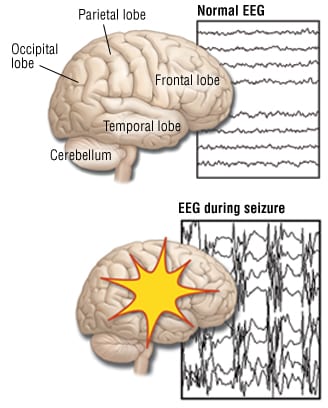
Study Rundown: Epileptiform discharges form spikes on EEGs, and physicians with specialized training could visually interpret findings to detect epilepsy. However, misinterpretation is common, and there is a lack of physicians trained in EEG interpretation in many parts of the world. Li and colleagues developed SpikeNet2, a deep-learning spike detection model, and assessed its performance using real-life patient EEGs. Performance metrics were the area under the receiver operating characteristic curve (AUROC), area under the precision-recall curve (AUPRC), and the area under a modified receiver operating characteristic curve (mAUC) metric designed to measure sensitivity versus the number of false positives per hour. For event-level spike classification, SpikeNet2 achieved an AUROC of 0.973, AUPRC of 0.995, and a mAUC of 0.997. It also outperformed most human experts on all metrics, with only 44% of experts’ operating points located above SpikeNet2’s ROC curve. SpikeNet2 achieved similar performance on EEG level classification. This study demonstrated that SpikeNet2 can accurately detect epileptiform discharges at both the event and EEG levels.

Click here to read the study in NEJM AI

Relevant Reading: Artificial intelligence in electroencephalography analysis for epilepsy diagnosis and management

RELATED REPORTS

Artificial intelligence predicts colorectal cancer in ulcerative colitis with 99% accuracy

Artificial intelligence designed drugs Hit 90% Phase I success rate in trials

FDA clears Medtronic stealth AXiS AI-Robotic spine system

In-Depth [retrospective cohort]: SpikeNet2 was validated using three independent datasets that were not included in model development. The datasets consisted of 17,812 EEGs from 13,523 patients located in the United States, Europe, and Africa. The EEG recordings included both event-level and EEG-level labels provided by clinical experts. For event-level performance, the metrics were AUROC, AUPRC, and mAUC. Only AUROC and AUPRC were used to assess EEG-level classification. Additionally, SpikeNet2’s performance was compared with human experts using ROC curves. For event-level spike classification, SpikeNet2 achieved an AUROC of 0.973 (95% confidence interval (CI), 0.961-0.982), AUPRC of 0.995 (95% CI, 0.993-0.997), and a mAUC of 0.997 (95% CI, 0.994-0.998). For EEG-level classification, SpikeNet2 achieved an AUROC of 0.958 (95% CI, 0.946-0.968) and an AUPRC of 0.959 (95% CI, 0.947-0.970). For both event-level and EEG-level classifications, SpikeNet2 outperformed most human experts, with only 44% (95% CI, 25-75) and 32% of human experts’ operating points located above SpikeNet2’s ROC curve for event-level and EEG-level classification, respectively. The validity of this model was strengthened by its large-scale multi-institutional training dataset, representing diverse patient demographics. However, the model was limited by its inability to analyze background EEG rhythms and lack of clinical contexts. Overall, this study provided promising evidence that deep-learning models can be used for the detection of epilepsy in settings where experienced neurologists are scarce.

Image: PD

©2026 2 Minute Medicine, Inc. All rights reserved. No works may be reproduced without expressed written consent from 2 Minute Medicine, Inc. Inquire about licensing here. No article should be construed as medical advice and is not intended as such by the authors or by 2 Minute Medicine, Inc.


Tags: artificial intelligenceeegElectroencephalogram (EEG)electroencephalography (EEG)epilepsymachine based learningmachine learningseizures
Previous Post

2 Minute Medicine Rewind February 16, 2026

Next Post

Glucagon-like peptide-1 receptor agonists may reduce endometrial cancer risk in endometrial hyperplasia

RelatedReports

2MM: AI Roundup- AI Cancer Test, Smarter Hospitals, Faster Drug Discovery, and Mental Health Tech [May 2nd, 2025]
AI Roundup

Artificial intelligence predicts colorectal cancer in ulcerative colitis with 99% accuracy

February 20, 2026
2MM: AI Roundup- AI Cancer Test, Smarter Hospitals, Faster Drug Discovery, and Mental Health Tech [May 2nd, 2025]
AI Roundup

Artificial intelligence designed drugs Hit 90% Phase I success rate in trials

February 19, 2026
2MM: AI Roundup- AI Cancer Test, Smarter Hospitals, Faster Drug Discovery, and Mental Health Tech [May 2nd, 2025]
AI Roundup

FDA clears Medtronic stealth AXiS AI-Robotic spine system

February 18, 2026
2MM: AI Roundup- AI Cancer Test, Smarter Hospitals, Faster Drug Discovery, and Mental Health Tech [May 2nd, 2025]
AI Roundup

2MM: AI Roundup- Medtronic’s AI-Robotic Spine Platform, 90% Phase I Success for AI-Designed Drugs, and UCSD’s AI Cancer Risk Predictor [Feb 17th, 2026]

February 17, 2026
Next Post
American-born Asian women more likely to have endometrial cancer

Glucagon-like peptide-1 receptor agonists may reduce endometrial cancer risk in endometrial hyperplasia

2 Minute Medicine Rewind October 21, 2019

One in Six Medicare Beneficiaries Use Telehealth for Essential Care

Risk of dementia with air pollution exposure amplified in patients with heart disease

Exposure to air pollution is associated with increased risk of developing limitations in physical function

2 Minute Medicine® is an award winning, physician-run, expert medical media company. Our content is curated, written and edited by practicing health professionals who have clinical and scientific expertise in their field of reporting. Our editorial management team is comprised of highly-trained MD physicians. Join numerous brands, companies, and hospitals who trust our licensed content.

Recent Reports

  • Poly-L-lysine-coated catheters are safe and well-tolerated in adults requiring short-term catheterization
  • Artificial intelligence predicts colorectal cancer in ulcerative colitis with 99% accuracy
  • Penpulimab and lenalidomide in combination with standard of care chemoimmunotherapy demonstrates promising safety and efficacy in diffuse large B-cell lymphoma
License Content
Terms of Use | Disclaimer
Cookie Policy
Privacy Statement (EU)
Disclaimer

© 2025 2 Minute Medicine, Inc. - Physician-written medical news.

  • Specialties
    • All Specialties, All Recent Reports
    • Cardiology
    • Chronic Disease
    • Dermatology
    • Emergency
    • Endocrinology
    • Gastroenterology
    • Imaging and Intervention
    • Infectious Disease
    • Nephrology
    • Neurology
    • Obstetrics
    • Oncology
    • Ophthalmology
    • Pediatrics
    • Pharma
    • Preclinical
    • Psychiatry
    • Public Health
    • Pulmonology
    • Rheumatology
    • Surgery
  • Tools
    • EvidencePulse™
    • RVU Search
    • NPI Registry Lookup
  • Pharma
  • AI News
  • The Scan
  • Classics™
    • 2MM+ Online Access
    • Paperback and Ebook
  • Rewinds
  • Partners
    • License Content
    • Submit Press Release
    • Advertise with Us
  • Account
    • Subscribe
    • Sign-in
    • My account
No Result
View All Result

© 2025 2 Minute Medicine, Inc. - Physician-written medical news.