• About
  • Masthead
  • License Content
  • Advertise
  • Submit Press Release
  • RSS/Email List
  • 2MM Podcast
  • Write for us
  • Contact Us
2 Minute Medicine
No Result
View All Result

No products in the cart.

SUBSCRIBE
  • About
  • Specialties
    • All Specialties, All Recent Reports
    • Cardiology
    • Chronic Disease
    • Dermatology
    • Emergency
    • Endocrinology
    • Gastroenterology
    • Imaging and Intervention
    • Infectious Disease
    • Nephrology
    • Neurology
    • Obstetrics
    • Oncology
    • Ophthalmology
    • Pediatrics
    • Pharma
    • Preclinical
    • Psychiatry
    • Public Health
    • Pulmonology
    • Rheumatology
    • Surgery
  • Tools+
    • EvidencePulse™
    • HypeCheck™
    • NPI Registry Lookup
    • RVU Search
  • Pharma
  • AI Roundup
  • The Scan+
  • Classics™+
    • 2MM+ Online Access
    • Paperback and Ebook
  • Rewinds
  • Partners
    • License Content
    • Submit Press Release
    • Advertise with Us
  • Account
    • Subscribe
    • My account
    • Cart
    • Sign-in
2 Minute Medicine
  • About
  • Specialties
    • All Specialties, All Recent Reports
    • Cardiology
    • Chronic Disease
    • Dermatology
    • Emergency
    • Endocrinology
    • Gastroenterology
    • Imaging and Intervention
    • Infectious Disease
    • Nephrology
    • Neurology
    • Obstetrics
    • Oncology
    • Ophthalmology
    • Pediatrics
    • Pharma
    • Preclinical
    • Psychiatry
    • Public Health
    • Pulmonology
    • Rheumatology
    • Surgery
  • Tools+
    • EvidencePulse™
    • HypeCheck™
    • NPI Registry Lookup
    • RVU Search
  • Pharma
  • AI Roundup
  • The Scan+
  • Classics™+
    • 2MM+ Online Access
    • Paperback and Ebook
  • Rewinds
  • Partners
    • License Content
    • Submit Press Release
    • Advertise with Us
  • Account
    • Subscribe
    • My account
    • Cart
    • Sign-in
SUBSCRIBE
2 Minute Medicine
Subscribe
EvidencePulse™ by 2 Minute Medicine 2026 evidence scan 3 reports You asked top stroke trials 2026 Synthesizing medical evidence... Top 2026 stroke trial results: OCEANIC — ischemic stroke: 6.2% vs 8.4% OPTION* — mRS 0–1: 43.6% vs 34.2% ORIENTAL* — mRS 0–2: 58.6% vs 46.6% *Higher sICH in intervention arms Participants randomizedN OCEANIC 12,327 OPTION 570 ORIENTAL 564 Ask about guidelines or landmark trials... ↑ Try EvidencePulse™ Ask the evidence.
Get the signal.
Try it now → Physician-trained medical AI by 2 Minute Medicine
Home All Specialties Cardiology

Direct oral anticoagulants for atrial fibrillation in patients with mitral stenosis

byJalal EbrahimandAnees Daud
March 18, 2019
in Cardiology, Chronic Disease, Emergency, Public Health
Reading Time: 2 mins read
Direct oral anticoagulants for atrial fibrillation in patients with mitral stenosis
Share on FacebookShare on Twitter

1. In this retrospective observational study, direct oral anticoagulant use for atrial fibrillation in patients with mitral stenosis was linked with decreased mortality and fewer thromboembolic events compared to warfarin. 

2. There was also a non-significant trend towards fewer episodes of intracranial hemorrhage with direct oral anticoagulant use.

Evidence Rating Level: 3 (Average)

Study Rundown: Atrial fibrillation is a common disease that greatly increases the risk of thromboembolic complications. Historically, warfarin was the mainstay oral anticoagulant used for reducing the risk of thromboembolism in these patients. More recently, direct oral anticoagulants (DOACs) have been shown to be at least as effective at reducing thromboembolism with lower risk of intracranial hemorrhage. However, patients with moderate to severe mitral stenosis as well as mechanical valve replacements have thus far been excluded from relevant trials.

This retrospective observational study in South Korea examined patients with atrial fibrillation and mitral stenosis treated with either a DOAC or warfarin. It found that DOAC use was linked with significantly lower systemic thromboembolism or ischemic stroke and significantly less all-cause mortality, with a non-significant trend towards less intracranial hemorrhage. There were several significant limitations. Firstly, severity of mitral stenosis was not available. The proportion of mild versus moderate to severe mitral stenosis patients could significantly impact results. Secondly, time in therapeutic INR was not provided, and so inappropriate warfarin dosing could be a potential confounder.

Click to read the study published in JACC

RELATED REPORTS

Apixaban (Eliquis) is associated with reduced rates of ischemic stroke and bleeding in patients with atrial fibrillation and advanced chronic kidney disease compared with warfarin (Coumadin)

2 Minute Medicine Rewind September 7, 2026

2 Minute Medicine Rewind August 31, 2026

Relevant Reading: Edoxaban versus Warfarin in Patients with Atrial Fibrillation

In-Depth [retrospective cohort]: This was a retrospective observational study looking at 2,230 patients in South Korea with atrial fibrillation and mitral stenosis being treated with either a direct oral anticoagulant (DOAC) or warfarin. Inclusion criteria included at least three weeks of anticoagulant prescription between February 2008 and January 2017. Exclusion criteria included history of mitral valve surgery. Propensity score matching (for age, gender, diabetes, hypertension, stroke, congestive heart failure, vascular disease, dyslipidemia, chronic kidney disease, and chronic obstructive pulmonary disease) was performed 1:1 between patients on a DOAC versus those on warfarin. Primary outcome was first hospitalization with ischemic stroke or systemic embolism after three weeks of anticoagulant use. The safety endpoint was episode of intracranial hemorrhage. Of patients treated with a DOAC (n=1,115), 32.9% were on dabigatran, 42.3% were on rivaroxaban, 17.2% were on apixaban, and 7.5% were on edoxaban. Mean follow-up period was 27 months. There were significantly fewer strokes or systemic embolism in the DOAC group compared with warfarin (2.22%/year versus 4.19%/year, aHR 0.28, 95% CI 0.18 – 0.45, p < 0.0001). There was a non-significant trend towards less intracranial hemorrhage in the DOAC group (0.49%/year versus 0.93%/year, aHR 0.53, 95% CI 0.22 – 1.26, p=0.14). All-cause mortality was significantly lower in the DOAC group (3.45%/year versus 8.08%/year, aHR 0.41, 95% CI 0.30 – 0.56, p < 0.0001). A sensitivity analysis excluding patients above the 95th percentile of risk or below the 5th percentile of risk based on propensity score did not change results significantly.

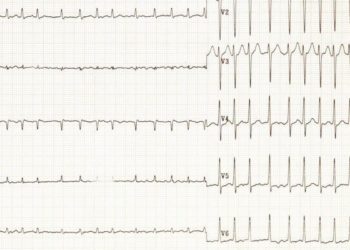
Image: PD

©2019 2 Minute Medicine, Inc. All rights reserved. No works may be reproduced without expressed written consent from 2 Minute Medicine, Inc. Inquire about licensing here. No article should be construed as medical advice and is not intended as such by the authors or by 2 Minute Medicine, Inc.
 

Tags: atrial fibrillationdirect oral anticoagulant (DOAC)mitral stenosisstroke
Previous Post

#VisualAbstract: Bag-Mask Ventilation during Tracheal Intubation of Critically Ill Adults

Next Post

Psychiatric emergency visits increasing among youth, especially racial minorities

RelatedReports

Nephrology

Apixaban (Eliquis) is associated with reduced rates of ischemic stroke and bleeding in patients with atrial fibrillation and advanced chronic kidney disease compared with warfarin (Coumadin)

September 9, 2026
Long-term outcomes for off-pump and on-pump CABG are similar
Weekly Rewinds

2 Minute Medicine Rewind September 7, 2026

September 7, 2026
Rivaroxaban likely reduces risk of recurrent stroke in specific subgroup of patients with embolic stroke of undetermined source
Weekly Rewinds

2 Minute Medicine Rewind August 31, 2026

August 31, 2026
Rivaroxaban likely reduces risk of recurrent stroke in specific subgroup of patients with embolic stroke of undetermined source
Cardiology

Catheter ablation within 1 year of atrial fibrillation diagnosis is associated with reduced risk of recurrence

July 24, 2026
Next Post
Quick Take: Impact of scribes on emergency medicine doctors’ productivity and patient throughput: multicentre randomised trial

Psychiatric emergency visits increasing among youth, especially racial minorities

Women with pregnancy-associated melanoma at greater risk of metastasis, recurrence

Melanoma as a possible cause of autoimmune encephalitis

Quick Take: Pulsed Dye Laser Treatment of Port-Wine Stains in Infancy Without the Need for General Anesthesia

2 Minute Medicine Rewind March 18, 2019

EvidencePulse™ by 2 Minute Medicine 2026 evidence scan 3 reports You asked top stroke trials 2026 Synthesizing medical evidence... Top 2026 stroke trial results: OCEANIC — ischemic stroke: 6.2% vs 8.4% OPTION* — mRS 0–1: 43.6% vs 34.2% ORIENTAL* — mRS 0–2: 58.6% vs 46.6% *Higher sICH in intervention arms Participants randomizedN OCEANIC 12,327 OPTION 570 ORIENTAL 564 Ask about guidelines or landmark trials... ↑ Try EvidencePulse™ Ask the evidence.
Get the signal.
Try it now → Physician-trained medical AI by 2 Minute Medicine

2MM+ All Access

Full details →
$4.99 /month

5-day free trial · cancel anytime

  • ✓100+ physician-written reports
  • ✓EvidencePulse™ + HypeCheck™
  • ✓Ad-free reading + newsletters
Start 5-day free trial

Then $4.99/month. Manage renewal in your account.

2 Minute Medicine® is an award winning, physician-run, expert medical media company. Our content is curated, written and edited by practicing health professionals who have clinical and scientific expertise in their field of reporting. Our editorial management team is comprised of highly-trained MD physicians. Join numerous brands, companies, and hospitals who trust our licensed content.

Recent Reports

  • An ultrasound-guided percutaneous method of vagal nerve stimulation may be effective for refractory chronic pain
  • Daraxonrasib extends survival in metastatic pancreatic cancer
  • Artificial intelligence (AI) scribes showed mixed effects on documentation time and improvements in physician well-being
License Content
Terms of Use | Disclaimer
Cookie Policy
Cleantalk Pixel
2MM+ All Access Full details →

The medical literature, distilled daily.

Monthly plan selected: $4.99 /month.

$4.99/month

5-day free trial · cancel anytime

Start 5-day free trial

Then $4.99/month. Manage renewal in your account.

Yearly plan selected: $49.90 /year.

$49.90/year

2 months free · only $4.16/month

Start 5-day free trial

Then $49.90/year. Manage renewal in your account.

Membership benefits

  • ✓100+ physician-written reports
  • ✓AI EvidencePulse™ + HypeCheck™
  • ✓Ad-free reading + newsletters

Already a member? Sign in

  • About
  • Specialties
    • All Specialties, All Recent Reports
    • Cardiology
    • Chronic Disease
    • Dermatology
    • Emergency
    • Endocrinology
    • Gastroenterology
    • Imaging and Intervention
    • Infectious Disease
    • Nephrology
    • Neurology
    • Obstetrics
    • Oncology
    • Ophthalmology
    • Pediatrics
    • Pharma
    • Preclinical
    • Psychiatry
    • Public Health
    • Pulmonology
    • Rheumatology
    • Surgery
  • Tools
    • EvidencePulse™
    • HypeCheck™
    • NPI Registry Lookup
    • RVU Search
  • Pharma
  • AI Roundup
  • The Scan
  • Classics™
    • 2MM+ Online Access
    • Paperback and Ebook
  • Rewinds
  • Partners
    • License Content
    • Submit Press Release
    • Advertise with Us
  • Account
    • Subscribe
    • My account
    • Cart
    • Sign-in
No Result
View All Result

© 2026 2 Minute Medicine, Inc. - Physician-written medical news.