• About
  • Masthead
  • License Content
  • Advertise
  • Submit Press Release
  • RSS/Email List
  • 2MM Podcast
  • Write for us
  • Contact Us
2 Minute Medicine
No Result
View All Result

No products in the cart.

SUBSCRIBE
  • About
  • Specialties
    • All Specialties, All Recent Reports
    • Cardiology
    • Chronic Disease
    • Dermatology
    • Emergency
    • Endocrinology
    • Gastroenterology
    • Imaging and Intervention
    • Infectious Disease
    • Nephrology
    • Neurology
    • Obstetrics
    • Oncology
    • Ophthalmology
    • Pediatrics
    • Pharma
    • Preclinical
    • Psychiatry
    • Public Health
    • Pulmonology
    • Rheumatology
    • Surgery
  • Tools+
    • EvidencePulse™
    • HypeCheck™
    • NPI Registry Lookup
    • RVU Search
  • Pharma
  • AI Roundup
  • The Scan+
  • Classics™+
    • 2MM+ Online Access
    • Paperback and Ebook
  • Rewinds
  • Partners
    • License Content
    • Submit Press Release
    • Advertise with Us
  • Account
    • Subscribe
    • My account
    • Cart
    • Sign-in
2 Minute Medicine
  • About
  • Specialties
    • All Specialties, All Recent Reports
    • Cardiology
    • Chronic Disease
    • Dermatology
    • Emergency
    • Endocrinology
    • Gastroenterology
    • Imaging and Intervention
    • Infectious Disease
    • Nephrology
    • Neurology
    • Obstetrics
    • Oncology
    • Ophthalmology
    • Pediatrics
    • Pharma
    • Preclinical
    • Psychiatry
    • Public Health
    • Pulmonology
    • Rheumatology
    • Surgery
  • Tools+
    • EvidencePulse™
    • HypeCheck™
    • NPI Registry Lookup
    • RVU Search
  • Pharma
  • AI Roundup
  • The Scan+
  • Classics™+
    • 2MM+ Online Access
    • Paperback and Ebook
  • Rewinds
  • Partners
    • License Content
    • Submit Press Release
    • Advertise with Us
  • Account
    • Subscribe
    • My account
    • Cart
    • Sign-in
SUBSCRIBE
2 Minute Medicine
Subscribe
EvidencePulse™ by 2 Minute Medicine 2026 evidence scan 3 reports You asked top stroke trials 2026 Synthesizing medical evidence... Top 2026 stroke trial results: OCEANIC — ischemic stroke: 6.2% vs 8.4% OPTION* — mRS 0–1: 43.6% vs 34.2% ORIENTAL* — mRS 0–2: 58.6% vs 46.6% *Higher sICH in intervention arms Participants randomizedN OCEANIC 12,327 OPTION 570 ORIENTAL 564 Ask about guidelines or landmark trials... ↑ Try EvidencePulse™ Ask the evidence.
Get the signal.
Try it now → Physician-trained medical AI by 2 Minute Medicine
Home All Specialties Oncology

Historical redlining associated with lower breast cancer screening across urban neighborhoods
byHannan MinhasandThomas Su
September 13, 2026
in Oncology, Public Health
Reading Time: 3 mins read
Share on FacebookShare on Twitter

1. In this retrospective cohort study, historically redlined grade C and D Census tracts had lower breast cancer screening rates than grade A tracts. 

2. Screening disparities remained geographically clustered over time, with poverty and lower educational attainment being key drivers of this association.

Evidence Rating Level: 2 (Good)

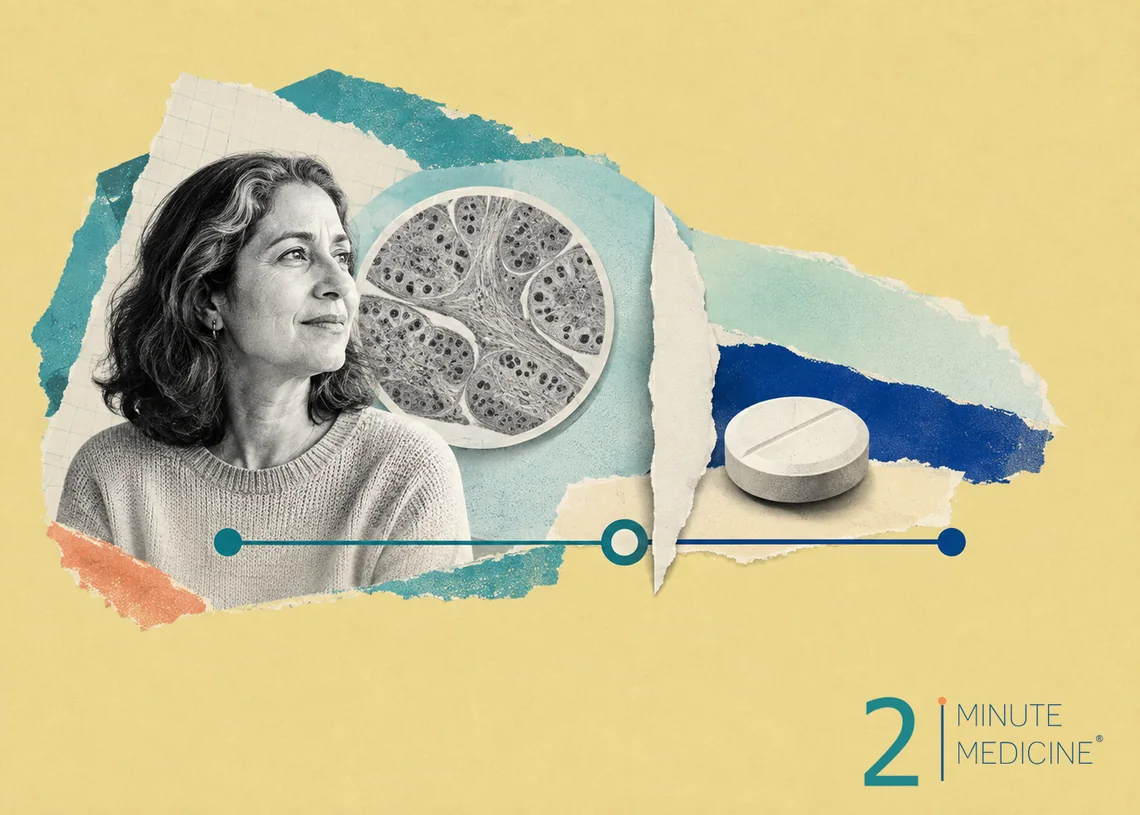
Study Rundown: Mammography is an important component of breast cancer detection, but screening prevalence remains uneven across communities, suggesting that structural and socioeconomic barriers continue to influence access to preventive care. Historical redlining refers to the Homeowners’ Loan Corporation (HOLC) system that graded neighborhoods from A, considered most desirable for investment, to D, considered most hazardous. These classifications contributed to sustained neighborhood disinvestment and may continue to affect contemporary health outcomes and health care use. Although prior studies have linked redlining with cancer screening disparities, many were cross-sectional and did not account for geographic clustering or changes over time. Hence, this longitudinal ecological study examined breast cancer screening patterns in historically graded neighborhoods across the University of Kansas Cancer Center catchment area. Overall, grade C and D neighborhoods had lower adjusted screening prevalence than grade A neighborhoods, independent of present-day socioeconomic conditions, housing characteristics, and distance to mammography facilities. Lower-screening neighborhoods remained geographically clustered, and most tracts remained below the national Healthy People 2030 target. Poverty and lower educational attainment were found to explain substantial portions of the association, whereas geographic distance contributed relatively little. The study was limited by its use of Census tract-level and model-based estimates rather than individual-level behavior, which may have attenuated associations. Further, the use of straight-line distance may have been an incomplete measure of access. Nonetheless, these findings support place-based strategies to address persistent inequities and socioeconomic barriers to screening. 

Click to read the study in JAMA

Relevant Reading: Association of Historical Redlining and Present-Day Social Vulnerability with Cancer Screening

RELATED REPORTS

Mortality in the post-housing period is high among homeless people in Ottawa, Canada

Susie Wiles’ breast cancer diagnosis drives national screening surge

The Scan by 2 Minute Medicine®: Susie Wiles breast cancer diagnosis drives national screening surge, Jensen Huang’s GTC keynote turns healthcare AI into a pop-culture phenomenon, landmark ACSM guidelines simplify resistance training for longevity, and consumer alert issued for high-pressure cosmetic surgery chains

In-Depth [retrospective cohort]: This study analyzed annual breast cancer screening prevalence from 2016 through 2024 in 1,152 historically HOLC-graded urban Census tracts across Kansas and adjacent Missouri counties. The sample included 27 grade A, 99 grade B, 423 grade C, and 603 grade D tracts. The primary outcome was the Centers for Disease Control estimate of the proportion of women aged 50 to 74 years who reported receiving mammography within the recommended interval. Exposures included HOLC grade, Social Vulnerability Index quintile, socioeconomic, housing, and transportation characteristics, and distance to the nearest certified mammography facility. Median screening prevalence was 79.6% in grade A tracts versus 75.2% in grade D tracts. After adjustment, grade C (odds ratio [OR], 0.94; 95% credible interval [CrI], 0.90 to 0.99) and D (OR, 0.94; 95% CrI, 0.89 to 0.99) tracts each had lower odds of screening than grade A tracts. Lower educational attainment was also associated with lower screening prevalence (OR, 0.94; 95% CrI, 0.92 to 0.96), while distance to the nearest mammography facility was not independently associated with screening (OR, 0.97; 95% CrI, 0.93 to 1.01). Geographic disparities persisted after adjustment, and 84.4% of tracts remained below the Healthy People 2030 screening target of 80.3%. In the mediation analysis, poverty accounted for an estimated 44.5% of the association between redlining and screening prevalence (95% confidence interval [CI], 22.7% to 76.1%), while lower educational attainment accounted for 25.5% (95% CI, 6.7% to 54.0%). Overall, these results highlight lasting inequities from historical residential segregation.

©2026 2 Minute Medicine, Inc. All rights reserved. No works may be reproduced without expressed written consent from 2 Minute Medicine, Inc. Inquire about licensing here. No article should be construed as medical advice and is not intended as such by the authors or by 2 Minute Medicine, Inc.


Tags: breast cancer screeninghousingmammographyprevalencescreening
Previous Post

N-methylaniline exposure identified as likely cause of methemoglobinemia during maritime migration

RelatedReports

“Housing First” linked to housing stability for homeless youth with mental illness
Public Health

Mortality in the post-housing period is high among homeless people in Ottawa, Canada

August 31, 2026
High frequency of germline mutations observed in triple negative breast cancers
All Specialties

Susie Wiles’ breast cancer diagnosis drives national screening surge

September 4, 2026
The Scan by 2 Minute Medicine®:  Ultra-Trail du Mont-Blanc, Taylor Swift, NBA rookie Chet Holmgren and Magic Mushrooms!
Artificial Intelligence

The Scan by 2 Minute Medicine®: Susie Wiles breast cancer diagnosis drives national screening surge, Jensen Huang’s GTC keynote turns healthcare AI into a pop-culture phenomenon, landmark ACSM guidelines simplify resistance training for longevity, and consumer alert issued for high-pressure cosmetic surgery chains

March 25, 2026
Quick Take: Diffusion-weighted Imaging of Invasive Breast Cancer: Relationship to Distant Metastasis–free Survival
Oncology

Breast cancer screening with MRI provides modest benefit for high-risk women

March 2, 2026
EvidencePulse™ by 2 Minute Medicine 2026 evidence scan 3 reports You asked top stroke trials 2026 Synthesizing medical evidence... Top 2026 stroke trial results: OCEANIC — ischemic stroke: 6.2% vs 8.4% OPTION* — mRS 0–1: 43.6% vs 34.2% ORIENTAL* — mRS 0–2: 58.6% vs 46.6% *Higher sICH in intervention arms Participants randomizedN OCEANIC 12,327 OPTION 570 ORIENTAL 564 Ask about guidelines or landmark trials... ↑ Try EvidencePulse™ Ask the evidence.
Get the signal.
Try it now → Physician-trained medical AI by 2 Minute Medicine

2MM+ All Access

Full details →
$4.99 /month

5-day free trial · cancel anytime

  • ✓100+ physician-written reports
  • ✓EvidencePulse™ + HypeCheck™
  • ✓Ad-free reading + newsletters
Start 5-day free trial

Then $4.99/month. Manage renewal in your account.

2 Minute Medicine® is an award winning, physician-run, expert medical media company. Our content is curated, written and edited by practicing health professionals who have clinical and scientific expertise in their field of reporting. Our editorial management team is comprised of highly-trained MD physicians. Join numerous brands, companies, and hospitals who trust our licensed content.

Recent Reports

  • Historical redlining associated with lower breast cancer screening across urban neighborhoods
  • N-methylaniline exposure identified as likely cause of methemoglobinemia during maritime migration
  • Video mental health care may have clinical advantages versus phone or in-person visits
License Content
Terms of Use | Disclaimer
Cookie Policy
Cleantalk Pixel
2MM+ All Access Full details →

The medical literature, distilled daily.

Monthly plan selected: $4.99 /month.

$4.99/month

5-day free trial · cancel anytime

Start 5-day free trial

Then $4.99/month. Manage renewal in your account.

Yearly plan selected: $49.90 /year.

$49.90/year

2 months free · only $4.16/month

Start 5-day free trial

Then $49.90/year. Manage renewal in your account.

Membership benefits

  • ✓100+ physician-written reports
  • ✓AI EvidencePulse™ + HypeCheck™
  • ✓Ad-free reading + newsletters

Already a member? Sign in

  • About
  • Specialties
    • All Specialties, All Recent Reports
    • Cardiology
    • Chronic Disease
    • Dermatology
    • Emergency
    • Endocrinology
    • Gastroenterology
    • Imaging and Intervention
    • Infectious Disease
    • Nephrology
    • Neurology
    • Obstetrics
    • Oncology
    • Ophthalmology
    • Pediatrics
    • Pharma
    • Preclinical
    • Psychiatry
    • Public Health
    • Pulmonology
    • Rheumatology
    • Surgery
  • Tools
    • EvidencePulse™
    • HypeCheck™
    • NPI Registry Lookup
    • RVU Search
  • Pharma
  • AI Roundup
  • The Scan
  • Classics™
    • 2MM+ Online Access
    • Paperback and Ebook
  • Rewinds
  • Partners
    • License Content
    • Submit Press Release
    • Advertise with Us
  • Account
    • Subscribe
    • My account
    • Cart
    • Sign-in
No Result
View All Result

© 2026 2 Minute Medicine, Inc. - Physician-written medical news.