

• About
  • Masthead
  • License Content
  • Advertise
  • Submit Press Release
  • RSS/Email List
  • 2MM Podcast
  • Write for us
  • Contact Us
2 Minute Medicine
No Result
View All Result

No products in the cart.

SUBSCRIBE
  • About
  • Specialties
    • All Specialties, All Recent Reports
    • Cardiology
    • Chronic Disease
    • Dermatology
    • Emergency
    • Endocrinology
    • Gastroenterology
    • Imaging and Intervention
    • Infectious Disease
    • Nephrology
    • Neurology
    • Obstetrics
    • Oncology
    • Ophthalmology
    • Pediatrics
    • Pharma
    • Preclinical
    • Psychiatry
    • Public Health
    • Pulmonology
    • Rheumatology
    • Surgery
  • Tools+
    • EvidencePulse™
    • HypeCheck™
    • NPI Registry Lookup
    • RVU Search
  • Pharma
  • AI Roundup
  • The Scan+
  • Classics™+
    • 2MM+ Online Access
    • Paperback and Ebook
  • Rewinds
  • Partners
    • License Content
    • Submit Press Release
    • Advertise with Us
  • Account
    • Subscribe
    • My account
    • Cart
    • Sign-in
2 Minute Medicine
  • About
  • Specialties
    • All Specialties, All Recent Reports
    • Cardiology
    • Chronic Disease
    • Dermatology
    • Emergency
    • Endocrinology
    • Gastroenterology
    • Imaging and Intervention
    • Infectious Disease
    • Nephrology
    • Neurology
    • Obstetrics
    • Oncology
    • Ophthalmology
    • Pediatrics
    • Pharma
    • Preclinical
    • Psychiatry
    • Public Health
    • Pulmonology
    • Rheumatology
    • Surgery
  • Tools+
    • EvidencePulse™
    • HypeCheck™
    • NPI Registry Lookup
    • RVU Search
  • Pharma
  • AI Roundup
  • The Scan+
  • Classics™+
    • 2MM+ Online Access
    • Paperback and Ebook
  • Rewinds
  • Partners
    • License Content
    • Submit Press Release
    • Advertise with Us
  • Account
    • Subscribe
    • My account
    • Cart
    • Sign-in
SUBSCRIBE
2 Minute Medicine
Subscribe
Home All Specialties Imaging and Intervention

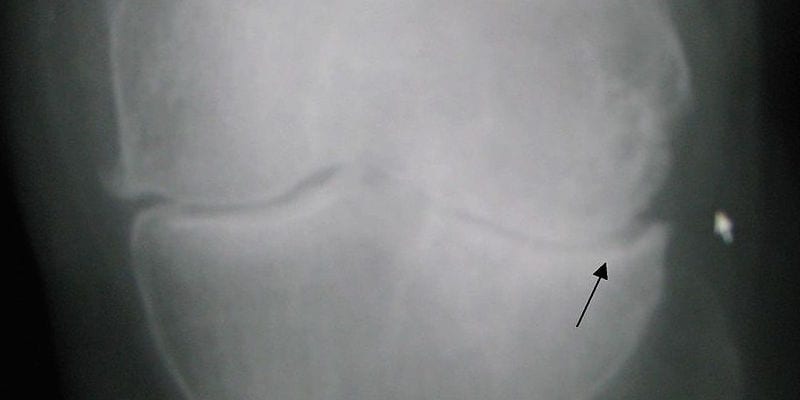
Infrapatellar fat pad glucocorticoid injections may not reduce pain or effusion volume in patients with knee osteoarthritis
byAlex XiangandSimon Pan
January 12, 2026
in Imaging and Intervention, Orthopedic Surgery, Rheumatology
Reading Time: 3 mins read
Placebo formulation impacts effectiveness of pain control in osteoarthritis
Share on FacebookShare on Twitter

1. Infrapatellar fat pad (IPFP) glucocorticoid injections do not significantly reduce pain or effusion volume compared to placebo in knee osteoarthritis (OA).

Evidence Rating Level: 1 (Excellent)

Study Rundown: Osteoarthritis is a debilitating condition that leads to physical disability, reduces quality of life, and most commonly affects the knee joint. Intra-articular glucocorticoid injections are reserved for patients when other pharmacological treatments are ineffective. However, they provide pain relief for weeks to months, with a decreasing magnitude of pain relief over this time. Furthermore, glucocorticoid injections may induce cartilage loss. Studies have shown that IPFP alterations may play a critical role in knee OA, particularly in patients with comorbid effusion synovitis and Hoffa synovitis. Therefore, there is a need to evaluate if IPFP glucocorticoid injections effectively alleviate knee pain.

This 12-week randomized, double-blind, placebo-controlled trial was conducted across 4 centres in China from April 2022 to June 2023. Participants included adults aged 45 years or older who met the symptomatic knee OA criteria according to the American College of Rheumatology standards and had positive Hoffa and effusion synovitis scores. Patients randomized to the glucocorticoid group received one IPFP injection of 1 mL of glucocorticoid (containing 5 mg of betamethasone dipropionate and 2 mg of betamethasone sodium phosphate), 0.5 mL lidocaine, and 0.5 mL saline. Patients randomized to the placebo group received one IPFP injection of 0.5 mL lidocaine and 1.5 mL saline. Patients in both groups received concomitant intra-articular injections of 2.5 mL hyaluronic acid (containing 25 mg of sodium hyaluronate).

Overall, this study found that there were no statistically significant differences in the reduction of pain or effusion volume between the glucocorticoid and placebo groups. Post-hoc analyses showed the treatment group had significantly greater reduction in Western Ontario and McMaster Universities Osteoarthritis Index (WOMAC) pain score and cartilage defect. Adverse events were rare in both groups. Further studies are required to compare the effectiveness of IPFP versus intra-articular glucocorticoid injections.

Click here to read this study in JAMA Network Open

RELATED REPORTS

The addition of leflunomide (Arava) to prednisone (Deltasone) may not improve rate of remission in Takayasu arteritis

2 Minute Medicine Rewind July 6, 2026

Guselkumab (Tremfya) strengthens its case for protecting joints in psoriatic arthritis

Relevant reading: Association between knee inflammation and knee pain in patients with knee osteoarthritis: a systematic review

In-depth [randomized clinical trial]: Intra-articular glucocorticoid injections are widely used in the management of knee OA. IPFP has been implicated in OA pathogenesis. This randomized controlled trial investigated the efficacy and safety of IPFP glucocorticoid injection with intra-articular hyaluronic acid compared to intra-articular hyaluronic acid alone. The primary outcomes were changes in knee pain and effusion synovitis volume.

60 patients were randomized in a 1:1 ratio to the glucocorticoid and placebo arms (mean [SD] age, 64.9 [11.1] years; 63.3% female). After 12 weeks, the treatment and placebo groups had reductions in visual analogue scale (VAS) pain scores of 39.3 (95% CI, 27.5 to 51.1) and 31.4 (95% CI, 19.7 to 43.1) points, resulting in a non-significant between-group difference of −7.9 points (95% CI, −19.7 to 4.0 points). The most significant VAS decrease occurred after 4 weeks. There was no significant difference in effusion volume reduction (−4.9 mL vs −5.4 mL; between-group difference, 0.5 mL; 95% CI, −1.9 to 2.9 mL). Between-group differences in Hoffa synovitis scores (−0.1 (95% CI, −0.3 to 0.2) were non-significant. Post hoc analyses showed IPFP glucocorticoid injection statistically reduced WOMAC pain scores (between-group difference of –46.2 (95% CI, –90.0 to –2.4)). 10.0% and 23.3% of patients in the treatment and placebo groups experienced at least one adverse event.

Image: PD

©2026 2 Minute Medicine, Inc. All rights reserved. No works may be reproduced without expressed written consent from 2 Minute Medicine, Inc. Inquire about licensing here. No article should be construed as medical advice and is not intended as such by the authors or by 2 Minute Medicine, Inc.
Tags: abdominal paineffusionfamily medicineglucocorticoid injectionknee osteoarthritisrheumatology
Previous Post

Ultrasound-guided stellate ganglion block reduces postoperative visceral pain following laparoscopic hysterectomy

Next Post

The preoperative combination of evolocumab and rosuvastatin may not reduce major adverse cardiovascular events

RelatedReports

Lower target oxygen saturation in extremely preterm infants appears safe
Chronic Disease

The addition of leflunomide (Arava) to prednisone (Deltasone) may not improve rate of remission in Takayasu arteritis

July 10, 2026
Obstetric scoring systems overestimate cases of severe sepsis
All Specialties

2 Minute Medicine Rewind July 6, 2026

July 7, 2026
Brodalumab effective in treating active psoriatic arthritis
Chronic Disease

Guselkumab (Tremfya) strengthens its case for protecting joints in psoriatic arthritis

June 5, 2026
Physical therapy reduces pain in adults with knee osteoarthritis
Chronic Disease

Knee bracing may provide small improvements in patient-reported outcomes in knee osteoarthritis

February 5, 2026
Next Post
Using HEART score to risk stratify patients with chest pain is safe but underutilized in the ED

The preoperative combination of evolocumab and rosuvastatin may not reduce major adverse cardiovascular events

High-flow nasal therapy with room air and fan therapy provide modest relief of dyspnea in advanced cancer patients who are not hypoxemic

Contrast-enhanced computed tomography associated with high sensitivity to renal stone detection

2 Minute Medicine Rewind January 12th, 2026

EvidencePulse™ by 2 Minute Medicine 2026 evidence scan 3 reports You asked top stroke trials 2026 Synthesizing medical evidence... Top 2026 stroke trial results: OCEANIC — ischemic stroke: 6.2% vs 8.4% OPTION* — mRS 0–1: 43.6% vs 34.2% ORIENTAL* — mRS 0–2: 58.6% vs 46.6% *Higher sICH in intervention arms Participants randomizedN OCEANIC 12,327 OPTION 570 ORIENTAL 564 Ask about guidelines or landmark trials... ↑ Try EvidencePulse™ Ask the evidence.
Get the signal.
Try it now → Physician-trained medical AI by 2 Minute Medicine

2MM+ All Access

Full details →
$4.99 /month

5-day free trial · cancel anytime

  • ✓100+ physician-written reports
  • ✓EvidencePulse™ + HypeCheck™
  • ✓Ad-free reading + newsletters
Start 5-day free trial

Then $4.99/month. Manage renewal in your account.

2 Minute Medicine® is an award winning, physician-run, expert medical media company. Our content is curated, written and edited by practicing health professionals who have clinical and scientific expertise in their field of reporting. Our editorial management team is comprised of highly-trained MD physicians. Join numerous brands, companies, and hospitals who trust our licensed content.

Recent Reports

  • Aletta brings autonomous robotics into routine blood collection
  • Higher coffee intake is associated with lower visceral fat despite similar body mass index
  • Molecularly guided therapy may improve outcomes in patients with unfavourable cancer of unknown primary compared with standard chemotherapy
License Content
Terms of Use | Disclaimer
Cookie Policy
Cleantalk Pixel
  • About
  • Specialties
    • All Specialties, All Recent Reports
    • Cardiology
    • Chronic Disease
    • Dermatology
    • Emergency
    • Endocrinology
    • Gastroenterology
    • Imaging and Intervention
    • Infectious Disease
    • Nephrology
    • Neurology
    • Obstetrics
    • Oncology
    • Ophthalmology
    • Pediatrics
    • Pharma
    • Preclinical
    • Psychiatry
    • Public Health
    • Pulmonology
    • Rheumatology
    • Surgery
  • Tools
    • EvidencePulse™
    • HypeCheck™
    • NPI Registry Lookup
    • RVU Search
  • Pharma
  • AI Roundup
  • The Scan
  • Classics™
    • 2MM+ Online Access
    • Paperback and Ebook
  • Rewinds
  • Partners
    • License Content
    • Submit Press Release
    • Advertise with Us
  • Account
    • Subscribe
    • My account
    • Cart
    • Sign-in
No Result
View All Result

© 2026 2 Minute Medicine, Inc. - Physician-written medical news.

2MM+ All Access Full details →

The medical literature, distilled daily.

Monthly plan selected: $4.99 /month.

$4.99/month

5-day free trial · cancel anytime

Start 5-day free trial

Then $4.99/month. Manage renewal in your account.

Yearly plan selected: $49.90 /year.

$49.90/year

2 months free · only $4.16/month

Start 5-day free trial

Then $49.90/year. Manage renewal in your account.

Membership benefits

  • ✓100+ physician-written reports
  • ✓AI EvidencePulse™ + HypeCheck™
  • ✓Ad-free reading + newsletters

Already a member? Sign in