• About
  • Masthead
  • License Content
  • Advertise
  • Submit Press Release
  • RSS/Email List
  • 2MM Podcast
  • Write for us
  • Contact Us
2 Minute Medicine
No Result
View All Result

No products in the cart.

SUBSCRIBE
  • Specialties
    • All Specialties, All Recent Reports
    • Cardiology
    • Chronic Disease
    • Dermatology
    • Emergency
    • Endocrinology
    • Gastroenterology
    • Imaging and Intervention
    • Infectious Disease
    • Nephrology
    • Neurology
    • Obstetrics
    • Oncology
    • Ophthalmology
    • Pediatrics
    • Pharma
    • Preclinical
    • Psychiatry
    • Public Health
    • Pulmonology
    • Rheumatology
    • Surgery
  • AI EvidencePulse™
  • Pharma
  • AI News
  • The Scan+
  • Classics™+
    • 2MM+ Online Access
    • Paperback and Ebook
  • Rewinds
  • Podcasts
  • Partners
    • License Content
    • Submit Press Release
    • Advertise with Us
  • Account
    • Subscribe
    • Sign-in
    • My account
2 Minute Medicine
  • Specialties
    • All Specialties, All Recent Reports
    • Cardiology
    • Chronic Disease
    • Dermatology
    • Emergency
    • Endocrinology
    • Gastroenterology
    • Imaging and Intervention
    • Infectious Disease
    • Nephrology
    • Neurology
    • Obstetrics
    • Oncology
    • Ophthalmology
    • Pediatrics
    • Pharma
    • Preclinical
    • Psychiatry
    • Public Health
    • Pulmonology
    • Rheumatology
    • Surgery
  • AI EvidencePulse™
  • Pharma
  • AI News
  • The Scan+
  • Classics™+
    • 2MM+ Online Access
    • Paperback and Ebook
  • Rewinds
  • Podcasts
  • Partners
    • License Content
    • Submit Press Release
    • Advertise with Us
  • Account
    • Subscribe
    • Sign-in
    • My account
SUBSCRIBE
2 Minute Medicine
Subscribe
Home All Specialties Chronic Disease

Ipatasertib plus abiraterone significantly improves survival in patients with PTEN-negative prostate cancer compared to abiraterone alone
byJessie WillisandTeddy Guo
July 22, 2021
in Chronic Disease, Oncology, Urology
Reading Time: 3 mins read
0
Share on FacebookShare on Twitter

1. Ipatasertib-abiraterone treatment significantly improved progression-free survival compared to placebo-abiraterone in patients with PTEN-loss metastatic castration-resistant prostate cancer.

2. Grade 3 or greater adverse events occurred in 70% of patients treated with ipatasertib plus abiraterone versus 39% in placebo plus abiraterone.

Evidence Rating Level: 1 (Excellent)

Study Rundown: Metastatic castration-resistant prostate cancer (mCRPC) is currently treated with abiraterone, an androgen biosynthesis inhibitor. Despite being an effective androgen-deprivation therapy, the median life expectancy for mCRPC is less than 3 years as patients go on to develop treatment-resistant disease. Activation of the P13K/AKT pathway is one mechanism of abiraterone resistance, which is especially hyperactive in tumors with PTEN-loss. PTEN is a tumor suppressor which is lost in approximately half of patients with mCRPC. Ipatasertib is an inhibitor of the PI3K/AKT pathway and has been shown in previous studies to have a greater effect in those patients with PTEN-loss. For these reasons, this multicenter randomized-control trial assessed the effect of dual ipatasertib-abiraterone treatment compared to placebo-abiraterone in patients with mCRPC. The 1101 enrolled patients were randomized 1:1 and stratified by PTEN-loss status. After a median follow-up of 19 months, radiographical progression-free survival was calculated. Results for the PTEN-loss group showed ipatasertib plus abiraterone significantly increased median progression-free survival compared to abiraterone alone. These numbers were similar in the intention-to-treat group, but not statistically significant. Drug adverse events were comparable to those seen in other ipatasertib trials, with the most common being a rash. Side effects that led to treatment discontinuation occurred in 5% and 21% of patients in the abiraterone only and ipatasertib plus abiraterone groups, respectively. A limitation of this study was that PTEN-loss status was archival and not updated at the time of the study. Since many tumors progress to lose PTEN, this may mean that the stratification was not accurate. Nonetheless, this study provides support for the combination of abiraterone and ipatasertib for mCRPC in patients with PTEN-loss, which usually demarcates more severe disease.

Click to read the study in the Lancet

Relevant Reading: Randomized Phase II Study Evaluating Akt Blockade with Ipatasertib, in Combination with Abiraterone, in Patients with Metastatic Prostate Cancer with and without PTEN Loss

RELATED REPORTS

Increasing cancer incidence rates in younger and older adults worldwide

Antioxidant Treatment and the Chance to Conceive in Men Seeking Fertility Care: The SUMMER Randomized Clinical Trial

Talazoparib and enzalutamide improve survival in metastatic castration-resistant prostate cancer

In-Depth [randomized controlled trial]: This randomized, double-blind, phase 3 drug trial enrolled 1101 patients from 200 sites across 26 countries or regions. The eligibility criteria included 18+ years of age, mCRPC, ECOG of 0 or 1 and status defined as untreated asymptomatic or mildly symptomatic. Patients were randomized to receive placebo-abiraterone 1000 mg (n=554) once daily or ipatasertib 400mg-abiraterone 1000mg (n=554) once daily. All patients received 5 mg of prednisolone twice daily. Patients were stratified based on previous treatment and PTEN-loss status confirmed by an archival or current immunohistochemistry result. Recruitment started on June 2017 with data cut-off in March 2020. For the results, patients were analyzed as part of the PTEN-loss group (n=261 placebo, n=260 ipatasertib) or intention-to-treat (all patients). For PTEN-loss patients, progression-free survival was longer in the ipatasertib group (18.5 months) than the placebo group (16.5 months; HR 0.77, p=0.034, significant at ɑ=0.04).  This trend was also seen in the intention-to-treat group (HR 0.84, p=0.043, ɑ=0.01), but the result was not significant. In terms of adverse events, grade 3 or higher events were seen in 39% of patients treated with placebo compared to 70% treated with ipatasertib. Treatment-related deaths were two in each group.

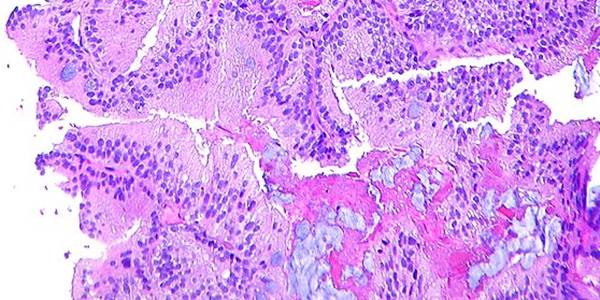
Image: PD

©2021 2 Minute Medicine, Inc. All rights reserved. No works may be reproduced without expressed written consent from 2 Minute Medicine, Inc. Inquire about licensing here. No article should be construed as medical advice and is not intended as such by the authors or by 2 Minute Medicine, Inc.

Tags: abirateroneIpatasertibmetastatic castration-resistant prostate cancermetastatic castration-resistant prostate cancer (mCRPC)metastatic prostate cancerPI3K/AKT pathwayprostateprostate cancerprostate specific antigenprostate specific antigen (PSA)PTENUrology
Previous Post

#VisualAbstract Menopausal hormone therapy was not associated with risk of cutaneous melanoma

Next Post

Automated behavioral intervention for improving workplace diet did not prevent weight gain

RelatedReports

Population-based risk factors and geographical trends identified for vitiligo
Oncology

Increasing cancer incidence rates in younger and older adults worldwide

October 20, 2025
Risk of autism in offspring linked to maternal pregestational diabetes and severe obesity
Lifestyle

Antioxidant Treatment and the Chance to Conceive in Men Seeking Fertility Care: The SUMMER Randomized Clinical Trial

October 3, 2025
Radiation plus hormone therapy may improve prostate cancer survival
Chronic Disease

Talazoparib and enzalutamide improve survival in metastatic castration-resistant prostate cancer

August 14, 2025
Being overweight and obese associated with increased incidence of chronic kidney disease
Nephrology

Restrictive intraoperative vascular filling is a strong risk factor for postoperative acute kidney injury

July 22, 2025
Next Post
Dietary variety linked to greater increase in childhood BMI

Automated behavioral intervention for improving workplace diet did not prevent weight gain

#VisualAbstract Addition of daratumumab to standard of care improves minimal residual disease negativity in patients with newly diagnosed, transplant-ineligible multiple myeloma

#VisualAbstract Addition of daratumumab to standard of care improves minimal residual disease negativity in patients with newly diagnosed, transplant-ineligible multiple myeloma

Adjuvant celecoxib not associated with improved disease-free survival in patients with ERBB2-negative breast cancer

2 Minute Medicine® is an award winning, physician-run, expert medical media company. Our content is curated, written and edited by practicing health professionals who have clinical and scientific expertise in their field of reporting. Our editorial management team is comprised of highly-trained MD physicians. Join numerous brands, companies, and hospitals who trust our licensed content.

Recent Reports

  • Efficacy of standard care versus acoustic therapy on acute tinnitus in idiopathic sudden sensorineural hearing loss: a randomized controlled trial
  • Opioid overdose associated with concomitant use of hydrocodone and selective serotonin reuptake inhibitors
  • Analysis of arrhythmia and its risk factors in patients with COVID-19
License Content
Terms of Use | Disclaimer
Cookie Policy
Privacy Statement (EU)
Disclaimer

© 2025 2 Minute Medicine, Inc. - Physician-written medical news.

  • Specialties
    • All Specialties, All Recent Reports
    • Cardiology
    • Chronic Disease
    • Dermatology
    • Emergency
    • Endocrinology
    • Gastroenterology
    • Imaging and Intervention
    • Infectious Disease
    • Nephrology
    • Neurology
    • Obstetrics
    • Oncology
    • Ophthalmology
    • Pediatrics
    • Pharma
    • Preclinical
    • Psychiatry
    • Public Health
    • Pulmonology
    • Rheumatology
    • Surgery
  • AI EvidencePulse™
  • Pharma
  • AI News
  • The Scan
  • Classics™
    • 2MM+ Online Access
    • Paperback and Ebook
  • Rewinds
  • Podcasts
  • Partners
    • License Content
    • Submit Press Release
    • Advertise with Us
  • Account
    • Subscribe
    • Sign-in
    • My account
No Result
View All Result

© 2025 2 Minute Medicine, Inc. - Physician-written medical news.