• About
  • Masthead
  • License Content
  • Advertise
  • Press Releases
  • Newsroom
  • RSS/Email List
  • 2MM Podcast
  • Write for us
  • Contact Us
2 Minute Medicine
No Result
View All Result

No products in the cart.

Sign in
SUBSCRIBE
  • About
  • Specialties
    • All Specialties, All Recent Reports
    • Cardiology
    • Chronic Disease
    • Dermatology
    • Emergency
    • Endocrinology
    • Gastroenterology
    • Imaging and Intervention
    • Infectious Disease
    • Nephrology
    • Neurology
    • Obstetrics
    • Oncology
    • Ophthalmology
    • Pediatrics
    • Pharma
    • Preclinical
    • Psychiatry
    • Public Health
    • Pulmonology
    • Rheumatology
    • Surgery
    • Rewinds
    • The Scan
  • EvidencePulse™
  • HypeCheck™
  • AI News
  • Classics™
    • 2MM+ Online Access
    • Paperback and Ebook
  • Tools
    • NPI Registry Lookup
    • RVU Search
  • Partners
    • License Content
    • Advertise with Us
2 Minute Medicine
  • About
  • Specialties
    • All Specialties, All Recent Reports
    • Cardiology
    • Chronic Disease
    • Dermatology
    • Emergency
    • Endocrinology
    • Gastroenterology
    • Imaging and Intervention
    • Infectious Disease
    • Nephrology
    • Neurology
    • Obstetrics
    • Oncology
    • Ophthalmology
    • Pediatrics
    • Pharma
    • Preclinical
    • Psychiatry
    • Public Health
    • Pulmonology
    • Rheumatology
    • Surgery
    • Rewinds
    • The Scan
  • EvidencePulse™
  • HypeCheck™
  • AI News
  • Classics™
    • 2MM+ Online Access
    • Paperback and Ebook
  • Tools
    • NPI Registry Lookup
    • RVU Search
  • Partners
    • License Content
    • Advertise with Us
Sign in
SUBSCRIBE
2 Minute Medicine
Sign in
Subscribe
2 Minute MedicineFree on Google PlayGet
✦ EvidencePulse™ by 2 Minute Medicine 2026 evidence scan 3 reports You asked top stroke trials 2026 Synthesizing medical evidence... Top 2026 stroke trial results: OCEANIC — ischemic stroke: 6.2% vs 8.4% OPTION* — mRS 0–1: 43.6% vs 34.2% ORIENTAL* — mRS 0–2: 58.6% vs 46.6% *Higher sICH in intervention arms Participants randomizedN OCEANIC 12,327 OPTION 570 ORIENTAL 564 Ask about guidelines or landmark trials... ↑ Try EvidencePulse™ Ask the evidence.
Get the signal.
Try it now → Physician-trained medical AI by 2 Minute Medicine
Home All Specialties Gastroenterology

Negative pressure wound therapy for open abdomens appears safe

bys25qthea
March 15, 2013
in Gastroenterology, Surgery
Reading Time: 4 mins read
Negative pressure wound therapy for open abdomens appears safe
Share on FacebookShare on TwitterShare on LinkedIn

[tabs tab1=”2MM Rundown” tab2= “2MM Full Report”]

[tab]

Image: PD

1. Risk of intestinal fistulation in open abdomens treated with negative pressure wound therapy (NPWT) is not statistically different than without such therapy.
 
2. Mortality in open abdomen patients treated with negative pressure wound therapy is not statistically different.

This independent study is the largest prospective study of open-abdomen management ever reported.  Given the previous inconclusive evidence regarding the use of NPWT in open abdomens, this study helps allay concerns that use of NPWT could increase mortality or the risk of intestinal fistulation.  The data in this study suggest that neither of those complications is more likely in NPWT, and, although not statistically significant at this sample size, the data suggest that mortality rate and intestinal fistulation may actually occur at a lower rate.  The finding of NPWT patients having a reduced rate of delayed primary closure, while statistically significant, does not necessarily suggest that the relationship is causal.  Given that the study did not collect enough variables to address whether there were failed attempts to close those abdomens, or if patients were left on NPWT as a more definitive therapy, there is no way of knowing exactly why there is a reduced rate.  Strengths of this study are the large number of acute care centers involved, as well as the sample size.  One limitation was that the study was not randomized.  Also, although the authors did match the pairs across multiple variables, and tried to address for selection bias, it is impossible to know if there are unmeasured confounding factors.

Click to read the study in Annals of Surgery

RELATED REPORTS

The rate of urethrocutaneous fistula formation may be similar between caudal and penile blocks

The rate of urethrocutaneous fistula following caudal and penile blocks for hypospadias repair may be similar

[/tab]

[tab]

Image: PD

1. Risk of intestinal fistulation in open abdomens treated with negative pressure wound therapy (NPWT) is not statistically different than without such therapy.
 
2. Mortality in open abdomen patients treated with negative pressure wound therapy is not statistically different. 

This [prospective] study included 578 patients in the United Kingdom who required surgery and were left with an open abdomen. They used a matched-pair cohort to compare various outcomes for open abdomen patients treated with negative pressure wound therapy (NPWT) vs. those not treated with it. The patients were culled from 105 different acute hospitals, with each hospital submitting information for a database on the patient data they had collected.  Nearly 80% of patients had the abdomen left open after an emergency laparotomy. 398 (68.9%) patients in the U.K. were treated for abdominal sepsis as the preceding cause.

The relative risk of intestinal fistulation was 0.83 (95% CI: 0.44-1.58), relative risk of death was 0.87 (95% CI: 0.64-1.20), and relative risk of intestinal failure was 1.00 (95% CI: 0.64-1.57).  The only statistically significant difference was found in the reduced rate of delayed primary closure, with a relative risk of 0.74 (95% CI: 0.6-0.9) with NPWT.

In sum: This independent study is the largest prospective study of open-abdomen management ever reported.  Given the previous inconclusive evidence regarding the use of NPWT in open abdomens, this study helps allay concerns that use of NPWT could increase mortality or the risk of intestinal fistulation.  The data in this study suggest that neither of those complications is more likely in NPWT, and, although not statistically significant at this sample size, the data suggest that mortality rate and intestinal fistulation may actually occur at a lower rate.  The finding of NPWT patients having a reduced rate of delayed primary closure, while statistically significant, does not necessarily suggest that the relationship is causal.  Given that the study did not collect enough variables to address whether there were failed attempts to close those abdomens, or if patients were left on NPWT as a more definitive therapy, there is no way of knowing exactly why there is a reduced rate.  Strengths of this study are the large number of acute care centers involved, as well as the sample size.  One limitation was that the study was not randomized.  Also, although the authors did match the pairs across multiple variables, and tried to address for selection bias, it is impossible to know if there are unmeasured confounding factors.

Click to read the study in Annals of Surgery

By David Mattos and Allen Ho

© 2013 2minutemedicine.com. All rights reserved. No works may be reproduced without written consent from 2minutemedicine.com. Disclaimer: We present factual information directly from peer reviewed medical journals. No post should be construed as medical advice and is not intended as such by the authors or by 2minutemedicine.com. PLEASE SEE A HEALTHCARE PROVIDER IN YOUR AREA IF YOU SEEK MEDICAL ADVICE OF ANY SORT. Content is produced in accordance with fair use copyrights solely and strictly for the purpose of teaching, news and criticism. No benefit, monetary or otherwise, is realized by any participants or the owner of this domain.

[/tab]

[/tabs]

Tags: fistulawound therapy
Previous Post

Nonemergent percutaneous coronary intervention safe without on-site cardiac surgery services

Next Post

Circulating tumor DNA used to monitor metastatic breast cancer

RelatedReports

Robotic surgical instruments with surgical mesh and sutures, indicating a procedure for hernia repair.
Imaging and Intervention

The rate of urethrocutaneous fistula formation may be similar between caudal and penile blocks

October 12, 2026
A mother and child walk together along a path depicting recovery, with a hospital, home, clock, and sneakers symbolizing pediatric surgery recovery.
Imaging and Intervention

The rate of urethrocutaneous fistula following caudal and penile blocks for hypospadias repair may be similar

September 18, 2026
#VisualAbstract: Encorafenib plus binimetinib improves quality of life outcomes compared to vemurafenib in patients with advanced BRAF-mutated melanoma
StudyGraphics

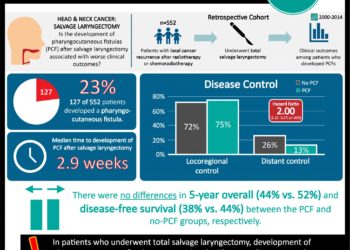
#VisualAbstract: Development of pharyngocutaneous fistulas after salvage laryngectomy is associated with an increased risk of distant metastasis

August 19, 2021
Post-surgical wound complications more common in obese ovarian cancer patients
Chronic Disease

No benefit of negative pressure wound therapy for lower extremity open fractures

June 14, 2018
Next Post
Circulating tumor DNA used to monitor metastatic breast cancer

Circulating tumor DNA used to monitor metastatic breast cancer

Reminder intervention increases colorectal cancer screening rates

Overuse of colonoscopy widespread in the US

New approaches effective in screening embryos for diseases

New approaches effective in screening embryos for diseases

✦ EvidencePulse™ by 2 Minute Medicine 2026 evidence scan 3 reports You asked top stroke trials 2026 Synthesizing medical evidence... Top 2026 stroke trial results: OCEANIC — ischemic stroke: 6.2% vs 8.4% OPTION* — mRS 0–1: 43.6% vs 34.2% ORIENTAL* — mRS 0–2: 58.6% vs 46.6% *Higher sICH in intervention arms Participants randomizedN OCEANIC 12,327 OPTION 570 ORIENTAL 564 Ask about guidelines or landmark trials... Try EvidencePulse™ Get the signal. Try it now → Physician-trained medical AI by 2 Minute Medicine

2MM+ All Access

Full details →
$4.99 /month

3-day free trial · cancel anytime

  • ✓100+ physician-written reports
  • ✓EvidencePulse™ + HypeCheck™
  • ✓Ad-free reading + newsletters
Start 3-day free trial

Then $4.99/month. Manage renewal in your account.

NPI Lookup · Free

Look up any US clinician

Search by name or NPI number, live from the CMS NPI Registry.

  • OIG exclusion check
  • Licenses and specialties
  • No account needed
Open NPI Lookup →

2 Minute Medicine® is an award winning, physician-run, expert medical media company. Our content is curated, written and edited by practicing health professionals who have clinical and scientific expertise in their field of reporting. Our editorial management team is comprised of highly-trained MD physicians. Join numerous brands, companies, and hospitals who trust our licensed content.

Recent Reports

  • Tarlatamab plus durvalumab improved survival versus durvalumab alone in extensive-stage small cell lung cancer, Amgen reports in interim phase 3 results
  • Sacituzumab tirumotecan improved overall survival versus platinum chemotherapy in company-reported final phase 3 results
  • Camupepimut did not improve disease-free survival versus observation in pancreatic cancer in the randomized phase 2 AMPLIFY-7P trial
License Content
Terms of Use | Disclaimer
Cookie Policy

Get the app

Read 2 Minute Medicine on iPhone, iPad and Android.

Download on the App StoreGet it on Google Play
QR code for www.2minutemedicine.com/app
On a computer? Scan this with your phone’s camera.
2MM+ All Access Full details →

The medical literature, distilled daily.

Monthly plan selected: $4.99 /month.

$4.99/month

3-day free trial · cancel anytime

Start 3-day free trial

Then $4.99/month. Manage renewal in your account.

Yearly plan selected: $49.90 /year.

$49.90/year

2 months free

Start 3-day free trial

Then $49.90/year.

Membership benefits

  • ✓100+ physician-written reports
  • ✓AI EvidencePulse™ + HypeCheck™
  • ✓Ad-free reading + newsletters
  • ✓NPI watchlist + bulk NPI verification

Already a member? Sign in

  • Get the app
  • About
  • Specialties
    • All Specialties, All Recent Reports
    • Cardiology
    • Chronic Disease
    • Dermatology
    • Emergency
    • Endocrinology
    • Gastroenterology
    • Imaging and Intervention
    • Infectious Disease
    • Nephrology
    • Neurology
    • Obstetrics
    • Oncology
    • Ophthalmology
    • Pediatrics
    • Pharma
    • Preclinical
    • Psychiatry
    • Public Health
    • Pulmonology
    • Rheumatology
    • Surgery
    • Rewinds
    • The Scan
  • EvidencePulse™
  • HypeCheck™
  • AI News
  • Classics™
    • 2MM+ Online Access
    • Paperback and Ebook
  • Tools
    • NPI Registry Lookup
    • RVU Search
  • Partners
    • License Content
    • Advertise with Us
No Result
View All Result

© 2026 2 Minute Medicine, Inc. - Physician-written medical news.