• About
  • Masthead
  • License Content
  • Advertise
  • Submit Press Release
  • RSS/Email List
  • 2MM Podcast
  • Write for us
  • Contact Us
2 Minute Medicine
No Result
View All Result

No products in the cart.

SUBSCRIBE
  • About
  • Specialties
    • All Specialties, All Recent Reports
    • Cardiology
    • Chronic Disease
    • Dermatology
    • Emergency
    • Endocrinology
    • Gastroenterology
    • Imaging and Intervention
    • Infectious Disease
    • Nephrology
    • Neurology
    • Obstetrics
    • Oncology
    • Ophthalmology
    • Pediatrics
    • Pharma
    • Preclinical
    • Psychiatry
    • Public Health
    • Pulmonology
    • Rheumatology
    • Surgery
  • Tools+
    • EvidencePulse™
    • HypeCheck™
    • NPI Registry Lookup
    • RVU Search
  • Pharma
  • AI Roundup
  • The Scan+
  • Classics™+
    • 2MM+ Online Access
    • Paperback and Ebook
  • Rewinds
  • Partners
    • License Content
    • Submit Press Release
    • Advertise with Us
  • Account
    • Subscribe
    • My account
    • Cart
    • Sign-in
2 Minute Medicine
  • About
  • Specialties
    • All Specialties, All Recent Reports
    • Cardiology
    • Chronic Disease
    • Dermatology
    • Emergency
    • Endocrinology
    • Gastroenterology
    • Imaging and Intervention
    • Infectious Disease
    • Nephrology
    • Neurology
    • Obstetrics
    • Oncology
    • Ophthalmology
    • Pediatrics
    • Pharma
    • Preclinical
    • Psychiatry
    • Public Health
    • Pulmonology
    • Rheumatology
    • Surgery
  • Tools+
    • EvidencePulse™
    • HypeCheck™
    • NPI Registry Lookup
    • RVU Search
  • Pharma
  • AI Roundup
  • The Scan+
  • Classics™+
    • 2MM+ Online Access
    • Paperback and Ebook
  • Rewinds
  • Partners
    • License Content
    • Submit Press Release
    • Advertise with Us
  • Account
    • Subscribe
    • My account
    • Cart
    • Sign-in
SUBSCRIBE
2 Minute Medicine
Subscribe
EvidencePulse™ by 2 Minute Medicine 2026 evidence scan 3 reports You asked top stroke trials 2026 Synthesizing medical evidence... Top 2026 stroke trial results: OCEANIC — ischemic stroke: 6.2% vs 8.4% OPTION* — mRS 0–1: 43.6% vs 34.2% ORIENTAL* — mRS 0–2: 58.6% vs 46.6% *Higher sICH in intervention arms Participants randomizedN OCEANIC 12,327 OPTION 570 ORIENTAL 564 Ask about guidelines or landmark trials... ↑ Try EvidencePulse™ Ask the evidence.
Get the signal.
Try it now → Physician-trained medical AI by 2 Minute Medicine
Home All Specialties Chronic Disease

Neoadjuvant chemoradiotherapy plus surgery increases overall survival of patients with advanced esophageal squamous cell carcinoma compared to surgery alone
byMeagan WiedermanandMichael Pratte
June 28, 2021
in Chronic Disease, Gastroenterology, Oncology
Reading Time: 3 mins read
Hybrid minimally invasive esophagectomy associated with lower complication rates compared to open esophagectomy
Share on FacebookShare on Twitter

1. Neoadjuvant chemoradiotherapy (NCRT) with surgery improves the death rate, overall survival, disease-free survival time, and locoregional and distal recurrence rates of advanced esophageal squamous cell carcinoma compared to surgery alone

2. While NCRT incurred more adverse events, there was not more treatment-associated deaths, thus the survival benefit could potentially outweigh these risks

Evidence Rating Level: 1 (Excellent)

Study Rundown: Esophageal squamous cell carcinoma (ESCC) makes up 90% of East Asian esophageal cancer, which in turn is half of esophageal cancer. Surgery is currently the standard of care for the treatment of locally-advanced esophageal cancer, with 5-year survival rate of 25%. The Neoadjuvant Chemoradiotherapy for Esophageal Cancer 5010 randomized controlled trial previously showed benefit of neoadjuvant chemoradiotherapy (NCRT) to overall and disease-free survival at 24-months. This study, the NEOCRTEC50 trial, investigated the efficacy of NCRT with surgery on overall survival of ESCC versus surgery alone, with a primary endpoint of overall survival and secondary outcome of disease-free survival. Adults with advanced ESCC were randomized to NCRT plus surgery or surgery alone. While adverse events to NCRT were common, most completed treatment. The number of patient-related deaths did not significantly differ between treatment groups. NCRT had improved death rate, overall survival, and overall percent of participants surviving at 5-years compared to surgery alone. While most surgeries had negative margins at the time of resection, more cancer relapse and locoregional and/or distant recurrence occurred with surgery alone, shortening disease-free survival time compared to patients who also received NCRT. Strengths of this study include the size, power, and long duration of follow-up, focus on the population primarily afflicted by ESCC, and intention-to-treat analysis making conservative estimates. One drawback of this design is the burdensome treatment requiring significant exclusion criteria caused most patients to be quite young and fit, especially for a cancer study, which limits the generalizability of this data. Additionally, this data might not be applicable to a Western setting as it occurred in China where ESCC is more common.

Click to read the study in JAMA Surgery

Click to read an accompanying editorial in JAMA Surgery

RELATED REPORTS

Active surveillance is cost-effective compared with standard surgery among esophageal cancer patients with complete clinical response after neoadjuvant chemoradiotherapy

Camrelizumab may be safe and effective in the management of locally advanced esophageal squamous cell carcinoma

2 Minute Medicine Rewind March 16, 2026

Relevant Reading: A meta-analysis on surgery with or without postoperative radiotherapy to treat squamous cell esophageal carcinoma

In-Depth [randomized controlled trial]: Adults (age 18-70) with stage T1-4N1M0/T4N0M0, surgically resectable, histologically proven ESCC, who were surgical candidates with a Karnofsky score of at least 90 and had no history of other cancers or gastrectomy, were eligible for this study. Patients were computer-randomized to NCRT plus surgery or surgery alone, stratified by participating center. Age, percent male, and disease stage were balanced between groups. The NCRT group radiotherapy and chemotherapy started on the same day. Chemotherapy involved either 75 mg/m2 of cisplatin on day 1 plus 25 mg/m2 of vinorelbine on days 1 and 8 or 25 mg/m2 of cisplatin on days 1 – 4 and 22- 25. Most participants (n = 451) had T3 tumors (60.3%) and N1 nodes (86.5%), and were male (81.4%), with a mean age of 56.5±7.0 years. ESCC patients were evenly randomized, stratified by the 8 Chinese centers, into a NCRT group (n = 224; age = 56.0±7.1 years; 84.8% male; 83.9% stage III disease) and a surgery group (n = 227; age = 56.9±6.9 years; 78.0% male; 83.7% stage III disease). Adverse events were common to the NCRT group, including Grade 3 or 4 hematologic (54.3%), Grade 3 or 4 non-hematologic (7.2%), leukopenia (48.9%), and neutropenia (45.7%). 182 NCRT patients of the 185 that went on to have surgery had negative margins (98.4%). 207 of 227 surgery only patients went on to have negative margins (91.2%), fewer than NCRT (P = 0.002). Peri-treatment mortality did not significantly differ (P = 0.21) between NCRT (n = 4; 2.2%) and surgery (n = 1; 0.4%). The NCRT group had a death rate of 44.6%, while the surgery only group had one of 54.6%, thus overall survival post-operatively was higher with NCRT (HR = 0.74; 95% CI = 0.57-0.97; P = 0.03). Overall survival at 5 years with NCRT (59.9%, 95% CI = 52.9%-66.1%) compared to surgery alone (49.1%, 95% CI = 42.3%-55.6%) was higher (HR = 0.73, 95% CI = 0.55-0.97; P = 0.03), with a number needed to treat of 9.3 (95% CI = 5.0-73.2). Fewer NCRT patients experienced cancer relapse (42.3%) compared to surgery group (59.4%). Compared to surgery alone, NCRT decreased locoregional recurrence (21.7% vs 13.7%) and distal recurrence (35.7% vs 25.3%), and combined locoregional and distal recurrence of cancer (8.2% vs 4.4%). NCRT patients had longer disease-free survival times than the surgery patients (HR = 0.60; 95%CI = 0.45-0.80; P < 0.001). Similarly, a greater proportion of NCRT patients were disease-free at 5 years (63.6%, 95% CI = 56.0%-70.2%) compared with the surgery group (43.0%, 95% CI = 36.0%-49.7%) (HR = 0.55, 95%CI = 0.40-0.74; P < 0.001), with a number needed to treat of 4.9 (95% CI = 3.3-9.4). These results stand for all demographic subgroups benefiting from NCRT.

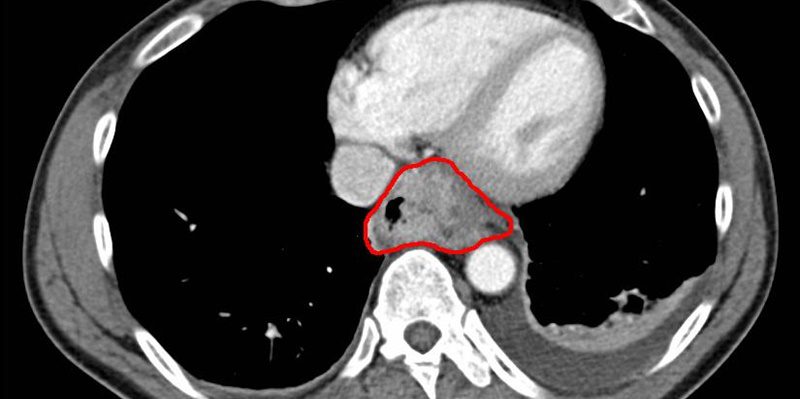
Image: PD

©2021 2 Minute Medicine, Inc. All rights reserved. No works may be reproduced without expressed written consent from 2 Minute Medicine, Inc. Inquire about licensing here. No article should be construed as medical advice and is not intended as such by the authors or by 2 Minute Medicine, Inc.

Tags: chemoradiotherapyesophageal canceresophageal squamous cell carcinomaneoadjuvant
Previous Post

Age-related hearing impairment in older adults associated with decreased physical functioning

Next Post

Restrictive versus liberal fluid resuscitation strategy for post-partum hemorrhage

RelatedReports

Hybrid minimally invasive esophagectomy associated with lower complication rates compared to open esophagectomy
Chronic Disease

Active surveillance is cost-effective compared with standard surgery among esophageal cancer patients with complete clinical response after neoadjuvant chemoradiotherapy

August 6, 2026
Hybrid minimally invasive esophagectomy associated with lower complication rates compared to open esophagectomy
Chronic Disease

Camrelizumab may be safe and effective in the management of locally advanced esophageal squamous cell carcinoma

March 19, 2026
Buccal administration of dextrose gel effective for neonatal hypoglycemia
Weekly Rewinds

2 Minute Medicine Rewind March 16, 2026

March 16, 2026
Incidence of esophageal cancer subtypes vary drastically globally and by gender
Chronic Disease

Active Surveillance vs Standard Surgery Post-Neoadjuvant Chemoradiotherapy for Esophageal Cancer

March 24, 2025
Next Post
Delays in surgical intervention do not increase odds of appendiceal perforation

Restrictive versus liberal fluid resuscitation strategy for post-partum hemorrhage

Adolescents’ muscle strength associated with lower cardiometabolic risk

Combined exercise training reduced occupational burnout in helping professions

Exercise associated with decreased breast cancer risk

Incidence of benign breast diseases and their association with age, family history of breast cancer, and hormonal activities

EvidencePulse™ by 2 Minute Medicine 2026 evidence scan 3 reports You asked top stroke trials 2026 Synthesizing medical evidence... Top 2026 stroke trial results: OCEANIC — ischemic stroke: 6.2% vs 8.4% OPTION* — mRS 0–1: 43.6% vs 34.2% ORIENTAL* — mRS 0–2: 58.6% vs 46.6% *Higher sICH in intervention arms Participants randomizedN OCEANIC 12,327 OPTION 570 ORIENTAL 564 Ask about guidelines or landmark trials... ↑ Try EvidencePulse™ Ask the evidence.
Get the signal.
Try it now → Physician-trained medical AI by 2 Minute Medicine

2MM+ All Access

Full details →
$4.99 /month

5-day free trial · cancel anytime

  • ✓100+ physician-written reports
  • ✓EvidencePulse™ + HypeCheck™
  • ✓Ad-free reading + newsletters
Start 5-day free trial

Then $4.99/month. Manage renewal in your account.

2 Minute Medicine® is an award winning, physician-run, expert medical media company. Our content is curated, written and edited by practicing health professionals who have clinical and scientific expertise in their field of reporting. Our editorial management team is comprised of highly-trained MD physicians. Join numerous brands, companies, and hospitals who trust our licensed content.

Recent Reports

  • The use of neoadjuvant chemotherapy in patients with advanced epithelial ovarian cancer may reduce mortality
  • Alcohol use declines but remains above pre-pandemic levels
  • High maternal egg-peanut intake not associated with reduced infant allergy
License Content
Terms of Use | Disclaimer
Cookie Policy
Cleantalk Pixel
2MM+ All Access Full details →

The medical literature, distilled daily.

Monthly plan selected: $4.99 /month.

$4.99/month

5-day free trial · cancel anytime

Start 5-day free trial

Then $4.99/month. Manage renewal in your account.

Yearly plan selected: $49.90 /year.

$49.90/year

2 months free · only $4.16/month

Start 5-day free trial

Then $49.90/year. Manage renewal in your account.

Membership benefits

  • ✓100+ physician-written reports
  • ✓AI EvidencePulse™ + HypeCheck™
  • ✓Ad-free reading + newsletters

Already a member? Sign in

  • About
  • Specialties
    • All Specialties, All Recent Reports
    • Cardiology
    • Chronic Disease
    • Dermatology
    • Emergency
    • Endocrinology
    • Gastroenterology
    • Imaging and Intervention
    • Infectious Disease
    • Nephrology
    • Neurology
    • Obstetrics
    • Oncology
    • Ophthalmology
    • Pediatrics
    • Pharma
    • Preclinical
    • Psychiatry
    • Public Health
    • Pulmonology
    • Rheumatology
    • Surgery
  • Tools
    • EvidencePulse™
    • HypeCheck™
    • NPI Registry Lookup
    • RVU Search
  • Pharma
  • AI Roundup
  • The Scan
  • Classics™
    • 2MM+ Online Access
    • Paperback and Ebook
  • Rewinds
  • Partners
    • License Content
    • Submit Press Release
    • Advertise with Us
  • Account
    • Subscribe
    • My account
    • Cart
    • Sign-in
No Result
View All Result

© 2026 2 Minute Medicine, Inc. - Physician-written medical news.