• About
  • Masthead
  • License Content
  • Advertise
  • Submit Press Release
  • RSS/Email List
  • 2MM Podcast
  • Write for us
  • Contact Us
2 Minute Medicine
No Result
View All Result

No products in the cart.

SUBSCRIBE
  • About
  • Specialties
    • All Specialties, All Recent Reports
    • Cardiology
    • Chronic Disease
    • Dermatology
    • Emergency
    • Endocrinology
    • Gastroenterology
    • Imaging and Intervention
    • Infectious Disease
    • Nephrology
    • Neurology
    • Obstetrics
    • Oncology
    • Ophthalmology
    • Pediatrics
    • Pharma
    • Preclinical
    • Psychiatry
    • Public Health
    • Pulmonology
    • Rheumatology
    • Surgery
  • Tools+
    • EvidencePulse™
    • HypeCheck™
    • NPI Registry Lookup
    • RVU Search
  • Pharma
  • AI Roundup
  • The Scan+
  • Classics™+
    • 2MM+ Online Access
    • Paperback and Ebook
  • Rewinds
  • Partners
    • License Content
    • Submit Press Release
    • Advertise with Us
  • Account
    • Subscribe
    • My account
    • Cart
    • Sign-in
2 Minute Medicine
  • About
  • Specialties
    • All Specialties, All Recent Reports
    • Cardiology
    • Chronic Disease
    • Dermatology
    • Emergency
    • Endocrinology
    • Gastroenterology
    • Imaging and Intervention
    • Infectious Disease
    • Nephrology
    • Neurology
    • Obstetrics
    • Oncology
    • Ophthalmology
    • Pediatrics
    • Pharma
    • Preclinical
    • Psychiatry
    • Public Health
    • Pulmonology
    • Rheumatology
    • Surgery
  • Tools+
    • EvidencePulse™
    • HypeCheck™
    • NPI Registry Lookup
    • RVU Search
  • Pharma
  • AI Roundup
  • The Scan+
  • Classics™+
    • 2MM+ Online Access
    • Paperback and Ebook
  • Rewinds
  • Partners
    • License Content
    • Submit Press Release
    • Advertise with Us
  • Account
    • Subscribe
    • My account
    • Cart
    • Sign-in
SUBSCRIBE
2 Minute Medicine
Subscribe
EvidencePulse™ by 2 Minute Medicine 2026 evidence scan 3 reports You asked top stroke trials 2026 Synthesizing medical evidence... Top 2026 stroke trial results: OCEANIC — ischemic stroke: 6.2% vs 8.4% OPTION* — mRS 0–1: 43.6% vs 34.2% ORIENTAL* — mRS 0–2: 58.6% vs 46.6% *Higher sICH in intervention arms Participants randomizedN OCEANIC 12,327 OPTION 570 ORIENTAL 564 Ask about guidelines or landmark trials... ↑ Try EvidencePulse™ Ask the evidence.
Get the signal.
Try it now → Physician-trained medical AI by 2 Minute Medicine
Home All Specialties Cardiology

No difference between three methods of catheter ablation for persistent atrial fibrillation [STAR AF II]

byAndrew Cheung, MD MBAandXu Gao
May 6, 2015
in Cardiology, Chronic Disease
Reading Time: 3 mins read
Radiofrequency catheter ablation effective as first-line therapy for atrial fibrillation [RAAFT-2 trial]
Share on FacebookShare on Twitter

1. This study compared three different methods of catheter ablation to manage persistent atrial fibrillation: pulmonary-vein isolation alone, isolation with ablation of complex fractionated electrograms, and isolation with linear ablation.

2. There were no significant differences between the three groups in the rates of freedom from atrial fibrillation episodes after a single ablation procedure.

Evidence Rating Level: 1 (Excellent)      

Study Rundown: In patients with paroxysmal atrial fibrillation, percutaneous catheter ablation has been found to be an effective treatment, especially in individuals who are not well managed using antiarrhythmic drugs. Catheter ablation is more challenging in individuals with persistent atrial fibrillation and has not been found to be as effective. A procedure known as substrate modification (i.e., by creating linear lesions in the left atrium, or by focal ablation of complex fractionated electrograms) is often performed in addition to pulmonary-vein isolation in order to improve outcomes in these patients. There is limited evidence from randomized trials comparing the efficacy of different methods of ablation.

The Substrate and Trigger Ablation for Reduction of Atrial Fibrillation Trial Part II (STAR AF II) sought to compare three different methods of ablating for persistent atrial fibrillation: 1) pulmonary-vein isolation alone, 2) pulmonary-vein isolation with ablation of complex fractionated electrograms, and 3) pulmonary-vein isolation with linear ablation. In summary, there were no significant differences between the groups with regards to freedom from atrial fibrillation episodes lasting >30 seconds after a single ablation procedure. A weakness of the study was the lack of a group receiving isolation with ablation of electrograms and linear ablation, which has been shown to be superior to either one or two alone.

Click to read the study, published today in NEJM

RELATED REPORTS

Apixaban (Eliquis) is associated with reduced rates of ischemic stroke and bleeding in patients with atrial fibrillation and advanced chronic kidney disease compared with warfarin (Coumadin)

2 Minute Medicine Rewind September 7, 2026

2 Minute Medicine Rewind August 31, 2026

Relevant Reading: Is the elimination of triggers sufficient? Current controversies in catheter ablation of persistent atrial fibrillation

In-Depth [randomized controlled trial]: A total of 589 patients were enrolled from 48 experienced centers in 12 countries. Patients were eligible if they were ≥18 years of age, had symptomatic persistent atrial fibrillation refractory to at least 1 antiarrhythmic drug, and had never previously had ablation. Patients were excluded if they had paroxysmal atrial fibrillation, sustained atrial fibrillation >3 years, and left atrial diameter ≥60 mm. Enrolled patients were assigned randomly in a 1:4:4 ratio to 1) pulmonary-vein isolation alone, 2) pulmonary-vein isolation with ablation of complex fractionated electrograms (i.e., isolation plus electrograms), and 3) pulmonary-vein isolation with linear ablation (i.e., isolation plus lines). Clinical evaluation, 12-lead electrocardiograms, and 24-hour Holter monitors were performed at baseline, 3, 6, 9, 12, and 18 months after receiving ablation. The primary outcome was freedom from atrial fibrillation lasting >30 seconds and occurring after a single ablation procedure with or without antiarrhythmic medications.

A total of 90% of patients completed the 18-month follow-up. There were no significant differences between the three groups in the rate of repeat ablation (p = 0.10). The rates of the primary outcome were not significantly difference between the three groups (59% for isolation-alone, 49% for isolation plus electrograms, 46% for isolation plus lines; p = 0.15). The most common adverse events related to the procedure were sedation-related complications, pseudoaneurysm at the access site, and hematoma at the access site.

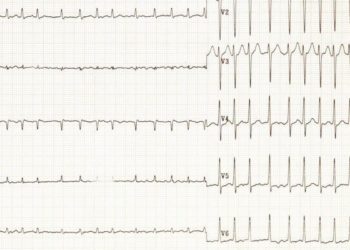
Image: PD

©2015 2 Minute Medicine, Inc. All rights reserved. No works may be reproduced without expressed written consent from 2 Minute Medicine, Inc. Inquire about licensing here. No article should be construed as medical advice and is not intended as such by the authors or by 2 Minute Medicine, Inc.
Tags: atrial fibrillation
Previous Post

Incidence of non-melanoma skin cancer continues to increase in the USA

Next Post

Exercise associated with improved quality of life during chemotherapy

RelatedReports

Nephrology

Apixaban (Eliquis) is associated with reduced rates of ischemic stroke and bleeding in patients with atrial fibrillation and advanced chronic kidney disease compared with warfarin (Coumadin)

September 9, 2026
Long-term outcomes for off-pump and on-pump CABG are similar
Weekly Rewinds

2 Minute Medicine Rewind September 7, 2026

September 7, 2026
Rivaroxaban likely reduces risk of recurrent stroke in specific subgroup of patients with embolic stroke of undetermined source
Weekly Rewinds

2 Minute Medicine Rewind August 31, 2026

August 31, 2026
Rivaroxaban likely reduces risk of recurrent stroke in specific subgroup of patients with embolic stroke of undetermined source
Cardiology

Catheter ablation within 1 year of atrial fibrillation diagnosis is associated with reduced risk of recurrence

July 24, 2026
Next Post
Exercise improves aromatase inhibitor-induced arthralgia in breast cancer survivors

Exercise associated with improved quality of life during chemotherapy

Cervical conization may double risk of preterm birth

Study finds variation in treatment of extremely pre-term infants among hospitals

Majority of pediatric medication-related visits to emergency department are preventable

Bisphosphonates may reduce risk of endometrial cancer

EvidencePulse™ by 2 Minute Medicine 2026 evidence scan 3 reports You asked top stroke trials 2026 Synthesizing medical evidence... Top 2026 stroke trial results: OCEANIC — ischemic stroke: 6.2% vs 8.4% OPTION* — mRS 0–1: 43.6% vs 34.2% ORIENTAL* — mRS 0–2: 58.6% vs 46.6% *Higher sICH in intervention arms Participants randomizedN OCEANIC 12,327 OPTION 570 ORIENTAL 564 Ask about guidelines or landmark trials... ↑ Try EvidencePulse™ Ask the evidence.
Get the signal.
Try it now → Physician-trained medical AI by 2 Minute Medicine

2MM+ All Access

Full details →
$4.99 /month

5-day free trial · cancel anytime

  • ✓100+ physician-written reports
  • ✓EvidencePulse™ + HypeCheck™
  • ✓Ad-free reading + newsletters
Start 5-day free trial

Then $4.99/month. Manage renewal in your account.

2 Minute Medicine® is an award winning, physician-run, expert medical media company. Our content is curated, written and edited by practicing health professionals who have clinical and scientific expertise in their field of reporting. Our editorial management team is comprised of highly-trained MD physicians. Join numerous brands, companies, and hospitals who trust our licensed content.

Recent Reports

  • Transanastomotic tubes not linked to anastomotic stricture after esophageal atresia repair
  • Artificial intelligence (AI) chatbot reduced depression, anxiety, and eating disorder risk symptoms
  • Real-time AI guidance enters live brain tumor surgery
License Content
Terms of Use | Disclaimer
Cookie Policy
Cleantalk Pixel
2MM+ All Access Full details →

The medical literature, distilled daily.

Monthly plan selected: $4.99 /month.

$4.99/month

5-day free trial · cancel anytime

Start 5-day free trial

Then $4.99/month. Manage renewal in your account.

Yearly plan selected: $49.90 /year.

$49.90/year

2 months free · only $4.16/month

Start 5-day free trial

Then $49.90/year. Manage renewal in your account.

Membership benefits

  • ✓100+ physician-written reports
  • ✓AI EvidencePulse™ + HypeCheck™
  • ✓Ad-free reading + newsletters

Already a member? Sign in

  • About
  • Specialties
    • All Specialties, All Recent Reports
    • Cardiology
    • Chronic Disease
    • Dermatology
    • Emergency
    • Endocrinology
    • Gastroenterology
    • Imaging and Intervention
    • Infectious Disease
    • Nephrology
    • Neurology
    • Obstetrics
    • Oncology
    • Ophthalmology
    • Pediatrics
    • Pharma
    • Preclinical
    • Psychiatry
    • Public Health
    • Pulmonology
    • Rheumatology
    • Surgery
  • Tools
    • EvidencePulse™
    • HypeCheck™
    • NPI Registry Lookup
    • RVU Search
  • Pharma
  • AI Roundup
  • The Scan
  • Classics™
    • 2MM+ Online Access
    • Paperback and Ebook
  • Rewinds
  • Partners
    • License Content
    • Submit Press Release
    • Advertise with Us
  • Account
    • Subscribe
    • My account
    • Cart
    • Sign-in
No Result
View All Result

© 2026 2 Minute Medicine, Inc. - Physician-written medical news.