



• About
  • Masthead
  • License Content
  • Advertise
  • Submit Press Release
  • RSS/Email List
  • 2MM Podcast
  • Write for us
  • Contact Us
2 Minute Medicine
No Result
View All Result

No products in the cart.

SUBSCRIBE
  • Specialties
    • All Specialties, All Recent Reports
    • Cardiology
    • Chronic Disease
    • Dermatology
    • Emergency
    • Endocrinology
    • Gastroenterology
    • Imaging and Intervention
    • Infectious Disease
    • Nephrology
    • Neurology
    • Obstetrics
    • Oncology
    • Ophthalmology
    • Pediatrics
    • Pharma
    • Preclinical
    • Psychiatry
    • Public Health
    • Pulmonology
    • Rheumatology
    • Surgery
  • Tools
    • EvidencePulse™
    • RVU Search
    • NPI Registry Lookup
  • Pharma
  • AI News
  • The Scan+
  • Classics™+
    • 2MM+ Online Access
    • Paperback and Ebook
  • Rewinds
  • Partners
    • License Content
    • Submit Press Release
    • Advertise with Us
  • Account
    • Subscribe
    • Sign-in
    • My account
2 Minute Medicine
  • Specialties
    • All Specialties, All Recent Reports
    • Cardiology
    • Chronic Disease
    • Dermatology
    • Emergency
    • Endocrinology
    • Gastroenterology
    • Imaging and Intervention
    • Infectious Disease
    • Nephrology
    • Neurology
    • Obstetrics
    • Oncology
    • Ophthalmology
    • Pediatrics
    • Pharma
    • Preclinical
    • Psychiatry
    • Public Health
    • Pulmonology
    • Rheumatology
    • Surgery
  • Tools
    • EvidencePulse™
    • RVU Search
    • NPI Registry Lookup
  • Pharma
  • AI News
  • The Scan+
  • Classics™+
    • 2MM+ Online Access
    • Paperback and Ebook
  • Rewinds
  • Partners
    • License Content
    • Submit Press Release
    • Advertise with Us
  • Account
    • Subscribe
    • Sign-in
    • My account
SUBSCRIBE
2 Minute Medicine
Subscribe
Home All Specialties Pediatrics

Noninvasive ventilation strategies examined in NICU infants

byNeha JoshiandCordelia Ross
February 9, 2015
in Pediatrics, Pulmonology
Reading Time: 3 mins read
0
Share on FacebookShare on Twitter

1. Noninvasive ventilator strategies provide an alternative to mechanical ventilation in very low birth weight infants and are being explored as treatment modalities to reduce the incidence of ventilator-induced lung injury.

2. There were no statistical differences found in the duration of required ventilation, failure rates, and selected secondary outcomes between bilevel continuous positive airway pressure (BiPAP) and nasal synchronized intermittent positive pressure ventilation (NSIPPV).

Evidence Rating Level: 1 (Excellent)

Study Rundown: In recent decades, modes of noninvasive ventilation have been explored as a primary alternative therapy to mechanical ventilation in very low birth weight infants with respiratory distress syndrome. These noninvasive ventilation strategies are postulated to decrease rates of ventilator-induced lung injury in infants. This randomized controlled trial compared 2 modes of noninvasive ventilation, BiPAP and NSIPPV, and found no significant differences in duration of required ventilation, failure rates, or selected secondary outcomes. Although these findings may provide reassurance of equal efficacy and safety between BiPAP and NSIPPV, this study is limited by its inability to directly compare these 2 modalities to mechanical ventilation. Nonetheless, this study provides a foundation for further research in noninvasive ventilator support in very low birth weight infants.

Click to read the study, published today in Pediatrics

Relevant Reading: Respiratory Support in Preterm Infants at Birth

RELATED REPORTS

Neonatal Hyperbilirubinemia and navigating the 2022 AAP guideline updates

What Is the Cricothyroid Membrane and Why It Matters in Medicine

Preoxygenation with noninvasive ventilation reduces hypoxemia during intubation

Study Author, Dr. Diego Gazzolo, MD PhD, talks to 2 Minute Medicine: Neonatal ICU, C. Arrigo Children’s Hospital, Alessandria, Italy.

“We conducted the first randomized study that compared two different modalities of Non-Invasive Ventilation (NIV) such as synchronized intermittent positive pressure and bi-level CPAP (BiPAP) a non-synchronized two alternate different level of CPAP, in which the newborns can breathe spontaneously. Results showing no differences in terms of duration of ventilation, failure and secondary outcomes suggest that both different NIV strategies are effective and safe when used as first intention respiratory support for RDS treatment of preterm newborns. Of note, NIV can constitute a valid alternative option to mechanical ventilation and its main complication, the so-called ventilator induced lung injury. Further investigations comparing NSIPPV, BiPAP and CPAP will elucidate which among NIV strategies could be safer and effective as first intention respiratory support for RDS treatment in preterm newborns.”

In-Depth (randomized controlled trial): Participants included 124 very low birth weight infants (<1500 g and <32 weeks gestational age) with respiratory distress syndrome from 2 neonatal intensive care units (NICUs) in Italy. Immediately after birth, all enrolled infants received standard care, including suctioning, sustained lung inflation, and nasal continuous positive airway pressure (NCPAP). Neonates ≤26 weeks gestational age also received prophylactic surfactant. All enrolled infants were then randomized to either BiPAP (n = 62) or NSIPPV (n = 62) within 2 hours of birth. Failure rates (persistent or recurrent hypoxia, acidosis and hypercarbia, apnea, necrotizing enterocolitis, bowel perforation, hemodynamic instability) between BiPAP and NSIPPV were statistically not significant (P = 0.80). Additionally, there was no significant difference (P = 0.45) between average hours of required ventilation support (NSIPPV = 89, BiPAP = 87). Secondary outcomes – including pneumothorax, interventricular hemorrhage, periventricular leukomalacia, need for repeated surfactant doses, need for postnatal glucocorticoids, persistent patent ductus arteriosis requiring intervention, retinopathy of prematurity, late onset sepsis, days to regain birth weight, death – were also not found to be statistically significant between BiPAP and NSIPPV groups.

More from this author: Study explores energy and nutrient intake from pizza, Foster placement not sole factor in lagging academic achievement, Study evaluates family-initiated medication dialogues on rounds, AAP guidelines for pneumococcal vaccination in high-risk groups released, Continuous albuterol thought to be safe in floor setting

Image: PD 

©2012-2014 2minutemedicine.com. All rights reserved. No works may be reproduced without expressed written consent from 2minutemedicine.com. Disclaimer: We present factual information directly from peer reviewed medical journals. No post should be construed as medical advice and is not intended as such by the authors, editors, staff or by 2minutemedicine.com. PLEASE SEE A HEALTHCARE PROVIDER IN YOUR AREA IF YOU SEEK MEDICAL ADVICE OF ANY SORT. 

Tags: neonatal intensive carepremature infantsventilation
Previous Post

Diet, exercise may improve endothelial function in obese teens

Next Post

2 Minute Medicine Rewind February 1 – February 8, 2015

RelatedReports

Low evidence for glycerin use in preterm infants
Pediatrics

Neonatal Hyperbilirubinemia and navigating the 2022 AAP guideline updates

February 6, 2026
Patient Basics: Graves’ Disease
Career Development

What Is the Cricothyroid Membrane and Why It Matters in Medicine

September 17, 2025
Emergency

Preoxygenation with noninvasive ventilation reduces hypoxemia during intubation

June 27, 2024
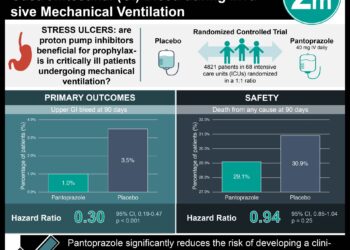
#VisualAbstract: Stress Ulcer Prophylaxis Lowers Risk of Gastrointestinal (GI) Bleed during Invasive Mechanical Ventilation
StudyGraphics

#VisualAbstract: Stress Ulcer Prophylaxis Lowers Risk of Gastrointestinal (GI) Bleed during Invasive Mechanical Ventilation

June 25, 2024
Next Post
Retinopathy of prematurity associated with nonvisual impairment in childhood

2 Minute Medicine Rewind February 1 – February 8, 2015

Classics Series, Landmark Trials in Medicine

The V-HeFT I: Hydralazine and isosorbide dinitrate in heart failure [Classics Series]

Many lung cancers visible on prior imaging studies

“Lung-RADS” lung cancer screening may reduce false positives vs NLST screening

2 Minute Medicine® is an award winning, physician-run, expert medical media company. Our content is curated, written and edited by practicing health professionals who have clinical and scientific expertise in their field of reporting. Our editorial management team is comprised of highly-trained MD physicians. Join numerous brands, companies, and hospitals who trust our licensed content.

Recent Reports

  • An ultrasound test may more reliably detect ovarian cancer in premenopausal women than the Risk of Malignancy Index
  • Chimeric antigen receptor T-cell therapy may induce sustained remission in multirefractory autoimmune hemolytic anemia
  • Neonatal Hyperbilirubinemia and navigating the 2022 AAP guideline updates
License Content
Terms of Use | Disclaimer
Cookie Policy
Privacy Statement (EU)
Disclaimer

© 2025 2 Minute Medicine, Inc. - Physician-written medical news.

  • Specialties
    • All Specialties, All Recent Reports
    • Cardiology
    • Chronic Disease
    • Dermatology
    • Emergency
    • Endocrinology
    • Gastroenterology
    • Imaging and Intervention
    • Infectious Disease
    • Nephrology
    • Neurology
    • Obstetrics
    • Oncology
    • Ophthalmology
    • Pediatrics
    • Pharma
    • Preclinical
    • Psychiatry
    • Public Health
    • Pulmonology
    • Rheumatology
    • Surgery
  • Tools
    • EvidencePulse™
    • RVU Search
    • NPI Registry Lookup
  • Pharma
  • AI News
  • The Scan
  • Classics™
    • 2MM+ Online Access
    • Paperback and Ebook
  • Rewinds
  • Partners
    • License Content
    • Submit Press Release
    • Advertise with Us
  • Account
    • Subscribe
    • Sign-in
    • My account
No Result
View All Result

© 2025 2 Minute Medicine, Inc. - Physician-written medical news.