• About
  • Masthead
  • License Content
  • Advertise
  • Press Releases
  • Newsroom
  • RSS/Email List
  • 2MM Podcast
  • Write for us
  • Contact Us
2 Minute Medicine
No Result
View All Result

No products in the cart.

Sign in
SUBSCRIBE
  • About
  • Specialties
    • All Specialties, All Recent Reports
    • Cardiology
    • Chronic Disease
    • Dermatology
    • Emergency
    • Endocrinology
    • Gastroenterology
    • Imaging and Intervention
    • Infectious Disease
    • Nephrology
    • Neurology
    • Obstetrics
    • Oncology
    • Ophthalmology
    • Pediatrics
    • Pharma
    • Preclinical
    • Psychiatry
    • Public Health
    • Pulmonology
    • Rheumatology
    • Surgery
    • Rewinds
    • The Scan
  • EvidencePulse™
  • HypeCheck™
  • AI News
  • Classics™
    • 2MM+ Online Access
    • Paperback and Ebook
  • Tools
    • NPI Registry Lookup
    • RVU Search
    • Physician Pay by Specialty
    • ICD-10 Code Lookup
    • FDA Drug Approvals
    • Drug Safety for Breastfeeding/Pregnancy
    • Clinical Guidelines
    • Medical Calculators
    • ECG Reference
      • QTc Calculator
      • Sgarbossa Criteria
      • ECG Axis Calculator
      • AV Block Helper
  • Rankings
    • Medical School Rankings
    • Residency Rankings
  • Partners
    • License Content
    • Advertise with Us
2 Minute Medicine
  • About
  • Specialties
    • All Specialties, All Recent Reports
    • Cardiology
    • Chronic Disease
    • Dermatology
    • Emergency
    • Endocrinology
    • Gastroenterology
    • Imaging and Intervention
    • Infectious Disease
    • Nephrology
    • Neurology
    • Obstetrics
    • Oncology
    • Ophthalmology
    • Pediatrics
    • Pharma
    • Preclinical
    • Psychiatry
    • Public Health
    • Pulmonology
    • Rheumatology
    • Surgery
    • Rewinds
    • The Scan
  • EvidencePulse™
  • HypeCheck™
  • AI News
  • Classics™
    • 2MM+ Online Access
    • Paperback and Ebook
  • Tools
    • NPI Registry Lookup
    • RVU Search
    • Physician Pay by Specialty
    • ICD-10 Code Lookup
    • FDA Drug Approvals
    • Drug Safety for Breastfeeding/Pregnancy
    • Clinical Guidelines
    • Medical Calculators
    • ECG Reference
      • QTc Calculator
      • Sgarbossa Criteria
      • ECG Axis Calculator
      • AV Block Helper
  • Rankings
    • Medical School Rankings
    • Residency Rankings
  • Partners
    • License Content
    • Advertise with Us
Sign in
SUBSCRIBE
2 Minute Medicine
Sign in
Subscribe
2 Minute MedicineFree on Google PlayGet
✦EvidencePulse™by 2 Minute Medicine3 reportsYou askedtop stroke trials 2026Synthesizing medical evidence...Top 2026 stroke trial results:OCEANIC — ischemic stroke: 6.2% vs 8.4%OPTION* — mRS 0–1: 43.6% vs 34.2%ORIENTAL* — mRS 0–2: 58.6% vs 46.6%*Higher sICH in intervention armsParticipants randomizedNOCEANIC12,327OPTION570ORIENTAL564Ask about guidelines or landmark trials...↑Try EvidencePulse™Ask the evidence. Get the signal.Try it now →
Home Health A to Z

Patient Basics: Alcohol Withdrawal
by2 Minute Medicine
October 30, 2026
in Health A to Z
Reading Time: 5 mins read
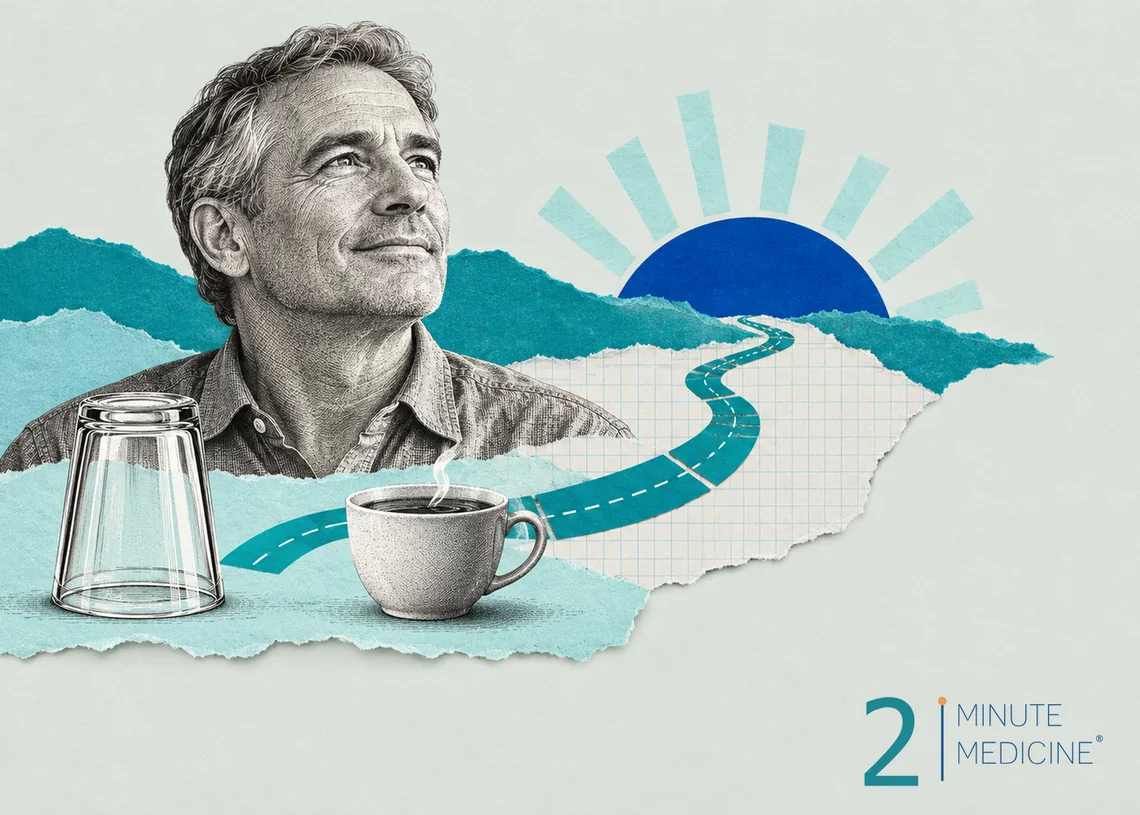
Collage for alcohol withdrawal: a calm middle-aged man, an upturned empty glass, a cup of tea and a sunrise
Share on FacebookShare on TwitterShare on LinkedIn

Alcohol withdrawal is the set of symptoms that can start when someone who has been drinking heavily for weeks or longer suddenly stops or cuts back. It ranges from shaky hands and poor sleep to seizures and a dangerous state of confusion called delirium tremens. If you drink heavily every day, talk to a doctor before you stop. With medical care, withdrawal can be managed safely.

Key points

  • Symptoms usually begin within a day of stopping and are often worst on days 2 and 3.
  • Seizures and delirium tremens (the DTs) can be life-threatening and need hospital care.
  • Medicines called benzodiazepines are the main treatment. Thiamine (vitamin B1) protects the brain.
  • Getting through withdrawal is a first step. Counseling and medicines help people stay off alcohol afterward.
  • For free, confidential help any time, call the SAMHSA National Helpline at 1-800-662-4357.

Why alcohol withdrawal happens

Alcohol slows down the brain. When a person drinks a lot day after day, the brain adjusts by turning up its own activity to stay in balance. If the alcohol is suddenly taken away, that extra activity is no longer held in check. The nervous system becomes overexcited, which causes the shaking, sweating, fast heartbeat and, in severe cases, seizures.

Withdrawal is more likely, and tends to be worse, in people who:

  • Have had bad withdrawal, seizures or DTs before
  • Have been drinking heavily for many years
  • Are older or have other health problems, such as liver disease or an infection
  • Also use sedatives, such as sleeping pills or anti-anxiety medicines

Symptoms and timeline

Everyone is different, but withdrawal tends to follow a pattern.

Within the first day

  • Shaky hands (tremor)
  • Sweating, anxiety and feeling on edge
  • Nausea, vomiting and poor appetite
  • Headache and trouble sleeping
  • Fast heartbeat and raised blood pressure

For many people, symptoms stay mild and fade over 4 to 7 days.

Days 1 and 2

  • Hallucinations. Seeing, hearing or feeling things that aren’t there, such as insects on the skin, while otherwise thinking clearly
  • Seizures. Usually a single seizure or a short cluster of whole-body seizures

2 to 4 days: delirium tremens

A small number of people develop the DTs. Signs include severe confusion, not knowing where they are, agitation, vivid hallucinations, fever, heavy sweating and a racing heart. The DTs are a medical emergency and need treatment in a hospital, often in intensive care.

RELATED REPORTS

Increased alcohol consumption among post-menopausal women is associated with higher mortality

2 Minute Medicine Rewind October 26, 2026

Weeks to months

Poor sleep, low mood, anxiety, brain fog and cravings can linger after the physical symptoms are gone. This raises the risk of starting to drink again, so ongoing support matters.

How doctors assess it

A doctor or nurse will ask how much and how long you’ve been drinking, when you had your last drink, and whether you’ve had withdrawal before. They check your pulse, blood pressure and temperature, and they use a symptom checklist to score how severe withdrawal is and guide treatment.

Blood tests check salts such as potassium and magnesium, blood sugar, liver function and blood counts. The team also looks for other problems that can look like withdrawal or occur alongside it, such as an infection, a head injury, low blood sugar, or bleeding in the stomach.

Treatment

Where it happens

People with mild symptoms and no history of seizures or DTs can sometimes go through withdrawal at home or in an outpatient program, with daily check-ins and a support person. Others need care in a hospital or a medically supervised detox unit.

Medicines

  • Benzodiazepines, such as chlordiazepoxide, diazepam or lorazepam, calm the overexcited brain and prevent seizures and DTs. Doses are adjusted to symptoms and lowered over several days.
  • Phenobarbital is used in some hospitals, alone or with benzodiazepines.
  • Gabapentin or carbamazepine are sometimes used for mild withdrawal outside the hospital.
  • Thiamine (vitamin B1) is given to prevent Wernicke encephalopathy, a brain condition linked to heavy drinking that causes confusion, unsteady walking and eye movement problems.
  • Fluids, salts and nutrition to replace what was lost

Don’t try to treat withdrawal with leftover pills, other people’s prescriptions or more alcohol. Mixing sedatives and alcohol can stop your breathing.

After withdrawal

Withdrawal treatment gets the body through the first days without alcohol. It doesn’t treat alcohol use disorder (alcoholism) itself. Ongoing care makes it much more likely you’ll stay well:

  • Medicines such as naltrexone, acamprosate and disulfiram reduce cravings or help prevent drinking.
  • Counseling, alone or in a group, builds skills to handle triggers and stress.
  • Mutual support groups, such as Alcoholics Anonymous and SMART Recovery, offer support from people with lived experience.
  • Treatment for depression, anxiety or other conditions that often go along with heavy drinking

Slips are common and don’t mean failure. Reach out to your care team early if you start drinking again.

Getting help

  • SAMHSA National Helpline: 1-800-662-4357, free and confidential, 24 hours a day, for treatment referrals and information.
  • 988 Suicide & Crisis Lifeline: call or text 988 if you feel hopeless or have thoughts of harming yourself.

Get emergency care

Call 911 if someone in withdrawal has:

  • A seizure
  • Confusion, or doesn’t know where they are
  • Hallucinations
  • A high fever, racing heart or chest pain
  • Vomiting that won’t stop, or vomit with blood in it

Common questions about alcohol withdrawal

Can you die from alcohol withdrawal?

Yes, although it’s uncommon with treatment. Seizures and delirium tremens can be fatal without medical care, which is why people who drink heavily every day should get help before they stop. With proper treatment in the right setting, the risk of dying is very low.

Can you get withdrawal after a weekend of drinking?

Mild symptoms such as shakiness, anxiety and poor sleep can follow a few days of very heavy drinking. Serious withdrawal with seizures or the DTs usually happens only after weeks or longer of heavy daily drinking. A hangover is different, since it comes from the alcohol itself.

Is it dangerous to quit drinking cold turkey?

It can be, if you drink heavily every day. Stopping suddenly can bring on seizures or delirium tremens within a few days. People who drink less, or only now and then, usually aren’t at risk of severe withdrawal. If you’re unsure, talk to a doctor before you stop.

What should I eat after I stop drinking?

Eat regular, balanced meals with fruit, vegetables, whole grains and protein, and drink plenty of water. Heavy drinking often leaves people low in thiamine, folate and magnesium, so your doctor may suggest vitamins. Go easy on caffeine and energy drinks, which can make anxiety and poor sleep worse.

Questions to ask your doctor

  • Is it safe for me to stop drinking at home, or do I need to be in a hospital or detox unit?
  • What symptoms should make me get help right away?
  • Which medicines will I get, and how long will I take them?
  • What treatment can help me stay off alcohol afterward?
  • Has drinking affected my liver, heart or other organs?

Learn more

  • Alcohol withdrawal (MedlinePlus, U.S. National Library of Medicine)

This guide is general information and doesn’t replace advice from your own doctor. Last updated October 2026.

Tags: Alcohol
Previous Post

Patient Basics: Alcohol Use Disorder (Alcohol Dependence, Alcoholism)

Next Post

Patient Basics: Hay Fever (Allergic Rhinitis)

RelatedReports

A woman gently holding her shoulder, reflecting a contemplative mood, with art elements representing healing and growth around her.
Chronic Disease

Increased alcohol consumption among post-menopausal women is associated with higher mortality

October 28, 2026
An abstract representation of therapeutic pathways and personal journeys towards mental health improvement, with visual elements suggesting anxiety or panic states.
Weekly Rewinds

2 Minute Medicine Rewind October 26, 2026

October 27, 2026
A healthcare professional examines a complex network of decision paths and technology symbols, representing the integration of AI in clinical diagnostics and decision-making.
Psychiatry

Alcohol use declines but remains above pre-pandemic levels

September 22, 2026
An illustration featuring healthy food, light therapy, exercise, and a patient consultation, emphasizing various aspects of wellness in mental health.
Chronic Disease

Deficits in executive function are not universal among patients with alcohol use disorder

September 15, 2026
Next Post
Hay fever collage: a calm young woman beside a dandelion seed head, grass stems with pollen and a blank nasal spray bottle

Patient Basics: Hay Fever (Allergic Rhinitis)

Morton's neuroma collage: foot bones with a nerve between the third and fourth toes, a high heel, a pebble and a foot pad

Patient Basics: Morton's Neuroma

Collage of a young man with one round patch of alopecia areata on his scalp, a hair follicle drawing and a comb

Patient Basics: Alopecia Areata

✦ EvidencePulse™ by 2 Minute Medicine 3 reports You asked top stroke trials 2026 Synthesizing medical evidence... Top 2026 stroke trial results: OCEANIC — ischemic stroke: 6.2% vs 8.4% OPTION* — mRS 0–1: 43.6% vs 34.2% ORIENTAL* — mRS 0–2: 58.6% vs 46.6% *Higher sICH in intervention arms Participants randomizedN OCEANIC 12,327 OPTION 570 ORIENTAL 564 Ask about guidelines or landmark trials... Try EvidencePulse™ Get the signal. Try it now → Physician-trained medical AI by 2 Minute Medicine

2MM+ All Access

Full details →
$4.99 /month

3-day free trial · cancel anytime

  • ✓100+ physician-written reports
  • ✓EvidencePulse™ + HypeCheck™
  • ✓Ad-free reading + newsletters
Start 3-day free trial

Then $4.99/month. Manage renewal in your account.

2 Minute Medicine® is an award winning, physician-run, expert medical media company. Our content is curated, written and edited by practicing health professionals who have clinical and scientific expertise in their field of reporting. Our editorial management team is comprised of highly-trained MD physicians. Join numerous brands, companies, and hospitals who trust our licensed content.

Recent Reports

  • Pelacarsen lowers lipoprotein(a) but does not reduce major cardiovascular events in patients with established cardiovascular disease
  • Durvalumab plus enfortumab vedotin was approved for perioperative treatment of muscle-invasive bladder cancer
  • CDC reports 5,412 confirmed measles cases in the United States in 2026
License Content
Terms of Use | Disclaimer
Cookie Policy

Get the app

Read 2 Minute Medicine on iPhone, iPad and Android.

Download on the App StoreGet it on Google Play
QR code for www.2minutemedicine.com/app
On a computer? Scan this with your phone’s camera.
2MM+ All Access Full details →

The medical literature, distilled daily.

Monthly plan selected: $4.99 /month.

$4.99/month

3-day free trial · cancel anytime

Start 3-day free trial

Then $4.99/month. Manage renewal in your account.

Yearly plan selected: $49.90 /year.

$49.90/year

2 months free

Start 3-day free trial

Then $49.90/year.

Membership benefits

  • ✓100+ new physician-written study summaries monthly, 12,000+ searchable
  • ✓AI EvidencePulse™ + HypeCheck™
  • ✓Ad-free reading + newsletters
  • ✓FDA drug approvals + clinical calculators

Already a member? Sign in

  • Get the app
  • About
  • Specialties
    • All Specialties, All Recent Reports
    • Cardiology
    • Chronic Disease
    • Dermatology
    • Emergency
    • Endocrinology
    • Gastroenterology
    • Imaging and Intervention
    • Infectious Disease
    • Nephrology
    • Neurology
    • Obstetrics
    • Oncology
    • Ophthalmology
    • Pediatrics
    • Pharma
    • Preclinical
    • Psychiatry
    • Public Health
    • Pulmonology
    • Rheumatology
    • Surgery
    • Rewinds
    • The Scan
  • EvidencePulse™
  • HypeCheck™
  • AI News
  • Classics™
    • 2MM+ Online Access
    • Paperback and Ebook
  • Tools
    • NPI Registry Lookup
    • RVU Search
    • Physician Pay by Specialty
    • ICD-10 Code Lookup
    • FDA Drug Approvals
    • Drug Safety for Breastfeeding/Pregnancy
    • Clinical Guidelines
    • Medical Calculators
    • ECG Reference
      • QTc Calculator
      • Sgarbossa Criteria
      • ECG Axis Calculator
      • AV Block Helper
  • Rankings
    • Medical School Rankings
    • Residency Rankings
  • Partners
    • License Content
    • Advertise with Us
No Result
View All Result

© 2026 2 Minute Medicine, Inc. - Physician-written medical news.