• About
  • Masthead
  • License Content
  • Advertise
  • Press Releases
  • Newsroom
  • RSS/Email List
  • 2MM Podcast
  • Write for us
  • Contact Us
2 Minute Medicine
No Result
View All Result

No products in the cart.

Sign in
SUBSCRIBE
  • About
  • Specialties
    • All Specialties, All Recent Reports
    • Cardiology
    • Chronic Disease
    • Dermatology
    • Emergency
    • Endocrinology
    • Gastroenterology
    • Imaging and Intervention
    • Infectious Disease
    • Nephrology
    • Neurology
    • Obstetrics
    • Oncology
    • Ophthalmology
    • Pediatrics
    • Pharma
    • Preclinical
    • Psychiatry
    • Public Health
    • Pulmonology
    • Rheumatology
    • Surgery
    • Rewinds
    • The Scan
  • EvidencePulse™
  • HypeCheck™
  • AI News
  • Classics™
    • 2MM+ Online Access
    • Paperback and Ebook
  • Tools
    • NPI Registry Lookup
    • RVU Search
    • Physician Pay by Specialty
    • ICD-10 Code Lookup
    • FDA Drug Approvals
    • Drug Safety for Breastfeeding/Pregnancy
    • Clinical Guidelines
    • Medical Calculators
    • ECG Reference
      • QTc Calculator
      • Sgarbossa Criteria
      • ECG Axis Calculator
      • AV Block Helper
  • Rankings
    • Medical School Rankings
    • Residency Rankings
  • Partners
    • License Content
    • Advertise with Us
2 Minute Medicine
  • About
  • Specialties
    • All Specialties, All Recent Reports
    • Cardiology
    • Chronic Disease
    • Dermatology
    • Emergency
    • Endocrinology
    • Gastroenterology
    • Imaging and Intervention
    • Infectious Disease
    • Nephrology
    • Neurology
    • Obstetrics
    • Oncology
    • Ophthalmology
    • Pediatrics
    • Pharma
    • Preclinical
    • Psychiatry
    • Public Health
    • Pulmonology
    • Rheumatology
    • Surgery
    • Rewinds
    • The Scan
  • EvidencePulse™
  • HypeCheck™
  • AI News
  • Classics™
    • 2MM+ Online Access
    • Paperback and Ebook
  • Tools
    • NPI Registry Lookup
    • RVU Search
    • Physician Pay by Specialty
    • ICD-10 Code Lookup
    • FDA Drug Approvals
    • Drug Safety for Breastfeeding/Pregnancy
    • Clinical Guidelines
    • Medical Calculators
    • ECG Reference
      • QTc Calculator
      • Sgarbossa Criteria
      • ECG Axis Calculator
      • AV Block Helper
  • Rankings
    • Medical School Rankings
    • Residency Rankings
  • Partners
    • License Content
    • Advertise with Us
Sign in
SUBSCRIBE
2 Minute Medicine
Sign in
Subscribe
2 Minute MedicineFree on Google PlayGet
✦EvidencePulse™by 2 Minute Medicine3 reportsYou askedtop stroke trials 2026Synthesizing medical evidence...Top 2026 stroke trial results:OCEANIC — ischemic stroke: 6.2% vs 8.4%OPTION* — mRS 0–1: 43.6% vs 34.2%ORIENTAL* — mRS 0–2: 58.6% vs 46.6%*Higher sICH in intervention armsParticipants randomizedNOCEANIC12,327OPTION570ORIENTAL564Ask about guidelines or landmark trials...↑Try EvidencePulse™Ask the evidence. Get the signal.Try it now →
Home Health A to Z

Patient Basics: Amyloidosis
by2 Minute Medicine
October 30, 2026
in Health A to Z
Reading Time: 5 mins read
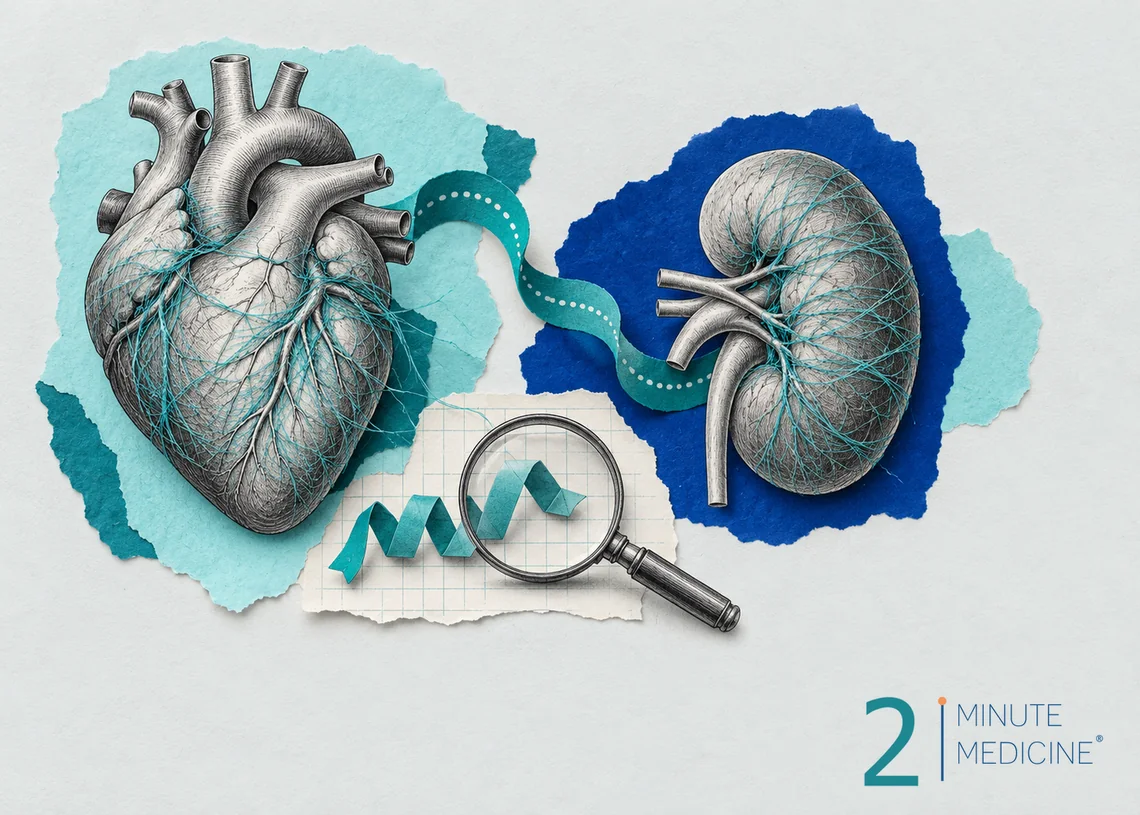
Amyloidosis collage: a heart and a kidney threaded with fine teal fibers, a folded paper strip and a magnifying glass
Share on FacebookShare on TwitterShare on LinkedIn

Amyloidosis is a group of rare diseases in which proteins fold into the wrong shape and clump into stiff fibers called amyloid. These deposits build up in organs such as the heart, kidneys and nerves and stop them from working well. Symptoms are often vague at first, so it can take a long time to diagnose. Finding out which type you have matters most, because each type is treated differently, and treatments have improved a great deal.

Key points

  • The two most common types are AL amyloidosis, linked to abnormal cells in the bone marrow, and ATTR amyloidosis, caused by a protein made in the liver.
  • Swollen legs, shortness of breath, tiredness, foamy urine and numb or tingling feet are common warning signs.
  • A tissue sample (biopsy) or special heart scan confirms the diagnosis and the type.
  • Treatment aims to stop new amyloid from forming. Newer medicines can slow or halt several types.
  • The outlook depends mostly on the type and how much the heart is affected, so early diagnosis helps.

What causes amyloidosis

Many proteins can form amyloid. The protein involved sets the type of amyloidosis:

  • AL (light chain) amyloidosis. A small group of abnormal plasma cells, the bone marrow cells that make antibodies, release extra pieces of antibody called light chains. These misfold and settle in the kidneys, heart, nerves, liver or gut. It is related to multiple myeloma, and some people have both.
  • Wild-type ATTR amyloidosis. With age, a normal blood protein called transthyretin can come apart and form amyloid, mostly in the heart. It mainly affects men over 70. Carpal tunnel syndrome in both wrists or narrowing of the spinal canal often appears years earlier.
  • Hereditary ATTR amyloidosis. A gene change makes transthyretin unstable. It can affect the nerves, the heart or both, and runs in families. One gene change, often called V122I, is carried by about 3 to 4 in 100 Black Americans and raises the risk of heart amyloidosis later in life.
  • AA amyloidosis. Long-lasting inflammation, from conditions such as rheumatoid arthritis, inflammatory bowel disease or chronic infections, raises a protein that can form amyloid, mainly in the kidneys.
  • Other types. Some forms stay in one spot, such as the skin or bladder. People on dialysis for many years can get amyloid in their joints.

The amyloid plaques in Alzheimer’s disease are made of a different protein and are a separate condition.

Amyloidosis symptoms

Symptoms depend on which organs are involved, and they often come on slowly:

  • Heart: shortness of breath, swollen ankles and legs, trouble lying flat, an irregular heartbeat, dizziness or fainting
  • Kidneys: foamy urine from leaking protein, and leg swelling
  • Nerves: numbness, tingling or burning in the feet and hands, carpal tunnel syndrome
  • Nerves that run the body on autopilot (autonomic nerves): lightheadedness when standing, diarrhea or constipation, bloating, feeling full quickly, and erection problems
  • Other signs, mainly in AL amyloidosis: a large tongue, purple bruising around the eyes, easy bruising, tiredness and weight loss

Doctors start to suspect amyloidosis when symptoms from several organs show up together, for example heart failure with numb feet, or protein in the urine with no clear cause.

How amyloidosis is diagnosed

  • Blood and urine tests look for abnormal light chains, protein in the urine, and strain on the heart and kidneys.
  • Biopsy. A small sample of tissue is stained with a dye that makes amyloid stand out under a microscope. Belly fat taken with a needle is a simple place to start. Samples from bone marrow, kidney, heart or other organs may be needed. A lab then identifies the protein to confirm the type.
  • Heart tests. An echocardiogram (ultrasound of the heart) and cardiac MRI can show thick, stiff heart walls. A nuclear bone scan of the heart can diagnose ATTR amyloidosis without a heart biopsy, as long as blood and urine tests rule out AL.
  • Genetic testing checks whether ATTR amyloidosis is hereditary. Relatives may want testing too.

Doctors also give AL and ATTR amyloidosis a stage. It’s based on blood tests that show strain on the heart and kidneys, and in AL, light chain levels. A higher stage means more organ damage.

RELATED REPORTS

Vutrisiran reduces mortality in transthyretin amyloidosis with cardiomyopathy

Daratumumab therapy addition improved response in systemic immunoglobulin light-chain amyloidosis

How amyloidosis is treated

Treatment works best when it starts before organs are badly damaged. It usually happens at a center with experience in amyloidosis.

AL amyloidosis

Treatment targets the abnormal plasma cells, using drugs also used for multiple myeloma. A common first combination includes daratumumab, bortezomib, cyclophosphamide and the steroid dexamethasone. Some people then have high-dose chemotherapy with a stem cell transplant. When light chain levels fall, organs often recover slowly over months.

ATTR amyloidosis

  • Stabilizers such as tafamidis and acoramidis hold transthyretin together so it doesn’t break apart into amyloid.
  • Silencers such as vutrisiran, patisiran and eplontersen lower how much transthyretin the liver makes.

These medicines slow the disease and can help people live longer, especially when started early.

AA amyloidosis

Treatment controls the underlying inflammation or infection, which can stop new amyloid from forming.

Care for affected organs

Water pills and a low-salt diet ease swelling. Some common heart medicines are poorly tolerated, so your doctors will adjust them carefully. A pacemaker, dialysis, or rarely a heart, kidney or liver transplant may be needed. Compression stockings and medicines can help with dizziness on standing.

When to see a doctor

  • Swelling in your legs, or shortness of breath that’s getting worse
  • Foamy urine or a test showing protein in your urine
  • Numbness or burning in your feet, or carpal tunnel in both wrists
  • Feeling faint when you stand up
  • A relative with hereditary amyloidosis

Call 911 for chest pain, fainting, severe shortness of breath or a racing, irregular heartbeat.

Common questions about amyloidosis

Is amyloidosis cancer?

Most types are not. AL amyloidosis comes from a small group of abnormal plasma cells, similar to those in multiple myeloma, so it’s treated by blood cancer specialists with similar drugs. It usually isn’t considered cancer itself. ATTR and AA amyloidosis have nothing to do with cancer.

Is amyloidosis fatal?

It can be when it’s found late, especially when the heart is badly affected. Outlook has improved a lot. Many people with AL amyloidosis who respond well to treatment now live for many years, and newer ATTR medicines slow the disease. Ask your care team what your type and stage mean for you.

Can amyloidosis cause gas and bloating?

Yes. When amyloid affects the nerves that control the gut, or builds up in the gut wall, digestion slows or becomes irregular. That can cause bloating, gas, feeling full quickly, nausea, diarrhea or constipation. Treating the amyloidosis and adjusting your diet can help, and your doctor can offer medicines for these symptoms.

Questions to ask your doctor

  • Which type of amyloidosis do I have, and how do you know?
  • Which organs are affected, and what stage is it?
  • What treatment do you recommend, and what are its side effects?
  • Should my family members have genetic testing?
  • Can you refer me to an amyloidosis center?

Learn more

  • Amyloidosis (MedlinePlus, U.S. National Library of Medicine)

This guide is general information and doesn’t replace advice from your own doctor. Last updated October 2026.

Tags: Amyloidosis
Previous Post

Patient Basics: Amenorrhea

Next Post

Patient Basics: Anal Disorders

RelatedReports

Heart failure collage: an engraved heart with teal ventricles above a folded patchwork quilt, a teacup and house slippers
Cardiology

Vutrisiran reduces mortality in transthyretin amyloidosis with cardiomyopathy

August 29, 2026
Cardiology

Daratumumab therapy addition improved response in systemic immunoglobulin light-chain amyloidosis

July 14, 2021
Cardiology

Patisiran therapy reduces ventricular myocardial strain in hereditary transthyretin amyloidosis

March 23, 2019
Next Post
Collage for anal disorders: a basin of warm water, a bowl of oats with prunes, a ring cushion and a water pitcher

Patient Basics: Anal Disorders

Anaphylaxis collage: a calm young woman, a capped epinephrine auto-injector, peanuts in the shell and a honeybee

Patient Basics: Anaphylaxis

Progesterone injections for short cervix do not reduce preterm birth

✦ EvidencePulse™ by 2 Minute Medicine 3 reports You asked top stroke trials 2026 Synthesizing medical evidence... Top 2026 stroke trial results: OCEANIC — ischemic stroke: 6.2% vs 8.4% OPTION* — mRS 0–1: 43.6% vs 34.2% ORIENTAL* — mRS 0–2: 58.6% vs 46.6% *Higher sICH in intervention arms Participants randomizedN OCEANIC 12,327 OPTION 570 ORIENTAL 564 Ask about guidelines or landmark trials... Try EvidencePulse™ Get the signal. Try it now → Physician-trained medical AI by 2 Minute Medicine

2MM+ All Access

Full details →
$4.99 /month

3-day free trial · cancel anytime

  • ✓100+ physician-written reports
  • ✓EvidencePulse™ + HypeCheck™
  • ✓Ad-free reading + newsletters
Start 3-day free trial

Then $4.99/month. Manage renewal in your account.

2 Minute Medicine® is an award winning, physician-run, expert medical media company. Our content is curated, written and edited by practicing health professionals who have clinical and scientific expertise in their field of reporting. Our editorial management team is comprised of highly-trained MD physicians. Join numerous brands, companies, and hospitals who trust our licensed content.

Recent Reports

  • Nipocalimab patient interviews identify mouth dryness as the most important symptom to improve in phase 2 Sjögren’s disease data
  • CDC reports 5,182 confirmed measles cases in the United States in 2026
  • In selected patients with anterior-circulation large-vessel stroke 24-72 hours after onset, thrombectomy improved 90-day function but increased hemorrhage and death
License Content
Terms of Use | Disclaimer
Cookie Policy

Get the app

Read 2 Minute Medicine on iPhone, iPad and Android.

Download on the App StoreGet it on Google Play
QR code for www.2minutemedicine.com/app
On a computer? Scan this with your phone’s camera.
2MM+ All Access Full details →

The medical literature, distilled daily.

Monthly plan selected: $4.99 /month.

$4.99/month

3-day free trial · cancel anytime

Start 3-day free trial

Then $4.99/month. Manage renewal in your account.

Yearly plan selected: $49.90 /year.

$49.90/year

2 months free

Start 3-day free trial

Then $49.90/year.

Membership benefits

  • ✓100+ physician-written reports
  • ✓AI EvidencePulse™ + HypeCheck™
  • ✓Ad-free reading + newsletters
  • ✓FDA drug approvals + clinical calculators

Already a member? Sign in

  • Get the app
  • About
  • Specialties
    • All Specialties, All Recent Reports
    • Cardiology
    • Chronic Disease
    • Dermatology
    • Emergency
    • Endocrinology
    • Gastroenterology
    • Imaging and Intervention
    • Infectious Disease
    • Nephrology
    • Neurology
    • Obstetrics
    • Oncology
    • Ophthalmology
    • Pediatrics
    • Pharma
    • Preclinical
    • Psychiatry
    • Public Health
    • Pulmonology
    • Rheumatology
    • Surgery
    • Rewinds
    • The Scan
  • EvidencePulse™
  • HypeCheck™
  • AI News
  • Classics™
    • 2MM+ Online Access
    • Paperback and Ebook
  • Tools
    • NPI Registry Lookup
    • RVU Search
    • Physician Pay by Specialty
    • ICD-10 Code Lookup
    • FDA Drug Approvals
    • Drug Safety for Breastfeeding/Pregnancy
    • Clinical Guidelines
    • Medical Calculators
    • ECG Reference
      • QTc Calculator
      • Sgarbossa Criteria
      • ECG Axis Calculator
      • AV Block Helper
  • Rankings
    • Medical School Rankings
    • Residency Rankings
  • Partners
    • License Content
    • Advertise with Us
No Result
View All Result

© 2026 2 Minute Medicine, Inc. - Physician-written medical news.