

Patient Basics: Back Pain
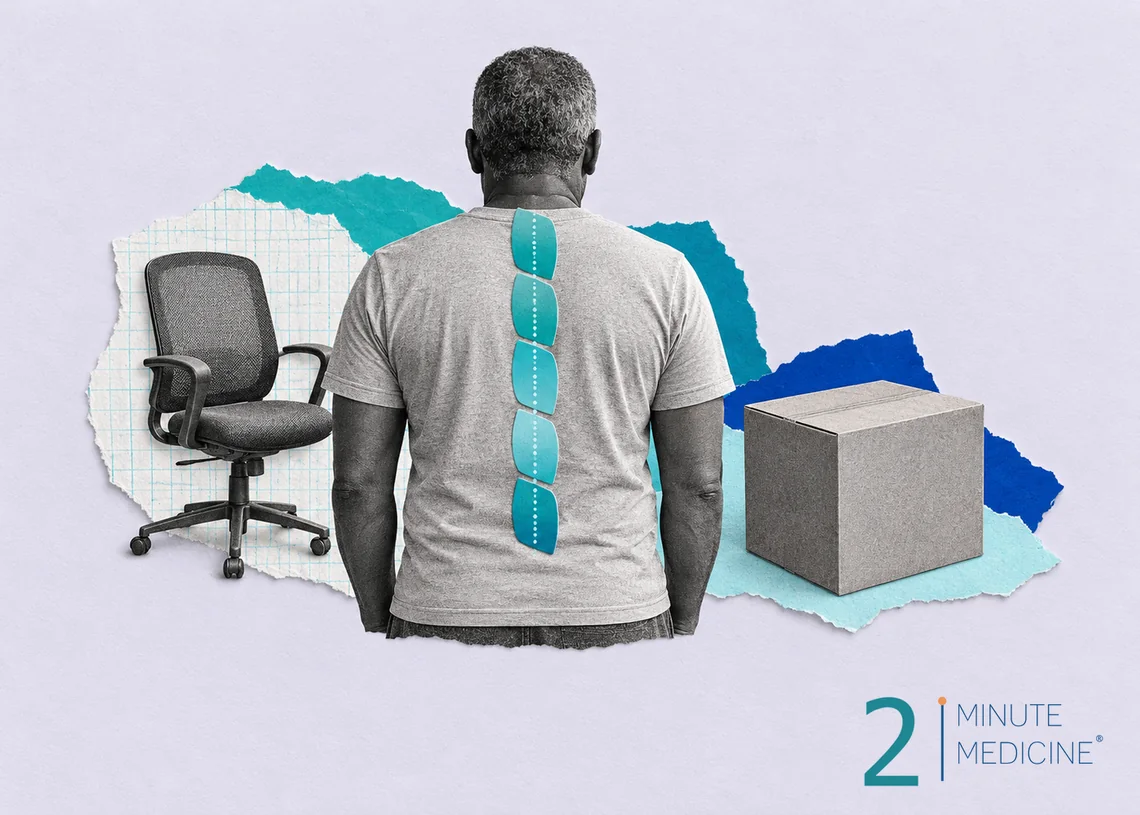
Back pain is one of the most common reasons adults see a doctor, and most people have it at some point. Most low back pain comes from strained muscles, ligaments or discs, and it gets much better within a few weeks. Staying gently active helps you heal faster than resting in bed. A few warning signs, listed below, mean you need medical care quickly.
Key points
- In most people, back pain isn’t caused by serious disease, even when it hurts a lot.
- Most new back pain improves a great deal within 4 to 6 weeks.
- Walking and normal activity, heat and over-the-counter pain relievers are the first steps.
- X-rays and MRIs usually aren’t needed in the first several weeks.
- Get emergency care for loss of bladder or bowel control, numbness between the legs or new leg weakness.
What causes back pain?
Often, no single damaged part can be found. Doctors call this nonspecific back pain. It is the most common kind and usually gets better on its own. Known causes include:
- Strains and sprains of muscles and ligaments from lifting, twisting or a sudden movement
- Disc problems. A disc can bulge or tear and press on a nerve, causing pain down the leg (sciatica).
- Wear and tear (osteoarthritis) in the discs and small joints of the spine, which is common with age and can make the lower back and hips stiff
- Spinal stenosis, where the space around the nerves gets tight, causing leg pain when walking
- Compression fractures, small breaks in the spine bones, mostly in older adults with thin bones (osteoporosis)
- Inflammatory arthritis of the spine (axial spondyloarthritis). It usually starts before age 45 and causes stiffness in the morning that eases with exercise.
- Problems elsewhere that are felt in the back, such as kidney stones, a kidney infection, period pain or endometriosis in women, or, rarely, a bulge in the main artery of the belly (aortic aneurysm)
- Rare serious causes, such as infection in the spine or cancer that has spread to the bones
Being inactive, carrying extra weight, smoking, heavy physical work, stress and low mood all raise the chance of back pain or of it lasting longer.
What does it feel like?
Back pain can be a dull ache, a sharp or stabbing pain, a burning pain from an irritated nerve, or tight muscle spasms that make it hard to stand straight. It may spread into the buttocks or legs. Pain that lasts less than 4 weeks is called acute. Pain that lasts longer than 3 months is called chronic. Chronic pain affects only a small share of people who have a first bout.
Do I need an X-ray or MRI?
Usually not at first. Scans rarely change treatment in the early weeks. They often show disc bulges and wear that are common in people with no pain at all, which can lead to worry and treatments you don’t need. Your doctor will order imaging if you have warning signs, nerve problems that are getting worse, or pain that hasn’t improved after about 6 weeks of care.
What can I do at home?
- Keep moving. Short walks and your usual activities, as much as pain allows, help you recover. If you need to rest, keep it brief.
- Use heat. A heating pad or heat wrap can ease pain and muscle spasm. Some people prefer ice. Use whichever feels better, for 15 to 20 minutes at a time.
- Take a pain reliever if you need one. Anti-inflammatory medicines such as ibuprofen or naproxen work best for back pain. Acetaminophen helps less, but it’s an option if you can’t take those. Follow the label and check with your doctor if you have stomach, kidney or heart problems.
- Find comfortable sleep positions. Try a pillow between your knees when lying on your side, or under your knees when lying on your back.
- Change positions often, and avoid sitting or standing still for long stretches.
What treatments help?
- Physical therapy and exercise. A therapist can teach exercises to strengthen your core and back and help you move with confidence. Exercise is the best long-term treatment for chronic back pain.
- Hands-on and mind-body treatments. Massage, spinal manipulation, acupuncture, yoga and tai chi help some people.
- Pain coping skills. For long-lasting pain, cognitive behavioral therapy and mindfulness programs can lower pain and help you get back to daily life.
- Prescription medicines. A muscle relaxant can help for a few days but often causes sleepiness. For chronic pain, duloxetine is an option. Opioids are rarely a good choice, because the risks usually outweigh the benefits.
- Injections. Steroid shots near the spine can ease leg pain from a pinched nerve for a while. They help less for back pain alone.
- Surgery helps only for specific problems, such as a pinched nerve causing weakness, severe spinal stenosis or an unstable spine. It’s not a treatment for nonspecific back pain.
What if the pain keeps coming back?
Many people have more than one bout of back pain. Each one usually gets better the same way. When pain lasts for months, the nerves and brain can become more sensitive, so pain continues even after tissues have healed. Staying active, sleeping well, managing stress and treating depression or anxiety all help. A team approach, with a doctor, a physical therapist and sometimes a psychologist, works best.
Can I prevent it?
- Stay active with walking, swimming or cycling, and add exercises for your core muscles.
- Lift with your legs, hold the load close to your body and avoid twisting while you lift.
- Keep a healthy weight, and don’t smoke.
- Get up and move at least every hour if you sit for long periods.
- Protect your bones with enough calcium and vitamin D, and ask about osteoporosis screening.
When to see a doctor
- Pain that is severe or hasn’t improved after a few weeks
- Pain that wakes you at night or doesn’t ease when you change position
- Pain, numbness or tingling that spreads down a leg below the knee
- Back pain after a fall or other injury
- Back pain with fever, weight loss you can’t explain, a history of cancer or a weak immune system
- New back pain after age 50, or if you have osteoporosis or take steroid pills
- Morning stiffness that lasts more than 30 minutes, especially if you are under 45
- Aches in many parts of your body at once
Get emergency care
- Trouble passing urine, or losing control of your bladder or bowels
- Numbness in the groin, buttocks or inner thighs
- Weakness in one or both legs that is new or getting worse
- Sudden, severe back or belly pain with dizziness, sweating or fainting. Call 911.
Common questions about back pain
What are the symptoms of a back sprain?
A sprained or strained back usually aches or stabs in the lower back, starting during or soon after lifting, twisting or a sudden move. The muscles may spasm, feel tight and hurt to touch. Pain gets worse when you bend or move and eases with rest. It usually stays above the knee.
How can I tell if back pain is from my kidneys?
Kidney pain is usually higher and deeper, under the ribs on one side, and doesn’t change much when you move. A kidney stone causes waves of severe pain that can spread to the groin. A kidney infection brings fever and burning when you urinate. Both need a doctor’s visit.
Why does my back hurt more when lying down?
Often it’s stiff joints, or a mattress or sleep position that strains your back, and the pain eases once you’re up and moving. Pain that wakes you every night and doesn’t ease in any position is different. See a doctor for it, especially with fever, weight loss or a history of cancer.
Questions to ask your doctor
- What is most likely causing my back pain?
- Do I need any tests?
- Which activities are safe, and which should I avoid for now?
- Would physical therapy help me?
- What should I do if the pain comes back?
Learn more
- Back pain (National Institute of Arthritis and Musculoskeletal and Skin Diseases)
- Back pain (MedlinePlus, U.S. National Library of Medicine)
This guide is general information and doesn’t replace advice from your own doctor. Last updated October 2026.
RelatedReports







 Get the app