2 Minute Medicine Rewind August 17, 2026
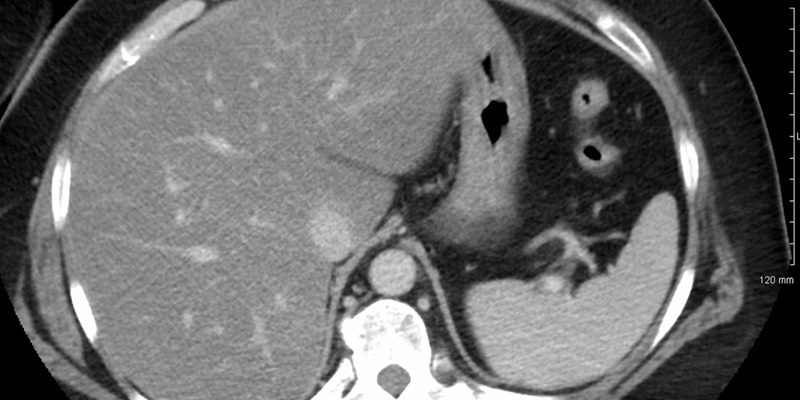
1. Short-term dietary weight loss targeting hepatic fat reduction was associated with measurable improvements in arterial stiffness, endothelial function, and cardiovascular risk scores in MASLD patients.
2. These vascular improvements did not correlate directly with the magnitude of hepatic triglyceride reduction, suggesting the vascular benefits may occur through mechanisms independent of liver fat content itself.
Evidence Rating Level: 1 (Excellent)
Metabolic dysfunction-associated steatotic liver disease (MASLD) is increasingly recognized as a cardiovascular risk factor, yet whether reducing hepatic triglycerides directly improves vascular function remains unclear. This two-week, randomized, pre-post trial enrolled 47 adults (mean age 54, 81% female) with or at high risk for MASLD, assigned to either a low-carbohydrate (<30 g/day) or low-calorie (~1,200–1,500 kcal/day) diet. Hepatic triglyceride content was quantified via MRI-proton density fat fraction, while arterial stiffness (pulse wave velocity) and endothelial function (flow-mediated dilation, FMD) were assessed pre- and post-intervention. Both diets produced comparable reductions in hepatic triglycerides (–15% relative to baseline). Brachial-ankle PWV decreased significantly (–41 cm/s), FMD improved by ~1%, and Framingham Risk Score declined, alongside reductions in body weight, insulin resistance, and inflammatory markers (IP-10). Notably, hepatic triglyceride reduction correlated with decreased resting heart rate (r=0.35 after adjustment for age/weight) but not with changes in vascular stiffness or endothelial function measures.
1. Positive Psychotherapy (PPT) produced anxiety and well-being outcomes statistically comparable to standard CBT, suggesting it may be a viable alternative for patients who do not respond to or prefer not to pursue traditional exposure-based treatment.
2. Both interventions demonstrated durable, clinically meaningful improvement sustained at three-month follow-up in an online group format
Evidence Rating Level: 1 (Excellent)
This randomized controlled trial compared Positive Psychotherapy (PPT) to standard Cognitive Behavioral Therapy (CBT) for anxiety disorders delivered in an online group format, addressing the need for alternative, patient-tailored treatment options. Investigators randomized 110 adults with panic disorder, generalized anxiety disorder, or social anxiety disorder (per ICD-10 criteria) to ten weeks of manualized group therapy (PPT n=53; CBT n=57), with outcomes assessed at baseline, post-treatment, and three-month follow-up using validated measures of anxiety (BAI, PAS, GAD-7, FQ), subjective happiness/quality of life (PPTI, FS, SWLS), and psychological distress (ISR, PHQ-9). Linear mixed models revealed no significant group × time interactions across any outcome, indicating that improvement trajectories did not differ between treatments. Both groups showed statistically significant, medium-to-large effect size improvements in anxiety and distress from pre- to post-treatment, with gains maintained at three-month follow-up. The only significant between-group difference was on the Fear Questionnaire, favoring CBT, though this did not translate to differential change over time. Limitations included a predominantly female sample (97.3%), multiple treating therapists, and 18–21% attrition.
1. Brain-predicted age difference (brain-PAD) is a robust, reproducible predictor of dementia progression across two independent estimation methods, and it is most clinically useful in subjective cognitive decline, where it can help identify low-risk patients and reassure the “worried well,” rather than in mild cognitive impairment, where visual rating scales already capture most prognostically relevant information.
Evidence Rating Level: 2 (Good)
Visual rating scales remain the standard for assessing brain atrophy in memory clinics, but their limited sensitivity to subtle change constrains early dementia risk-stratification in subjective cognitive decline (SCD) and mild cognitive impairment (MCI). This retrospective study from the Amsterdam Dementia Cohort and SCIENCe project examined whether brain-predicted age difference (brain-PAD), derived from structural MRI using two pretrained algorithms (BrainageR and cNeuro), adds prognostic value beyond visual rating scales (MTA, GCA, Koedam, Fazekas) and amyloid status. Among 799 patients (412 SCD, 387 MCI; median follow-up 3.2 years), 235 (29.4%) progressed to dementia. Higher brain-PAD independently predicted progression (HR 1.06 per year), with model fit improving even after adjusting for visual ratings and amyloid status. The effect was diagnosis-dependent: brain-PAD added meaningful discriminative value in SCD (HR 1.09), where a cutoff of −2.6 years yielded high negative predictive value (0.91–0.99) over 2–10 years, but offered little incremental benefit in MCI once visual ratings were considered.
1. Diffusion-weighted imaging (DWI)-positive lesions are common after intracerebral hemorrhage (ICH) and serve as an independent biomarker of cerebral small vessel disease (cSVD) severity and worse 6-month functional outcome, supporting their potential use in prognostication and clinical trial patient selection.
2. The anatomical distribution of DWI-positive lesions may help distinguish cerebral amyloid angiopathy (CAA) from non-CAA small vessel arteriopathy, as deep lesions were never observed in probable CAA cases.
Evidence Rating Level: 2 (Good)
Diffusion-weighted imaging (DWI)-positive lesions are increasingly recognized in acute intracerebral hemorrhage (ICH) as markers of cerebral small vessel disease (cSVD), but their mechanisms and prognostic significance remain incompletely defined. This prospective cohort study analyzed 342 consecutive patients with acute ICH from the SIGNAL registry (North Central London, 2017–2020) who underwent diagnostic MRI, assessing DWI-positive lesions and STRIVE-2–defined cSVD markers, with the primary outcome being 6-month modified Rankin Scale (mRS) score. DWI-positive lesions were present in 21.6% of patients, most often in lobar regions. They were independently associated with severe white matter hyperintensities (OR 3.37), ICH volume ≥30 mL (OR 2.29), higher cerebral microbleed burden (OR 1.61), and poor 6-month functional outcome (OR 2.16). Patients with cerebral amyloid angiopathy (CAA) more frequently had strictly lobar DWI-positive lesions, whereas strictly deep lesions occurred exclusively in non-CAA patients, suggesting distribution reflects underlying arteriopathy.
1. Restorative neurostimulation produces durable, clinically meaningful improvements in pain, disability, and quality of life at 5 years in real-world chronic mechanical low back pain patients
Evidence Rating Level: 3 (Average)
This 5-year follow-up study evaluated restorative neurostimulation (ReActiv8) for chronic mechanical low back pain (CLBP) attributed to multifidus dysfunction. Restorative neurostimulation delivers electrical stimulation to the L2 dorsal rami medial branches to induce tetanic multifidus contractions, addressing motor control impairment thought to underlie mechanical CLBP that is refractory to conservative treatment. This prospective, open-label study enrolled 42 patients across five UK sites who received the implanted device without formal inclusion/exclusion criteria, reflecting real-world practice. Outcomes—pain (NRS), disability (ODI), and quality of life (EQ-5D-5L)—were assessed at baseline and annually through 5 years, alongside device-logged therapy utilization. At 5 years, 81% of patients (34/42) completed follow-up. Mean NRS fell from 7.0 to 3.2, mean ODI from 46.6 to 26.1, and EQ-5D index rose from 0.426 to 0.703. Eighty-two percent achieved a minimally clinically important change in pain or disability, and 62% became pain remitters (NRS ≤3). Device usage declined over time (312 to 166 hours/year), with lower usage associated with non-response, though causality was unclear. No serious device-related adverse events occurred in years 4–5.
Image: PD
©2026 2 Minute Medicine, Inc. All rights reserved. No works may be reproduced without expressed written consent from 2 Minute Medicine, Inc. Inquire about licensing here. No article should be construed as medical advice and is not intended as such by the authors or by 2 Minute Medicine, Inc.