

Patient Basics: Esophageal Varices
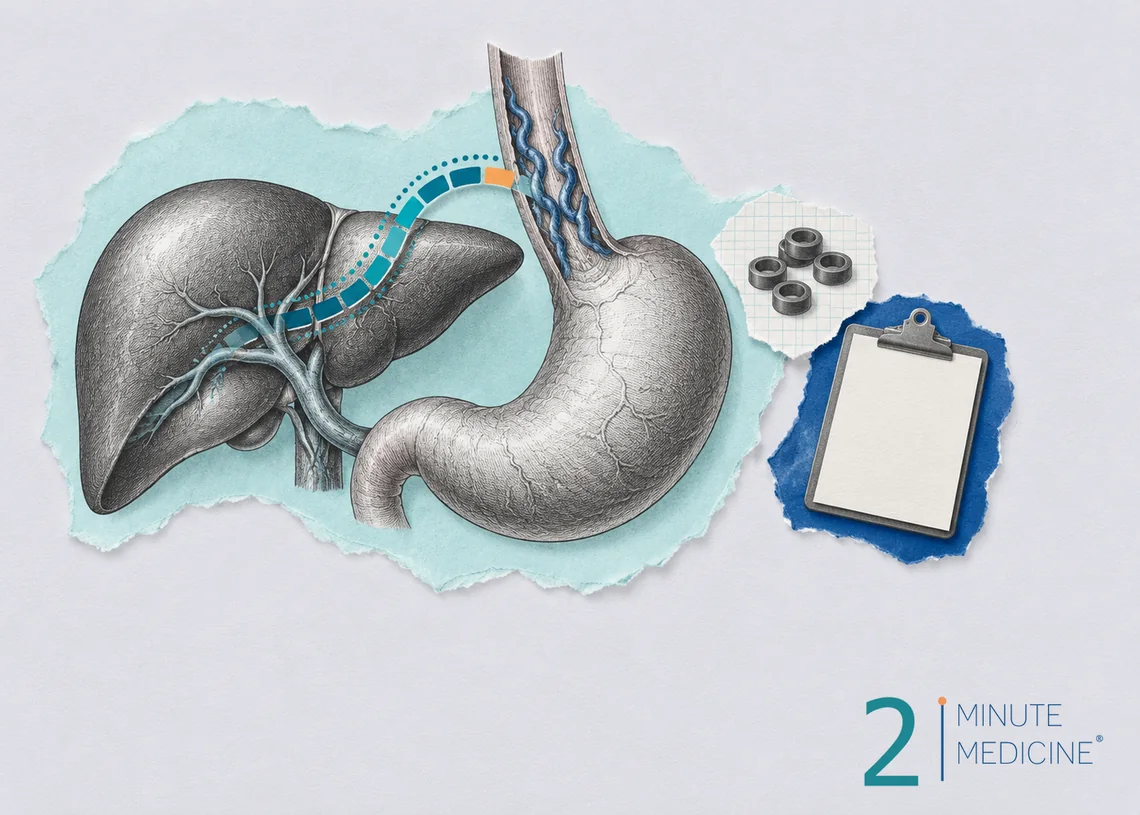
Esophageal varices are enlarged, bulging veins in the lower part of the esophagus, the tube that carries food from the throat to the stomach. They most often develop in people with cirrhosis (scarring of the liver), because blood backs up and is forced through these small veins. Varices usually cause no symptoms until they burst and bleed, which is a life-threatening emergency. Regular checks and treatment can prevent most bleeds.
Key points
- Esophageal varices are caused by high pressure in the vein that carries blood to the liver (portal hypertension).
- Cirrhosis from alcohol, hepatitis or fatty liver disease is the most common cause.
- Vomiting blood or passing black, tarry stool can mean bleeding varices. Call 911.
- Beta-blocker pills or banding during an endoscopy lower the chance of a first bleed.
- Stopping alcohol and treating the liver disease can lower pressure in the veins.
What causes esophageal varices
Blood from the stomach, intestines and spleen normally drains into the liver by way of a large vessel called the portal vein. When the liver is scarred, blood can’t pass through easily, and pressure in the portal vein rises. Doctors call this portal hypertension. Blood then finds detours through smaller veins, including those in the lower esophagus and upper stomach. These thin veins aren’t built for the extra flow. They stretch and swell, and the larger they get, the more likely they are to burst.
Causes of portal hypertension include:
- Cirrhosis, from heavy alcohol use, hepatitis B or C, or fatty liver disease (now called MASLD, linked to obesity and diabetes)
- A blood clot in the portal vein (portal vein thrombosis)
- Some rarer liver and blood conditions, and in parts of the world, a parasite infection called schistosomiasis
About half of people with cirrhosis develop varices. Varices can also form in the stomach.
Symptoms of esophageal varices
Varices themselves cause no pain or trouble swallowing. Most people find out about them during a screening test or when they bleed. Signs of bleeding include:
- Vomiting blood, which may be bright red or look like coffee grounds
- Black, tarry or bloody stool
- Lightheadedness, fainting or a racing heartbeat
- Pale, cool or clammy skin
- Confusion or extreme sleepiness
Many people also have signs of liver disease, such as yellow skin or eyes (jaundice), a swollen belly from fluid (ascites), easy bruising and swollen legs.
How it’s diagnosed
The main test is an upper endoscopy. After you get medicine to make you sleepy, a doctor guides a slim, bendable camera scope down through your mouth to look at the esophagus and stomach. This shows the size of any varices and red marks on them that signal a higher risk of bleeding.
People with cirrhosis are usually offered this test when the cirrhosis is found. Some with milder disease may be able to skip it if a liver stiffness scan (elastography) and their blood platelet count are reassuring. CT and MRI scans can also show swollen veins and the state of the liver.
Treatment
Preventing a first bleed
- Beta-blockers, such as carvedilol, propranolol or nadolol, lower pressure in the portal vein. They are taken every day.
- Band ligation. During an endoscopy, the doctor places tiny rubber bands around the varices. The banded veins shrink and fall off over a few days. It is often repeated every few weeks until the varices are gone.
Your doctor will choose one or both, depending on the size of the varices and your health.
Treating a bleed
Bleeding varices need care in a hospital, often in intensive care.
- Fluids and blood transfusions through a vein to replace lost blood
- Octreotide, a medicine given by vein that lowers blood flow to the varices
- Antibiotics to prevent serious infections, which are common after a bleed in people with cirrhosis
- Urgent endoscopy, usually within 12 hours, to band the bleeding vein
- A balloon or special stent placed in the esophagus to press on the vein if bleeding won’t stop
TIPS and liver transplant
A TIPS (transjugular intrahepatic portosystemic shunt) is a small metal tube that a radiologist places inside the liver by threading it in from a neck vein. It creates a new path for blood and lowers portal pressure quickly. It may be used when bleeding keeps coming back or in people at high risk. Its main downside is confusion caused by toxins bypassing the liver. For some people with advanced cirrhosis, a liver transplant is the long-term answer.
Preventing another bleed
After a bleed, the risk of another one is high. Most people take a beta-blocker and have repeat banding until the varices are gone, then regular endoscopies to check for new ones.
Living with esophageal varices
- Stop drinking alcohol completely. This can lower portal pressure and help the liver heal. For help, call the SAMHSA helpline at 1-800-662-4357, free and open any time.
- Treat the cause. Medicines can cure hepatitis C and control hepatitis B. Losing weight helps fatty liver disease.
- Avoid aspirin, ibuprofen and naproxen, which raise bleeding risk and can harm the kidneys. Ask your doctor which pain reliever is safe for you.
- Take beta-blockers every day, and don’t stop them suddenly.
- Get vaccinated against hepatitis A and B if you aren’t already immune.
- Keep your endoscopy and liver appointments, even when you feel well.
Get emergency care
Call 911 if you or someone with liver disease vomits blood or material that looks like coffee grounds, passes black or bloody stool, faints, or becomes confused or very drowsy. Don’t drive yourself.
See your doctor soon for new swelling of the belly or legs, yellowing skin or eyes, or dizziness when you stand.
Common questions about esophageal varices
What happens if esophageal varices rupture?
A burst varix can bleed heavily and quickly, causing vomiting of blood, black stools, fainting and shock. It is a medical emergency. Hospital teams stop most bleeds with medicine and banding during an endoscopy, but a large bleed can be fatal, especially when liver disease is advanced. That is why prevention matters so much.
Can esophageal varices heal on their own?
Not usually. They may shrink if pressure in the portal vein falls, for example after someone stops drinking or is cured of hepatitis C. Banding can clear the varices you have, but new ones can form while portal hypertension remains. Regular endoscopies catch them early.
Are bleeding varices painful?
The bleeding itself is usually not very painful. People more often feel weak, dizzy, sick to the stomach or confused because of blood loss. In the hospital, the care team treats any discomfort. For people with end-stage liver disease, palliative and hospice care focus on keeping them comfortable and calm.
How long can you live with esophageal varices?
It depends mostly on how healthy the liver is. Many people with varices and stable cirrhosis live for years, especially if they stop drinking, treat the cause and prevent bleeding. Outlook is poorer after a major bleed or with advanced liver failure. Your liver specialist can explain what your test results mean for you.
Questions to ask your doctor
- How large are my varices, and how likely are they to bleed?
- Should I take a beta-blocker, have banding, or both?
- How often do I need an endoscopy?
- Which pain relievers are safe for me?
- Am I a candidate for TIPS or a liver transplant?
Learn more
- Bleeding esophageal varices (MedlinePlus, U.S. National Library of Medicine)
- Cirrhosis (National Institute of Diabetes and Digestive and Kidney Diseases)
This guide is general information and doesn’t replace advice from your own doctor. Last updated October 2026.






 Get the app